New Hampshire Antler Point Restriction Status
It's completely understandable to wonder about antler point restrictions (APRs) when you're planning a deer hunt, especially if you've hunted in other states where these rules are a fundamental part of deer management. There's a common perception that more selective harvesting rules lead to bigger bucks, and many states have adopted various antler restrictions to achieve just that. This guide will cut through the speculation and clearly explain New Hampshire's current stance on antler point restrictions, what that means for hunters, and why the Granite State manages its deer herd the way it does.
Understanding Antler Point Restrictions in Deer Management
Antler point restrictions, or APRs, are a wildlife management tool used by many state agencies to influence the age structure and quality of their deer herds. The basic idea is to protect younger bucks from harvest, allowing them more time to mature and, theoretically, grow larger antlers and contribute to breeding. It’s a strategy rooted in the desire for a more balanced herd with a higher ratio of older, more dominant bucks.
The Philosophy Behind APRs
The core philosophy behind APRs is often twofold: biological and social. Biologically, protecting younger bucks allows them to reach older age classes, which can lead to larger antlers and a more natural buck-to-doe ratio, potentially improving breeding dynamics. Socially, hunters often desire the opportunity to harvest larger, more mature deer, and APRs are implemented to meet these expectations and improve the "quality" of the hunting experience. States might introduce these rules after extensive public input, driven by a desire among hunters for more impressive trophies. However, such restrictions can also be quite controversial, as some hunters prefer the flexibility to harvest any legal buck, regardless of antler size.
Common APR Formats
APRs come in several common formats, and if you've hunted across different states, you've likely encountered a few. The most prevalent is often a "minimum number of points on one side," such as a 3-point or 4-point rule. This means a buck must have at least that many points on one antler to be considered legal. Another variation might be a "minimum antler spread," requiring the antlers to be wider than the deer's ears. Sometimes, specific units or zones within a state might have different restrictions based on local herd dynamics or habitat goals. These rules are usually clearly defined in a state's hunting digest and often require hunters to accurately count points or estimate spread in the field, which can add a layer of challenge and sometimes frustration to a hunt.
New Hampshire's Current Antler Regulations
Now, let's get down to what really matters for hunting here in the Granite State. If you're coming from a state with strict APRs, you might be surprised, or even relieved, to learn about New Hampshire's approach.
No Antler Point Restrictions in the Granite State
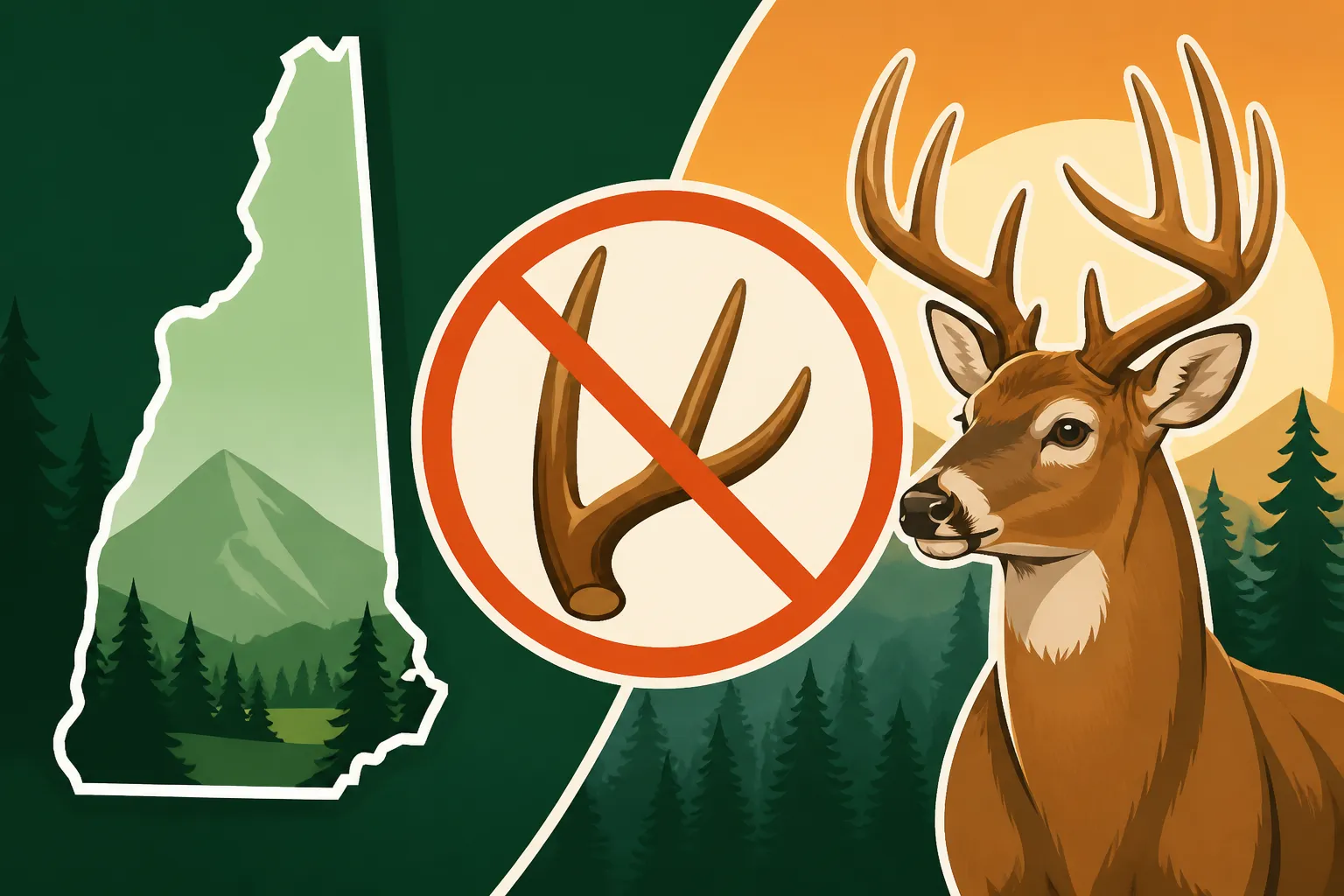
That's right, folks. As of the most recent regulations, New Hampshire does not have antler point restrictions for deer. You won't find rules about "3 points on one side" or "15-inch spread" in the New Hampshire Fish and Game Department's official hunting digest. This can be a refreshing change for hunters accustomed to having to make split-second decisions about a buck's legality based on antler configuration. The absence of APRs here simplifies the field judging process considerably, allowing hunters to focus more on shot placement and ethical harvest rather than counting points. This management strategy sets New Hampshire apart from many other states that have adopted more complex antler-based rules. When you're using tools like GoHunt to scout out new areas, you won't need to overlay any specific point restriction maps, which is a nice perk.
What "Legal Antlered Deer" Means Here
So, if there are no APRs, what exactly constitutes a "legal antlered deer" in New Hampshire? It's quite straightforward: any deer with at least one antler three inches or longer, measured from the skull, is considered a legal antlered deer. That's it. It doesn't matter if it's a spike, a fork horn, or a magnificent ten-pointer; as long as that single antler clears the three-inch mark, it's fair game during the appropriate seasons and within your bag limit. This broad definition ensures that virtually any buck that has developed antlers beyond nubs is a legal target. This simplicity carries through all hunting methods, whether you're out during the long archery season, the ten-day muzzleloader season, or the main November firearms season. Hunters should always consult the official Fish and Game digest for the most up-to-date information on New Hampshire's WMU-Based Deer Season Structure and specific weapon requirements.
Here's a quick comparison to illustrate the difference:
| Feature | New Hampshire Antlered Deer Definition | Example APR State (Hypothetical) |
|---|---|---|
| Minimum Antler Size | One antler 3 inches or longer | 3 points on one side |
| Age Class Targeted | Any buck with 3"+ antler | Older bucks (1.5+ years old) |
| Field Judging Skill | Simple (measure one antler length visually) | Moderate to High (accurate point count, spread estimation) |
| Flexibility for Hunter | High | Moderate |
Why New Hampshire Doesn't Use Antler Point Restrictions
The decision not to implement antler point restrictions isn't an oversight; it's a deliberate and informed choice by the New Hampshire Fish and Game Department, based on specific management goals, deer biology, and habitat characteristics unique to the state. It reflects a different approach compared to many neighboring states.
Focus on Doe Harvest and Population Control
One of the primary reasons New Hampshire does not use APRs is its overarching deer management strategy, which heavily emphasizes doe harvest for population control. Unlike some states where the goal might be to maximize trophy buck potential at the expense of overall herd numbers, New Hampshire's deer management often focuses on keeping the herd in balance with available habitat and reducing deer-human conflicts, especially in certain regions.
Across many areas of the state, especially the more developed southern regions, high deer densities can lead to increased vehicle collisions, agricultural damage, and concerns about forest regeneration. Encouraging the harvest of antlerless deer (does and fawns) is the most effective way to manage and reduce deer populations. By not imposing APRs, the Fish and Game Department avoids creating a situation where hunters might pass on younger bucks to wait for larger, older deer, potentially reducing their overall hunting success and focus away from necessary doe harvests. The state's approach ensures that hunters have opportunities to fill their tags, whether it's with a young buck or a doe, contributing to sound New Hampshire Deer Population Estimate management.
Habitat and Deer Density Considerations
New Hampshire's diverse landscape, from the dense softwood thickets of the North Country to the mixed hardwoods and agricultural lands further south, plays a significant role in its deer management philosophy. The state's varied habitat means deer densities can differ considerably across its Wildlife Management Units (WMUs). In areas with less productive habitat or harsher winters, deer might not achieve the same antler growth at younger ages as deer in more fertile regions. Imposing uniform APRs across such varied terrain could disproportionately affect hunting opportunities in some WMUs, making it harder for hunters to be successful.
Furthermore, managing a healthy deer herd involves more than just antler size. Factors like disease prevention, habitat carrying capacity, and overall herd health are paramount. New Hampshire is proud to remain a New Hampshire's CWD-Free Deer Herd, and responsible management practices contribute to this status. The simpler antler regulations mean that hunters can focus on ethical harvest and enjoy their time in the woods without the added complexity of point counting, especially in challenging environments like the White Mountain National Forest. When scouting or researching hunting spots, platforms like GoHunt can help you understand the terrain and plan your strategy without adding APRs to the mix.
Implications for New Hampshire Deer Hunters
Understanding New Hampshire's lack of antler point restrictions has several important implications for hunters, both in terms of strategy and overall hunting experience. It allows for a degree of flexibility that might be unfamiliar to those coming from more regulated states.
Embracing the "Any Legal Buck" Approach
For hunters in New Hampshire, the "any legal buck" rule means freedom. You don't have to second-guess if that quick glimpse of a deer meant three points or two, or if its spread was truly beyond its ears. If it has an antler measuring at least three inches, and it's within your tag limits, it's a legal animal. This simplifies the hunting experience, especially during fast-paced encounters or in thick cover where getting a perfect view of a buck's antlers can be challenging.
This approach means that hunters can focus on other aspects of the hunt, like reading sign, understanding deer movement patterns, and making an ethical shot. It encourages participation from all skill levels, as new hunters aren't burdened with complex antler-judging rules. This is particularly relevant when you're Hunting the Rut in Early-to-Mid November, when bucks are on the move and opportunities can arise quickly. While the state offers a generous New Hampshire Buck Bag Limit, many hunters choose to self-regulate, aiming for a mature deer, but it’s a personal choice, not a mandate.
Responsible Harvest and Self-Imposed Management
While New Hampshire doesn't impose antler restrictions, this doesn't mean ethical hunters abandon all forms of selective harvest. In fact, many experienced hunters in the state choose to "self-impose" their own antler criteria. They might pass on younger bucks in hopes of encountering a more mature animal later in the season. This personal choice is a hallmark of responsible hunting and conservation. It's about respecting the resource and making decisions that align with your personal hunting goals, whether that's filling the freezer or seeking a larger trophy.
For those interested in the bigger picture, reviewing the annual New Hampshire Deer Harvest Records can provide insights into herd health and the types of deer being harvested. Responsible hunters also understand the importance of reporting their harvest accurately and promptly, contributing vital data to the state's management efforts, as outlined in the New Hampshire Deer Reporting Requirements. Whether you decide to harvest the first legal buck that walks by or hold out for a particular deer, New Hampshire’s regulations provide the flexibility for you to make that call, allowing a personalized hunting experience within the state's wildlife management framework.
Disclaimer
Please note: Hunting regulations are subject to change. Always consult the most current New Hampshire Fish and Game Department official regulations and digest before planning your hunt. This guide is for informational purposes only and should not be considered a substitute for official sources.