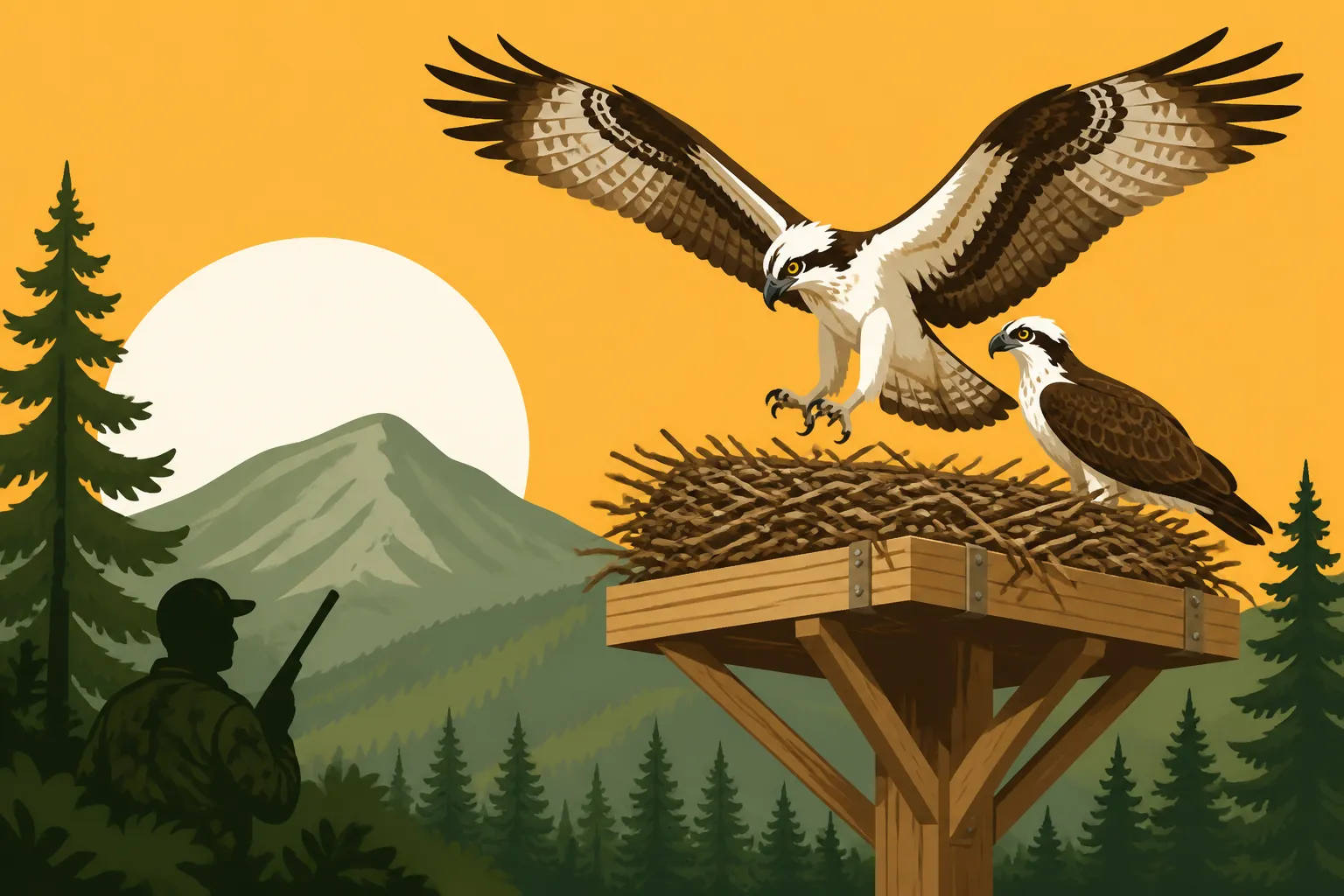
New Hampshire Osprey Nesting Platforms
For years, many of us who cherish New Hampshire's wild spaces have watched with a mix of awe and concern as the majestic osprey, a true symbol of our state's waterways, struggled to find suitable places to raise their young. These incredible raptors, with their distinctive white underbellies and keen fishing eyes, faced a housing crisis of sorts. This guide aims to shed light on the crucial role of osprey nesting platforms, explaining not just what they are, but why they are a vital solution in ensuring the continued comeback and thriving presence of these magnificent birds across the Granite State.
The Osprey's Story in New Hampshire: A Comeback Worth Supporting
If you've spent any time by New Hampshire's lakes, rivers, or coastal areas, you've likely witnessed the breathtaking sight of an osprey diving talons-first into the water, emerging with a fish. They're an integral part of our state's natural beauty, a testament to healthy aquatic ecosystems. However, it wasn't always this way. Like many raptor species, ospreys faced significant challenges decades ago, particularly from environmental contaminants that severely impacted their reproductive success. It's a comeback story, truly, and one that requires ongoing support from all of us who care about wildlife.
The conservation story of the osprey really resonates with those of us who spend a lot of time outdoors. We see the direct impact of human activity, both negative and positive, on the creatures we share the land with. Just as we care about the health of our deer herds, as discussed in White-Tailed Deer Across New Hampshire, we also appreciate the diversity that species like ospreys bring. Their presence indicates a vibrant and functional aquatic environment, something that benefits all wildlife, from the smallest fish to the largest moose.
Osprey Population Challenges and Recovery Efforts
Historically, a major blow to osprey populations across North America, including right here in New Hampshire, was the widespread use of certain pesticides. These chemicals accumulated in their prey fish, leading to thin eggshells that often broke before hatching. It was a bleak time for many raptors, and seeing their numbers dwindle was disheartening. Thankfully, with the banning of these harmful substances and dedicated conservation efforts, ospreys have begun a slow, but steady, recovery.
However, recovery doesn't mean the work is done. Even with cleaner environments, ospreys still face hurdles, primarily habitat loss and a shortage of safe, stable nesting sites. They prefer large, open nests usually in tall trees or on man-made structures near water. As development encroaches, or older snags fall, finding that perfect spot becomes increasingly difficult. This is where human intervention, through careful planning and platform construction, becomes absolutely essential.
Imagine a situation where a pair of ospreys returns to their traditional nesting territory only to find their preferred tree has fallen in a winter storm, or a new construction has removed suitable snags. They might attempt to nest in precarious locations, like power poles, which can be dangerous for both the birds and infrastructure. This scenario underscores the critical need for proactive measures to provide them with safe alternatives, ensuring their continued breeding success.
Why Ospreys Need Our Help with Nesting Sites
Ospreys are magnificent creatures, but they aren't architects capable of building skyscrapers. They need a sturdy foundation for their massive nests. Their nests can be enormous, sometimes six feet deep and wide, and weighing hundreds of pounds. This requires a robust support structure that can withstand New Hampshire's often harsh weather, from heavy snow loads to strong winds. Natural sites are dwindling, and those that remain are often vulnerable to storms or human disturbance.
Without adequate natural nesting sites, ospreys are forced to adapt, sometimes choosing less-than-ideal spots. We've all seen pictures, or perhaps even in person, of an osprey nest precariously perched on a cell tower or a utility pole. While the birds might make it work, these locations present risks, from electrocution to entanglement with wires, not to mention potential power outages. Providing purpose-built platforms redirects them to safer, more stable environments.
These platforms aren't just about providing a place to build a nest; they're about giving ospreys a secure, elevated location that is typically free from ground predators like raccoons and foxes, and often strategically placed away from heavy human disturbance. It's about giving them the best possible chance to successfully raise their chicks, which is the ultimate goal of any wildlife conservation effort. It's a direct, tangible way to support their population growth.
What Makes an Ideal Osprey Nesting Platform?
Building an osprey nesting platform isn't just about sticking a pole in the ground. It requires thought, planning, and an understanding of osprey behavior and their environmental needs. These platforms are designed to mimic the natural nesting sites ospreys prefer, offering stability, visibility, and safety for the nesting pair and their young. It's a blend of engineering and ecological knowledge, often carried out by dedicated volunteers and conservation groups.
When considering where to place a platform, or what materials to use, it's crucial to think like an osprey. They're fish-eaters, so proximity to abundant food sources is paramount. This means platforms are typically found along the shores of our larger lakes, such as Lake Winnipesaukee, along major rivers like the Connecticut, or in coastal marshlands. Hunting the Connecticut River Valley and Hunting the Lakes Region both touch on prime osprey habitat.
Even hunting and outdoor enthusiasts can appreciate the meticulous detail that goes into these structures. It's similar to scouting for the perfect treestand location – you're looking for an advantage, a good view, and security. Osprey platforms offer that for these incredible birds, ensuring they have the best chance to hunt and raise their brood without unnecessary stress or danger.
Essential Components of a Successful Platform
A well-designed osprey nesting platform typically consists of a few key elements. First and foremost is a sturdy, tall pole, often made of treated wood or steel, that can withstand the elements and the sheer weight of a mature nest. This pole needs to be sunk deep into the ground or secured to a robust foundation to prevent it from toppling over in strong winds or under heavy ice loads during the off-season.
At the top of this pole sits the actual platform. This is usually a square or rectangular wooden or metal frame, roughly 3 to 4 feet across, with an open mesh or slat design to allow for drainage. It's often lined with a rough starter nest of branches or hay to encourage the ospreys to build there. Think of it as providing a welcoming, structurally sound base, rather than forcing them to start from scratch on a bare, slick surface.
Another critical, but often overlooked, component is the predator guard. This is typically a conical or cylindrical baffle installed around the pole below the platform. Its purpose is to prevent climbing predators like raccoons from reaching the nest and preying on eggs or chicks. It’s a simple addition that makes a world of difference in the nesting success rates of these platforms, offering peace of mind to the parent birds.
Here's a quick look at common platform components:
| Component | Description | Key Benefit |
|---|---|---|
| Support Pole | Tall, durable pole (wood, steel), securely anchored. | Provides height and stability. |
| Platform Base | Square/rectangular frame with drainage (wood, metal). | Sturdy foundation for nest building. |
| Starter Nest | Loose branches, hay, or sticks arranged on the platform. | Encourages immediate use by arriving ospreys. |
| Predator Guard | Conical or cylindrical baffle around the pole below platform. | Prevents climbing predators from reaching nest. |
| Location | Near water, clear flight path, away from major disturbance. | Access to food and safety from human interference. |
Strategic Placement for Maximum Impact
The location of an osprey nesting platform is just as vital as its construction. Ospreys are primarily piscivores, meaning their diet consists almost entirely of fish. Therefore, a platform must be erected within easy flying distance of abundant fishing grounds – think shallow, clear water where fish are easily spotted and caught. Placing a platform deep in the woods, far from water, would be pointless, no matter how well-built.
Furthermore, ospreys prefer platforms that offer an unobstructed view of their surroundings, both for spotting prey and for detecting potential threats. This means avoiding areas with dense tree cover that would block their flight path or limit their visual range. A clear approach and departure path is essential, making open shorelines, marsh edges, and even open fields adjacent to water prime real estate for these installations.
Sometimes, platforms are strategically placed near existing utility poles with old nests. If a nest on a utility pole is deemed too risky, conservationists will often erect a new, safe platform nearby and then, once the ospreys transition, carefully remove the old, dangerous nest. This redirection effort is a clever way to ensure the birds’ safety without disrupting their established nesting patterns too drastically. Tools like the GoHunt app, often used by hunters, might even help identify ideal open areas or water sources in WMAs like those discussed in New Hampshire Wildlife Management Areas.
Community and Conservation: Who's Building These Platforms?
The construction and maintenance of osprey nesting platforms are rarely solitary endeavors. They represent a beautiful example of community-driven conservation, bringing together diverse groups of people who share a common goal: protecting and enhancing New Hampshire's wildlife. From local wildlife groups to state agencies and passionate individuals, a network of hands and hearts works to ensure these platforms are installed and cared for.
This collaborative spirit is something many hunters recognize and appreciate. We often talk about doing our part for conservation, whether it's through buying licenses and tags (which fund Fish and Game, as covered in New Hampshire Moose Permit Cost If Drawn) or by actively participating in habitat improvement projects. Osprey platform projects are another facet of this broader commitment to healthy ecosystems. It’s about more than just one species; it's about the entire health of the landscape.
Think about the time and effort involved in a project like this. It’s not a quick afternoon task. Erecting a sturdy pole, often requiring heavy equipment, and then regularly monitoring the platforms for structural integrity or nesting success, all contribute to a significant volunteer investment. These efforts highlight the passion that many Granite Staters have for their natural surroundings.
Key Organizations and Volunteer Roles
Several organizations play pivotal roles in the osprey platform initiative. The New Hampshire Fish and Game Department, as the primary wildlife agency, provides guidance, permits, and often direct assistance with these projects. They have the ecological expertise and regulatory authority to ensure projects are done correctly and safely. Their biologists are often at the forefront of identifying ideal locations and monitoring osprey populations, a process similar to how they track other species like those mentioned in New Hampshire Moose Population Estimate.
Local conservation commissions, land trusts, and Audubon chapters are frequently the driving force behind specific projects. These grassroots groups mobilize volunteers, raise funds, and coordinate the actual construction and installation. Volunteers are the backbone, often providing the labor, equipment, and local knowledge needed to get these large structures into place, sometimes in challenging terrain.
Beyond the formal organizations, individual landowners and concerned citizens also contribute significantly. Many platforms are installed on private property, thanks to the generosity and wildlife-friendly attitudes of landowners. They understand the value of having ospreys as neighbors and are willing to host these structures, becoming stewards of these important nesting sites. It's a wonderful example of private citizens directly contributing to public wildlife health.
Funding and Resources for Platform Projects
Building an osprey nesting platform isn't free. The materials alone – a sturdy pole, lumber or metal for the platform, predator guards, and concrete – can add up. Then there are the logistical costs, such as renting specialized equipment for digging deep holes or lifting heavy poles, or even the cost of fuel for volunteers driving to remote sites. Fortunately, various funding streams and resources help make these projects a reality.
State wildlife grants, often derived from hunting and fishing license sales, provide foundational support for many conservation initiatives. This is where the connection between hunting and broader wildlife conservation truly shines, demonstrating how hunters' dollars directly benefit a wide array of species, even those not hunted directly. Federal grants, often administered through state agencies, also contribute significantly.
Beyond government funding, private donations and fundraising efforts by local conservation groups are crucial. These groups might host community events, seek corporate sponsorships, or apply for grants from conservation-focused foundations. It's a testament to the dedication of these organizations that they are able to secure the necessary funds to continue these important projects, highlighting a community-wide investment in New Hampshire's natural heritage.
The Impact of Nesting Platforms on New Hampshire's Ecosystem
The success of osprey nesting platforms in New Hampshire extends far beyond just providing a home for a single bird species. These structures contribute to the overall health and biodiversity of our state's ecosystems. They act as visible symbols of successful conservation, inspiring further efforts and reminding us all of our role as stewards of the natural world. The positive ripple effects can be observed throughout the environment.
Just as efforts to understand and manage conditions like CWD, discussed in New Hampshire's CWD Surveillance Program, protect the health of one species and, by extension, many others, so too do osprey platforms support a broader ecological balance. A healthy osprey population indicates clean waters and abundant fish, conditions that benefit countless other species, from muskrats to otters. It's all interconnected.
The presence of a thriving osprey population also enriches the experience of anyone who enjoys the outdoors. Whether you're a paddler, an angler, a birdwatcher, or a hunter Scouting New Hampshire Public Land Before Season, seeing these magnificent birds soar overhead and dive for fish is a special moment. It's a reminder of the wild beauty that New Hampshire offers and the importance of preserving it for future generations.
Monitoring Osprey Success and Population Trends
Once a platform is installed, the work isn't over. Ongoing monitoring is essential to gauge its success and to understand broader osprey population trends. Volunteers and biologists routinely check these platforms during the nesting season, observing if ospreys are using them, how many eggs are laid, and how many chicks successfully fledge. This data is critical for assessing the effectiveness of the platforms and informing future conservation strategies.
This monitoring involves careful observation, often from a distance with binoculars or spotting scopes to avoid disturbing the nesting birds. Data collected from these observations, combined with information from banded birds, helps researchers understand migration patterns, survival rates, and reproductive success across different regions of the state. This scientific approach helps ensure that conservation efforts are data-driven and effective.
The long-term data collected over years allows biologists to track the overall health of New Hampshire's osprey population. We can see if numbers are increasing, remaining stable, or if new challenges are emerging. This vigilance is crucial for any species recovery, ensuring that problems can be identified and addressed promptly, continuing the positive trajectory for these incredible raptors.
Broader Conservation Benefits and Hunter Involvement
The success of osprey nesting platforms is a powerful testament to what focused conservation efforts can achieve. It demonstrates that with understanding, planning, and community involvement, we can reverse negative trends and help wildlife thrive. This positive outcome often encourages similar projects for other species facing habitat challenges, creating a broader culture of ecological stewardship.
Hunters, through their dedication to conservation funding and often their volunteer efforts, play an undeniable role in this success. Many who participate in hunts, whether for waterfowl in New Hampshire Waterfowl on the Atlantic Flyway or other game, understand that healthy habitats and diverse wildlife populations benefit everyone. The skills learned through Reading New Hampshire Public Land Boundary Signs or navigating the backcountry for game can also be applied to habitat improvement and monitoring.
Ultimately, the osprey nesting platforms scattered across New Hampshire are more than just wooden structures; they are beacons of hope and symbols of successful collaboration. They represent a commitment to preserving the natural heritage that makes our state so special, ensuring that future generations can continue to witness the stunning flight and fishing prowess of the magnificent osprey.
Disclaimer
This article is for general informational purposes only and does not constitute professional advice. Laws, prices and regulations vary by location and change over time. Consult a qualified professional for guidance on your specific situation.