New Hampshire Common Loon Population
Many of us who cherish New Hampshire's wild places, whether we're deep in the hardwoods chasing whitetails or waiting for a gobbler in a spring field, often connect with the larger ecosystem around us. But sometimes, it's the non-game species, the ones we don't pursue with a license and a weapon, that truly tell us about the health of our environment. The common loon is one such iconic species, and understanding its population in the Granite State is crucial to appreciating the overall vitality of the wild lands and waters we treasure. This guide will delve into the status of New Hampshire's common loon population, the challenges they face, and how their well-being reflects the health of the broader natural world that hunters and outdoor enthusiasts hold dear.
The Iconic Common Loon in New Hampshire's Waters
When you think of a quintessential New Hampshire summer evening on a remote lake, what sound comes to mind? For many, it's the haunting, melancholic call of the common loon echoing across the still water. These magnificent birds are more than just a pretty sight or a unique sound; they're a symbol of wilderness and clean, healthy aquatic environments. Their presence, or absence, can tell us a lot about the water bodies they inhabit.
What Makes the Loon So Special?
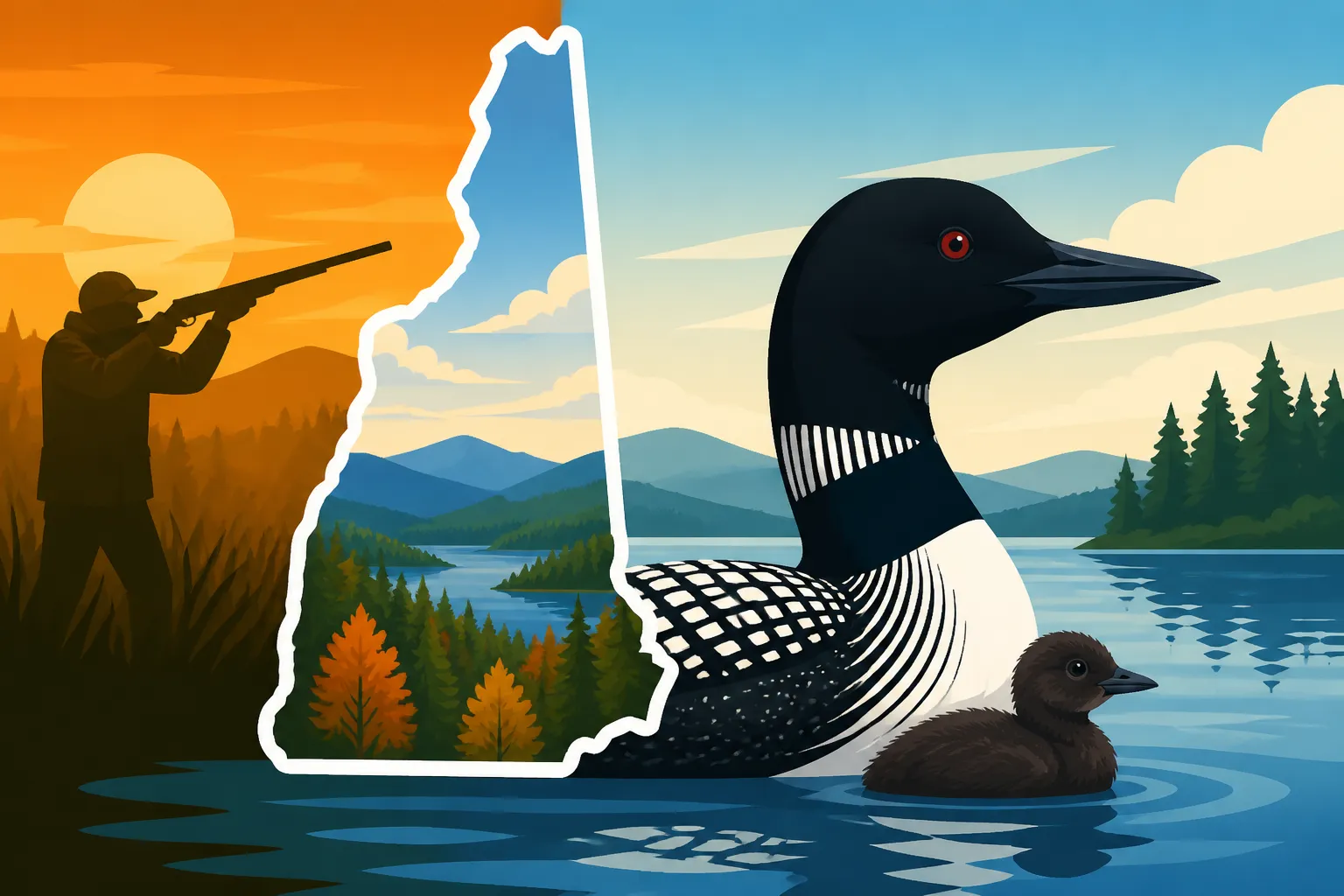
The common loon (Gavia immer) is a truly remarkable bird, instantly recognizable by its striking black and white plumage, piercing red eyes, and that unmistakable call. There's the tremolo, often described as a crazy laugh, used in alarm or territorial disputes; the wail, a long, mournful cry that carries for miles and signals anxiety or contact; the yodel, a complex call unique to each male, signaling aggression and defense of territory; and the hoot, a soft, quiet call used between family members. These calls aren't just beautiful; they're a vital part of the loon's communication system.
Beyond their vocalizations, loons are incredible divers, built like torpedoes for life underwater. Their legs are set far back on their bodies, making them agile swimmers and divers, capable of pursuing fish to depths that would surprise many. This specialized anatomy, however, makes them clumsy on land, where they only come ashore to nest. They are true masters of their aquatic domain, spending most of their lives gracefully gliding across the surface or expertly hunting beneath it. Many a hunter, sitting quietly by a remote pond or lake while Scouting New Hampshire Public Land Before Season for deer sign, has paused to watch a loon surface with a fish, a small, wild moment that connects us to the larger world.
Where Loons Call Home in the Granite State
In New Hampshire, loons prefer large, clear, deep freshwater lakes and ponds with abundant fish populations and secluded coves for nesting. You'll find them predominantly in the central and northern parts of the state, particularly within the Hunting the Lakes Region and the Hunting the North Country. Think of iconic bodies of water like Lake Winnipesaukee, Squam Lake, Lake Umbagog, and countless smaller, pristine ponds scattered throughout Coos, Grafton, Carroll, and Belknap counties.
These areas provide the critical habitat features loons need: ample open water for foraging and takeoff (loons need a "runway" of open water to become airborne), islands or quiet shoreline coves for nesting, and a healthy supply of fish like perch, trout, and minnows. They're sensitive to disturbance, so their presence often indicates relatively undeveloped shorelines and minimal human interference, especially during nesting season. As hunters, when we think about the health of our game species, we also implicitly consider the health of these larger ecosystems. Loons are just one more indicator species that tell us when things are right, and sometimes, when they aren't.
Understanding the Health of New Hampshire's Loon Population
Monitoring a wildlife population, especially one as mobile and sensitive as the common loon, is a complex undertaking. It requires dedicated efforts from state agencies, non-profit organizations, and countless volunteers. For those of us who spend a lot of time outdoors, understanding these efforts can give us a deeper appreciation for the work that goes into managing all of New Hampshire's natural resources, not just the species we pursue.
Current Population Status and Trends
Historically, loon populations in many parts of the Northeast faced significant declines due to habitat loss, pollution, and direct persecution. New Hampshire's loons, however, have shown a remarkable recovery and stabilization over the past few decades, thanks to concerted conservation efforts. While specific numbers fluctuate from year to year, the general trend indicates a stable or slowly increasing breeding population across the state. This is a testament to the hard work of many.
This general stability is measured by tracking the number of breeding pairs, the number of successful nests, and the number of chicks that survive to fledge. The total number of adults on the lakes also gives us a sense of the overall population. However, "stable" doesn't mean "out of the woods." Loons still face significant pressures, and their long-term health is constantly evaluated. It's a bit like managing deer herds; while New Hampshire Deer Population Estimate might show a healthy number overall, localized issues or broader environmental changes can still impact segments of the population. The same holds true for loons; general numbers look good, but specific lakes might have ongoing challenges.
Monitoring Efforts and Data Collection
The primary organization behind loon monitoring in New Hampshire is the Loon Preservation Committee (LPC), working in close partnership with the New Hampshire Fish and Game Department. Their efforts are extensive and include annual censuses, detailed observations of breeding pairs, and banding programs. Volunteers play a crucial role, dedicating thousands of hours to observe loons, report nesting activity, and help educate the public.
These monitoring efforts involve:
- Annual Loon Census: A specific day each summer when volunteers across the state count loons on assigned lakes and ponds. This provides a snapshot of the population.
- Nest Monitoring: Regular checks on known nesting sites to track success rates, clutch sizes, and chick survival. Floating nesting rafts are often deployed in areas where natural nesting sites are threatened by fluctuating water levels or shoreline development.
- Band-Resightings: Individual loons are sometimes captured and fitted with unique leg bands. Resighting these banded birds helps researchers understand migration patterns, longevity, and reproductive success over multiple seasons.
This meticulous data collection allows wildlife managers to identify trends, pinpoint areas of concern, and evaluate the effectiveness of conservation strategies. It’s part of a larger ecosystem health monitoring effort that includes programs like the New Hampshire Wildlife Disease Monitoring Program, ensuring that all species, from deer to loons, are observed for signs of trouble or success. Even when we're focused on game species, understanding how non-game populations are tracked can offer valuable insights into the science behind wildlife management.
Challenges and Threats to Loon Survival
Even with impressive conservation successes, New Hampshire's common loons face a gauntlet of threats in their daily lives. Many of these challenges stem directly or indirectly from human activity, reminding us that our presence in wild spaces, while often driven by a love for nature, carries a responsibility to minimize our impact. Understanding these threats is the first step toward becoming better stewards of the environment, whether we're Hunting a Beaver Flowage Edge or enjoying a quiet paddle.
Habitat Degradation and Human Impact
One of the most significant long-term threats to loons is habitat degradation, largely driven by shoreline development. Loons need pristine, quiet coves for nesting and abundant clear water for foraging. As more lakeshores are developed with homes, docks, and beaches, suitable nesting sites dwindle, and increased boat traffic can disturb incubating birds or separate chicks from their parents. The constant presence of people can also reduce the feeling of security necessary for loons to successfully raise their young.
Beyond direct habitat loss, human activities on the water pose immediate dangers:
- Boating and Watercraft: Fast-moving boats and personal watercraft can accidentally strike loons, particularly chicks, or disrupt their foraging and nesting activities. Wakes from larger boats can swamp nests built close to the water's edge.
- Fishing Tackle: A truly insidious threat comes from discarded or lost fishing tackle, especially lead sinkers and jigs. Loons, when diving for fish or foraging for pebbles (gastroliths) to aid digestion, can ingest these lead items. Lead poisoning is almost always fatal, slowly debilitating the bird and leading to death. This is why New Hampshire has regulations restricting the use of lead tackle, a measure that directly benefits loons and other waterfowl, much like regulations around New Hampshire's CWD Prevention Rules protect deer health.
- Plastic Pollution: While not as immediately fatal as lead, plastics can also be ingested by loons, leading to internal injuries or blockages.
Environmental Factors and Predator Pressures
While human impact is substantial, natural environmental factors and predator dynamics also play a role in loon survival. Climate change, for example, can lead to more unpredictable weather patterns, including severe storms that can flood nests or heavy rain events that impact water quality. Warmer lake temperatures could also affect fish populations, altering the loon's food supply.
Predation is a natural part of the ecosystem, but sometimes human-caused disruptions can exacerbate its effects. Common predators of loon eggs and chicks include:
- Raccoons: Often opportunistic, raccoons will raid nests if they are accessible from shore. Increased human activity can sometimes lead to higher raccoon populations near developed areas, bringing them into closer contact with loon nests.
- Snapping Turtles: These aquatic predators can prey on loon chicks.
- Birds of Prey: Bald eagles, which have made a fantastic comeback in New Hampshire, are powerful predators and have been observed preying on loon chicks and even adult loons. While this is a natural interaction, it's another pressure on the loon population. Even something like understanding New Hampshire Coyote Range and Density helps us appreciate the intricate web of predators and prey that exist in our wild spaces.
Conservation Efforts and How Hunters Support Them
The story of the common loon in New Hampshire is largely one of successful conservation, demonstrating what can be achieved when dedicated individuals and organizations work together. As hunters and outdoor enthusiasts, we share a deep connection to the wild and often contribute significantly to these broader conservation efforts, even for species we don't hunt.
What's Being Done to Protect Loons
Conservation for loons in New Hampshire is multi-faceted, focusing on both direct intervention and public education:
- Lead Tackle Ban: New Hampshire has been a leader in restricting the sale and use of small lead fishing tackle. This crucial regulation has drastically reduced the incidence of lead poisoning in loons and other waterfowl. Educating anglers about alternatives like steel, tungsten, or bismuth tackle remains a key focus.
- Volunteer Monitoring and Management: The Loon Preservation Committee, with its vast network of volunteers, monitors loon territories, tracks nesting success, and intervenes when necessary. This might include deploying floating nest rafts to protect eggs from fluctuating water levels or shoreline predators, or rescuing injured birds.
- Public Education: A significant part of conservation is raising awareness. Programs educate boaters about safe distances from loons, encourage anglers to use lead-free tackle, and teach property owners how to create loon-friendly shorelines. Signs are often posted at boat launches and along shorelines to remind people to "Give Loons Space."
- Habitat Protection: Efforts are ongoing to conserve undeveloped shorelines and critical nesting habitats through land acquisition and conservation easements. This secures the long-term future of these vital areas. Many of these efforts align with the broader goals of protecting public lands like New Hampshire State Forests and Reservations which benefit all wildlife.
The Hunter's Role in Broader Conservation
It might seem counterintuitive to connect hunting with loon conservation, given that loons are not a game species. However, hunters have historically been, and continue to be, some of the most ardent conservationists. Our passion for the outdoors and the wildlife within it extends far beyond the species we pursue.
Here's how hunters indirectly and directly support loon and broader wildlife conservation:
- Conservation Funding: Through the purchase of hunting licenses, stamps (like the Federal Duck Stamp, essential for waterfowl and wetlands), and excise taxes on hunting equipment (Pittman-Robertson Act), hunters generate millions of dollars annually for wildlife management, research, and habitat acquisition. While a portion goes to game species, a significant amount benefits all wildlife, including loons, by protecting and enhancing their habitats. Programs that protect wetlands for waterfowl, for instance, also provide vital habitat for loons. New Hampshire Waterfowl Hunting New Hampshire's Two Zones directly benefits from these funds.
- Habitat Stewardship: Many hunters are actively involved in habitat improvement projects, such as planting food plots for deer, managing timber for grouse, or cleaning up public lands. These efforts contribute to a healthier overall ecosystem, which benefits loons by ensuring clean water and thriving food chains. When using tools like GoHunt to scout and learn about specific areas, hunters often gain a deeper understanding of the ecological needs of the landscape, fostering a broader appreciation for all species.
- Advocacy and Education: Hunters often advocate for sound wildlife management policies, clean water initiatives, and responsible land use. Our deep connection to the land and its resources makes us powerful voices for conservation. Furthermore, the principles taught in courses like New Hampshire Hunter Education Requirements emphasize responsible outdoor ethics, respect for wildlife, and adherence to regulations – values that naturally extend to protecting all creatures, including the common loon.
Understanding the health of non-game species like the common loon gives us a fuller picture of the ecological health of New Hampshire. It shows us that every creature, from the biggest moose to the smallest chickadee, plays a role in the vibrant tapestry of our state's wild places. By supporting broad conservation efforts, hunters help ensure that the haunting call of the loon continues to echo across New Hampshire's pristine waters for generations to come.
Here's a quick look at some key aspects of loon protection and how you can help:
| Threat to Loons | Impact on Loons | Hunter/Outdoor Enthusiast Action |
|---|---|---|
| Lead Fishing Tackle | Lead poisoning (fatal) | Use lead-free sinkers and jigs. Support tackle exchange programs. |
| Disturbance by Boats | Nest abandonment, chick separation, direct injury | Observe "Safe Boating for Loons" guidelines, keep distance. |
| Shoreline Development | Loss of nesting habitat, increased human activity | Support land conservation efforts, minimize shoreline impact on your property. |
| Discarded Fishing Line/Gear | Entanglement, injury, drowning | Always pack out all fishing gear; properly dispose of monofilament. |
| Water Quality Decline | Reduced food sources, disease susceptibility | Support clean water initiatives, minimize runoff from properties. |
Disclaimer
This article is for general informational purposes only and does not constitute professional advice. Laws, prices and regulations vary by location and change over time. Consult a qualified professional for guidance on your specific situation.