New Hampshire’s Eight Moose-Permit WMUs
The dream of drawing a New Hampshire moose permit can feel like chasing a ghost, especially when you're trying to figure out which of the state's Wildlife Management Units (WMUs) even offers a chance. It's tough enough to beat the odds, let alone when you're wading through regulations trying to pinpoint where your efforts — and application fees — might actually lead to an opportunity. This guide will meticulously break down New Hampshire's eight designated moose-permit WMUs, offering deep insights into each area to help you make informed decisions and better understand this challenging but incredibly rewarding pursuit.
Understanding New Hampshire's Moose Permit Lottery System
Many hunters dream of a New Hampshire moose tag, but the path to getting one is paved with a unique lottery system that can feel complex and, let's be honest, a little disheartening at times, given the sheer number of applicants versus the limited permits. It’s not just about luck; understanding how the system works is the first critical step toward even having a chance at this once-in-a-lifetime hunt. The New Hampshire Fish and Game Department manages this precious resource carefully, and knowing the ins and outs is crucial.
The Application Process Explained
Applying for a New Hampshire moose permit isn't as simple as just checking a box; you need to be mindful of deadlines, fees, and the specific information required. The New Hampshire Fish and Game Department typically opens the application window early in the year, usually around January, with a closing date sometime in May. Missing this window means another year of waiting, which is a frustration many aspiring moose hunters know all too well. You'll need an active New Hampshire hunting license, or at least be eligible for one, to even apply. The application itself requires you to select your preferred WMU from the eight available options, a choice that becomes much clearer after you read through this guide. You also have the option to apply as a party of two, which doubles your application fee but means if either of you draws the permit, both can hunt. This can be a great way to share the experience, though it doesn't statistically improve your individual odds, only the party's chance of drawing a permit.
Once you’ve submitted your application, often through the state's online portal or by mail, it enters the pool. The drawing itself is usually held in June, a time of nervous anticipation for thousands of hunters. Imagine the feeling of getting that notification – pure elation! But until then, it’s a waiting game. Every detail on your application matters, from your address to your selected WMU, so double-checking everything before submission is paramount. For a deeper dive into the specifics, you can always check the official guide on the New Hampshire Moose Lottery Application Process.
Preference Points and How They Work
New Hampshire uses a preference point system, which is a beacon of hope for those who consistently apply but haven't yet drawn a tag. It’s designed to reward loyalty and persistence, acknowledging the dedication of hunters who keep trying year after year. For every consecutive year you apply for the moose lottery and are unsuccessful, you accumulate one preference point. These points are then factored into subsequent drawings, essentially giving you a slightly better chance. It's not a guarantee, mind you, but it does mean that someone who has been applying for ten years without success has a higher statistical probability of drawing a tag than someone applying for the first time. However, there’s a catch: if you skip a year of applying, all your accumulated preference points are reset to zero. This is a tough lesson many hunters have learned the hard way, missing a deadline and realizing their years of waiting counted for nothing. So, even if you're feeling discouraged, it’s always wise to keep that application coming in annually to maintain your hard-earned points.
The system itself is a weighted lottery, meaning your preference points are converted into additional "chances" or "tickets" in the drawing. The exact mechanics can be a bit opaque, but the principle is clear: more points, better odds. This system helps to alleviate some of the sting of consistent rejection, knowing that your patience is slowly, steadily paying off. It's why many veteran hunters talk about applying every single year, regardless of their immediate hunting plans, just to build that bank of points.
Non-Resident Considerations
For hunters coming from outside the Granite State, the dream of a New Hampshire moose hunt is just as strong, but the rules and odds are a bit different. New Hampshire, like many states with coveted wildlife resources, allocates a smaller percentage of its total moose permits to non-residents. This is a common practice to prioritize resident hunters who contribute more directly to the state's conservation efforts through their taxes and fees. Historically, only a small fraction, typically 5-10%, of the total permits issued each year are reserved for non-residents. This significantly reduces the New Hampshire Moose Draw Odds by Residency for out-of-staters, making the wait even longer and the dream even more distant for many.
The cost of a non-resident hunting license and a moose permit is also substantially higher than for residents. While the application process itself is largely the same – same deadlines, same preference point system (though non-resident points are tracked separately for the non-resident quota) – the financial commitment and the lower statistical chance mean non-residents truly need to weigh their options. Many non-residents treat the New Hampshire moose lottery as a very long-term investment, applying for decades to build up enough preference points to make their statistical chances more reasonable. It’s a testament to the allure of New Hampshire’s wilderness and the majestic moose that so many are willing to make that commitment year after year.
The Eight Designated Moose-Permit WMUs: A Deep Dive
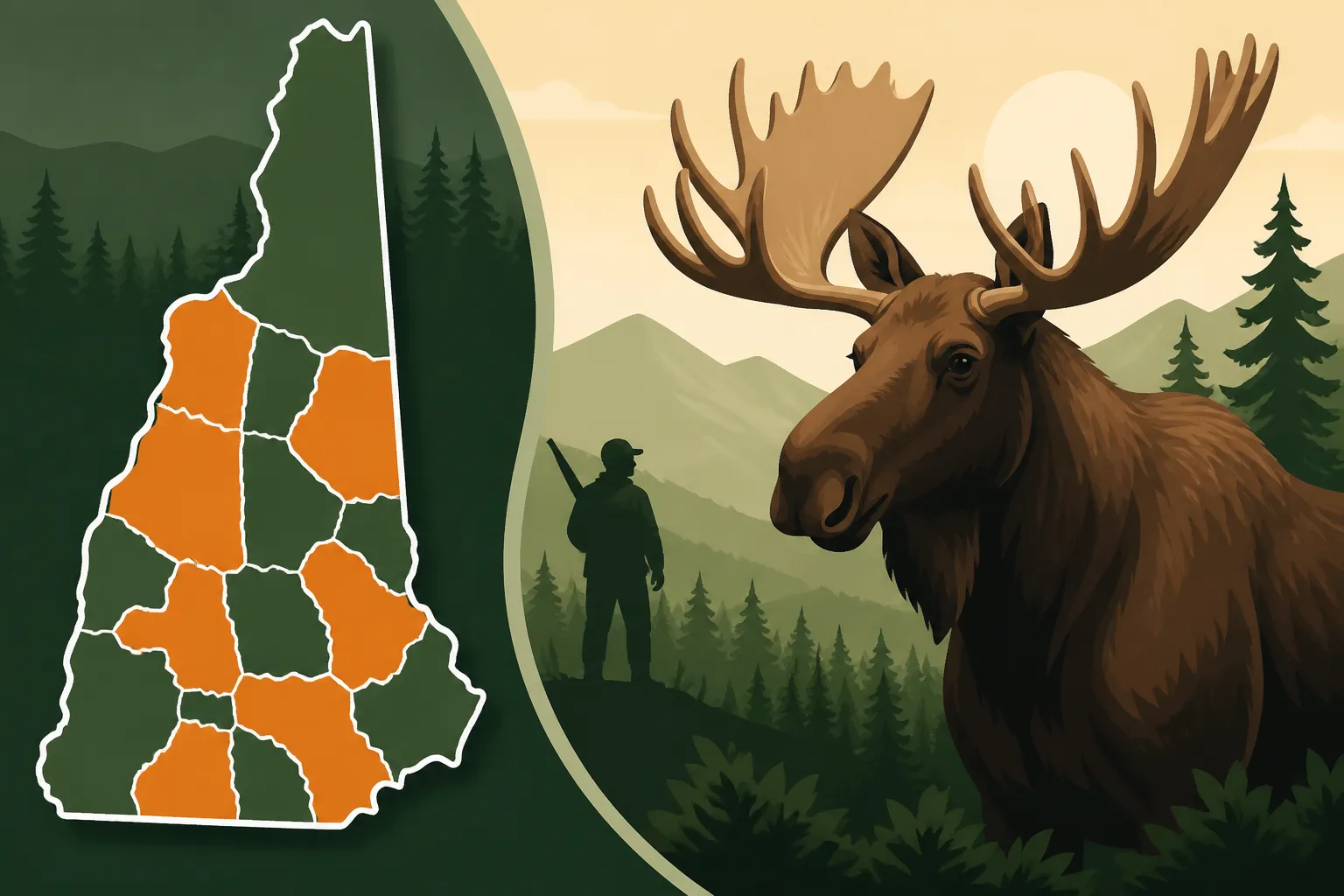
New Hampshire is a diverse state, from the rugged peaks of the White Mountains to rolling farmlands, and its Wildlife Management Units reflect that. When it comes to moose hunting, not all WMUs are created equal, and only eight of them are open to moose hunting through the lottery. Each of these WMUs presents its own unique landscape, moose density, and challenges, making your choice of WMU on the application a critical strategic decision. Understanding these distinctions is paramount, not just for applying, but also for planning a successful hunt if you are lucky enough to draw a tag.
North Country Powerhouses: WMU A, B, C
These WMUs represent the heart of New Hampshire's moose country, deep in the North Country where vast tracts of forest and wildlands dominate the landscape. This is where most hunters dream of drawing a tag, and for good reason: these areas generally boast higher moose densities and offer a true wilderness experience.
WMU A is perhaps the most iconic, covering the northernmost tip of New Hampshire, including the Connecticut Lakes Region and bordering Canada. This is big, wild country – vast timberlands, dense conifer swamps, and sprawling bogs. Vehicle access can be limited in many areas, requiring hunters to be prepared for extensive foot travel, ATVs, or even canoes to reach prime moose habitat. Moose in WMU A thrive in the mosaic of logging cuts and mature forests. If you draw a tag here, be ready for a physically demanding hunt, but one that offers incredible solitude and a high probability of encountering moose, particularly mature bulls. This area is often highlighted when people talk about Moose Hunting New Hampshire's North Country.
WMU B is adjacent to A, stretching further south but still firmly within the traditional "North Country" definition. It includes large portions of Coos County, with a mix of industrial timberlands, state forests, and private holdings. WMU B offers a slightly more varied landscape than A, with some significant elevation changes, but still holds excellent moose populations. Hunters in B often find success by focusing on areas with regenerating clear-cuts, beaver flowages, and logging roads. The sheer size of these areas means scouting is critical, and knowing how to read topo maps and utilize GPS apps like GoHunt is invaluable for understanding property boundaries and terrain.
WMU C extends further southeast from WMU B, still very much North Country, but beginning to transition towards more mixed forest types. It encompasses parts of the White Mountain National Forest and various private timber holdings. While moose densities might be slightly lower than in the extreme northern WMUs, C still offers fantastic opportunities. Hunters here need to be adept at navigating more rugged, mountainous terrain in some areas, focusing on saddles, benches, and the edges of dense cover where moose seek refuge. Successful hunting in WMU C often involves patience and a willingness to explore different elevations and habitat types.
Transitional Zones: WMU D1, D2, E
As you move south from the pure North Country, these WMUs present a mix of traditional moose habitat and areas with increasing human presence, making the hunting experience distinct.
WMU D1 covers the Lakes Region and the eastern side of the White Mountains, encompassing a diverse landscape of mixed hardwoods and softwoods, numerous lakes, and small towns. Moose here are still plentiful, but their patterns might be more influenced by human activity and residential areas. Hunters need to be especially mindful of private property boundaries and safety zones. Successful tactics in D1 often involve hunting near swamps, old orchards, and beaver ponds in areas with good cover, often requiring more nuanced scouting to locate pockets of undisturbed habitat. This unit can offer excellent moose hunting but demands a different approach than the vast wilderness of the far north.
WMU D2 lies west of the White Mountains, stretching into the Connecticut River Valley. This WMU features a blend of agricultural lands, river bottoms, and forested hills. While moose aren't as dense as in WMU A or B, they are present and can be quite large. Hunters often find success by targeting the transition zones between agricultural fields and dense forest, as well as the thick cover along river corridors and wet areas. Access here is generally better than in the deep North Country, but navigating private land ownership and gaining permission, if necessary, becomes a more significant factor. Knowing your specific hunting locations, like Hunting a Beaver Flowage Edge, is key here.
WMU E sits at the heart of the White Mountain National Forest, characterized by dramatic elevation changes, rugged terrain, and extensive coniferous forests at higher elevations. Moose here are often found in the valleys, along logging roads (where permitted), and in regenerating clear-cuts. While the scenery is breathtaking, the hunting can be physically grueling. Moose densities might be lower overall due to the high-elevation habitat, but the reward of harvesting a moose in such an iconic landscape is immense. Hunters in WMU E must be prepared for steep climbs, variable weather, and the potential for long hauls out of rough country. Good physical conditioning and robust gear are not just recommended, they're essential.
Southernmost Opportunities: WMU F, G
These two WMUs represent the southernmost extent of New Hampshire's moose hunting opportunities. While moose are less abundant here than in the northern WMUs, drawing a tag in F or G still presents a fantastic, albeit different, challenge.
WMU F covers parts of the Monadnock Region in southwestern New Hampshire. This WMU is characterized by rolling hills, mixed hardwoods, smaller forest blocks, and more residential development. Moose here are truly adaptable, often living in close proximity to human activity. Hunting in F requires meticulous scouting to find the secluded pockets of habitat where moose feel safe, such as dense cedar swamps, overgrown clear-cuts, and unfragmented forest parcels. Permission to hunt on private land can be crucial in this WMU, as public land access is more limited. Hunters in WMU F often focus on areas with abundant browse and water sources, knowing that moose here can be more nocturnal and wary.
WMU G is located in the southeastern part of the state, bordering Massachusetts, and represents the absolute edge of moose range in New Hampshire. Moose populations here are the lowest of the eight permit WMUs, and the landscape is highly fragmented by development. However, permits are issued for WMU G, offering a rare chance for a local hunter. Success in G hinges entirely on extensive pre-season scouting and often requires knowing a specific animal's patterns. Hunters will need to identify isolated wetlands, brushy thickets, and remote wooded corridors that provide cover and food. The challenge in WMU G is not just finding a moose, but finding a legal moose in an area where they might be sparse and incredibly difficult to pattern. It truly is a testament to the resilience of the species and the persistent nature of hunters.
| WMU | General Location (Region) | Primary Habitat Type | Relative Moose Density | Typical Terrain Challenges | Key Hunting Considerations |
|---|---|---|---|---|---|
| A | Far North (Connecticut Lakes) | Vast Timber, Bogs, Conifer | Highest | Remote, Limited Access | Wilderness hunt, physical |
| B | North Country (Coos County) | Timberlands, Mixed Forest | High | Moderate, varied | Logging roads, clear-cuts |
| C | North Country (White Mtns Fringe) | Mixed Forest, Rugged Terrain | High-Moderate | Steep, mountainous | Elevation changes, scouting |
| D1 | Lakes Region/East White Mtns | Mixed Hardwoods, Lakes | Moderate | Rolling hills, developed | Private land, human activity |
| D2 | Connecticut River Valley | Farm/Forest, River Bottoms | Moderate | Flat to rolling | Access, private parcels |
| E | Central White Mountains | High-Elevation Conifers | Moderate-Low | Very steep, rugged | Extreme physical demand |
| F | Monadnock Region (SW NH) | Mixed Hardwoods, Fragmented | Low | Rolling hills, developed | Private land access, wary moose |
| G | Southeastern NH (MA Border) | Fragmented Forest, Wetlands | Lowest | Highly developed, small blocks | Intensive scouting, specific animals |
Navigating the Unique Challenges of Each WMU
Drawing a New Hampshire moose permit is a significant achievement, but the real work begins when you start to plan your hunt within your assigned WMU. Each of the eight permit areas, while offering the same coveted opportunity, presents a distinct set of challenges that can make or break your hunt. It's not enough to simply know where moose live; you need to understand the practical realities of hunting that specific landscape.
Terrain and Access Differences
The varied geography of New Hampshire plays a huge role in how you approach a moose hunt. In the North Country WMUs like A, B, and C, you'll likely encounter vast, unroaded tracts of land, dense softwood thickets, and expansive beaver flowages. While this offers incredible solitude, it also means limited vehicle access. Hunters often rely on ATVs on designated trails, or simply their own two feet, to get into remote areas. This necessitates being prepared for long walks, navigating through dense brush, and crossing wet, boggy ground. You might find yourself Hunting a New Hampshire North Country Moose Bog, which is an experience unto itself. The challenges aren't just in reaching your hunting grounds, but also in the monumental task of extracting a several-hundred-pound animal from deep within the woods.
As you move into the transitional and southern WMUs (D1, D2, E, F, G), the terrain might become less "wild" but presents different access issues. In areas like D1, D2, and F, you'll find more roads, but also more private land. Gaining permission from landowners becomes a critical skill. You might be hunting small woodlots adjacent to residential areas, requiring extreme caution and a keen awareness of property lines and safety zones. The White Mountain National Forest (WMU E and parts of C) offers extensive public land, but it's famously rugged with steep inclines and rocky terrain. Hunters here need to be in excellent physical condition and prepared for true mountain hunting. Regardless of the WMU, reliable navigation tools, like the GoHunt app which can show you land ownership and access points, are absolutely essential.
Moose Density and Habitat Variations
While the permit numbers for each WMU are calculated based on moose populations, the density of moose within those units can vary significantly, directly impacting your hunting strategy. In WMUs A and B, moose densities are higher, meaning you're more likely to encounter moose sign and potentially multiple animals during your hunt. Here, covering ground and looking for fresh browse, tracks, and rubs in regenerating clear-cuts, along stream bottoms, and around swamps is a highly effective tactic. A prime example would be Reading a New Hampshire Mud for Fresh Deer Movement, which applies equally well to moose. Moose in these areas also benefit from expansive, interconnected habitat.
In contrast, WMUs F and G, and even parts of D1 and D2, have lower moose densities. This means you’re not just looking for any moose, but often a specific moose that you've patterned during your scouting. The habitat is more fragmented, with moose utilizing smaller, more isolated pockets of cover and food. This requires a more surgical approach: identifying key bedding areas, water sources, and travel corridors. Hunters might spend more time glassing specific areas from a distance, or focusing on calling techniques that draw a reluctant bull from thick cover, such as Calling a Bull Moose in Late October. Understanding the subtle habitat preferences of moose in these more settled areas is a skill developed through extensive scouting and observation.
Weather and Seasonal Considerations
New Hampshire's weather is notoriously fickle, especially during the fall moose season, which typically runs in October. The North Country can experience early snowfalls and freezing temperatures, while the southern WMUs might still be enjoying milder, rainy conditions. Being prepared for anything is not just a suggestion, it's a necessity. Early season hunts might be plagued by warm temperatures, making meat care a race against time, whereas late-season hunts can bring bitter cold, wind, and heavy snow, increasing the physical demands and complicating tracking.
Understanding how weather patterns affect moose behavior is also critical. A cold front after a period of warm weather can stir moose activity, while sustained heavy rain might put them down in thick cover. Knowing when to call a bull moose, or when to still-hunt quietly through a fresh snowfall, comes with experience. For example, Cold-Weather Sitting Strategy in the North Country details how important proper layering and equipment are when you're facing those crisp, frigid mornings that often yield great moose movement. The unpredictable nature of New Hampshire's autumn weather means your packing list needs to be comprehensive, covering everything from rain gear to insulated clothing, ensuring you're comfortable and safe regardless of what Mother Nature throws at you.
Improving Your Odds and What to Expect
Getting a New Hampshire moose permit truly feels like winning the lottery, because in many ways, it is. With thousands of applicants vying for a limited number of tags each year, the odds can feel stacked against you. But even within a lottery system, there are ways to think strategically and manage your expectations for this incredible opportunity.
Strategic WMU Selection
Choosing which WMU to apply for isn't just a random pick; it's a strategic decision that can subtly influence your chances and, more importantly, define the kind of hunt you'll have. While WMUs A, B, and C often have the highest moose populations and thus, sometimes, a few more permits, they also tend to attract the most applicants, particularly non-residents hoping for that quintessential North Country experience. This means the draw odds, despite higher permit numbers, might still be very low due to intense competition.
Conversely, applying for WMUs F or G might feel counter-intuitive given their lower moose densities, but they often have fewer applicants. This could, in theory, marginally improve your statistical chance of drawing a permit, though the hunting itself will be significantly more challenging. It's a trade-off: higher density and a classic experience versus potentially (and I stress potentially) slightly better draw odds in a harder-to-hunt area. Many seasoned applicants, especially those with a lot of preference points, will meticulously review the annual permit allocations and draw statistics to make an informed decision. Some even analyze the New Hampshire Moose Population Estimate trends to anticipate which WMUs might see shifts in permit numbers. It's a gamble, but a calculated one, and platforms like GoHunt can provide valuable data overlays to help with this analysis.
Realistic Expectations and Persistence
The single most important piece of advice for anyone applying for a New Hampshire moose permit is to cultivate realistic expectations and embrace persistence. This is not a hunt you "plan" to do next year with any certainty. It's a long game, often taking many years, sometimes even decades, to draw a permit. The average wait time for a resident with max preference points can still be significant, and for non-residents, it's even longer. The emotional rollercoaster of applying, hoping, and then receiving that "unsuccessful" notification year after year can be tough.
However, the reward is so immense that it keeps thousands of us coming back. Each unsuccessful application builds another preference point, bringing you one step closer. Think of it as an investment in a future dream. When you do finally draw that tag, it becomes one of the most anticipated and cherished hunting experiences of your life. It's not just about the harvest; it's about the journey, the anticipation, and the profound appreciation for the opportunity. Embrace the wait, enjoy the process, and know that persistence is key to ultimately living out that dream.
Utilizing Resources like GoHunt
In today’s digital age, hunters have access to an incredible array of resources that can help, from scouting to applying. For the New Hampshire moose lottery, one such valuable tool is GoHunt. While primarily known for its western draws and mapping capabilities, GoHunt can be incredibly useful for researching draw odds, permit statistics, and even understanding habitat trends across different WMUs in New Hampshire, if you dig into its data.
Beyond the lottery itself, once you do draw a tag, mapping apps become indispensable. GoHunt's mapping features can help you scout your assigned WMU virtually, identifying public land boundaries, potential access points, dense cover, water sources, and elevation changes. This is particularly crucial in the vast, often un-marked public lands of the North Country, or the fragmented private/public mix of the southern WMUs. You can layer satellite imagery with topographic maps, mark potential hunting spots, and plan entry and exit routes. This kind of detailed pre-season analysis, combined with boots-on-the-ground scouting, maximizes your chances of success and minimizes wasted time once you're actually in the woods. It turns a daunting landscape into a manageable hunting puzzle.
Essential Regulations Beyond Just the WMU
Drawing a moose permit for a specific WMU is just the beginning. New Hampshire has a comprehensive set of hunting regulations designed to ensure safety, conservation, and ethical hunting practices. Understanding these rules before you head into the woods is not just important for avoiding fines or penalties; it’s essential for respecting the resource and contributing to the positive image of hunters.
Tagging and Reporting Requirements
Once you've harvested a moose, the immediate priority, after ensuring the animal is dispatched safely and humanely, is to properly tag it. New Hampshire requires immediate tagging of the animal at the site of kill with the tag provided with your permit. This tag must remain attached to the moose until it is legally registered. This isn't just bureaucracy; it's a critical part of wildlife management, ensuring each harvested animal is accounted for and helps prevent illegal taking.
Beyond tagging, New Hampshire mandates that all harvested moose be reported to the Fish and Game Department. This can often be done online or through a designated check station, usually within 24 hours of harvest. Reporting provides vital data on harvest success rates, age and sex ratios, and overall population health, which directly informs future permit allocations and management decisions. Failing to tag or report your moose properly can result in significant penalties, including fines and the loss of hunting privileges. It’s a simple but absolutely critical step that every hunter must adhere to. The process is similar to Registering a New Hampshire Deer Online, though with specific moose requirements. Additionally, be aware of the exact New Hampshire Moose Season Dates for your permit.
Carcass Transport and CWD Prevention
New Hampshire is incredibly proud to remain a Chronic Wasting Disease (CWD)-free state, and a robust set of regulations is in place to keep it that way. CWD is a fatal neurological disease affecting deer, moose, and elk, and it can be devastating to wildlife populations. To prevent its introduction, New Hampshire has strict rules regarding the importation and transport of cervid (deer, moose, elk, caribou) carcasses or parts.
Generally, if you harvest a moose within New Hampshire, you are free to transport the carcass or parts within the state. However, if you were to hunt moose in another state or province where CWD has been detected (though not applicable for New Hampshire's moose permits themselves, it's a vital consideration for deer or elk hunters), you would be prohibited from bringing certain high-risk parts, such as the brain, spinal cord, eyes, spleen, and lymph nodes, back into New Hampshire. For a New Hampshire moose hunt, the main takeaway is to understand that the state is vigilant about CWD, and any unusual observations of your harvested animal should be reported. Always check New Hampshire's CWD Prevention Rules for the most current information. This proactive approach helps protect our healthy herds for future generations.
Weapon Restrictions and Safety
New Hampshire has specific regulations regarding the types of weapons legal for moose hunting. For firearms, this typically means centerfire rifles using ammunition designed for big game. Shotguns using slugs are also permitted, as are muzzleloaders. Archery equipment, including compound bows and crossbows (in the legal WMUs), is also allowed, provided they meet minimum draw weight and broadhead requirements. You can't just show up with any old rifle; it needs to be appropriate for dispatching such a large animal cleanly and ethically.
Safety is, of course, paramount. While not explicitly weapon-related, New Hampshire requires hunters to wear specific amounts of blaze orange during the firearms and muzzleloader seasons. This visibility requirement is designed to prevent hunting accidents. Beyond the legal requirements, hunters are expected to exercise extreme caution, identifying their target clearly, knowing what lies beyond, and always treating every firearm as if it were loaded. When you're out in the deep woods pursuing an animal as large and powerful as a moose, adherence to all safety protocols is not just a recommendation; it’s a life-saving practice. For broader safety considerations, always refer to the official New Hampshire Fish and Game digest, which outlines requirements for things like New Hampshire Hunter Education Requirements. Knowing New Hampshire Hunting Licenses and What They Cost is also a foundational aspect of legal hunting.
Planning Your Hunt After Drawing a Tag
Congratulations! You've beaten the odds and drawn a New Hampshire moose permit for one of the eight coveted WMUs. The real adventure is about to begin, but successful moose hunting is rarely spontaneous. It requires meticulous planning, physical preparation, and a deep understanding of what it takes to ethically harvest and process such a magnificent animal. This is where your dream really starts to take shape.
Pre-Season Scouting and Preparation
Drawing a tag is akin to receiving a golden ticket, but it's only the admission to the show; you still have to perform. The single most important factor for success after drawing a permit is extensive pre-season scouting. This means getting boots on the ground in your assigned WMU well before the season opens. Moose are creatures of habit, and they utilize specific habitats at different times of the year. Your goal is to identify feeding areas (browse, wetlands, specific clear-cuts), bedding areas (dense softwoods), and travel corridors between them. Look for fresh tracks, rubs on trees, and browse lines that indicate active moose presence.
Utilize mapping tools like GoHunt to mark potential hot spots, understand property lines, and plan out your access routes. Many successful moose hunters spend days, if not weeks, in their WMU during the summer and early fall, learning the terrain, installing trail cameras, and even practicing calling. Pay attention to water sources like beaver ponds and bogs, as moose are highly attracted to these areas. Remember that scouting isn't just about finding moose; it's about understanding the land so intimately that when the season arrives, you can navigate it confidently and efficiently. For instance, knowing how to interpret Scouting New Hampshire Public Land Before Season information can give you a significant advantage.
Logistics: Lodging, Guides, and Gear
A New Hampshire moose hunt, especially in the North Country WMUs, is a true expedition. Logistics are a huge part of the challenge. Consider your lodging: will you camp in the White Mountain National Forest, rent a cabin, or stay in a local motel? For the remote WMUs like A and B, self-sufficiency is key. You might be camping near your hunting grounds, which means you need reliable gear for cooking, sleeping, and staying warm in potentially harsh conditions. Packing for a Nine-Day Moose Hunt isn't just about clothes; it's about food, water, emergency supplies, and specialized tools.
Many first-time moose hunters, or those unfamiliar with the terrain, choose to hire a registered New Hampshire guide. Guides offer invaluable local knowledge, often have access to private lands, and can significantly increase your chances of success. They also bring crucial equipment for recovery and field dressing. If you plan to go it alone or with a small party, ensure everyone is well-equipped. This means reliable rifles or bows, quality optics (binoculars, rangefinders), navigation devices, a first-aid kit, and a heavy-duty pack frame for hauling meat. Don't underestimate the physical demands; a moose hunt is not a walk in the park.
Field Dressing and Meat Care
This is arguably the most critical and often underestimated aspect of a New Hampshire moose hunt. Once you've successfully harvested your moose, the real work begins: field dressing and meat care. A bull moose can weigh upwards of 1,000 pounds, and a cow can be 600-800 pounds. Getting that much meat cooled down and out of the woods quickly is paramount, especially if temperatures are mild. The clock starts ticking the moment the animal is down.
You'll need sharp knives, a bone saw, game bags, and a plan for quartering the animal in the field. Many hunters in the North Country quarter the moose on-site, packing out the meat in specialized backpacks or using ATVs or trucks on accessible trails. The sheer volume of meat means you need a robust plan for transport and processing. Having large coolers filled with ice ready at camp or a nearby vehicle is crucial. Don't forget about the hide, head, and antlers if you plan to taxidermy. Learning how to properly Field Dressing a Moose in the North Country is a skill you'll want to review extensively beforehand. Mismanaging the meat can lead to spoilage, which is a heartbreaking outcome after such an incredible effort. You can also review tips for Packing Out a New Hampshire Moose to get your animal from the field to the freezer efficiently. Respect the animal by taking every measure to ensure its meat is properly cared for.
Disclaimer
Please note that hunting regulations, season dates, and permit requirements are subject to change annually by the New Hampshire Fish and Game Department. Always consult the most current official New Hampshire Hunting Digest or visit the New Hampshire Fish and Game Department website before planning any hunting trip to ensure you have the most up-to-date and accurate information. This guide is for informational purposes only and should not be considered a substitute for official regulations.