New Hampshire Buck Age Structure
New Hampshire buck age structure tracks male deer distribution across specific age classes from yearlings to mature adults to evaluate herd health.

New Hampshire buck age structure tracks male deer distribution across specific age classes from yearlings to mature adults to evaluate herd health.

Photoperiod controls the white-tailed deer rut in New Hampshire, while weather and buck-to-doe ratios influence daily behavior.
New Hampshire deer record criteria, scoring processes, and measurement standards explain how trophy bucks qualify for state and national books.

New Hampshire white-tailed deer hunting strategies explain how age, genetics, and nutrition impact trophy buck potential.
Southern New Hampshire deer density explains localized populations, habitat fragmentation, and hunting strategies for suburban and agricultural landscapes.
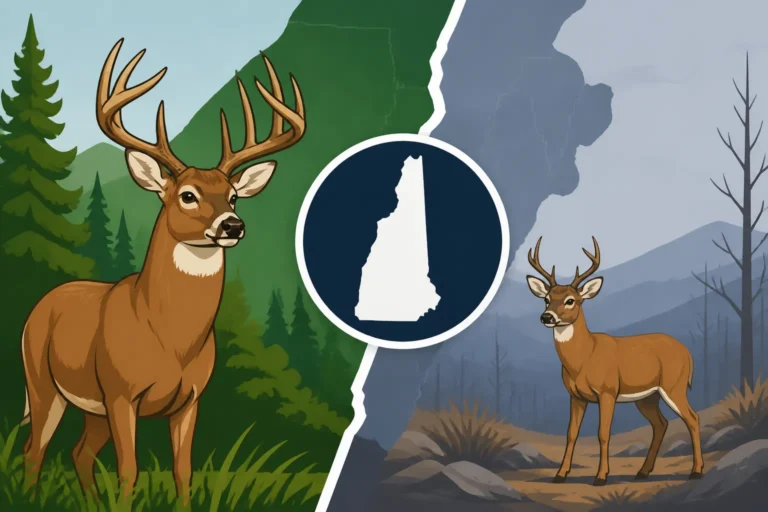
Northern New Hampshire white-tailed deer are smaller because short growing seasons, deep snow, and predators limit their growth.
New Hampshire wildlife management units offer distinct potential for finding mature deer through age and nutrition factors.
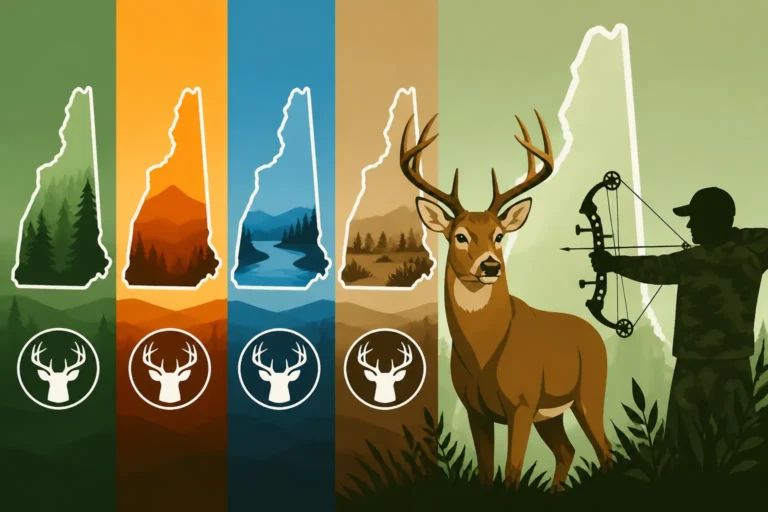
New Hampshire Wildlife Management Unit deer harvest data and population factors explain regional hunting success patterns and statistics.
New Hampshire annual deer harvest statistics track white-tailed deer legally taken by hunters during archery, muzzleloader, and firearms seasons.

New Hampshire deer herd population estimates and management methods explained using harvest data, surveys, and scientific modeling.