Best Muzzleloader for the Ten-Day Season
New Hampshire's ten-day muzzleloader season often feels like a secret window into deer hunting, a brief pause between the archery rush and the full-on firearms frenzy. It's a challenging, rewarding period, often marked by crisp air, falling leaves, and sometimes even the first dusting of snow. But it also presents a unique set of considerations when it comes to gear, and choosing the best muzzleloader for these specific conditions can make all the difference in your success and enjoyment.
Navigating New Hampshire's Muzzleloader-Only Season
That ten-day window for muzzleloader hunting in New Hampshire isn't just a random slot on the calendar; it's a strategic period that offers hunters a chance to pursue deer with a specific kind of challenge. For many, it's a coveted time, especially after the initial peak of the archery season and right before the woods fill up with more firearms hunters. Understanding the nuances of this season is crucial before you even pick out your smoke pole.
The Special Appeal of the Ten-Day Window
Think about it: you've likely spent weeks, maybe months, preparing for deer season. Archery hunters have had their shot, and while the rut might be kicking into high gear, the woods aren't yet saturated with the full pressure of the general firearms season. This brief muzzleloader period offers a unique blend of challenge and opportunity. You're hunting during a time when deer activity is often high, driven by the breeding season, but the deer haven't been as heavily pressured by hunters with high-powered rifles. This can translate to more natural deer movement and a different kind of hunting experience. The sound of a single muzzleloader shot, followed by a puff of smoke, feels almost historical, connecting you to generations of hunters who relied on similar technology.
Plus, the weather can be incredibly varied. You might have mild, sunny days perfect for still-hunting, or cold, blustery mornings that demand serious layering and attention to detail to Keeping a Muzzleloader Dry in Late-Fall Rain. The ten-day season forces you to adapt, to be observant, and to truly engage with the environment. It's not just about the weapon; it's about the entire experience woven into this specific timeframe.
Key Regulations and Preparations
Before you even dream of a trophy buck, you absolutely need to be squared away on the rules. New Hampshire's Fish and Game Department outlines specific regulations for muzzleloader hunting, including legal weapons, projectile types, and even ignition systems. It’s not a "anything goes" situation just because it's a black powder gun. You'll need to know if your preferred rifle and load are compliant. For example, some states have restrictions on telescopic sights during muzzleloader season, though New Hampshire generally permits them. Always consult the current hunting digest for the most up-to-date information for New Hampshire Muzzleloader Season Dates.
Beyond the regulations, practical preparation is key. This isn't a modern cartridge rifle where you load a magazine and go. Muzzleloaders require careful loading procedures, meticulous cleaning, and plenty of practice. You need to be intimately familiar with your rifle, knowing its quirks and capabilities. Are you using a percussion cap, a 209 primer, or a flintlock? Each has its own rhythm and demands. And speaking of demands, make sure your New Hampshire Hunter Education Requirements are met; that's fundamental no matter what weapon you choose.
Knowing your WMU (Wildlife Management Unit) is also vital. While the muzzleloader season generally applies statewide, always double-check the digest for any WMU-specific nuances, especially regarding deer reporting, like during Registering a New Hampshire Deer In Person During the Blackout Days.
The Modern Workhorse: In-Line Muzzleloaders
When most folks talk about "muzzleloaders" today, especially for hunting, they're typically thinking of an in-line design. These rifles have revolutionized black powder hunting, bridging the gap between historical tradition and modern firearm performance. For New Hampshire's ten-day season, an in-line muzzleloader is often the most practical and reliable choice for many hunters.
Why In-Lines Are So Popular
The appeal of modern in-line muzzleloaders is undeniable, largely due to their enhanced reliability, accuracy, and ease of use compared to their traditional counterparts. Imagine sitting in a freezing treestand in mid-November, with a light drizzle turning to sleet. With a traditional percussion cap system, you might be worrying about a misfire due to moisture. An in-line, with its sealed breech and 209 primer ignition, offers significantly better weather resistance. This means less anxiety about your primer getting damp and more focus on the hunt itself.
Accuracy is another huge factor. Many in-line muzzleloaders can achieve accuracy comparable to centerfire rifles at reasonable hunting distances, thanks to modern barrel manufacturing, rifling, and the use of saboted projectiles. This allows for ethical shots out to 150 yards or even a bit more with practice, which can be a real advantage if you find yourself on a wider logging road or field edge in New Hampshire. Brands like CVA, Traditions, and Thompson/Center have made names for themselves in this space, offering reliable and accurate options that won't break the bank.
Here’s a quick look at why they stand out:
| Feature | In-Line Muzzleloader Advantages |
|---|---|
| Ignition | Uses 209 primers; highly reliable, better in wet weather. |
| Accuracy | Excellent, often comparable to centerfire rifles at hunting ranges. |
| Ease of Use | Simpler loading and cleaning processes. |
| Projectile | Designed for modern sabots and conical bullets. |
| Optics | Easily accommodates scopes, aiding precise shot placement. |
| Maintenance | Generally easier to disassemble and clean after shooting. |
Key Features to Look For in an In-Line
When you're trying to pick an in-line, there are a few features that really stand out, especially for hunting in New Hampshire's diverse terrain.
- Ignition System: Most modern in-lines use 209 primers, which are essentially shotgun primers. They offer consistent, powerful ignition, reducing misfires. Some models also feature an "accelerator breech plug" design that ensures even more consistent ignition, even in challenging conditions. This is a big deal when you've waited all season for a shot at a New Hampshire buck, and you don't want a "click" instead of a "bang."
- Barrel Material and Length: Stainless steel barrels offer superior corrosion resistance, which is a huge plus when you're out in the woods in late fall and battling moisture. A barrel length between 24 and 28 inches is a good sweet spot. It provides enough velocity for ethical shots without being so long that it's cumbersome to maneuver through thick timber or climb into a treestand.
- Breech Design: An easily removable breech plug is a godsend for cleaning. Black powder and its substitutes can be incredibly corrosive, and thorough cleaning after every use is non-negotiable. Some modern designs allow you to remove the breech plug by hand or with minimal tools, making cleanup much faster and less frustrating.
- Stock and Sights: A synthetic stock is generally preferred over wood for its durability and weather resistance. As for sights, many hunters opt for a scope on their in-line for better accuracy, especially if they anticipate longer shots or hunting in low light. A good quality Best Muzzleloader Scope for Timber Shots can dramatically improve your precision. However, fiber optic open sights are excellent for closer encounters in thick cover or for those who prefer a more traditional aiming method.
- Weight and Balance: You'll be carrying this rifle, possibly for miles, over uneven terrain. A lighter rifle, especially one that balances well in your hands, will feel much better by the end of the day.
When you're trying to figure out the best places to hunt during those ten precious days, especially if you're exploring new public land or navigating tricky elevation changes like in the White Mountains, tools like GoHunt can be invaluable for scouting and understanding terrain. This detailed topographical information can certainly influence your muzzleloader choice, perhaps favoring a slightly lighter model if you anticipate a lot of hiking.
Embracing Tradition: Flintlock and Percussion Cap Muzzleloaders
While modern in-line muzzleloaders dominate the market for their convenience and performance, there's an undeniable allure to hunting with a traditional muzzleloader. For some New Hampshire hunters, the challenge and historical connection of a flintlock or percussion cap rifle truly embody the spirit of the hunt. This path isn't for everyone, but for those who choose it, the rewards are profound.
The Charm and Challenge of Traditional Muzzleloaders
Hunting with a traditional muzzleloader — whether it's a flintlock sparking a pan of powder or a percussion cap igniting the charge — is a completely different experience. It's slower, more deliberate, and demands a greater connection to the mechanics of your rifle. There's a certain charm in hearing the distinct "thwack" of the flint hitting the frizzen, showering sparks into the pan, or the satisfying "pop" of a cap. It takes you back to a time when hunting was a primary means of sustenance, and the tools were simpler, yet incredibly effective in the right hands.
However, this charm comes with its own set of challenges. Traditional muzzleloaders are more susceptible to moisture, meaning a light rain or even heavy fog can turn your hunt into a frustrating battle against misfires. Ignition can be less reliable than with a 209 primer, and accuracy, while certainly sufficient for hunting, often requires more skill and a deeper understanding of powder charges and patched round balls. The loading process is slower, and reloading in the field for a follow-up shot is a skill unto itself. For a true traditionalist, these aren't drawbacks; they are part of the authentic experience. You learn patience, precision, and an appreciation for every single shot.
Choosing Between Flintlock and Percussion Cap
If you're leaning towards the traditional route, you'll generally be choosing between a flintlock and a percussion cap system. Both offer a rich history and unique hunting experiences, but they differ significantly in their operation and reliability.
Flintlocks:
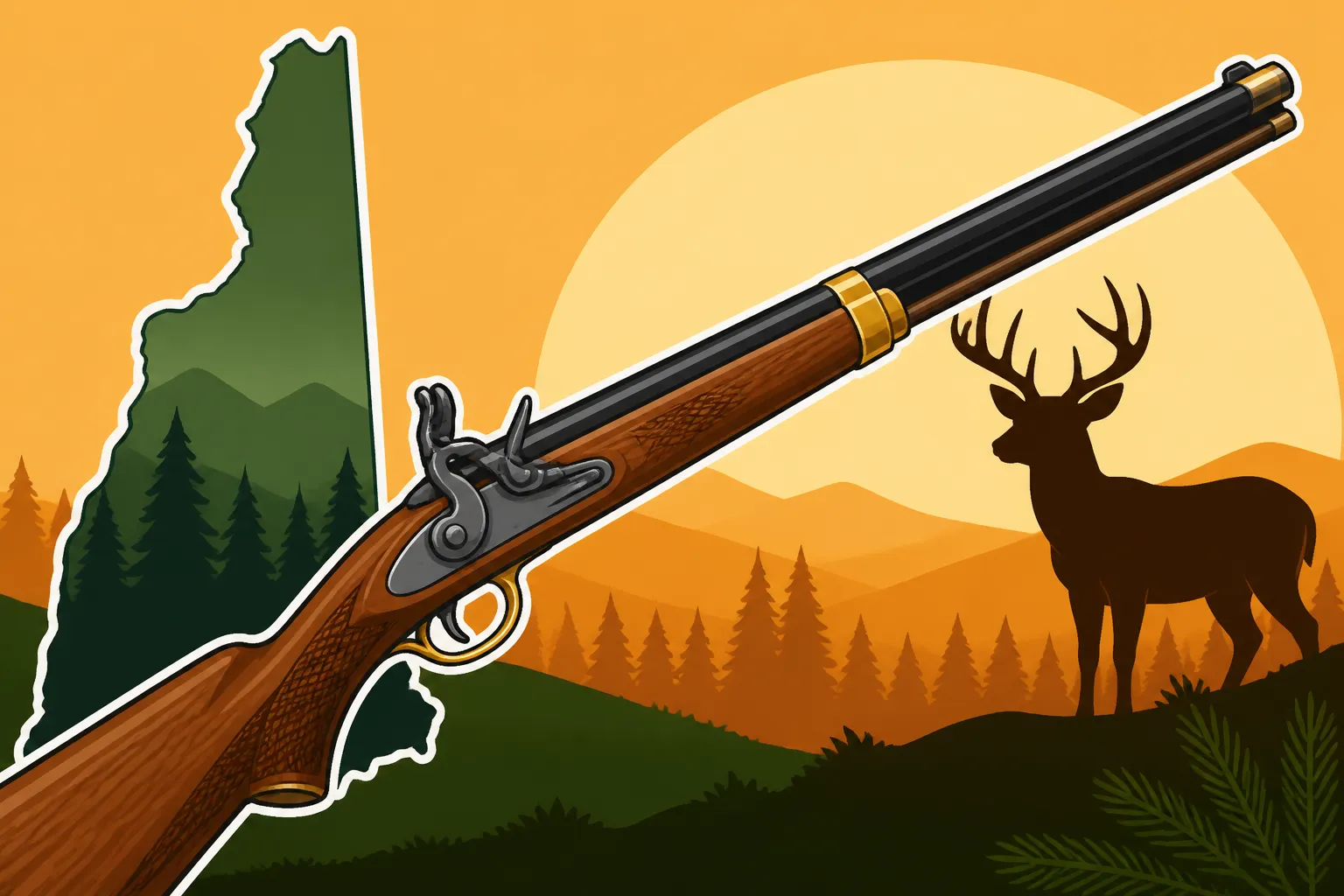
These are the oldest ignition systems still commonly used by traditional hunters. A piece of flint strikes a steel plate (frizzen), creating sparks that ignite a small amount of priming powder in the pan. The flame then flashes through a small hole (vent) into the main powder charge.
- Pros: Deep historical connection, incredible satisfaction when it fires, no need for manufactured caps or primers (just flint and powder).
- Cons: Most susceptible to moisture (a wet pan means no shot), slower lock time (the delay between trigger pull and main charge ignition), requires more careful maintenance of the flint and frizzen, generally less reliable ignition.
Percussion Caps:
Developed after flintlocks, percussion cap systems use a small, explosive cap placed over a nipple, which is then struck by the hammer. This creates a hot spark that ignites the main powder charge.
- Pros: More reliable ignition than flintlocks, especially in damp conditions, faster lock time, generally easier to use for beginners in traditional muzzleloading.
- Cons: Still susceptible to moisture if the cap isn't sealed well, requires carrying small, delicate caps, some feel it's less "traditional" than flintlock.
For hunting in New Hampshire, particularly during the often damp and chilly late fall, a percussion cap muzzleloader will generally offer more consistent ignition and less frustration than a flintlock. That said, if you're truly seeking the ultimate historical experience and are willing to embrace the additional challenges, a flintlock can be incredibly rewarding. Being able to pull up detailed maps and property lines, perhaps on an app like GoHunt, can help you visualize the kind of shots you might get and therefore what kind of traditional setup makes the most sense for your hunt – a quick-handling carbine for tight woods, or a longer rifle for open fields.
Beyond the Rifle: Ammunition, Optics, and Field Craft
Picking the right muzzleloader is just the beginning. To truly succeed during New Hampshire's ten-day season, you need to consider the ammunition you'll feed it, the optics you'll use to aim, and the critical field craft that ties it all together. This comprehensive approach ensures you're prepared for whatever the Granite State's woods throw at you.
Choosing Your Projectile and Powder
This is where the "load development" for your muzzleloader truly comes in, and it's a critical step that many new muzzleloader hunters underestimate. Unlike cartridge rifles where the ammunition is pre-assembled, you're building your load from scratch each time.
For modern in-line muzzleloaders, the most popular choices are:
- Saboted Projectiles: These consist of a smaller diameter bullet (like a .45 or .40 caliber) encased in a plastic sleeve (sabot) that allows it to be fired through a larger bore (.50 caliber is common). Sabots provide excellent accuracy and allow for the use of modern bullet designs, often with polymer tips for better ballistic coefficients and expansion. They are often the Best Sabot Weight for a Ten-Day Season in New Hampshire due to their versatility.
- Full-Bore Conicals: These are larger, heavier bullets that match the bore diameter, typically .50 caliber. They hit hard and are excellent for close-range power. They might not offer the same flat trajectory as sabots, but their energy transfer is impressive.
For traditional muzzleloaders, your options usually include:
- Patched Round Balls: A lead ball wrapped in a lubricated cloth patch, which seals the bore and engages the rifling. This is the classic traditional load, known for its decent accuracy at moderate ranges and easy loading.
- Conical Bullets: Heavier lead bullets designed to fit the bore, offering more knockdown power than round balls but often requiring more effort to load.
When it comes to powder, you'll likely be choosing between black powder and black powder substitutes. Real black powder is incredibly effective but requires special cleaning solvents and can be quite corrosive. Substitutes like Pyrodex, Triple Seven, or Blackhorn 209 offer similar performance with easier cleanup and less corrosiveness. Always match your powder to your rifle's specifications and never mix different types. Starting with a moderate charge and working your way up while observing accuracy is the best approach.
Optics and Sighting Systems
Your sighting system is just as important as the rifle itself. While open sights are perfectly viable for closer shots, many hunters opt for magnification for greater precision, especially in the varied terrain of New Hampshire where shots can sometimes stretch beyond a deer's comfort zone with open sights.
- Scopes: A low-power variable scope (e.g., 2-7x, 3-9x) is a popular choice for in-line muzzleloaders. It provides enough magnification for distant shots but can be dialed down for quick target acquisition in dense cover. Durability and light-gathering capabilities are key, as you might be hunting in low light at dawn or dusk. Choosing a scope specifically designed to withstand the unique recoil of a muzzleloader is also a good idea. For hunting in New Hampshire's dark timber, consider a Best Muzzleloader Scope for Timber Shots with excellent low-light performance.
- Red Dot Sights: These offer extremely fast target acquisition and are excellent for close-to-moderate ranges in thick woods. They're not magnified, but the single red dot makes aiming intuitive and quick. They are also generally robust and hold up well to weather.
- Fiber Optic Sights: If you prefer open sights, look for fiber optic models. The bright, glowing pins are much easier to see in low light or against dark backgrounds than traditional iron sights.
Regardless of your choice, practice is paramount. You need to know exactly where your chosen load shoots at various distances with your chosen sighting system. Rangefinders for New Hampshire's White Mountain Ridge Shots can be invaluable for confirming distances.
Essential Field Craft for Muzzleloader Hunting
Beyond the hardware, your hunting skills and preparation are what truly make the difference.
- Practice, Practice, Practice: This cannot be overstated. Muzzleloaders have a different recoil, sound, and loading process than cartridge rifles. Spend time at the range, practicing loading and firing until it becomes second nature. Practice from various positions you might encounter in the field – off-hand, kneeling, using a rest.
- Weather Protection: This is especially critical for muzzleloaders. Moisture is their enemy. Invest in a good quality gun cover or sleeve, and make sure your primers or caps are well-protected. Some hunters even carry spare primers in a waterproof container. You've gone through the trouble of Keeping a Muzzleloader Dry in Late-Fall Rain; don't let a sudden downpour ruin your hunt.
- Loading and Reloading: Know your loading sequence by heart. Measure your powder precisely, seat your projectile firmly but without deforming it, and ensure your primer or cap is properly seated. Practice a speedy, quiet reload for the rare but possible follow-up shot.
- Cleaning is Non-Negotiable: Because of the corrosive nature of black powder and its substitutes, cleaning your muzzleloader immediately after shooting is essential to prevent rust and damage. Develop a thorough cleaning routine and stick to it.
- Scouting and Understanding Your Terrain: New Hampshire offers incredibly diverse hunting opportunities, from the dense timber of the North Country to the rolling hills and farmlands of the southern regions. Scouting with detailed maps, perhaps utilizing the advanced mapping layers on an app like GoHunt, can help you identify prime hunting areas and understand potential shot distances. This kind of preparation helps you anticipate where you might encounter deer and what kind of shot you might get, ensuring your muzzleloader choice and load are appropriate. Reading Aerial Photos for North Country Deer can reveal hidden funnels and bedding areas.
- Tracking Skills: Muzzleloader hunting often means slower bullet velocities compared to modern rifles, which can sometimes lead to different wound channels. Honing your Blood Trailing After Dark in New Hampshire skills, and being patient after the shot, is crucial for successful recovery.
Choosing the best muzzleloader for New Hampshire's ten-day season is a personal journey, blending technical considerations with your desired hunting experience. Whether you lean towards the modern efficiency of an in-line or the classic challenge of a traditional rifle, thorough preparation, understanding the regulations, and dedicated practice will put you in the best position for a successful and memorable hunt in the Granite State.
Disclaimer
This article is for general informational purposes only and does not constitute professional advice. Laws, prices and regulations vary by location and change over time. Consult a qualified professional for guidance on your specific situation.