Still-Hunting White Mountain National Forest Timber
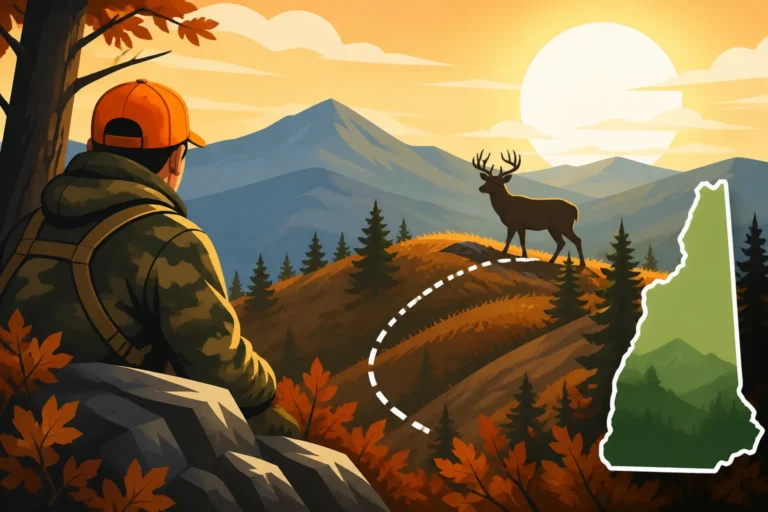
The vast, rugged expanse of the White Mountain National Forest (WMNF) can feel utterly overwhelming to a deer hunter. You’re not just looking for a deer; you’re looking for a needle in a haystack, often on a steep, rocky slope, miles from the nearest road. The frustration of endless walking without seeing game, or worse, spooking a deer you never even knew was there, is a common experience. This guide is dedicated to breaking down the art and science of still-hunting in the WMNF timber, transforming those daunting challenges into actionable strategies to find success in New Hampshire's demanding backcountry.
Understanding the White Mountain National Forest Environment
Hunting the White Mountain National Forest isn't like hunting woodlots or farm fields. It's an immersive experience in truly wild, often unforgiving, terrain. The sheer scale and unique characteristics demand a different mindset and approach.
Unique Challenges of Mountain Hunting
When you step into the WMNF, you're not just entering a forest; you're entering a dynamic, vertical landscape. Elevations can change rapidly, from river valleys to high ridges, often within a short walking distance. This creates complex wind patterns, varying temperatures, and diverse vegetation that profoundly impact deer movement and your hunting strategy. The ground itself is frequently littered with granite rocks, tangled blowdowns, and thick underbrush, making silent movement a constant battle. It’s physically demanding, and the quiet patience required for still-hunting is regularly tested by the urge to just get somewhere. But it's precisely this patience that separates the successful hunter from the one who just walks miles.
Beyond the physical, the WMNF is public land, meaning you'll share it with other hunters, hikers, and outdoor enthusiasts. This pressure can push deer into even thicker, nastier cover, forcing you to go deeper and hunt smarter. Understanding where other hunters don't want to go is often key to finding undisturbed game. You need to be prepared for longer hauls, more strenuous climbs, and the potential for a full day's work to recover an animal, especially if you're not familiar with New Hampshire's CWD Prevention Rules.
Common Habitat Types and Deer Behavior
The WMNF boasts a mosaic of habitat types, each influencing how deer live and move. Lower elevations and river bottoms often feature mature hardwoods like oak, maple, and beech, which provide critical mast crops. Here, deer will browse on fallen acorns or beechnuts, especially in years with good mast production. These areas might also have some older clear-cuts that have grown into dense, regenerating timber, providing fantastic bedding and thermal cover. When Hunting After a Poor Acorn Year, deer might be pushed towards softwood stands or areas with browse.
As you gain elevation, the forest often transitions to mixed growth or predominantly softwoods like spruce, fir, and hemlock. These dense evergreen stands offer crucial thermal cover during harsh winter months and fantastic bedding areas year-round. Deer will often utilize these dense thickets for security, especially when pressured. Ridges and saddles, which serve as natural travel corridors, can be a mix of hardwoods and softwoods. Identifying these transition zones and understanding how deer use them for feeding, bedding, and travel is paramount. A good mapping app, like those available through a GoHunt subscription, can help you dissect these habitat types before you even lace up your boots.
Mastering the Art of Still-Hunting in Timber
Still-hunting is less about speed and more about awareness. It’s a deliberate, slow, and methodical process of moving through the woods, stopping frequently to observe, listen, and scan your surroundings. It's often misunderstood as simply "walking slowly," but it's much more nuanced.
The Pace and Awareness of Still-Hunting
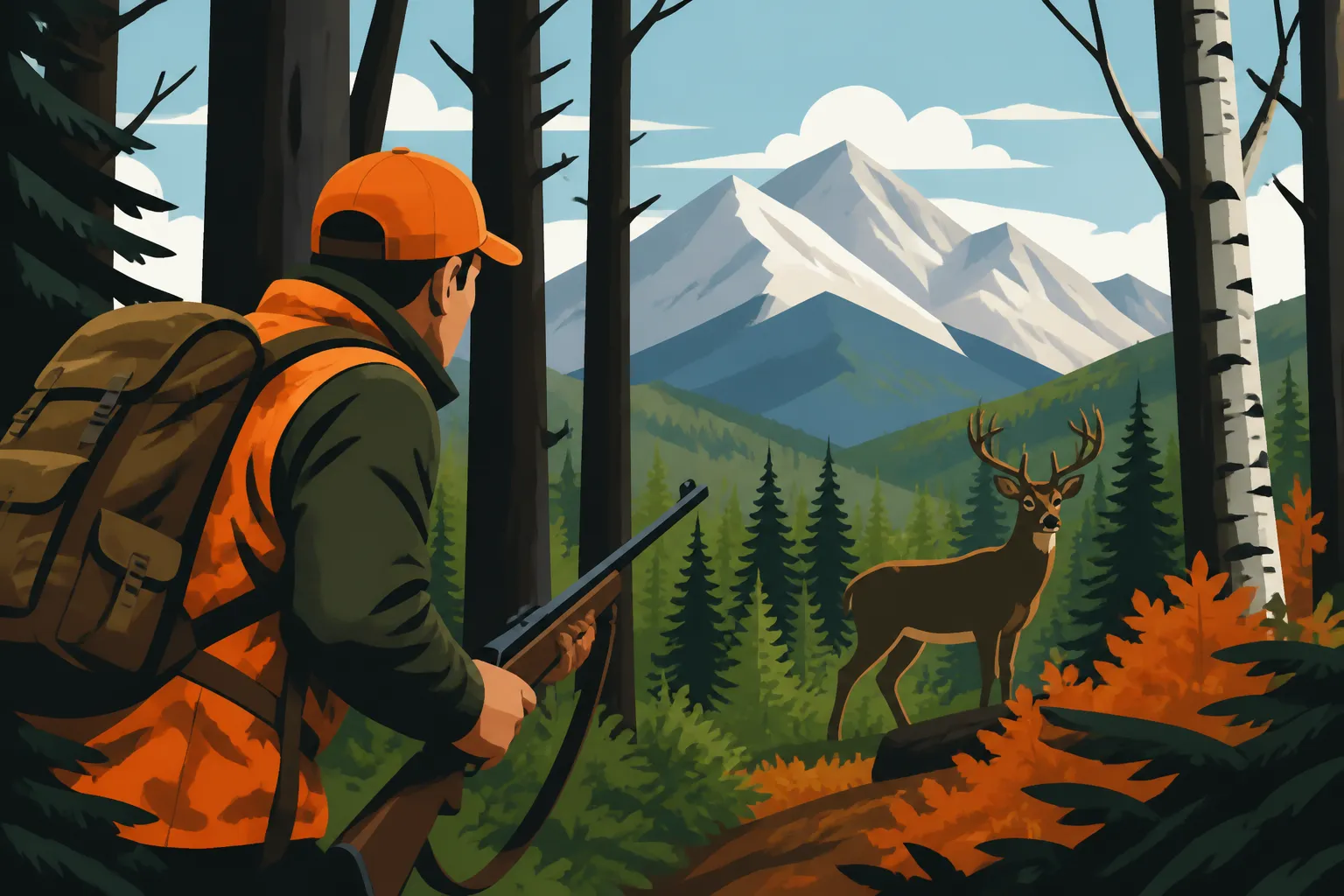
The core principle of still-hunting is to move so slowly and deliberately that you can effectively see a deer before it sees you, or at least before it spooks. Imagine taking 10 steps, then stopping for 5-10 minutes, maybe even longer. During those stops, you're not just resting; you're actively hunting. Your eyes should be constantly scanning for parts of a deer: an ear flick, the horizontal line of a back against vertical trees, the darker patch of a deer's leg, or even the subtle glint of an antler. Use your binoculars to pick apart dense cover. It’s amazing what you can resolve with good optics once you train your eye to look for anomalies.
Your ears are just as important. Listen for the rustle of leaves that isn't wind, the snapping of a twig, or even the soft breathing of an animal. The WMNF can be notoriously noisy underfoot, especially in dry autumns with crisp leaves. Choose your steps carefully, aiming for mossy patches, bare earth, or smooth rocks whenever possible. If you must step on leaves, do it slowly, rolling your foot from heel to toe to minimize crunch. This slow, almost meditative pace allows you to cover ground effectively while maximizing your chances of detecting game. When you're Still-Hunting White Mountain National Forest Timber, every single step matters.
Using Wind and Thermals to Your Advantage
In the mountains, wind and thermals are your best friends or your worst enemies. Deer have an incredible sense of smell, and a misplaced scent cone will guarantee a blown opportunity. Understanding Wind and Thermals in Steep Granite Terrain is critical. In mountainous areas, thermals are localized air currents caused by temperature differences. In the morning, as the sun warms the earth, air rises, creating an updraft (thermals going uphill). In the evening, as the air cools, it sinks, creating a downdraft (thermals going downhill).
This means you should generally hunt up in the morning, letting your scent blow behind you and below you, and hunt down in the evening, with your scent carried below you. Mid-day, when thermals are less predictable or swirling, can be challenging. Always carry a small wind checker to constantly monitor the wind direction. Puffs of milkweed fluff or a small bottle of scent-free powder are invaluable. Try to plan your route so the wind is in your face or quartering into you. This not only keeps your scent from reaching deer ahead but also carries their scent to you. Never hunt with the wind at your back, especially when still-hunting. It's a recipe for educating deer rather than harvesting them.
Key Gear and Preparation for WMNF Still-Hunting
The demanding nature of the White Mountain National Forest requires careful gear selection and thorough preparation. You don’t want to be caught unprepared miles from the nearest trail.
Essential Footwear and Clothing for Timber
Your feet are your most important tool in the WMNF, so good boots are non-negotiable. You need boots that provide excellent ankle support, waterproof protection, and aggressive traction for navigating steep, often wet, and rocky terrain. Look for boots designed for mountain hunting, perhaps from brands like Kenetrek or Schnee's, which are known for their ruggedness. Best Boots for White Mountain Granite Trails will be stiff-soled to reduce fatigue from uneven ground and have a high ankle to prevent sprains. Break them in well before the season. Blisters are a hunt-killer.
Clothing needs to be layered for temperature regulation, especially given the rapid changes in elevation and weather. You’ll be working hard, generating heat, but then stopping for extended periods, where you'll cool down quickly. A good layering system starts with a moisture-wicking base layer (merino wool is excellent), followed by an insulating mid-layer (fleece or down), and an outer shell that is waterproof, breathable, and quiet. Look for quiet fabrics that won't rustle loudly as you move. Don't forget quality wool socks, a warm hat, and gloves. Remember, New Hampshire mandates blaze orange during firearms season, so ensure your outer layers meet the requirements. Check out Layering for New Hampshire's Cold Hunting Season for more in-depth advice on keeping warm.
Optics and Navigation for the WMNF
For still-hunting in timber, quality optics are vital. Binoculars are your primary tool for picking apart cover and identifying game before it moves. A good 8x or 10x power is usually sufficient, with a 42mm objective lens for brightness in low light. Brands like Vortex, Leupold, or Maven offer excellent value. While you won't typically need a spotting scope for still-hunting, compact binoculars are indispensable. They allow you to spend less time moving and more time observing. Every time you stop, bring those binos up and methodically scan every nook and cranny.
Navigation in the WMNF can be tricky, even for experienced woodsmen. Cell service is spotty at best, and often non-existent in deep valleys or high ridges. Relying solely on your phone is a mistake. Always carry a physical map (USGS topo maps are ideal) and a compass, and know how to use them. Supplement this with a reliable GPS unit or a mapping app like GoHunt on your phone, downloaded with offline maps. Mark your truck, key terrain features, and any sign you find. This redundancy is crucial for safety. Before you even head out, spend time with aerial photos on your GoHunt app or other mapping software, studying contour lines and identifying potential funnels or bedding areas. Reading Aerial Photos for North Country Deer can give you a significant advantage.
Reading the Woods: Sign, Scrapes, and Rubs
Still-hunting is about more than just moving quietly; it’s about interpreting the story the deer leave behind. Every track, every disturbed leaf, every rub, and every scrape tells a part of that story.
Identifying Deer Movement Patterns
Deer are creatures of habit, and while their patterns change, certain tendencies remain. When still-hunting, you're constantly looking for clues about where deer are moving. Fresh tracks in soft dirt or mud, especially along old logging roads, creek bottoms, or game trails, indicate recent activity. Pay attention to the size of the track and whether it's singular (possibly a buck) or part of a group (likely does and fawns). Look for scuff marks on logs where deer have jumped over, or disturbed leaves where they’ve been browsing. Follow these subtle clues.
Deer often use specific terrain features as travel corridors, such as saddles between ridges, benches on steep hillsides, or the edges of different habitat types. A saddle, for instance, offers an easier path between two points than climbing straight over a peak. Hunting a Granite Ridge Saddle often proves fruitful because deer will naturally funnel through these areas. Look for parallel trails that are heavily used, indicating a bedding-to-feeding route. The presence of fresh droppings or urine can confirm recent activity. The more recent the sign, the closer you are to the deer.
Interpreting Rut Sign in the WMNF
When still-hunting during the rut, deer sign takes on a whole new meaning. Scrapes and rubs become invaluable indicators of where bucks are actively cruising for does. Scrapes are cleared patches of ground, often under an overhanging branch (the "licking branch"), where a buck deposits urine and scent from his forehead gland. Fresh scrapes, especially those actively maintained, are like calling cards. The soil will be moist, and the licking branch often appears frayed. Bucks will check these scrapes regularly, making them prime locations to still-hunt near.
Rubs are areas where bucks have scraped their antlers against trees, leaving visible marks on the bark. Fresh rubs will show moist wood underneath the bark, indicating recent activity. A line of rubs, often leading in a particular direction, is called a rub line and can reveal a buck's travel route. Larger rubs on bigger trees often suggest a more mature buck. During the peak of Hunting the Rut in Early-to-Mid November, bucks are less cautious, more focused on breeding, and often more vocal. Still-hunting near these signposts, especially downwind, can yield incredible results. Always be looking for Finding Sign in White Mountain Timber to piece together the puzzle of deer movement.
Adapting to Weather and Terrain Challenges
The White Mountain National Forest is renowned for its changeable weather and challenging terrain. A successful still-hunter must be prepared to adapt to whatever Mother Nature throws their way.
Navigating Steep Slopes and Ravines
Still-hunting steep terrain in the WMNF is a physical and mental test. Ravines, ledges, and rocky outcrops are common features. When moving up or down a steep slope, try to traverse horizontally as much as possible, or use switchbacks. This conserves energy and allows you to better control your footing and your noise. Always look for natural benches or breaks in the slope where deer might pause or travel. Deer will often choose the path of least resistance, just like you, but they are also masters of using topography for their advantage. They might bed on a steep sidehill where they can see and smell anything approaching from below or across.
When still-hunting a ravine, consider hunting parallel to the bottom, halfway up the slope. This allows you to look down into the bottom and up to the opposing ridge. Pay attention to how sound travels in these areas; echoes can be deceiving. Always be aware of your footing. A twisted ankle miles deep in the WMNF is a serious emergency. Pack a small, lightweight first-aid kit that includes supplies for sprains and cuts. Your GoHunt app can often help identify these terrain features through its contour lines, allowing for better pre-hunt planning.
Dealing with Variable Weather Conditions
New Hampshire weather, especially in the mountains, can turn on a dime. A sunny, crisp morning can quickly become a driving rain or a heavy snowfall. This variability demands preparedness and adaptability. Rain or light snow can actually be a still-hunter's best friend. The precipitation dampens the forest floor, making silent movement much easier. The falling rain or snow also reduces visibility and muffles sounds, giving you an advantage against a deer's keen senses. Deer often continue to move and feed during light rain or snow, and they may even become more active as they try to get food before heavier weather sets in.
However, heavy rain, dense fog, or whiteout snow conditions can make hunting dangerous and visibility too poor to be effective. Know when to call it a day. In very cold, clear weather, the forest can be incredibly noisy underfoot. This is when patience and choosing your steps become even more critical. During colder periods, deer will often seek thermal cover in dense softwood stands, making those areas prime for still-hunting. Always dress in layers (as discussed previously) and carry extra dry clothes in a waterproof bag in your pack. A thermos of hot coffee or soup can be a morale booster on a cold, wet day.
| Weather Condition | Still-Hunting Strategy | Gear Considerations |
|---|---|---|
| Dry, Leafy Fall | Extremely slow pace, focus on bare spots, listen intently. Use wind to mask sound. | Quiet clothing, stiff-soled boots. |
| Light Rain/Snow | Move more freely, excellent for masking sound. Deer may be more active. | Waterproof outer layers, waterproof boots, lens covers for optics. |
| Heavy Wind | Hunt into the wind, use gust fronts to move. Deer often bed in sheltered areas. | Secure hat, layered clothing to prevent chilling. |
| Cold, Clear | Very noisy. Focus on thermal cover (softwoods), sun-warmed slopes. | Insulated layers, hand warmers, warm hat/gloves. |
| Fog | Great for stealth, but visibility is limited. Hunt cautiously, maintain bearings. | GPS/compass, bright blaze orange to be seen by other hunters. |
Safety and Ethical Considerations in the WMNF
Hunting in the White Mountain National Forest is a privilege that comes with significant responsibilities, both for your safety and for the preservation of the resource and the experience for others.
Blaze Orange Requirements and Visibility
Safety should always be your top priority, especially on public land like the WMNF where other hunters may be present. During the firearms season, New Hampshire law requires hunters to wear specific amounts of solid blaze orange. This isn't just a suggestion; it's a critical safety measure. You want to be visible to other hunters, especially when still-hunting and moving slowly through dense cover. Consider wearing more than the minimum requirement. A blaze orange hat and vest are wise choices. If you're carrying a pack, ensure your vest isn't covered by it.
In addition to wearing blaze orange, always identify your target absolutely before taking a shot. In thick timber, deer can appear and disappear quickly, and shadows can play tricks on your eyes. Use your binoculars to confirm antlers or the absence of them, and ensure you have a clear shot at the vitals with a safe backdrop. Never shoot at sound or movement alone. Ethical hunting means making a clean kill and a responsible shot. For specific regulations, refer to the New Hampshire Hunter Education Requirements and the annual hunting digest.
Encountering Other Users and Leaving No Trace
The WMNF is a multi-use area. You’ll encounter hikers, dog walkers, mountain bikers, and other outdoor enthusiasts. It's vital to be courteous and respectful. A simple nod or "hello" goes a long way. If you see someone approaching, make your presence known verbally to avoid startling them. Be especially mindful if you're hunting with a firearm; keep it pointed in a safe direction and perhaps sling it over your shoulder to present a less intimidating profile. Remember, you are an ambassador for hunters, and negative interactions can lead to increased restrictions down the line.
Finally, always practice Leave No Trace principles. Pack out everything you pack in, including spent shell casings, food wrappers, and anything else. If you harvest an animal, field dress it away from trails and water sources. Bury entrails if feasible and legal. Be mindful of flagging tape; remove it after you’ve used it to mark a blood trail or a route. The goal is to leave the forest as you found it, or even better, for the next person and for the wildlife that calls it home. Good New Hampshire Deer Camp Traditions often emphasize this respect for the land and for fellow outdoor enthusiasts.
Disclaimer
Hunting involves inherent risks, including injury and death. Always prioritize safety, adhere to all local, state, and federal laws and regulations, and obtain proper licenses and permits. This guide is for informational purposes only and does not substitute for professional instruction, proper research, or personal experience. The White Mountain National Forest terrain can be challenging; be prepared for adverse conditions and always inform someone of your hunting plans and expected return time.