Fixed Versus Mechanical Broadheads in Thick Cover
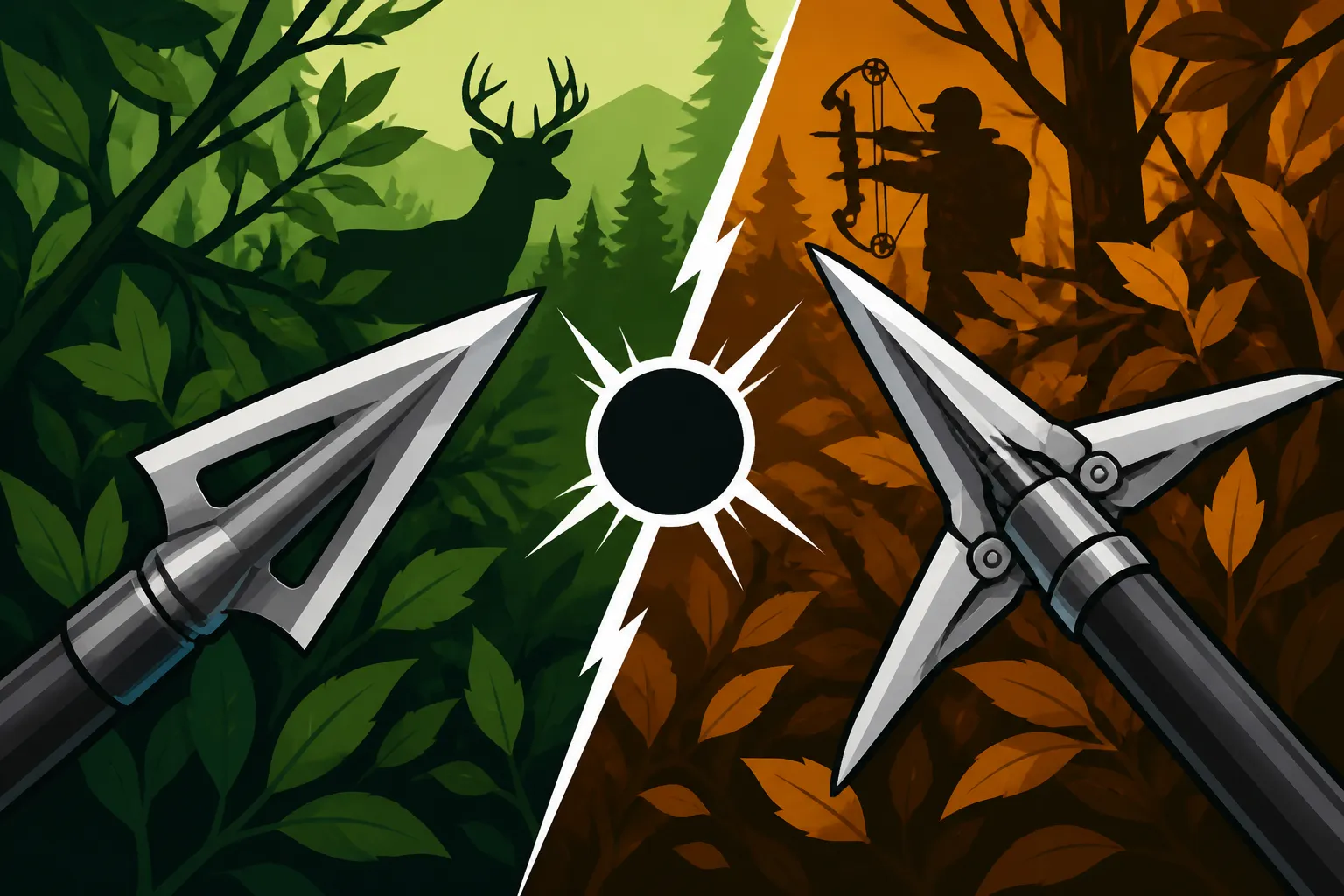
One of the biggest head-scratchers for a New Hampshire bowhunter, especially when you're geared up to navigate our thick stands of pine, gnarly blowdowns, or dense cedar swamps, is picking the right broadhead. You want something that flies true, hits hard, and creates a devastating wound channel, but what performs best when your arrow might glance a twig or smash through heavy brush? This guide is going to dive deep into the age-old debate of fixed blade versus mechanical broadheads, specifically through the lens of hunting our challenging New Hampshire cover.
Understanding Fixed Blade Broadheads in New Hampshire's Woods
For many of us who've spent decades chasing deer through the Granite State's varied terrain, the fixed blade broadhead feels like an old friend. It's reliable, it's simple, and it's been putting meat in the freezer for generations. But understanding why it works so well in thick cover goes beyond just tradition.
The Unyielding Reliability of Fixed Blades
Imagine you're tucked into a treestand, high above a deer trail winding through a dense patch of hemlocks in the Monadnock Region. A mature buck steps out, and you draw back. Your shot is true, but just before impact, a tiny, unseen branch deflects your arrow ever so slightly. With a fixed blade broadhead, its blades are always rigid, always deployed. There's no mechanism to fail, no parts to break or prevent opening. This inherent simplicity is its greatest strength in unpredictable environments. If that arrow hits a small branch or even a sapling before the deer, the fixed blades, while potentially causing a slight deflection, will generally maintain their integrity and be ready to cut upon contact with the animal. This unwavering reliability gives many hunters a peace of mind that's hard to beat, especially when hunting the gnarly, unforgiving woods of New Hampshire.
In thick cover, where every shot could potentially involve contact with a stray twig or a hidden vine, the fixed blade's design means one less variable to worry about. You're counting on solid steel, not springs or pivot points, to do its job. This is particularly crucial when you're hunting in areas like the White Mountain National Forest, where shot opportunities can be fleeting, and follow-up shots are often impossible due to the terrain and density of the woods. You need that first shot to count, and a broadhead that you trust implicitly is paramount. For a deeper dive into overall archery season strategies, check out Bowhunting New Hampshire's Long Archery Season.
Penetration Dynamics in Dense Vegetation
One of the most compelling arguments for fixed blade broadheads in thick cover is their superior penetration, particularly when facing resistance before hitting your target. Because the blades are fixed and form a part of the arrow's overall profile, they are designed to drive through obstacles, rather than fold back or open prematurely. Think about shooting through dense alder thickets along a beaver flowage or sending an arrow through the brushy edges of a clear-cut. A mechanical broadhead, designed to open on impact with soft tissue, might deploy its blades prematurely if it strikes even a light branch, losing energy and potentially failing to penetrate effectively into the animal.
Fixed blades, on the other hand, maintain a consistent cutting diameter from the moment they leave the bow. This means that even if they encounter some light brush, they continue to act as a solid, unified projectile. The energy from the bow is transferred efficiently into driving the broadhead forward, ensuring maximum penetration into the deer, even after a minor obstacle. This is especially important for Best Broadhead for New Hampshire Whitetails, where every inch of penetration can make the difference between a quick, ethical kill and a long, difficult track. The consistent flight and robust construction of many fixed blades also means they can withstand greater impact forces, which is a real concern when you're navigating the unforgiving New Hampshire woods.
Tuning Your Bow for Fixed Broadhead Accuracy
While fixed blades offer incredible reliability and penetration, they do demand a little more attention when it comes to bow tuning. Because of their exposed blades, fixed broadheads can catch more air during flight, potentially causing the arrow to plane or steer if your bow isn't perfectly tuned. This isn't a huge hurdle, but it's a critical step that some hunters might overlook. Proper tuning ensures that your field points and broadheads hit the same spot, which is absolutely essential for ethical hunting.
The process often involves checking your arrow rest, nock point, and cam timing to ensure your arrow leaves the bow perfectly straight. You might need to make small adjustments, or even try different spine arrows, to achieve "broadhead accuracy." It takes a bit of time on the practice range, but the confidence gained from knowing your fixed blades are flying true is invaluable. Resources like GoHunt often have forums or articles where experienced bowhunters share their tuning tips for different setups, which can be a real help. For those serious about consistency, spending that extra time before the season is a non-negotiable step. Without a properly tuned bow, even the best broadhead is just guesswork. If you want to refine this skill, consider reviewing Tuning a Bow for Broadhead Flight.
Mechanical Broadheads and Their Place in Thick Cover
Mechanical broadheads have certainly gained popularity over the years, and for good reason. They offer some distinct advantages, particularly in terms of flight characteristics and cutting diameter. However, when you're talking about hunting New Hampshire's thick, unforgiving cover, they also introduce a few unique considerations and potential drawbacks that every hunter needs to weigh.
Advantages of Mechanicals: Flight and Cutting Diameter
One of the biggest draws of mechanical broadheads is their field-point-like flight. Because their blades are tucked away during flight, they present a smaller profile, reducing aerodynamic drag and minimizing the effect of wind or minor tuning imperfections. This can lead to tighter groups at longer distances, giving archers more confidence in their shot placement, especially on the practice range. For those of us who might struggle with perfect bow tuning, mechanicals can often be more forgiving.
Beyond flight, mechanicals often boast a significantly larger cutting diameter once deployed compared to most fixed blades. A larger cutting diameter means a wider wound channel, theoretically leading to more blood loss and a quicker, more humane kill. This can also result in a more visible blood trail, which is a massive advantage when tracking a deer through dense New Hampshire cover where every drop of blood counts. When you are on a limited window to track a deer after a shot, a strong blood trail makes all the difference, especially when you might be Tracking a Deer in Fresh White Mountain Snow.
The Risk of Deployment Failure in Obstacles
Here's where the rubber meets the road when considering mechanical broadheads for thick cover: the risk of deployment failure. Mechanical broadheads are designed to open on impact with resistance, typically the hide and muscle of an animal. However, if your arrow brushes a branch, a sapling, or any other dense vegetation just before reaching the deer, those blades can deploy prematurely. When this happens, a few things can go wrong.
Firstly, premature deployment can cause the broadhead to lose a significant amount of kinetic energy before it even reaches the target. This can lead to insufficient penetration, resulting in a superficial wound rather than a pass-through. Secondly, if the blades deploy unevenly or get damaged by the brush, they might not open properly upon hitting the animal, essentially turning your broadhead into a glorified field point. This is a nightmare scenario for any hunter, especially when you're targeting an animal in areas like a dense cedar thicket or a clear-cut edge, where vegetation is constantly a factor. You want maximum effectiveness when you're working a cedar thicket for late-season deer. The intricate mechanisms, while offering advantages in flight, also introduce potential points of failure that fixed blades simply don't have.
Designing for Durability: Understanding Mechanical Blade Retention
Not all mechanical broadheads are created equal, and manufacturers have spent a lot of time and effort trying to minimize the risk of premature deployment. Different designs utilize various blade retention systems, from O-rings and collars to spring-loaded mechanisms, all aimed at keeping those blades tucked until they hit their intended target. Some brands specifically design "tough country" mechanicals, with thicker blades or more robust retention, trying to bridge the gap between fixed-blade durability and mechanical cutting diameter.
When choosing a mechanical, it's crucial to understand how its blade retention works and if it's truly designed to resist incidental contact with brush. Reading reviews and, if possible, testing them by shooting through light obstacles (like heavy cardboard with twigs taped to it, away from your target) can give you a better idea of their resilience. You want a broadhead that holds its blades firmly enough to resist brush, but releases them reliably on impact with game. This balance is key when you're relying on a mechanical to perform flawlessly in our dense New Hampshire woods, and something a service like GoHunt might detail in their gear reviews.
Comparing Performance: Fixed vs. Mechanical in New Hampshire's Habitat
Choosing between fixed and mechanical broadheads isn't a matter of one being inherently "better" than the other in all situations. It’s about understanding the nuances of your hunting environment, your setup, and your personal preferences, especially when you’re hunting in a place as diverse as New Hampshire.
Scenario-Based Selection: When to Choose Which
Let's think about some common New Hampshire hunting scenarios:
- Deep Woods/Thick Brush: If you're planning on still-hunting or setting up in extremely dense cover, like the thick spruce and fir stands of the North Country, or the tangled regrowth of an old logging cut, a fixed blade broadhead might be your best bet. The chances of an arrow encountering small branches before hitting a deer are significantly higher. You need that unwavering reliability and penetration. This is especially true if you are Hunting a Clear-Cut Regrowth Edge.
- Open Hardwoods/Field Edges: In more open hardwood forests, like those you might find in central New Hampshire, or when hunting a field edge where your shot lane is clear and unobstructed, a mechanical broadhead's flight advantages and large cutting diameter can shine. The risk of premature deployment is minimal, and the wider wound channel can be a real asset.
- Marginal Shot Angles: This is a tricky one. With mechanicals, the larger cutting diameter might improve the chances of hitting vital organs on a less-than-perfect broadside shot, but this is debatable and dependent on proper deployment and penetration. Fixed blades, with their robust construction, might offer more consistent penetration through bone, which could be a factor in a quartering-away shot. However, the best advice here is always the same: wait for an ethical shot, regardless of broadhead type.
Ultimately, your choice should align with the specific conditions of your hunt. A single hunter might even carry both types of broadheads, switching them out depending on the terrain they plan to hunt that day.
| Feature | Fixed Blade Broadhead | Mechanical Broadhead |
|---|---|---|
| Reliability | Very High (no moving parts to fail) | Moderate (risk of premature deployment/failure) |
| Penetration | Generally Superior (consistent cutting profile) | Variable (can lose energy if deployed prematurely) |
| Flight Characteristics | Can be sensitive to bow tuning | Often field-point-like, more forgiving on tuning |
| Cutting Diameter | Generally Smaller (e.g., 1-1.25 inches) | Often Larger (e.g., 1.5-2 inches or more) |
| Durability | Very High (solid construction) | Moderate (moving parts can bend/break) |
| Best for Thick Cover | Highly Recommended (resists premature opening) | Use with Caution (higher risk of hang-ups/failure) |
| Noise on Impact | Generally minimal | Can be noisier if blades deploy through brush |
Examining Post-Impact Energy Transfer and Blood Trails
The purpose of any broadhead is to create a wound channel that leads to a quick, humane death and a recoverable animal. Both fixed and mechanical broadheads aim to do this by transferring kinetic energy from the arrow into the animal, causing tissue damage and hemorrhaging.
With a fixed blade, the energy transfer is direct and often very efficient, resulting in deep penetration and sometimes even pass-through shots that create two holes for a better blood trail. The blades are constantly cutting, leading to continuous tissue damage. When hunting through our deep woods, finding a deer can be incredibly difficult, so a good blood trail is invaluable. You need to consider all the factors that contribute to this, from Best Arrow Weight for New Hampshire Deer to broadhead choice.
Mechanical broadheads, with their larger cutting diameter, can create a very impressive initial wound channel, which often leads to copious blood trails, assuming they deploy correctly and achieve sufficient penetration. However, if a mechanical broadhead hits bone or encounters heavy resistance, the wider cutting surface can sometimes absorb more energy, potentially reducing penetration depth compared to a well-placed fixed blade. If you are focused on maximizing the blood trail, especially in areas where finding a downed animal could be a challenge, understanding these dynamics is paramount.
Ethical Considerations and Shot Placement in Tough Cover
Ultimately, the most ethical kill comes from a well-placed shot, regardless of the broadhead you choose. No broadhead, fixed or mechanical, can compensate for poor shot placement. However, when hunting in thick New Hampshire cover, achieving that perfect shot can be incredibly difficult. Obstacles can materialize out of nowhere, deer might be partially obscured, and shot angles might be less than ideal due to the terrain.
This is where the choice of broadhead becomes an extension of your hunting ethics. If you're in a situation where you anticipate potential brush contact or require maximum penetration through tough hide and muscle, the reliability of a fixed blade might be the more ethical choice. It minimizes variables and maximizes the chances of a clean pass-through. If you are confident in completely clear shooting lanes, and your bow is perfectly tuned for mechanicals, then their wider cut can certainly be effective. Always strive for the double-lung or heart shot. Know your limits, and be prepared to pass on any shot that doesn't feel absolutely perfect, especially when the woods are dense. Scouting with tools like GoHunt and really getting to know your hunting spot can help you identify clearer shooting lanes and reduce these risks. Getting to know the area is key to making a clean shot, whether you're focused on Reading New Hampshire Mud for Fresh Deer Movement or Finding Sign in White Mountain Timber.
Disclaimer
This article is for general informational purposes only and does not constitute professional advice. Laws, prices and regulations vary by location and change over time. Consult a qualified professional for guidance on your specific situation.