Cellular Camera Coverage in Remote North Country
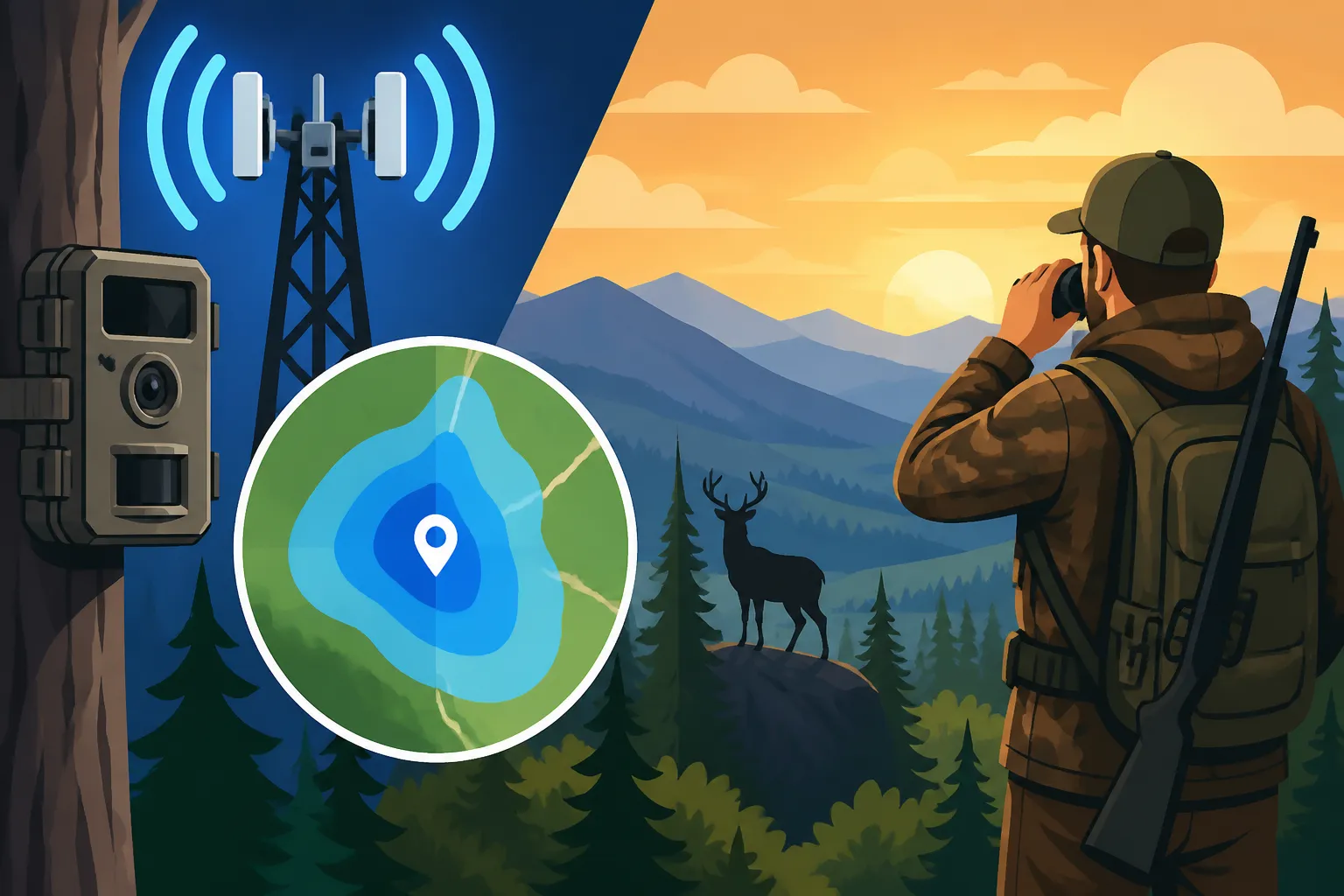
You've trekked miles into the remote New Hampshire North Country, the kind of wild, rugged terrain where the moose roam freely and the deer are truly monarchs of their domain. You've hung your cellular trail camera in a prime funnel, hoping to catch that elusive buck on his way to a late-season food source, only to pull up your phone and see… nothing. No signal. Just that frustrating blank screen or a "sync failed" message. It’s a common heartache for hunters trying to leverage modern tech in areas where modern tech just hasn't quite caught up yet. This guide is all about understanding why that happens and what you can actually do to get reliable cellular camera coverage, even in the most remote corners of our beautiful Granite State.
The Uphill Battle for Cellular Signal in New Hampshire's North Country
Anyone who's spent time in the wilderness north of the notches knows that cellular service can be a fickle beast. It’s one thing to lose a signal on I-93 for a few minutes, but it's another entirely when you've invested time and effort into setting up a crucial piece of scouting equipment in a far-flung locale. The challenges up here are unique, and they stack up against your little cellular eye in the woods.
Why the North Country is a Signal Black Hole
Let’s be honest, much of New Hampshire’s North Country is simply not designed for robust cell service. First off, you're dealing with immense geographic challenges. We’re talking about towering peaks, deep, glacially carved valleys, and vast expanses of thick, unbroken timber that can swallow a signal whole. Radio waves, which is what your cell camera uses to communicate, don't bend well around granite mountains or penetrate dense stands of spruce and fir. They prefer a clear line of sight, and those are hard to come by when you’re nestled deep in a logging cut or tucked into a remote saddle between two ridges.
Beyond the natural topography, there's the harsh reality of sparse infrastructure. Cell towers aren't popping up every few miles like they do closer to Manchester or Concord. The population density just isn't there to justify the massive investment in network expansion. This means fewer towers, longer distances between them, and weaker signals by the time they reach your camera. Add to that the unpredictable New England weather – heavy snowfalls, ice storms, dense fog, and even just a prolonged period of rain can attenuate an already weak signal, pushing your camera’s connection over the edge into oblivion. It’s a perfect storm of environmental and infrastructural hurdles.
The Frustration of Checking Empty Cameras
There's a special kind of hunter's frustration reserved for the cellular camera user in a dead zone. You’ve invested good money in a camera, paid for a data plan, and perhaps even hiked miles with a heavy pack and a new treestand to get it into that perfect spot. You hit refresh on your app, full of anticipation, only to be met with no new photos. Or worse, the camera went offline days ago, leaving you completely blind to whatever activity has been happening. That deer, the one you know is using that oak flat or logging road, could be walking by, and you’re none the wiser.
This isn't just about missing a few pictures; it impacts your entire hunting strategy. Without real-time intel, you're back to square one, relying solely on your physical presence and traditional scouting, which defeats the purpose of the cellular camera in the first place. Imagine driving an hour or two each way, then hiking another hour or more, just to pull an SD card from a camera that could have been sending you updates all week. The time, the gas, the wear and tear on your boots – it all adds up to a sense of wasted effort, especially when you’re trying to pinpoint a buck’s movements or verify a Scrape Lines Along a Logging Road. It can make you question whether these modern conveniences are truly worth the hassle in such wild country.
Demystifying Cellular Camera Technology and Network Realities
Understanding how cellular cameras work, and more importantly, why they sometimes don't, is the first step toward getting more reliable service. It's not just magic; there's a lot of tech under the hood, and each component plays a role in your camera's ability to communicate with the outside world.
How Cellular Trail Cameras Actually Work (or Don't)
At its core, a cellular trail camera is essentially a miniature cell phone with a camera attached. It contains a SIM card, just like your smartphone, which connects it to a specific cellular network (like AT&T, Verizon, T-Mobile, etc.) and allows it to send data. When the camera detects motion or takes a time-lapse photo, it compresses the image and attempts to upload it via the cellular network to a cloud server, which then pushes it to your phone app. The critical component here is that connection. If the signal is too weak or too intermittent, that upload simply won't happen.
Many cameras are "carrier specific," meaning they are designed to work best with either Verizon or AT&T SIM cards, for example. Some newer models are "universal" or "multi-carrier," meaning they can connect to whichever network has the strongest signal in a given area, offering a significant advantage in spotty coverage areas. The antenna on your camera also plays a huge role. Most come with small, stubby antennas, but some allow for external, larger antennas that can significantly boost reception. Without a solid, consistent connection, your camera might take photos, but they'll just sit on the SD card, mocking your efforts.
Understanding Signal Strength and Reliability
You know those "bars" on your phone? With cellular cameras, those bars can be misleading. A camera might show two bars of service, yet struggle to upload a single photo, while another camera with one bar might transmit perfectly. This is because "bars" often indicate raw signal quantity, but not necessarily quality. Signal quality involves factors like interference, signal-to-noise ratio, and latency (the delay in data transmission). A weak, noisy signal, even if technically present, isn't enough to reliably transmit images.
Several factors affect both signal strength and reliability in the field. Distance from the nearest cell tower is paramount, of course. But also, what's between your camera and that tower? Dense foliage, hilly terrain, buildings, or even heavy precipitation can degrade the signal. Battery life is also intrinsically linked. When a camera is constantly searching for a signal or struggling to maintain a connection, it drains its batteries much faster. This means those 8-AA batteries you expected to last a month might only get you a week or two, leading to more trips into the woods and more missed data. Monitoring your camera's reported signal strength and battery status in your app can give you clues, but often, the only true test is whether those photos are actually showing up. You can often see this information within the GoHunt app for cameras integrated with their platform.
Proven Strategies for Boosting Your Remote Camera's Signal
While the North Country might feel like it's actively conspiring against your cellular camera, there are definitely proactive steps you can take to give yourself the best possible chance of getting those valuable intel pictures. It often comes down to smart placement and, sometimes, smart gear choices.
Strategic Placement for Optimal Reception
When scouting a location for a cellular camera, you need to think like a radio wave. Remember, they like clear lines of sight. This means elevation is your friend. If you can place your camera on a ridge top, a high point on a saddle, or even just up on a slightly elevated knoll, you’re giving it a much better chance to "see" a distant cell tower. Even a difference of 10 or 15 feet can sometimes make all the difference. Get it off the ground, perhaps mounted higher on a tree, particularly if you’re in a depression or dense stand of timber.
Avoid deep ravines, thick cedar swamps, or the bottom of steep valleys. These are natural signal traps. Look for openings in the canopy if possible, but prioritize getting above the immediate ground clutter. Sometimes, simply rotating the camera slightly, even just 15-20 degrees, can improve its line of sight to a tower. Think about the direction a signal might be coming from – generally, the direction of the nearest town or major highway often aligns with the location of a cell tower. Scouting with an app like onX Layers for New Hampshire Land Status or the New Hampshire Fish and Game App can help you identify higher elevations or clearings nearby.
External Antennas and Signal Boosters: Are They Worth It?
For many remote setups, the built-in antenna on your camera just isn't enough. This is where external antennas and signal boosters come into play.
-
External Antennas: These typically screw directly into your camera, replacing the smaller stock antenna. They come in various forms:
- Omnidirectional Antennas: These are usually larger, more robust versions of your camera's stock antenna. They pick up signals from all directions, which is good if you're unsure where the nearest tower is. They offer a general boost to signal strength.
- Directional Antennas: These are often panel-style or Yagi antennas, designed to be aimed directly at a known or suspected cell tower. They can provide a significant boost in a specific direction but require careful aiming. You'll need to research tower locations or use a signal strength app to help you pinpoint the best direction.
External antennas need to be mounted as high as possible, ideally above the tree canopy, using a separate mounting pole or bracket. The higher you get them, the better.
-
Signal Boosters: These are more complex systems that include an external antenna, an amplifier, and an internal antenna. The external antenna picks up a weak signal, the amplifier boosts it, and the internal antenna rebroadcasts the stronger signal to your camera. While highly effective, they are more expensive, require external power (often a large battery or solar setup), and can be cumbersome to deploy in truly remote areas. They are usually a last resort for the most challenging locations.
When considering these options, weigh the cost and effort against the value of the intelligence you'll gain. For a once-in-a-lifetime moose hunt or a truly trophy buck pursuit, the investment might be well worth it. For more casual scouting, a simple external antenna might be enough. Remember, even with these tools, there are still true dead zones where no amount of boosting will help.
Carrier Choice and Camera Compatibility
One of the most impactful decisions you can make is selecting the right cellular carrier. Not all carriers have the same coverage footprint, especially in rural New Hampshire. Before you even buy a cellular camera, check the coverage maps for AT&T, Verizon, T-Mobile, and any other regional carriers that might operate in your specific hunting area. These maps aren't always 100% accurate, especially in deep timber, but they provide a good starting point. Many hunters find that Verizon often has better coverage in the deepest woods of New Hampshire, but this is highly localized and can vary even within a few miles.
If possible, test multiple carriers in your precise hunting spot before committing to a camera or data plan. Some camera manufacturers offer cameras that can run on either AT&T or Verizon, or even universal cameras that automatically select the strongest available network. This flexibility is invaluable in areas where coverage is spotty and unpredictable. For example, a camera that ships with a SIM pre-activated for GoHunt's integrated data plans might offer more seamless connection management, potentially allowing you to switch between networks if they support that feature.
Here's a quick comparison of factors to consider when dealing with camera signal:
| Feature/Option | Description | Pros | Cons | Ideal Use Case |
|---|---|---|---|---|
| Stock Antenna | Small antenna included with most cameras. | Easy to set up, minimal bulk. | Limited range, poor in low-signal areas. | Areas with known good signal, quick deployment. |
| Omnidirectional Ext. Antenna | Larger external antenna, collects signal from all directions. | Improved signal strength, no aiming required. | Still limited in deep dead zones, added bulk. | Moderately weak signal areas, unsure of tower direction. |
| Directional Ext. Antenna | External antenna designed to be aimed at a specific cell tower. | Significant signal boost, best for very weak signals. | Requires careful aiming, knowledge of tower location. | Very weak signal areas, clear line of sight possible. |
| Cellular Signal Booster | System with external antenna, amplifier, and internal antenna. | Most powerful signal improvement. | Expensive, bulky, requires significant power (battery/solar). | Extreme dead zones where other options fail, high value intel needed. |
| Carrier Choice (e.g., Verizon vs. AT&T) | Selecting the network provider for your camera's SIM card. | Can leverage regional differences in coverage. | Requires research, coverage maps can be misleading. | Always important, but critical in marginal areas. |
| Universal/Multi-Carrier Cameras | Camera that can connect to multiple carrier networks. | Best chance of finding any signal, flexible. | May have higher initial cost, data plans can vary. | Highly recommended for remote, unpredictable areas. |
Testing different carriers can be done by simply inserting a SIM card from a different provider into your camera (if it's compatible) or by using a cell phone from different carriers in the exact spot you plan to place your camera. A strong signal on your phone doesn't always guarantee your camera will work flawlessly, but it's a good indicator. Before heading into the field, always double-check New Hampshire's CWD Prevention Rules as they may affect what you can bring between states if you're coming from out of state, including certain lures or parts of an animal carcass.
When Cellular Fails: Exploring Non-Cellular Alternatives
Sometimes, despite all your best efforts, technology simply cannot overcome the ruggedness of the New Hampshire wilderness. There are true dead zones where no cellular camera, no matter how much you try to boost its signal, will ever reliably connect. In these situations, it’s not about giving up; it’s about adapting and utilizing other proven methods to get your scouting intel.
Traditional Trail Cameras: The Reliable Standby
Before cellular cameras became widely available, hunters relied solely on traditional trail cameras that saved images to an SD card. And guess what? They still work! In areas where cellular coverage is nonexistent, a good old-fashioned trail camera is your most reliable friend. The biggest downside, of course, is that you have to physically visit the camera to retrieve the photos. This means more trips into the woods, more scent left behind, and less real-time information.
However, traditional cameras offer several advantages. They are generally less expensive, don't require a monthly data plan, and their batteries last significantly longer because they aren't constantly searching for a signal. If you're hunting a spot where you plan to be in and out frequently anyway, or a place that's only a short walk from the truck, a traditional camera can be a perfectly viable, and often less frustrating, option. They are also excellent for areas that you only check every couple of weeks, allowing you to minimize pressure while still gathering crucial long-term data. Just ensure you have plenty of Best SD Card Setup for a Trail Camera capacity for those extended deployments.
Satellite Communicators and Offline Mapping Tools
Even if your cellular camera won't send you pictures, other technologies can still keep you connected and informed in the backcountry. Satellite communicators, like those from Garmin inReach or Zoleo, are invaluable for personal safety in remote areas. While they don't transmit trail camera photos, they allow you to send and receive text messages, share your location, and, crucially, trigger an SOS in an emergency, even when miles from cell service. For anyone venturing deep into the North Country, especially during solo trips or cold weather hunts, these are critical pieces of gear.
Beyond communication, robust offline mapping applications are absolutely essential. Services like GoHunt or onX Hunt, when downloaded for offline use, can provide detailed topographical maps, satellite imagery, and property boundaries even without a cell signal. You can drop waypoints for scrapes, rubs, bedding areas, or potential stand sites, and accurately navigate back to them. Best Offline Map App for the North Country is crucial for safely traversing challenging terrain and understanding the lay of the land, helping you find those productive features like Hunting a Funnel Between Two Woodlots or identify Where New Hampshire Bucks Bed in Thick Cover. Using these tools to inform your traditional scouting can be just as effective, if not more so, than simply relying on a cellular camera alone.
Embracing the "Slow Hunt" Philosophy
Ultimately, when modern technology hits its limits in the wild New Hampshire woods, it often nudges us back towards a more traditional, "slow hunt" philosophy. This approach emphasizes patience, keen observation, and developing a deep understanding of the land and its inhabitants, rather than relying on instant digital gratification. It means less time staring at a screen and more time reading sign, understanding wind and thermals, and quietly observing the natural world.
Instead of constantly checking an app, you might schedule strategic, impactful visits to your hunting area, focusing on careful scouting, setting up a fresh camera, or simply still-hunting through a promising timber block. It’s about being present in the moment and trusting your woodsmanship. This approach can be incredibly rewarding, forcing you to sharpen your skills and deepen your connection to the landscape. While cellular cameras are fantastic tools when they work, sometimes the most profound insights come from simply being in the woods, observing, and letting the wilderness speak to you on its own terms, free from the pings and notifications of the digital world. Hunting the North Country is a perfect example of where this mindset truly shines.
Disclaimer
This article is for general informational purposes only and does not constitute professional advice. Laws, prices and regulations vary by location and change over time. Consult a qualified professional for guidance on your specific situation.