Best Duck Decoy Spread for the Connecticut River
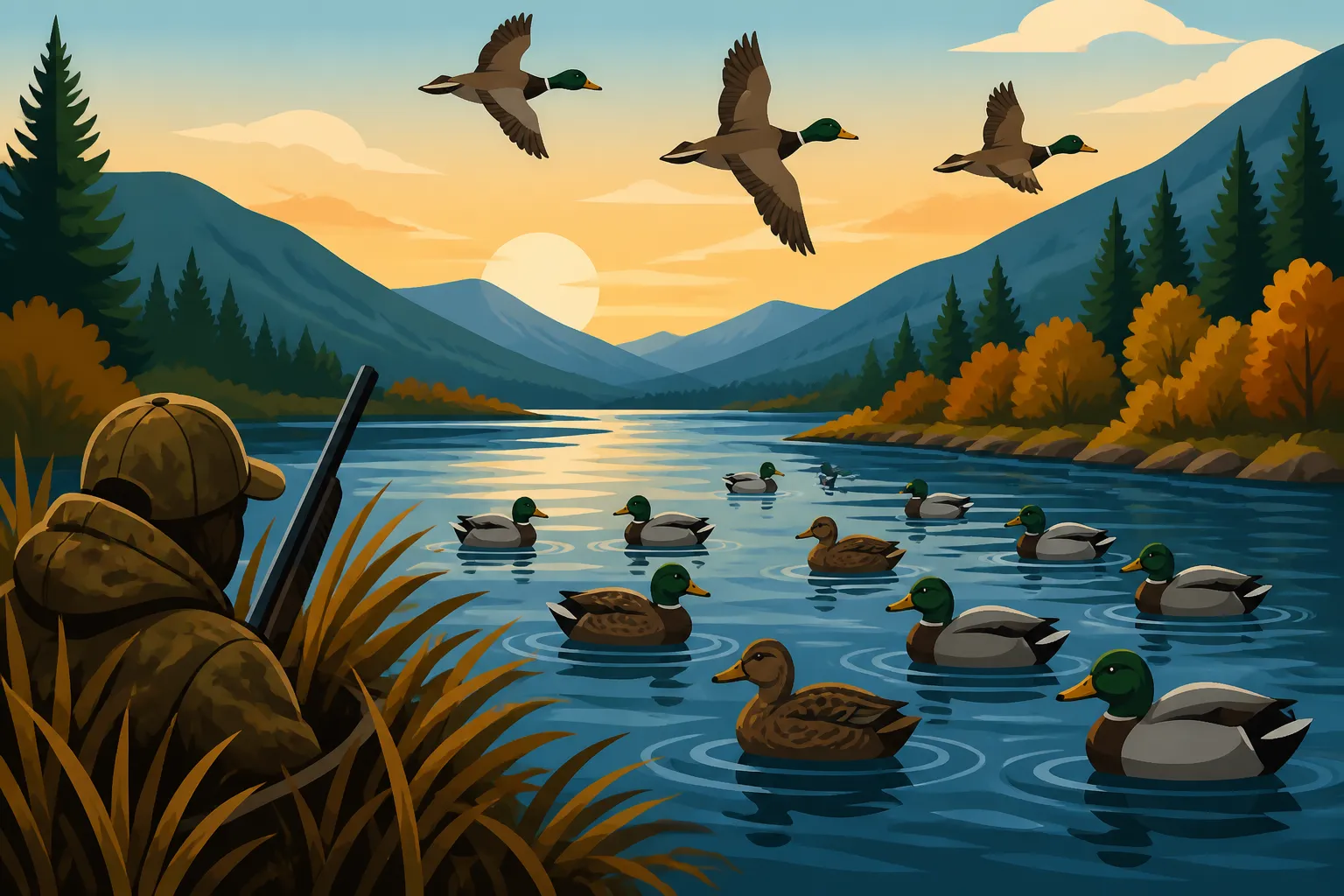
Hunting ducks on the mighty Connecticut River isn't like jump-shooting a beaver pond or setting up on a small marsh. This expansive waterway presents its own set of challenges, from swift currents to vast open water and wary birds accustomed to seeing hunters. If you've ever struggled to get ducks to commit, circling high and never dropping in, this guide is for you. We're going to dive deep into the best duck decoy spreads specifically designed to fool those educated Connecticut River birds and bring them right into your shooting lane.
Understanding the Connecticut River's Unique Challenges for Duck Hunting
The Connecticut River is a true gem of New England, but it demands a different approach from duck hunters. It's not a static environment; it's a dynamic, ever-changing highway for migrating waterfowl, and understanding its quirks is the first step to success. Many hunters try to apply small pond tactics to the river, only to be met with frustration when birds shy away or land far out of range. The sheer scale and constant movement of the water require a thoughtful strategy.
Current, Depth, and Water Flow
One of the biggest differences between river hunting and still-water hunting is the current. The Connecticut River can have a deceptively strong flow, especially after heavy rains or when upstream dams are releasing water. This current doesn't just make deploying and retrieving decoys tricky; it actively influences how ducks behave and how your spread appears to them. A static, lifeless spread that works on a pond will look unnatural and suspicious on moving water. You need decoys that can ride the current realistically, and a spread designed to utilize, rather than fight, the river's flow. Depth also plays a role; while ducks will feed in shallow areas, they might loaf or stage in deeper pockets, so understanding the contours of the riverbed is vital.
The constant push and pull of the current means your decoy lines need to be long enough to allow for natural movement without letting decoys bunch up or spin unnaturally. Many river hunters opt for heavier decoy weights or utilize decoy anchors that grip the bottom more effectively to prevent unwanted drift. Think about how a flock of live ducks interacts with the current—they naturally drift, swim against it, and find eddies. Your spread needs to mimic this subtle dance. Ignoring the current is a surefire way to create a spread that looks less like a welcoming flock and more like a collection of abandoned plastic.
Habitat Variability Along the River
From its headwaters in the North Country down to the wide stretches near the Massachusetts border, the Connecticut River offers a diverse range of habitats. You'll find wide-open main channels, narrower sections bordered by timber, deep oxbows, shallow backwaters, sloughs, and countless small islands and sandbars. Each of these micro-habitats attracts different species of ducks at different times, and each demands a slightly varied approach to your decoy spread. A spread that's perfect for a wide, flat section of river might be totally inappropriate for a tight, timber-lined bend. Hunting the Connecticut River Valley can involve a huge range of scenarios.
For example, a big, open water spread might be ideal for attracting divers like buffleheads or common mergansers on the main channel, but mallards and wood ducks often prefer the sheltered confines of a backwater slough or a small feeder creek entering the main stem. This means you can't have a one-size-fits-all decoy strategy. You need to scout diligently and be prepared to adapt your decoys to the specific spot you've chosen. Sometimes, a small, natural-looking spread of a few mallards is far more effective in a quiet eddy than a massive spread designed for open water.
Pressure and Hunter-Wise Birds
Let's be honest, New Hampshire hunters are passionate, and the good duck spots on the Connecticut River can see a fair bit of pressure, especially during peak migration. Those late-season mallards, black ducks, and geese have seen it all. They've been shot at, decoying into spreads that looked too perfect, too static, or just plain wrong. This makes them incredibly wary. What might work on a group of early-season, naive birds will send a flock of call-shy veterans flaring into the stratosphere.
To combat this, your decoy spread needs to exude realism and confidence. These birds aren't looking for a perfect V-formation; they're looking for a safe place to land and rest, with other ducks acting naturally. This means paying attention to details: how your decoys ride the water, avoiding unnatural lines, and ensuring they don't look like they're all tied to one central point. Over-calling or having a spread that's too large for the number of birds in the area can also turn them off. Sometimes, less is more when dealing with educated birds. Hunting the Split Inland Zone Waterfowl Season means encountering these pressured birds often.
Essential Decoy Spreads for Connecticut River Success
Now that we understand the river's quirks, let's talk about some tried-and-true decoy spreads that really shine on the Connecticut River. These aren't just random arrangements; they're designed to capitalize on water movement, create realistic landing zones, and make wary ducks feel safe.
The "J" Hook or "Fishhook" Spread
This is a classic for a reason, and it's especially effective on rivers with a noticeable current. Imagine a giant letter "J" or a fishhook floating in the water. The long, straight shank of the "J" extends out into the current, with the curved hook part closer to your blind. The idea is to create a natural-looking flock that ducks can see from a distance, with a clear, calm pocket for them to land in.
Here's how it works: you deploy the main body of your decoys upstream and slightly out from your blind. This long line of decoys acts as a visible marker for approaching birds, drawing their attention. As the birds fly downriver, they see the "hook" part of the spread, which curls back towards your position and creates a natural-looking opening, or "kill hole," where they feel safe to land. The current helps give the decoys subtle motion, making them appear more lifelike. Critically, the birds approaching from upstream will naturally be funneled by the long arm of the "J" into the landing zone, putting them right in front of your blind as they cup their wings to set down. This spread can work wonders for both puddle ducks and divers, especially when you understand Decoying Ducks on New Hampshire's Connecticut River.
The "X" or "Landing Strip" Spread
When you're dealing with a wider, more open stretch of the Connecticut River, or if you're targeting birds that prefer a more spacious landing area, the "X" spread, sometimes called the "landing strip" or "runway" spread, can be incredibly effective. This spread aims to create a clear, inviting landing zone by having two arms of decoys extending outwards from a central point, forming an "X" or a wide V-shape with a gap in the middle.
The concept here is to define a large, unambiguous landing zone. Birds will often approach from upwind or downwind, looking for a clear path to set down. The "X" spread gives them precisely that: a wide-open water space framed by decoys. You might have one arm of the "X pointing slightly upstream and the other downstream, or both angled to account for prevailing winds and currents. The key is that the center of the "X" is empty, signaling to incoming ducks that this is their safe zone. This works particularly well for species that like to land among their own kind but also need a bit of elbow room, and it's fantastic for attracting larger groups of ducks or geese that might be hesitant to squeeze into a smaller opening. Remember to position your blind discreetly at one end of the "X", allowing birds to commit fully to the landing zone before they see you.
The "Family Group" or "Loafing" Spread
Sometimes, simplicity and realism trump elaborate formations, especially when hunting highly pressured or late-season birds on the Connecticut River. The "family group" or "loafing" spread is about mimicking the natural behavior of ducks resting and feeding in small, scattered clusters. Instead of a large, continuous formation, you'll place small groups of decoys—say, 3-5 birds per group—with significant gaps between them.
The beauty of this spread lies in its naturalness. Ducks don't always fly in perfect formations or raft up in massive, organized lines. They often sit in small, seemingly random groups, some dabbling, some preening, some just loafing around. This scattered, unpressured look can be highly appealing to wary birds who might spook from a more formal spread. Place these groups in eddies, along current breaks, or near prominent features like small islands or submerged logs. You can even mix species within these small groups for added realism—a couple of mallards with a black duck, for instance. The key is to make each cluster look like a self-contained, content little family that has found a safe haven. This is also where motion decoys can play a crucial role, as a single flapping wing or subtly rocking decoy in a small group can add immense realism without overdoing it. Tools like GoHunt can help you scout aerial views to find these subtle current breaks and loafing areas.
Key Considerations Beyond the Spread Itself
While the arrangement of your decoys is critical, it's just one piece of the puzzle. To truly maximize your success on the Connecticut River, you need to pay attention to several other factors that contribute to a convincing and effective hunting setup.
Decoy Selection and Realism
Not all decoys are created equal, especially when hunting a challenging waterway like the Connecticut. Cheap, shiny, or poorly painted decoys will stand out like a sore thumb to a duck flying high over the river. Invest in quality decoys that have realistic paint schemes, natural postures, and a durable construction that can withstand currents and repeated use. Variety in your decoy spread can also be beneficial.
For the Connecticut River, a mix of species is often effective. Mallards are a staple, but don't forget about black ducks, which are common and often prefer to decoy with their own kind or mallards. If you're hunting wider, deeper sections, consider adding a few diver decoys like bluebills or ringnecks, as these birds will often use the main channel. Some hunters even add a few Canada goose decoys on the bank or upstream to give an added sense of security and visibility, acting as a beacon for other waterfowl. The goal is to create a dynamic, lifelike scene that perfectly mimics what a duck would expect to see in that specific river environment. For those looking for top-tier gear, checking out reputable brands on platforms like GoHunt can lead to excellent options.
Motion Decoys and Natural Movement
On a flowing river, movement is everything. A spread of static decoys can quickly look lifeless and unnatural, especially if the current isn't providing enough motion. This is where motion decoys become an invaluable asset. Spinning-wing decoys (like Mojos), jerk cords, and even simple keel weights that allow decoys to bob and weave with the current can make a monumental difference.
A spinning-wing decoy placed strategically in the "kill hole" or at the visible end of your "J" spread can catch a duck's eye from incredible distances. The flash of the spinning wings mimics a landing duck, signaling safety and drawing them in. Jerk cords, which allow you to manually create ripples and movement in a small cluster of decoys, are fantastic for adding subtle, lifelike action, especially on calmer days or in slack water. Even just ensuring your decoy lines are long enough to allow your decoys to swing and drift naturally with the current is a form of motion. Remember, ducks are constantly moving, preening, and feeding; your spread should reflect that vibrancy.
Camouflage, Concealment, and Boat Blinds
You can have the most perfect decoy spread in the world, but if the ducks see you, it's game over. Concealment is absolutely paramount when river hunting, especially on larger, more open waterways like the Connecticut. Ducks have excellent eyesight, and any unnatural shape, glint, or movement will send them flaring. Most successful Connecticut River hunters operate from boat blinds, layout blinds on sandbars, or carefully brushed-in bank blinds.
A good boat blind should be thoroughly brushed with natural vegetation from the area you're hunting. Think tall reeds, cattails, branches, and even dead leaves. It needs to blend seamlessly with the riverbank or the shoreline. Pay attention to your face and hands—these are often the first things birds see. Wear a face mask or paint and dark gloves. For open water or sandbar hunting, a layout blind can be incredibly effective, allowing you to disappear into the low profile of the terrain. Always position your blind so that you have the wind at your back or side, forcing incoming birds to land into the wind, presenting the best shot opportunities. Remember, if you think you're hidden, hide more.
Adapting Your Spread to River Conditions and Duck Behavior
The Connecticut River is a living, breathing entity, and no two hunting days are exactly alike. The most successful duck hunters aren't just good at setting a spread; they're masters of adaptation, constantly reading the conditions and the birds, and making adjustments on the fly.
Adjusting for Weather and Light
Weather plays a huge role in duck hunting. On calm, sunny days, ducks can see forever, and they'll be incredibly wary. Your spread needs to be realistic and subtle. Motion decoys are crucial on these days to break up the static look. On windy, overcast, or rainy days, ducks often fly lower and are less prone to flaring. They're more focused on finding shelter and food, and the rough water helps to obscure your blind and add natural motion to your decoys. On these days, you might get away with a larger, bolder spread, as visibility is reduced.
Light conditions also matter. At first light, when visibility is low, you want a spread that's highly visible from a distance, drawing birds in. As the day progresses and the sun gets higher, realism becomes even more important. Consider how shadows fall on your decoys and blind, and adjust accordingly. A bright reflection off a decoy or your blind can quickly turn birds. For those early mornings, make sure your Best Headlamp for a Pre-Dawn Granite Climb is packed and ready.
Reading Duck Reactions and Modifying on the Fly
This is where the art of duck hunting truly comes in. You've set your spread, you're concealed, and the first birds start to work. What do you see? Are they circling high, flaring at a certain point, or landing short? Every single bird's reaction is a clue. If ducks are consistently flaring over a particular part of your spread, something is off. Maybe a decoy is sitting unnaturally, or there's a glint from your blind.
Don't be afraid to make adjustments. If ducks are landing short, bring a few decoys closer to your blind. If they're flaring at a specific point, try rearranging that section of the spread or even removing a few decoys. Sometimes, adding or taking away a motion decoy makes all the difference. It takes experience to read these subtle cues, but paying close attention to how birds interact with your setup is vital. A hunter who just sets it and forgets it will be far less successful than one who constantly evaluates and adapts. You might find yourself needing to re-anchor a few decoys if the current shifts or if boat traffic disturbs your spread.
The Role of Scouting
Ultimately, no decoy spread, no matter how perfect, will work if you're not in the right spot. Scouting is the foundation of successful duck hunting on the Connecticut River. Ducks are creatures of habit; they'll use specific flight paths, feeding areas, and loafing spots based on water levels, food availability, and pressure. Scouting New Hampshire Public Land Before Season is invaluable.
Before you even think about putting out decoys, spend time observing the river. Drive along the banks, use binoculars to watch where birds are feeding and resting. Look for fresh tracks, droppings, and feeding sign in shallow mud flats or along grassy edges. Pay attention to how birds enter and exit certain areas. Is there a consistent flight path they use to round a bend or drop into a backwater? Are they using a specific sandbar for loafing? Understanding these patterns will tell you not only where to set up but also what kind of spread will be most effective. Sometimes, a simple walk along a likely stretch of river, even without a gun, will teach you more than a dozen unsuccessful hunts. Don't forget that using mapping apps can help identify prime locations and access points.
Decoy Spread Comparison for the Connecticut River
| Spread Name | Description | Ideal Conditions | Pros | Cons |
|---|---|---|---|---|
| "J" Hook/Fishhook | Long line of decoys extending upstream, with a curved "hook" creating a landing zone near the blind. | Moderate current, visible from a distance, good for funneling birds. | Funnels birds naturally, utilizes current for motion, clear landing zone. | Can be tricky to deploy in very strong currents, requires good anchor setup. |
| "X" / Landing Strip | Two lines of decoys forming an "X" or wide "V", creating a large, open landing zone in the center. | Wide-open water, targeting larger groups, wary birds needing space. | Large, inviting landing zone, highly visible, good for multiple approach angles. | Requires more decoys, may look unnatural in very tight quarters. |
| Family Group/Loafing | Small, scattered clusters of 3-5 decoys each, mimicking natural resting and feeding behavior. | Pressured birds, calm conditions, backwaters, eddies, natural presentation. | Extremely realistic, appeals to wary birds, requires fewer decoys. | Less visible from a distance, may not pull birds from far away, relies more on motion decoys. |
Disclaimer
This article is for general informational purposes only and does not constitute professional advice. Laws, prices and regulations vary by location and change over time. Consult a qualified professional for guidance on your specific situation.