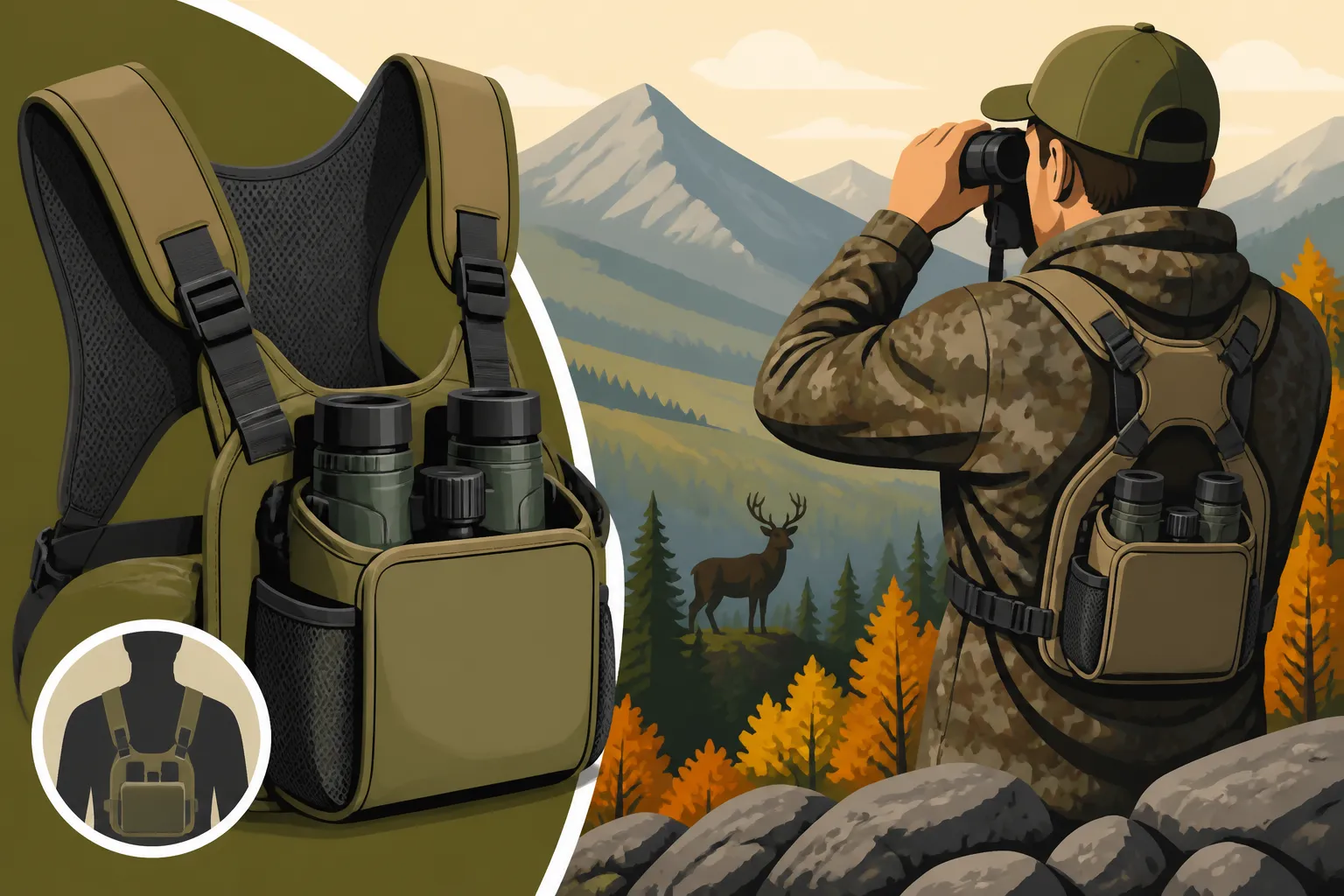
Best Optics Harness for a Spot-and-Stalk Hunt
There's nothing quite as frustrating as needing your binoculars or rangefinder in a split second, only for them to be tangled around your neck, bouncing off your chest, or worse, buried deep in your pack when a prime opportunity arises. For anyone serious about spot-and-stalk hunting in New Hampshire's diverse and often challenging terrain, a reliable optics harness isn't just a convenience – it's a critical piece of gear. This guide will walk you through what makes a great optics harness and why it’s essential for successful, efficient hunting.
Why an Optics Harness is Essential for Spot-and-Stalk Hunting
When you're still-hunting through thick New Hampshire timber or carefully glassing a distant ridge, quick access to your optics is paramount. Spot-and-stalk hunting demands stealth, agility, and the ability to react instantly. A dedicated optics harness system helps you meet these demands by keeping your essential viewing tools secure, protected, and ready at a moment's notice.
Protecting Your Investment
Let’s be honest, quality binoculars and rangefinders are a significant investment. Dropping them on granite rocks, banging them against trees, or letting them fill with moisture from a sudden downpour is a surefire way to shorten their lifespan and compromise their performance. A good optics harness encases your valuable glass, shielding it from impacts, dust, and the often-unforgiving elements of the New Hampshire woods. Think about scrambling up a steep bank or pushing through dense alders – a harness keeps your optics snug against your body, preventing them from swinging wildly or becoming snagged. This protection means your Optics for New Hampshire's Timber Country will last longer and perform better when you need them most.
Quick Access in Critical Moments
Imagine this: You're slowly picking your way through a mixed hardwood and softwood stand in the White Mountains. The fog is lifting, and you catch a flicker of movement just ahead, partly obscured by a cluster of balsam firs. Is it a deer? A moose? A fallen branch? You need your binoculars, and you need them now. With a properly designed optics harness, that critical piece of gear is right on your chest, easily accessible with one hand, allowing you to fluidly bring them up to your eyes without fumbling. This speed isn't just about convenience; it can be the difference between identifying a legal buck and letting a once-in-a-lifetime opportunity slip away. When you’re trying to Still-Hunting White Mountain National Forest Timber, every second counts.
Key Features to Look for in a New Hampshire Hunting Optics Harness
Not all optics harnesses are created equal. For the unique demands of hunting in New Hampshire, you'll want to prioritize specific features that ensure durability, functionality, and comfort. Don't just grab the first one you see; think about how it will perform when you're miles deep in the backcountry.
Durability and Weather Resistance
New Hampshire weather can be fickle. A crisp, clear morning can quickly turn into a driving rain or even an early-season snow squall. Your optics harness needs to stand up to these conditions. Look for harnesses made from rugged, water-resistant fabrics like Cordura or similar heavy-duty synthetics. Zippers should be robust and, ideally, water-resistant or covered by storm flaps. Seams should be well-stitched and reinforced. Some harnesses even feature built-in rain covers or highly water-repellent coatings to give your Binoculars for Glassing a North Country Bog an extra layer of protection. This isn't just about keeping your optics dry; it’s about preventing mud, grit, and snow from finding their way into lenses or moving parts.
Storage and Organization
While the primary function is holding your main optics, a great harness offers more. Integrated side pockets or a front zippered pouch can be invaluable for carrying other small essentials that you need quick access to. Think about a rangefinder – you'll want it easily reachable alongside your binoculars. Some harnesses are designed specifically for this, with dedicated sleeves or magnetic closures for your Rangefinders for New Hampshire's White Mountain Ridge Shots. Other handy items might include a wind checker, a small compass, lens cleaning cloths, or even your hunting license and tag. The goal is to keep these small, frequently used items organized and instantly available without having to dig into your main pack, which can save precious time and reduce movement.
Quiet Operation
Stealth is the name of the game in spot-and-stalk hunting. The last thing you want is a noisy harness giving away your position. Pay close attention to the materials and closures. Avoid harnesses with loud Velcro closures or jingling metal hardware. Magnetic closures are often a fantastic option as they are both secure and nearly silent. Similarly, ensure the fabric itself doesn't make a lot of rustling noise as you move or when you open and close compartments. Test it out in a quiet environment; imagine pulling your binoculars out when a deer is only 50 yards away. Any squeaks, snaps, or crinkles could spoil your hunt. This attention to detail is crucial when you're trying to remain unnoticed.
Comfort and Fit: Making Sure Your Harness Disappears
An optics harness, no matter how functional, is only good if you'll actually wear it all day. Comfort is paramount, especially when you're putting in serious miles over rugged New Hampshire terrain, perhaps even embarking on something like Packing for a Nine-Day Moose Hunt. The best harness is one you forget you’re wearing until you need your optics.
Adjustability and Strap Design
A truly comfortable harness needs to be highly adjustable to fit your specific body shape and how you layer your clothing throughout the season. Look for straps that are easily lengthened or shortened, even with gloves on. The harness should allow your binoculars to sit snugly against your chest without bouncing or sagging. Many harnesses feature a "figure-8" style strap system that distributes weight across your shoulders and back, rather than just pulling on your neck like a traditional binocular strap. This distribution is critical for preventing neck strain, especially when carrying heavier optics for extended periods. Consider if the harness will fit comfortably over a thin base layer in early archery season or over multiple Layering for New Hampshire's Cold Hunting Season in late muzzleloader season.
Weight Distribution and Padding
The weight of your binoculars, especially larger objective models, can really add up over a long day afield. Good harnesses incorporate padding on the shoulder straps to prevent digging and discomfort. The design should distribute the weight evenly across your torso, rather than concentrating it in one spot. Some harnesses even feature a breathable mesh backing to help manage sweat and prevent chafing during strenuous hikes. When you're navigating steep inclines or traversing rocky terrain, that even weight distribution makes a world of difference in your fatigue levels. Products like the GoHunt harness line often excel in this area, offering ergonomic designs that make your optics feel almost weightless.
Practical Considerations for New Hampshire Terrain and Weather
Hunting in New Hampshire presents unique challenges that your optics harness needs to be ready for. From dense forests to rocky mountainsides, and unpredictable weather, your gear must be up to the task.
Navigating Thick Cover
New Hampshire is known for its dense woods, from cedar swamps to thick stands of regenerating timber. When you're moving through this kind of cover, snagging branches are a constant threat. An optics harness that keeps your binoculars tight to your chest and fully enclosed prevents them from catching on brush, which could not only damage your optics but also create noise or even pull you off balance. This secure fit is far superior to an open binocular strap that leaves your optics swinging freely. You want a low-profile design that won't add unnecessary bulk as you squeeze between saplings or crawl through blowdowns. The robust construction of a GoHunt harness can truly shine in these conditions, providing peace of mind as you push through the toughest cover.
Weathering the Elements
As mentioned earlier, New Hampshire weather can shift rapidly. You might start a morning hunt under clear skies, but by noon, a cold rain could be sweeping through, or fog could roll in, reducing visibility. Your optics harness must protect your lenses from moisture, which can fog them up or leave water spots that obscure your view. A fully enclosed, water-resistant design is key here. It also protects your hands from getting excessively cold and wet if you're frequently reaching for exposed optics. Think about those chilly late-season days when you're trying to Cold-Weather Sitting Strategy in the North Country – keeping your optics dry and functional is critical for success.
Public Land Demands
Many of us hunt New Hampshire's vast public lands, from state forests to sections of the White Mountain National Forest. These areas often require you to walk further, traverse more varied terrain, and be more self-sufficient. A well-designed optics harness becomes an extension of your kit, aiding in efficient movement and quick decision-making. Whether you're trying to Scouting New Hampshire Public Land Before Season or actually pursuing game, being able to quickly glass an opening or confirm an animal's identity without unnecessary delays or fumbling is paramount. The extra pockets in a harness can even hold an emergency fire starter or a small snack for those long treks. When you're trying to Finding Ground That Sees Fewer Hunters, you're often putting in more miles, and every piece of gear that enhances your efficiency helps.
Choosing the Right Optics Harness for Your Style
With a variety of optics harnesses on the market, how do you pick the best one for you? It boils down to a combination of personal preference, the size of your optics, and your typical hunting conditions.
Sizing and Compatibility
First, measure your binoculars or rangefinder. Most harness manufacturers provide dimensions for the maximum size of optics their system can accommodate. You want a snug fit that prevents excessive movement but isn't so tight that it's difficult to get your optics in and out. If you run larger, heavy binoculars, you'll want a harness with wider, more padded straps and a more robust attachment system. Smaller, lighter binoculars might do well in a more minimalist harness. Don't forget to account for any lens caps or accessories you might have on your optics.
Enclosed vs. Open Designs
You'll find two main types: fully enclosed harnesses and more open designs that simply hold the binoculars against your chest. For New Hampshire's weather and thick cover, a fully enclosed design generally offers superior protection from the elements, dust, and snags. It also tends to be quieter. Open designs can be lighter and offer slightly faster access, but they leave your optics more exposed to damage and weather. Consider your priorities: is maximum protection and quiet operation more important than minimal weight and ultra-fast access? Most serious spot-and-stalk hunters lean towards the fully enclosed for its protective benefits.
Additional Features to Consider
- Attachment Points: Some harnesses offer external loops or MOLLE webbing for attaching additional pouches or accessories, like a small GPS unit or a water bottle.
- Safety Lanyards: A short lanyard inside the harness can attach to your binoculars, providing a fail-safe against dropping them when you pull them out.
- Camouflage Patterns: While not strictly functional, choosing a pattern that blends with your typical hunting attire can be a nice touch.
- Ease of Cleaning: After a muddy day in the woods, a harness that's easy to wipe down or even hand wash will be appreciated.
Remember to try on different harnesses if possible, especially when wearing your typical hunting layers. This will give you the best sense of how it feels and functions in a realistic scenario. The investment in a quality optics harness is an investment in protecting your valuable optics and enhancing your effectiveness in the field.
| Feature | Description | Benefit for NH Hunting |
|---|---|---|
| Durability | Heavy-duty fabrics (Cordura), robust stitching and zippers | Withstands rough terrain, dense brush, and frequent use. |
| Weatherproofing | Water-resistant materials, storm flaps, sometimes integrated rain covers | Protects optics from rain, snow, fog, and mud. |
| Quiet Operation | Magnetic closures, non-rustling fabrics, minimal noisy hardware | Prevents spooking game during critical moments in close quarters. |
| Adjustability | Easily adjustable straps for different body types and clothing layers | Ensures comfortable, secure fit from early season to late season. |
| Padding | Padded shoulder straps and back panel | Reduces fatigue and prevents discomfort during long hikes. |
| Extra Pockets | Integrated side pockets or front pouch for small gear | Keeps rangefinder, wind checker, or license quickly accessible. |
| Enclosed Design | Fully encases binoculars | Superior protection from impacts, snags, and environmental elements. |
| Ventilation | Breathable mesh on back panel (optional) | Helps manage sweat during strenuous activity. |
Disclaimer
This article is for general informational purposes only and does not constitute professional advice. Laws, prices and regulations vary by location and change over time. Consult a qualified professional for guidance on your specific situation.