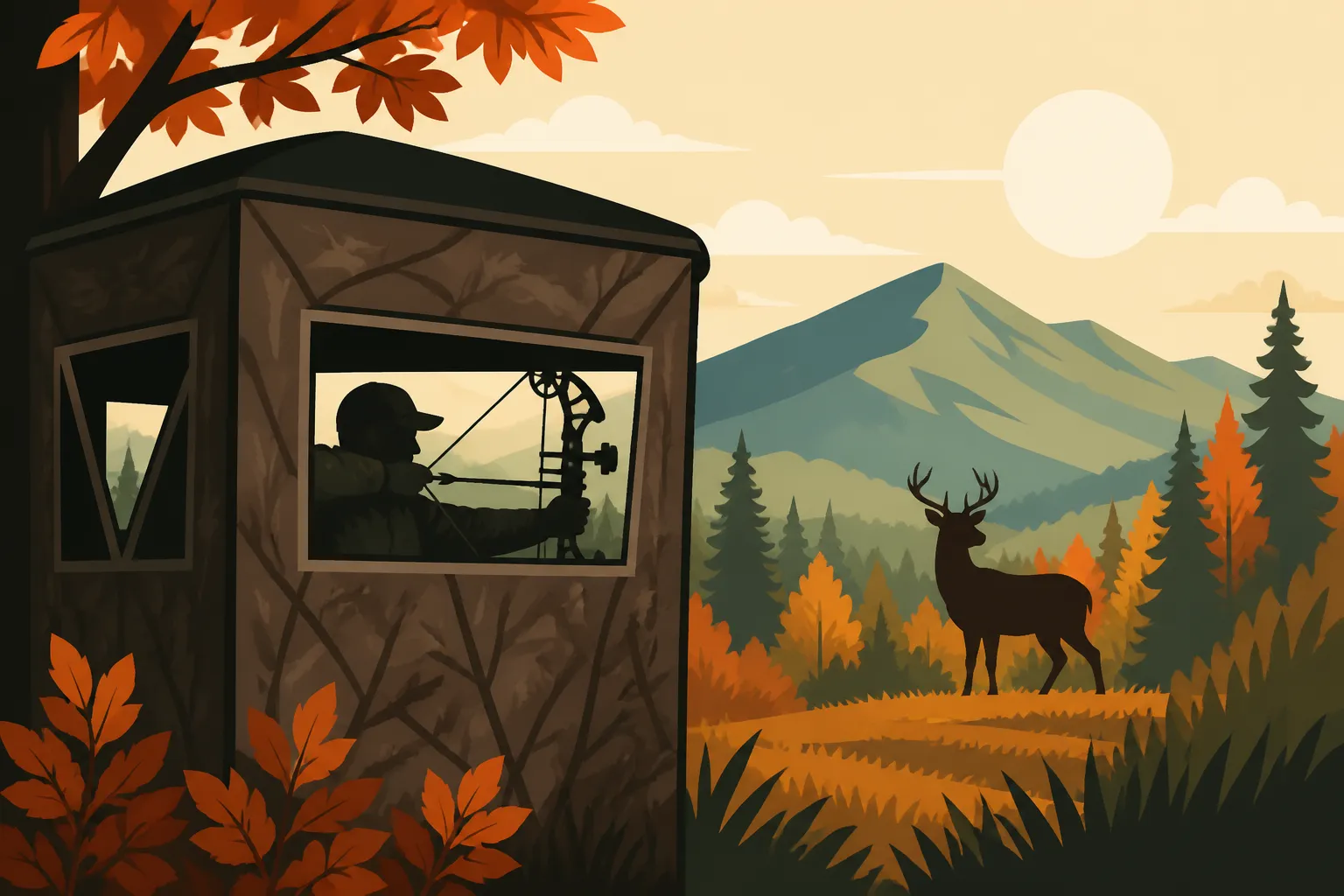
Using a Ground Blind on Public Land
Finding prime hunting spots on New Hampshire's public lands can feel like a constant battle, especially when you’re competing with other hunters or trying to minimize your presence in sensitive areas. Setting up a comfortable, concealed, and effective hunting position without leaving a permanent footprint is a common frustration for many. This comprehensive guide will walk you through everything you need to know about successfully using a ground blind on New Hampshire's public land, helping you maximize your concealment and increase your chances of success.
The Allure and Challenges of Ground Blinds on Public Land
Hunting public land in New Hampshire often means adapting to diverse terrain, changing conditions, and the presence of other outdoor enthusiasts. A ground blind can be an incredibly valuable tool, but it also comes with its own set of considerations. Understanding both the benefits and the hurdles is the first step toward effective use.
Why Ground Blinds Shine on Public Ground
Ground blinds offer a multitude of advantages that make them a fantastic choice for public land hunting, especially in a state like New Hampshire where the landscape can vary from dense forests to more open field edges. First and foremost, they provide incredible concealment. Unlike a treestand, which relies on elevation and natural breaks in the canopy, a ground blind completely encases you, breaking up your human silhouette entirely. This means you can get away with a bit more movement inside the blind – checking your phone, taking a sip of coffee, or even stretching – without alerting wary game. This can be a game-changer when you're facing long, cold sits during the New Hampshire's November Firearms Deer Season or even later into the archery season.
Beyond visual concealment, a well-sealed ground blind helps with scent control. While no blind is completely scent-proof, it does contain a significant portion of your scent profile, directing it primarily out of the designated shooting windows rather than broadcasting it 360 degrees. This is particularly crucial in areas with shifty winds or when hunting those smart, old bucks that seem to smell trouble a mile away. Think of hunting a small woodlot edge near a farm field where the thermals can swirl; a ground blind gives you an edge by containing your scent more effectively. The sheer comfort is also a huge plus. You can bring a comfortable chair, a small heater on those frosty mornings, and have more room for your gear, making those all-day sits far more bearable than shivering on a treestand platform.
Safety is another often-overlooked benefit. Falls from treestands are a real concern, but with a ground blind, you're firmly on solid ground. This makes them ideal for hunters with mobility issues, younger hunters, or anyone who simply prefers the stability of terra firma. For new hunters still building confidence, a ground blind provides a secure, less intimidating environment to learn the ropes. The complete enclosure also offers protection from the elements – a huge advantage when a sudden downpour or a biting New Hampshire wind whips up, allowing you to stay out longer and remain focused on the hunt.
The Public Land Predicament: What You're Up Against
While ground blinds offer many benefits, hunting with them on public land in New Hampshire presents unique challenges that you absolutely need to consider. The most obvious is hunter pressure. Public lands, by their very nature, are accessible to everyone, and popular spots can see significant traffic. Setting up a highly visible ground blind in an area already seeing heavy foot traffic can draw unwanted attention, potentially spooking game and inviting interaction with other hunters. It’s a delicate balance of finding a secluded spot yet still being in an area deer or turkey frequent.
Regulations are another big hurdle. New Hampshire Fish and Game has specific rules about structures on public land. For example, leaving a blind overnight or for extended periods might be prohibited or require special tagging. You can’t just set up shop indefinitely. It’s crucial to check the specific rules for the Wildlife Management Area (WMA) or state forest you plan to hunt, as they can sometimes vary. These regulations are in place to ensure fair access and prevent littering or permanent defacement of public lands. Always assume you need to pack it in and pack it out unless explicitly stated otherwise.
Then there’s the issue of theft and vandalism. Unfortunately, leaving valuable gear like a quality ground blind unattended on public land, even for a few hours, can be risky. While most hunters are respectful, there are always exceptions. If you must leave it, ensure it's well-hidden and perhaps secured in some way, though this isn't always foolproof. Finally, the physical act of setting up and taking down a ground blind can be more involved than simply hanging a hang-on stand, especially if you’re deep in the woods or navigating rugged terrain typical of places like the White Mountain National Forest. You have to consider its weight, bulk, and how easily you can transport it to your chosen spot without making too much noise or leaving an obvious trail.
Choosing and Setting Up Your Ground Blind for New Hampshire Public Land
The right ground blind and a smart setup strategy are critical for success on New Hampshire's public lands. It's not just about throwing a blind up; it's about making it a natural, unnoticed part of the environment.
Selecting the Right Blind for Granite State Terrain
When you're eyeing a ground blind for hunting in New Hampshire, you need to think practically about the rugged terrain, the weather, and the specific game you're after. Durability is paramount. Our woods can be tough, with sharp rocks, thorny bushes, and biting cold. Look for blinds made from robust, tear-resistant fabrics like 600-denier polyester. The hubs and poles should be sturdy metal, not flimsy plastic, to withstand repeated setups and breakdowns, especially when your hands are cold. Many hunters swear by brands like Primos or Barronett for their reliability in the field.
Camouflage patterns are also key. While a universal pattern works in many places, consider patterns that mimic New Hampshire’s diverse flora. A deep, dark hardwood pattern with strong vertical and horizontal elements works well for deer in the fall, blending into the bare trees and underbrush. If you're hunting earlier in the season or targeting turkeys in spring, something with more greens and light browns might be better. A popular option is a pattern that simulates bark and moss, which blends well into the granite ridges and mixed forests. Pay attention to the inside of the blind, too; a dark interior lining is crucial to prevent your silhouette from being visible through the fabric when it's bright outside. No matter the pattern, the goal is to break up the blind's outline.
Size and portability also matter immensely, especially if you're hiking in a long way to find undisturbed ground. A larger blind offers more comfort and room for gear, or even another hunter, but it's heavier and bulkier to carry. A smaller, lighter blind might be less comfortable but is far easier to pack into those hard-to-reach areas where deer feel safer. For solo hunts, a compact blind like a Primos Double Bull SurroundView 270 can be a lifesaver, offering great concealment without excess bulk. Always consider how much gear you plan to bring and whether you'll be sitting alone or with a partner. If you're going to be Hunting a White Mountain Notch Pass or deep into a remote woodlot, weight will be a major factor.
Strategic Placement: Blending In, Not Sticking Out
Blind placement isn't just about finding a spot where you think the deer will walk by; it's about making that blind disappear into the environment. The first step is thorough scouting. Before you even think about setting up, spend time afield without your blind. Identify key travel corridors, feeding areas, bedding cover, and pinch points. Tools like GoHunt maps or similar mapping apps, as mentioned in GPS and Mapping Apps for New Hampshire Public Land, are invaluable for identifying property lines, terrain features, and potential ambush points. You want to place your blind where you expect game to appear naturally, not force them into a new pattern because of a brightly colored tent in their usual route.
Once you have a general area, look for natural cover to integrate your blind. Don't set it up in the middle of an open field or clear-cut. Position it against a thick brush line, a downed log, a cluster of pines, or even a large rock formation. Use natural elements to break up its hard lines. If you can brush in your blind with local vegetation, that's even better – cut some dead branches, pile up leaves, and mimic the natural surroundings. The goal is for the blind to look like it belongs there, not like a foreign object dropped into the woods. Many hunters will place their blinds a week or two before the season opens, if regulations allow, to let game get accustomed to its presence.
Always consider wind direction and your entry and exit routes. You want a setup that allows you to approach and leave your blind without alerting game. This often means coming in with the wind in your face or on your quarter, walking quietly along a ridge line or creek bed that provides cover. For example, if you're hunting a funnel between two woodlots, you might approach from the downwind side, skirt the edge, and slip into your blind well before daylight. Never place your blind where your entry and exit routes will consistently cross active game trails. If you're hunting deer in the North Country, for instance, paying attention to the specific wind patterns and thermals in granite terrain can be the difference between success and a long, cold, fruitless sit.
Dealing with Regulations and Practicalities
New Hampshire's public lands operate under rules designed to protect the natural resources and ensure fair use for everyone. When it comes to ground blinds, you absolutely need to know the specific regulations for the area you're hunting. Generally, on most state forests and WMAs, ground blinds are considered temporary structures and cannot be left unattended for extended periods. Some areas may allow them to be left overnight, but often require them to be tagged with your name and address, and contact information, and removed immediately after your hunt concludes or within a very short timeframe. Failing to adhere to these rules can result in fines or even confiscation of your blind.
Beyond the regulations, practicalities demand careful thought. Security is a prime concern, especially if you intend to leave your blind even for a few hours. While official rules for Ground Blind Rules on New Hampshire WMAs might not always mandate it, using small, unobtrusive padlocks on zippers can deter casual theft, and heavy-duty stakes or even small cables can prevent wind from blowing it away. However, remember that no lock is truly foolproof on public land, so use your best judgment. If an area feels too exposed or has high human traffic, it's often safer to pack your blind out with you every time.
Another practical consideration is the condition of your setup over time. If you do leave a blind out, even for a short duration, be prepared for weather. Snow, rain, and strong winds can take a toll. Ensure it’s staked down securely, and if a heavy snowfall is predicted, it might be wise to retrieve it. For more detailed insights on general public land access and rules, checking resources like Public Hunting Land in New Hampshire will always serve you well. Being a responsible hunter means not just following the letter of the law, but also upholding the spirit of conservation and respect for shared resources.
Hunting Strategies from a Ground Blind on New Hampshire Public Land
A ground blind is more than just a place to sit; it's a strategic hunting platform. Maximizing its potential requires thoughtful execution and adaptation to the unique challenges of public land hunting.
Maximizing Concealment and Minimizing Your Footprint
The primary advantage of a ground blind is concealment, but you need to actively work to maximize it. Once inside, remember that you are still visible through the shooting windows. Avoid wearing light-colored clothing that could create a stark contrast against the dark interior of the blind. Black or dark brown clothing, especially gloves and a face mask, will help you disappear into the blind's shadows. Minimize movement, especially when game is in sight. Even subtle shifts can catch a deer's eye if they're looking in your direction. Practice drawing your bow or raising your firearm inside the blind before the moment of truth, ensuring you have enough clearance and won't snag anything.
Scent control remains paramount. While the blind helps contain your scent, it doesn't eliminate it. Always play the wind. Even with a good blind, if the wind is swirling directly towards a deer, it will likely bust you. Use scent elimination sprays on your clothing and gear, and shower with scent-free soaps before heading out. Consider using an ozone generator inside your blind for a short period before the hunt, but always ensure proper ventilation. Your entry and exit routes should be as scent-free as possible too, avoiding walking through thick cover that will cling to your clothes. The less trace you leave, the more effective your blind becomes.
Finally, manage noise. Zippers, Velcro, and fumbling gear can create sounds that carry surprisingly far in the quiet woods. Organize your gear inside the blind so everything is within easy reach and quiet to access. Place soft padding on the floor if your blind doesn’t have one, to muffle footsteps or dropped items. If you plan to call game, especially for turkeys or coyotes, practice your calls beforehand to ensure they sound natural from inside the blind. The goal is to be a silent, invisible predator, not a noisy intrusion.
Adapting to Different Game and Scenarios
Ground blinds are incredibly versatile, making them suitable for a wide array of hunting scenarios and game species on New Hampshire's public lands. For deer, they are particularly effective when placed along known travel corridors, funnel points, or near late-season food sources like standing acorns or apple trees (if permitted). You might set one up to overlook a well-used trail that leads between bedding and feeding areas, or on the edge of a thick swamp where deer often stage before venturing into more open woods. During the rut, a blind can be strategically placed to give you a great vantage point for rattling and grunting, allowing you to remain completely hidden while calling in a buck. Consider how deer utilize the terrain when planning your setup, as detailed in resources like Reading Aerial Photos for North Country Deer.
For turkey hunting, ground blinds are almost indispensable, especially during the spring season. Turkeys have incredible eyesight, and a blind allows you to make movements necessary to call, adjust decoys, or simply scratch an itch without being seen. You can set up a blind at the edge of a field where turkeys are known to feed, or in a timbered opening where gobblers might strut. Similarly, when trying your hand at Coyote Calling New Hampshire Farm Country, a blind offers crucial concealment. Coyotes are notoriously wary, and being completely hidden can make the difference between a successful call-in and having them hang up just out of range.
Even small game hunting can benefit from a ground blind. Imagine sitting comfortably and concealed while squirrel hunting New Hampshire hardwoods, observing their movements without being detected. The blind provides a controlled environment, allowing you to focus on the subtleties of the woods. The key is to adapt your blind placement and hunting tactics to the specific habits of your quarry. A setup perfect for deer might be completely ineffective for turkeys, and vice-versa. Always think from the animal's perspective – where do they feel safe, and where are they most likely to travel or feed without detecting you?
What to Do When the Hunt is Over
The hunt doesn’t truly end until your blind is properly managed and you've left no trace. If your hunting area permits leaving your blind out overnight or for a few days, make sure it’s properly secured and clearly tagged with your identification. This typically means affixing a durable tag with your name, address, and New Hampshire Fish and Game license number to the blind. Some areas might also require a phone number or specific WMA permits. It’s a good practice to take a photo of your tagged blind with its location for your records. Remember to check for any specific rules regarding how long a blind can be left out on a particular public parcel; these often vary.
However, the safest and most responsible practice, especially on public land that sees regular foot traffic, is to pack out your ground blind after each hunt. This eliminates any risk of theft or vandalism and ensures you are not in violation of any "temporary structure" regulations. It also keeps the land clean and prevents your blind from becoming an eyesore or a hazard. When you pack out, inspect your site. Pick up any trash, spent casings, or lost gear. Leave the area cleaner than you found it. This ethos of "Leave No Trace" is fundamental to responsible public land hunting.
For hunters using cellular trail cameras or other technology, ensure all devices are retrieved with your blind. Always double-check your surroundings for anything you might have dropped or forgotten. Remember, the goal is to enjoy our beautiful New Hampshire public lands and leave them pristine for the next hunter or outdoor enthusiast. This respect for the resource is a cornerstone of our hunting heritage, and it helps ensure continued access for everyone.
Essential Gear and Best Practices for Public Land Blind Hunting
While the ground blind itself is central, the success of your hunt is also heavily reliant on the supporting gear and how you conduct yourself in the field.
Beyond the Blind: What Else You Need to Bring
A successful ground blind hunt in New Hampshire involves more than just the blind itself. You'll need comfortable seating. A simple folding stool or a more elaborate, comfortable blind chair can make those all-day sits infinitely more enjoyable. Remember, comfort helps you stay still longer. For cold New Hampshire days, especially during late fall or winter hunts, a small, portable propane heater can be a game-changer. Brands like Mr. Heater offer safe, portable options that are ideal for ground blind use, just be sure to follow all safety instructions and ensure adequate ventilation.
Optics are indispensable. Even in a blind, having a good pair of binoculars is critical for spotting game, identifying legal animals, and watching their behavior. A quality pair, like those discussed in Optics for New Hampshire's Timber Country, will make a huge difference, allowing you to scan outside your shooting lanes without much movement. A rangefinder is also vital for confirming distances, especially if you're bowhunting or taking longer rifle shots across an open field. For navigation and understanding your terrain, a robust mapping application like those offered by GoHunt or onX is incredibly useful. These tools help you scout remotely, pinpoint your blind location, and ensure you stay on public land.
Don't forget the small but mighty necessities: a sharp knife for field dressing, game bags to protect your meat, and a reliable headlamp for early morning setups and late evening retrieves. Pack plenty of water and snacks, and a small first-aid kit is always a smart addition. For public land, especially in more remote areas, consider carrying a satellite communication device for emergencies, as cell service can be spotty. Remember, everything you pack in, you must pack out.
Respecting the Resource and Other Hunters
Hunting on New Hampshire’s public land is a privilege, and exercising courtesy and respect is paramount. The land is shared by hikers, birdwatchers, mountain bikers, and other hunters. Always be mindful of your surroundings and the presence of others. If you encounter another hunter who has already set up in a spot you intended to use, move on. There's plenty of Public Hunting Land in New Hampshire to go around, and conflicts only make hunting less enjoyable for everyone. A simple "good morning" and a nod go a long way.
Blaze orange requirements are another critical aspect of public land hunting in New Hampshire. Even if you're inside a ground blind, you often still need to display blaze orange on the exterior of the blind, or wear it when entering and exiting, depending on the season and specific regulations. Always double-check the current regulations for New Hampshire Blaze Orange Requirements before heading out. This is not just a rule; it's a critical safety measure designed to protect all outdoor enthusiasts. Make sure your blind has blaze orange panels or you can easily attach some.
Finally, always leave the land as you found it, or better. Pack out all your trash, including any spent ammunition casings, food wrappers, or forgotten items. Avoid cutting live trees or damaging vegetation unnecessarily to set up your blind. The longevity of our hunting access often depends on how responsibly we treat our shared public resources. By being a respectful and ethical hunter, you contribute positively to the future of hunting in New Hampshire.
| Ground Blind Feature | Public Land Consideration | Benefit | Challenge |
|---|---|---|---|
| Material Durability | Rugged terrain, harsh weather | Withstands wear, longer lifespan | Heavier, potentially more expensive |
| Camouflage Pattern | Blending with NH flora (hardwoods, pines) | Superior concealment, looks natural | Specific patterns may not suit all seasons/regions |
| Size/Portability | Hiking into remote public spots | Easier transport, less noticeable footprint | Less interior space, limited comfort/gear room |
| Scent Control | Containment via enclosed space | Reduces scent dispersion, less alarming to game | Not 100% scent-proof, still need wind awareness |
| Noise Management | Dark interior, quiet zippers, organization | Minimizes detection from wary game | Requires conscious effort, some blinds noisier |
| Security/Tagging | Adhering to WMA/state forest rules | Prevents fines, deters casual theft | Risk of theft/vandalism always present; not foolproof |
| Weather Protection | Shelter from rain, snow, wind | Enhanced comfort, longer sits possible | Can get hot without ventilation; condensation |
Disclaimer
Always consult the most current New Hampshire Fish and Game Department regulations before engaging in any hunting activities. Seasons, bag limits, and specific rules for public land use, including ground blinds, can change. This guide is for informational purposes only and does not supersede official state regulations.