Hunting Deer After a Cold Front
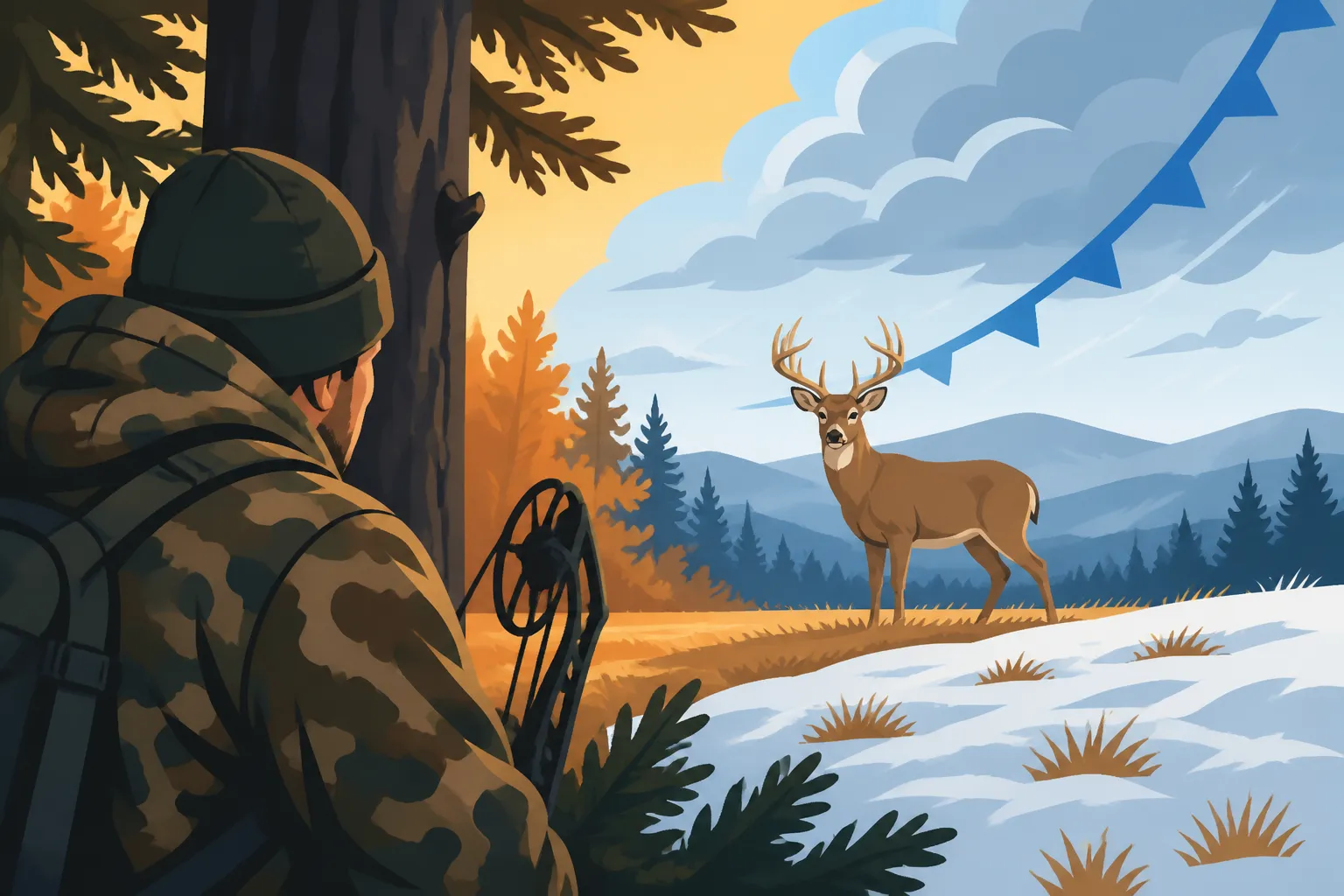
There’s nothing quite like the crisp air and brilliant blue skies after a cold front sweeps through New Hampshire. It’s invigorating for us, but for deer, it often means a scramble to adapt. Many hunters get frustrated when deer seemingly vanish overnight, or their usual patterns completely change. This guide is here to unravel the mysteries of deer behavior after a significant temperature drop and equip you with the strategies to successfully hunt whitetails in the challenging, yet rewarding, post-cold front conditions across our beautiful Granite State.
Understanding Deer Behavior After a Cold Front
When that first big cold front of the season rolls in, or even a smaller one in the midst of fall, it’s a game-changer for deer. Suddenly, their daily routines are thrown into flux, and their instincts kick into overdrive to cope with the new reality. Ignoring these shifts is a surefire way to come home empty-handed.
The Impact of Barometric Pressure and Temperature Drops
Deer, like many animals, are incredibly sensitive to changes in atmospheric pressure. A strong cold front is typically preceded by a sharp drop in barometric pressure, often bringing rain or snow, and then a rapid rise as the high-pressure system moves in, accompanied by plummeting temperatures and clear skies. That falling pressure often triggers a flurry of feeding activity before the front truly hits, as deer instinctively try to fuel up in anticipation of the energy demands ahead. It's a prime time to be in your stand if you can catch it.
Once the high-pressure system settles in and the air turns frigid, deer become much more deliberate. Their metabolism slows slightly, and they need to conserve energy. That means less casual wandering and more focused movement between critical areas. The colder the air, the more energy they burn just staying warm, so every movement becomes a calculated decision. This is why knowing their post-front priorities is so crucial for New Hampshire hunters.
Think about how you feel on a brutally cold day – you don't want to spend more time outside than necessary, and you definitely want a good, warm meal. Deer are no different, though their "warm meal" might be a forgotten apple or a browse line in a sheltered thicket. The clear, still air can also make scent detection even more acute for deer, so your scent control needs to be absolutely dialed in.
Energy Conservation and Food Priorities
After a cold front, deer’s primary objective shifts dramatically towards energy conservation and calorie intake. The abundant, scattered food sources they might have casually browsed during warmer weather suddenly become less appealing if they require too much effort to access or don’t provide enough bang for their caloric buck. Instead, they’ll seek out concentrated, high-energy food sources that allow them to feed efficiently and quickly.
In New Hampshire, this often means focusing on the remaining mast crops, like acorns, if it hasn't been a Hunting After a Poor Acorn Year. Apples in old orchards, if any are still on the tree or accessible on the ground, become gold mines. Fields of standing corn or brassicas, if you’re lucky enough to have access to private land with them, will be magnets. Even woody browse in sheltered areas will see increased activity. They want to get in, fuel up, and get out, minimizing their exposure to the biting cold and potential predators.
This shift in food preference means that areas that were hotbeds of activity before the front might become ghost towns, while seemingly quiet corners suddenly come alive. A savvy hunter will adjust their scouting and stand locations to reflect this new caloric imperative. It’s all about finding where the deer can eat the most, in the quickest amount of time, with the least energy expenditure.
Shifts in Bedding and Movement Patterns
Along with changes in feeding, deer also drastically alter their bedding and travel routes after a cold front. Gone are the days of bedding in open, sunny spots to catch a breeze. Now, they're looking for thermal cover – places that block the wind and offer some insulation from the cold.
In New Hampshire's diverse terrain, this means deep, dense softwood thickets – cedar swamps, spruce stands, or dense hemlock groves – become prime bedding areas. These conifer stands trap heat and block the wind far better than open hardwoods. South-facing slopes that catch more sunlight can also be favored, especially if they have good cover. Deer will bed in these areas to conserve body heat, minimizing their movement during the coldest parts of the day. Check out these spots if you're Where New Hampshire Bucks Bed in Thick Cover.
Their travel routes will also become more predictable, often skirting the edges of these thermal bedding areas and heading directly to the most calorie-rich food sources. They’ll use natural funnels, creek bottoms, and ridge lines that offer the most sheltered and efficient path between bed and feed. Understanding these shifts is paramount. Often, the deer will travel later in the morning and earlier in the afternoon, potentially even moving during the midday to take advantage of warmer temperatures or less hunting pressure.
Scouting and Locating Deer in Post-Front Conditions
After a cold front, your pre-season scouting notes might as well be written in invisible ink for many deer. What was true yesterday might not be true today. This is when your ability to adapt and actively scout for fresh sign becomes absolutely critical.
Focusing on Prime Food Sources
As we discussed, high-calorie food sources become the priority. Your initial scouting should revolve around identifying and confirming which of these sources are still viable and attracting deer. This means physically getting out there, even if it's chilly. Look for fresh droppings, tracks, and browse marks around:
- Acorn Flats: If there are any remaining acorns, especially white oaks, deer will hammer them.
- Old Apple Orchards: Even a few lingering apples can draw deer from a wide area. Look for sign where the apples are freshest.
- Green Fields: Winter wheat, clover plots, or brassicas, if present, offer vital nutrition.
- Evergreen Browse: Hemlock, cedar, and even certain types of woody browse found within softwood thickets become more important as other food dwindles.
When you find these concentrated food sources, look for the freshest sign possible. Are the tracks crisp? Are the droppings dark and moist? Are the browse lines recently nipped? This will tell you if deer are currently using the area. A high-quality mapping application like GoHunt can help you overlay public land boundaries with satellite imagery, identifying potential food sources like clear-cuts with young browse or unpicked agricultural fields that might hold deer.
Identifying Key Travel Corridors and Funnels
Once you’ve pinpointed the most attractive food sources, your next step is to connect those dots to the thermal bedding areas. Deer will use the path of least resistance and greatest security to travel between the two. These are your new prime locations for stand placement.
Look for natural funnels:
- Ridge Saddles: A dip in a ridge line acts as a natural crossing point.
- Creek Bottoms or Ravines: These can offer sheltered travel routes.
- Wooded Edges between Cover Types: The transition from dense softwood to more open hardwoods, or the edge of a field, often forms a clear travel corridor.
- Pinch Points: Areas where thick cover narrows, forcing deer into a tighter travel lane. This could be a narrow strip of timber between two open fields or a small wooded peninsula jutting into a swamp.
- Hunting a Funnel Between Two Woodlots is a classic strategy that becomes even more effective in cold weather as deer seek efficiency.
Scout these corridors for fresh tracks and rub/scrape lines, which can indicate consistent travel. The colder weather can sometimes make scrapes less active, but rubs will still show where bucks are moving and marking their territory. Even a few fresh rubs can confirm a travel route.
Interpreting Fresh Sign in Cold Weather
Interpreting deer sign after a cold front requires a keen eye and an understanding of how cold affects the evidence. Fresh tracks in frozen ground or a light dusting of snow will be sharp and clear, telling you exactly how recently a deer passed. Older tracks might be filled with ice crystals or appear more weathered. Pay close attention to the direction of travel and whether the tracks indicate a single deer or a group.
Droppings are also excellent indicators. In cold weather, fresh droppings will still be dark and moist, but they’ll quickly freeze solid. Older droppings will be dry and crumbly or covered in frost. Look for concentrations of droppings, particularly near preferred food sources, indicating that deer are spending time feeding there.
| Sign Type | Before Cold Front (Warmer) | After Cold Front (Colder) | Interpretation |
|---|---|---|---|
| Tracks | Can be soft, muddy; quickly degrade. | Crisp in frozen ground/snow; persist longer. | Freshness is easier to determine in cold. |
| Droppings | Soft, moist; decompose quickly. | Freeze solid; remain moist inside if very fresh. | Concentrations near food/bedding critical. |
| Rubs/Scrapes | Actively refreshed by bucks; scrapes heavily used. | Rubs still relevant; scrapes may see less activity. | Rubs show travel; scrapes confirm presence. |
| Browsing | More varied; less concentrated. | Highly concentrated on high-calorie/evergreen sources. | Reveals current preferred food and intensity of use. |
| Bed Areas | Open, airy spots; sunny side hills. | Dense thermal cover (softwoods); south-facing slopes. | Confirms new bedding locations for energy conservation. |
| Movement | Can be scattered; more midday loafing. | More direct, deliberate; shifts to early/late or midday. | Reveals new travel routes between redefined needs. |
Don't underestimate the value of fresh rubs, either. Bucks still leave these calling cards, and a shiny, recently rubbed sapling can indicate a buck moving through an area, even if he's not actively scraping. This is crucial for Finding Sign in White Mountain Timber. When you're glassing with your Optics for New Hampshire's Timber Country, pay attention to any visible movement, even slight, in dense cover during midday.
Adapting Your Hunting Strategy
Once you’ve done your cold-weather scouting homework, it's time to adjust your actual hunting tactics. What worked last week might just educate a deer this week. You need to become a silent, patient, and highly adaptable predator.
Adjusting Stand Placement for New Patterns
Your treestand or ground blind placement needs to reflect the deer’s new movement patterns. Instead of setting up on general travel corridors, focus on those specific funnels and pinch points that connect thermal bedding to concentrated food. For example, if you've identified a dense cedar swamp as a new bedding area, set your stand downwind of the most likely travel route out of it, heading towards an active apple orchard.
Consider prevailing wind directions and thermals, especially in New Hampshire's hilly terrain. Cold air sinks into valleys, creating downward thermals in the morning, which then rise as the day warms. Reverse your thinking for evening hunts. Wind and Thermals in Steep Granite Terrain are critical considerations. A high-quality mapping app with wind overlays, like GoHunt, can be a game-changer for visualizing how your scent will carry in a specific location. You might need to move your stand or hang a new one quickly. If you're Hanging a Stand on a Granite Ridge, ensure it allows you to intercept deer moving efficiently along that feature.
Don't be afraid to hunt midday. Deer are often less active during the coldest parts of the early morning or late evening, but as the sun warms things up, especially if it's sunny, they might move to feed or shift bedding. This is especially true for mature bucks who might use this lull in hunter activity to their advantage. A Cold-Weather Sitting Strategy in the North Country often means embracing the midday hunt.
The Importance of Scent Control and Quiet Movement
In cold, crisp air, scent travels incredibly well. Every breath, every piece of clothing, every step you take can give you away. This means your scent control regimen needs to be absolute.
- Thorough Cleaning: Wash all hunting clothes in scent-free detergent and store them in airtight containers.
- Scent Eliminators: Use sprays on your boots and outer layers before heading into the woods.
- Wind Awareness: Always, always play the wind. If the wind isn't right for your chosen spot, move to another. This is non-negotiable after a cold front.
Beyond scent, quiet movement is paramount. Frozen leaves crunch like potato chips, and snapping twigs sound like gunshots in the still, cold air. Take slow, deliberate steps. Wear quiet clothing that won't rustle or create static. If you’re still-hunting, this means pausing, listening, and observing for much longer periods. For more on this, check out Still-Hunting White Mountain National Forest Timber. The objective is to be as stealthy as possible, minimizing your footprint and acoustic signature in an environment where sound carries far.
Leveraging Midday Movement and Thermal Hubs
Deer, especially mature bucks, are masters of adapting to hunting pressure and environmental conditions. After a cold front, they often learn that the periods of lowest hunter activity, typically midday, can be their safest window for movement. Instead of a quick morning dash or an evening stroll, you might find them shifting their activity to between 10 AM and 2 PM.
Thermal hubs are areas where deer can bask in the sun, out of the wind, and still be close to food or heavy cover. South-facing slopes with good sun exposure and thick evergreens (like a stand of white pine or hemlock) can be ideal spots for them to warm up. A deer might move from dense bedding cover to a sunny, sheltered spot within a few hundred yards, just to soak up some rays, before moving back or heading to feed later. These areas can be fantastic ambush points, particularly for Reading a White Mountain Deer Yard which provide both food and thermal protection.
Consider trying some calling, especially if you're targeting bucks. After a cold front, the rut might be kicking in or close to it, and a well-placed Grunt Calls in Mature New Hampshire Hardwoods can sometimes pique the interest of a buck looking for a doe, even if he's not actively chasing. Patience is your greatest ally during these cold, quiet hours.
Essential Gear and Preparedness for the Cold
New Hampshire winters can be brutal, and even a cold front in early fall can bring truly frigid temperatures. Being unprepared for the cold isn't just uncomfortable; it's dangerous and will significantly reduce your effectiveness as a hunter.
Layering for Sustained Comfort
The key to staying warm and comfortable in New Hampshire's post-cold front conditions is a strategic layering system. It allows you to add or subtract clothing as your activity level and the ambient temperature change throughout the day.
- Base Layer: Start with a moisture-wicking base layer against your skin. Merino wool is fantastic because it insulates even when damp and doesn't retain odor. Synthetics are also good. Avoid cotton at all costs, as it holds moisture and will make you cold.
- Mid Layers: Add insulating layers like fleece or puffy jackets (down or synthetic). These layers trap warm air close to your body. You might need multiple mid-layers depending on how cold it is and how long you plan to sit.
- Outer Shell: Your outermost layer should be windproof and water-resistant. This protects you from the elements and prevents heat loss due to wind chill. Ensure it's quiet.
Don't forget your extremities! A good wool or fleece hat, insulated gloves or mittens (with finger access for shooting), and warm, waterproof boots are non-negotiable. Chemical hand and foot warmers can also be a lifesaver for those long, stationary sits. More details on this can be found in Layering for New Hampshire's Cold Hunting Season. Always pack more layers than you think you'll need; it's easier to take them off than to wish you had more when the temperature plummets.
Optics and Tools for Enhanced Visibility
In the clear, crisp air after a cold front, visibility can be exceptional, making good optics even more valuable.
- Binoculars: A quality pair of binoculars (10×42 is a great all-around choice) will help you pick apart dense cover, identify deer at a distance, and spot subtle movements that would be missed with the naked eye. They're indispensable for glassing those south-facing slopes and dense evergreen thickets where deer might be bedded.
- Rangefinder: With deer moving more deliberately and possibly at longer ranges, a good rangefinder is crucial for making ethical shots, especially in varied terrain.
Beyond optics, other tools are essential. A reliable GPS or a mapping app like GoHunt on your phone (with downloaded offline maps!) is critical for navigating New Hampshire's public lands, especially if you're exploring new post-front bedding areas or tracking a deer in minimal light. A quality headlamp with fresh batteries is also a must for pre-dawn walks in or post-dusk walks out. The cold can drain batteries faster, so having spares is a smart move.
Disclaimer
Hunting is an inherently dangerous activity. Always prioritize safety, understand and follow all New Hampshire Fish and Game Department regulations, and obtain appropriate licenses and permits. This guide provides general information and recommendations and should not replace proper hunter education or personal judgment. Be aware of your surroundings, hunt ethically, and respect the land and wildlife.