Decoy Placement for Pressured Spring Birds
There’s nothing quite as deflating as a spring gobbler that hangs up just out of range, eyeing your setup with an almost human suspicion, or worse, skirts your position entirely. Dealing with pressured spring turkeys in New Hampshire can be a real challenge, turning what should be an exciting morning into a frustrating game of cat and mouse. This guide will walk you through the nuances of decoy placement specifically for those wary birds that have seen it all, helping you increase your chances when the odds feel stacked against you.
Understanding Why Spring Birds Get Pressured
Spring gobblers don't start the season as cagey veterans; they become that way through encounters with hunters. By the time mid-May rolls around, many of these birds have had multiple close calls, heard countless calls, and seen various decoy spreads. Their survival instincts kick into high gear, making them far more difficult to entice into close range.
The Impact of Early Season Success and Hunter Density
When New Hampshire's spring turkey season opens, especially in areas with good turkey populations, initial hunter success can be high. This often means the easiest birds are taken first. As the season progresses, the remaining gobblers become increasingly educated. They learn to associate certain calls with danger, or they simply become less responsive to calling altogether. In areas with higher hunter density, such as popular state forests or wildlife management areas, this pressure intensifies quickly. Imagine a particularly accessible patch of woods near Manchester or Concord; those birds are going to get a lot more attention early on. Knowing this, your tactics need to evolve. It's not enough to just throw out a jake and two hens; you need to think like a gobbler that's already escaped danger a few times.
How Turkeys Learn to Avoid Decoys
Turkeys are incredibly intelligent creatures, and they learn quickly. If a gobbler walks into a setup, sees a jake decoy, and then hears a shotgun blast, he's going to be exceptionally wary of jake decoys in the future. They might even become accustomed to specific types of decoys, like foam or poorly painted plastic models, that just don't look right. Birds might shy away from overly aggressive jake postures or multiple hen decoys if they've had bad experiences. Sometimes, it’s not even about direct danger. If they approach a decoy spread and don't see the "live" birds that should be making the calls, they become suspicious. They key in on subtle cues: unnatural stillness, poor lighting, or decoys placed in an exposed, obvious manner. This accumulated knowledge makes them incredibly difficult to fool, especially after the initial rush of the season has subsided and you're well into the New Hampshire Spring Turkey Season Dates.
Reading the Landscape for Signs of Pressure
One of the most crucial aspects of hunting pressured birds is understanding where they feel safe and where they've encountered trouble. You won't always see literal signs, but you can infer a lot from turkey behavior. Are gobblers consistently roosting in thick, inaccessible areas? Are they quickly shutting down after a few calls? Are they flying down and moving in the opposite direction from traditional calling spots? These are all indicators of pressure. Look for areas with less human disturbance, perhaps deeper into public land or on private parcels where you've secured permission. Sometimes, it's about finding those overlooked pockets, the little ravines or thick stands of pine that hunters tend to walk past. This is where tools like GoHunt, with its detailed mapping layers, can be invaluable for identifying potential hidden gems and lesser-accessed areas, helping you to find ground others might walk past. You're essentially looking for where the birds don't expect to see a hunter or a decoy setup.
Strategic Decoy Selection for Wary Toms
When dealing with pressured turkeys, your decoy strategy needs to be pared down and perfected. Forget the flashy, over-the-top spreads you might see on TV. Simplicity, realism, and subtlety are your best friends.
Less Is More: Minimalism in Decoy Spreads
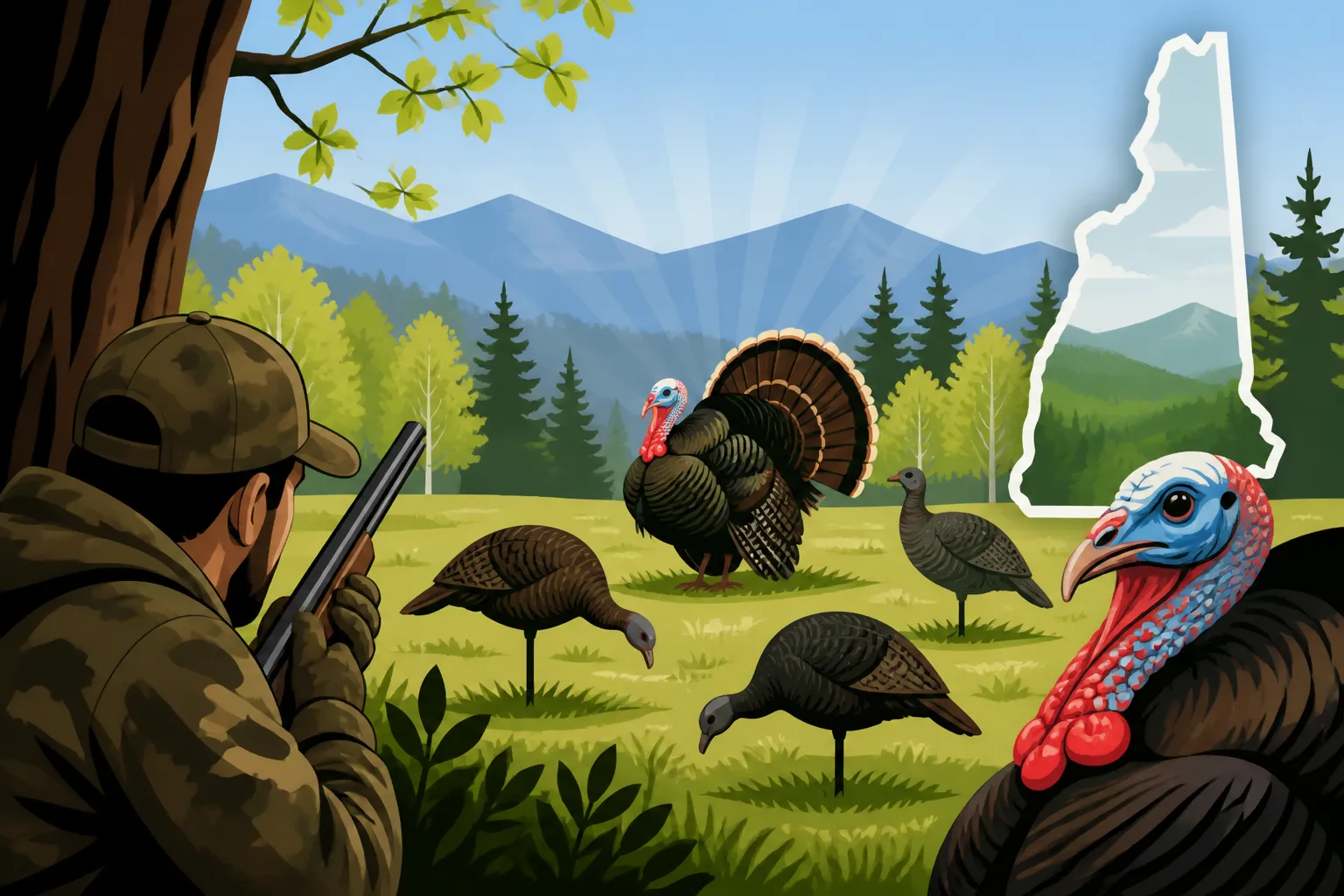
For pressured gobblers, a large, elaborate spread can be a red flag. It looks unnatural, particularly if they're used to seeing only a few birds together. Instead, lean into minimalism. Often, one or two ultra-realistic hen decoys is all you need. Sometimes, a single, contented hen is enough to pique a gobbler's curiosity without raising his suspicion. Think about what a real hen would be doing in that specific spot. A lone hen feeding or subtly preening can appear far more natural than a full flock. The idea is to create a scene that looks completely unthreatening and natural, something that doesn't scream "hunter." This is especially true if you're trying to coax a bird off the roost; a minimalist setup can be very effective as described in strategies for Calling a May Gobbler Off the Roost.
Hen Only Versus Breeding Pair Setups
The choice between a hen-only spread and one that includes a jake or gobbler can be critical with pressured birds. In early season, or with unpressured birds, an aggressive jake can draw in a dominant tom looking for a fight. However, for a tom that’s been shot at, or even just seen other jakes get shot at, a jake decoy can trigger a flight response rather than an aggressive charge. For pressured birds, a hen-only setup often proves more effective. A lone hen or two, possibly in a submissive or breeding posture, presents no direct threat. The gobbler's natural instinct to breed is still powerful, and a non-threatening hen is far more appealing than a rival jake that might represent danger. If you do opt for a jake, consider a submissive jake posture rather than an upright, strutting one. This signals less aggression and might be more palatable to a wary tom.
Realistic Decoys and Motion
Realism is paramount. Cheap, shiny, or poorly painted decoys stand out like a sore thumb to a wary turkey. Invest in high-quality, photo-realistic decoys that mimic natural feather patterns and body language. Brands like Avian-X or Dave Smith Decoys are popular for their incredible detail and lifelike postures, though any well-made, matte-finish decoy can work. Beyond static realism, consider adding subtle motion. A slight breeze can cause a feather to ruffle on a real turkey; motion decoys that subtly move a head or fan can replicate this. However, avoid overly dramatic motion, like full spinning wing decoys, unless you are hunting open fields and trying to draw attention from a very long distance. For pressured birds in the timber, subtle movement is key to enhancing realism without being jarring. One great tip is to observe real turkeys whenever possible to understand their nuanced movements, or use hunting apps like GoHunt to scout digital terrain and visualize natural turkey behavior in different settings.
Advanced Decoy Placement Techniques
Beyond simply choosing the right decoys, where and how you place them is where true mastery comes into play, especially when dealing with intelligent, pressured birds.
The "Approach Zone" and Where to Position Your Blind
Understanding a turkey's "approach zone" is critical. Turkeys, particularly gobblers, often approach a decoy setup from a specific direction, looking for safety and an escape route. They tend to stick to open fringes, logging roads, or natural funnels, avoiding thick cover that could conceal a predator. Your job is to predict this approach. Place your decoys where a gobbler has a clear line of sight, but not so exposed that they look out of place. More importantly, position your blind or hide well behind the decoys, ideally 20-30 yards back, off to the side of their expected approach. This creates an open "killing zone" between you and the decoys. The gobbler will focus on the decoys, presenting you with a broadside shot as he comes into range. Remember, if you're using a ground blind, ensure it's well-brushed in and camouflaged, especially if you're on public land. Learn more about Using a Ground Blind on Public Land to maximize your concealment.
Utilizing Natural Cover and Terrain Features
New Hampshire's varied terrain, from the dense hardwoods to rocky ridges, offers abundant natural cover. Use it to your advantage. Don't just set decoys in the middle of a field. Instead, position them near a natural funnel, a logging road bend, or the edge of a small clearing. A single hen decoy peeking out from behind a fallen log or a clump of pines can look incredibly natural, drawing a gobbler's attention without making him suspicious. If you’re hunting a ridge line, consider how a gobbler might come over the top or around a bend. You want to make it easy for him to see the decoys but give him enough sense of security that he commits. This might mean placing them slightly downhill or just out of sight around a knoll, forcing him to close the distance to get a better look. This kind of nuanced setup is vastly superior to just plopping decoys in the open. You can apply similar principles when Hunting a Funnel Between Two Woodlots to draw deer, but for turkeys, it's about subtle visual cues.
Adjusting for Wind and Sun Direction
Many hunters overlook the effects of wind and sun on their decoy spreads, but pressured birds won't. Turkeys prefer to approach into the wind so they can hear and smell any potential threats, and they also like to keep the sun at their backs to get a better view. Position your decoys so that an approaching gobbler will be looking into the sun, or at least not directly at your blind with the sun shining on it. This glare will work in your favor, obscuring your position. Similarly, if there's a prevailing wind, set your decoys so that a gobbler would naturally approach from the direction of the wind, putting him in a prime position for a shot. For example, if the wind is out of the north, position your setup so the gobbler approaches from the north, facing your decoys head-on, giving you a broadside or slightly quartering-away shot. These small adjustments can make a significant difference in how a wary tom commits.
Common Decoy Mistakes to Avoid with Pressured Birds
Even with the best decoys and intentions, certain mistakes can instantly spook a pressured gobbler. Avoiding these pitfalls is just as important as implementing good strategies.
Over-Calling and Decoy Visibility
One of the biggest mistakes hunters make, especially when birds are silent or reluctant, is over-calling. If a gobbler isn't responding, hitting him with constant yelps and cutts often just reinforces his suspicion. He's heard it all before. With pressured birds, less calling is often more effective, especially in conjunction with well-placed decoys. Let the visual appeal of your decoys do most of the work, using sparse, subtle calls to grab attention. Furthermore, consider the visibility of your decoys. If they are placed in a location where they are visible from hundreds of yards away, it might attract attention, but also give the gobbler ample time to scrutinize and decide not to commit. For pressured birds, sometimes a decoy that is only visible once the gobbler rounds a corner or crests a small rise is more effective, giving him less time to think and more reason to commit quickly.
Ignoring the Gobbler's Perspective
It’s easy to set up your decoys from a human perspective, thinking about what looks good to you. But you need to actively consider what the setup looks like from the gobbler's point of view. Get down on your hands and knees at turkey height and look at your spread. Is anything shiny? Is your blind poorly concealed? Are your decoys facing the wrong way? Is there too much brush between the decoys and the anticipated approach path? Turkeys have incredible eyesight, and they will pick up on details that you might miss from an upright position. Make sure your decoys are oriented correctly – often facing away or slightly quartering away from the expected approach, simulating contented birds. Remember, a gobbler wants to be able to see around and through the decoys to assess the situation for danger. An open, inviting visual corridor is essential.
Setting Up Too Early or Too Late
Timing your setup can be critical. If you arrive at your chosen spot too late, after the birds have already flown down, you risk spooking them as they move through the woods. Conversely, setting up too early, especially if you're making noise or letting a headlamp shine, can also alert birds still on the roost. The ideal window is often about 45 minutes to an hour before fly-down. This gives you enough time to move quietly, set your decoys, and get settled into your blind before the first calls of dawn. However, with pressured birds, sometimes waiting for them to fly down and move away from the roost area before slipping in and setting up on a travel corridor or feeding area can be more effective. This reduces the chance of spooking them at their most vulnerable time. Understanding the general patterns of White-Tailed Deer Across New Hampshire or even wild turkeys can help in predicting movement. For specific turkey roosting habits, learning When New Hampshire Gobblers Go Quiet in Late May can also inform your setup timing.
Here's a quick guide to decoy types and how they stack up against those smart, pressured gobblers:
| Decoy Type | Realism Level (1-5) | Pressure Suitability | Best Used For | Considerations |
|---|---|---|---|---|
| Full Strut Gobbler | 3-4 | Low | Early season, aggressive Toms, challenging rivals | Can intimidate or spook pressured birds; use sparingly, if at all. |
| Jumping Jake | 3-4 | Moderate | Challenging dominant Toms, encouraging a fight | Less threatening than a full gobbler; can still spook very wary birds. |
| Submissive Jake | 4-5 | High | Piquing curiosity, less aggression | Appears non-threatening, can draw in cautious Toms. |
| Breeding Hen | 4-5 | High | Attracting breeding-minded Toms | Very natural, taps into primal instinct. Combine with a submissive jake. |
| Feeding Hen | 4-5 | Very High | Creating a calm, natural scene | Signals safety and contentment; excellent for wary birds. Can be used singly. |
| Upright/Alert Hen | 3-4 | Moderate | Signalling other birds, adding realism | Use cautiously; an overly alert posture can sometimes suggest danger. |
| Fanning Decoy | N/A | Moderate | Run-and-gun, drawing distant attention | Highly effective for aggressive Toms but can be an instant red flag for wary ones. |
| Motion Decoy | 4-5 | High | Adding subtle, lifelike movement | Very effective when motion is subtle and natural, not over-the-top. |
Remember, the goal is not just to attract attention, but to build trust and eliminate suspicion. By choosing your decoys wisely and placing them strategically, you can still find success even when the spring woods are filled with smart, pressured birds. Keep scouting, adapt your methods, and don't be afraid to try new approaches—that's the true spirit of hunting in New Hampshire.
Disclaimer
Hunting is an inherently dangerous activity. Always prioritize safety, follow all local and state regulations, and ensure you have the necessary training and permits. The information provided in this guide is for informational purposes only and should not replace professional instruction or official wildlife agency guidelines. Always be aware of your surroundings, properly identify your target, and know your backstop.