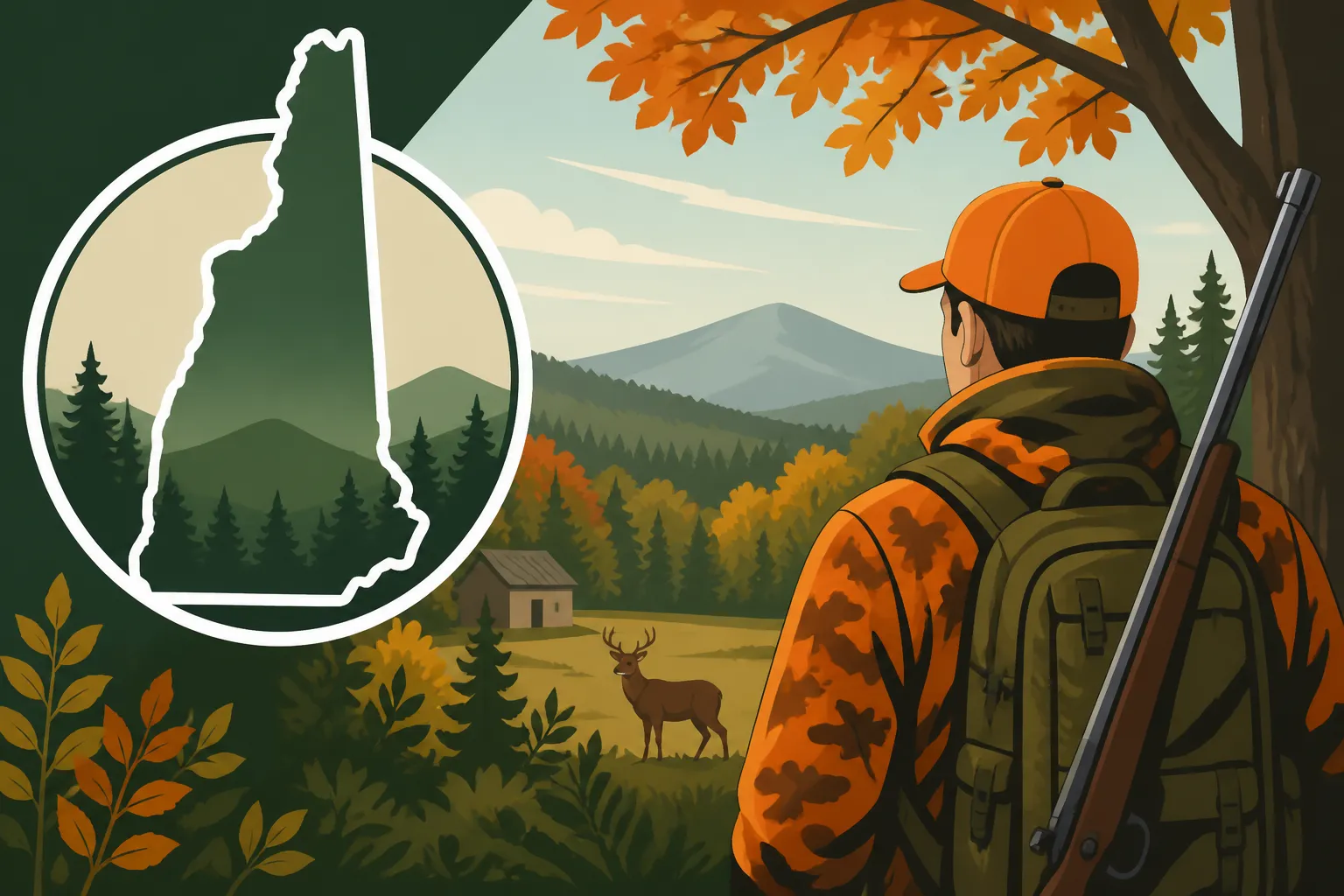
Hunting Small Private Tracts in New Hampshire
It’s a common frustration for hunters in New Hampshire: feeling like all the good public land is overrun, or that finding extensive private acreage is a pipe dream. Many of us automatically think big when it comes to hunting grounds, but overlook the incredible potential hiding in plain sight: smaller, often unpressured private tracts. This guide will walk you through how to pinpoint these overlooked gems, secure permission, and effectively hunt them for surprising success, offering a refreshing alternative to crowded public woods.
Finding and Identifying Small Private Tracts
The Granite State is a patchwork of public and private land, and while sprawling national forests get a lot of attention, countless small parcels exist—woodlots behind houses, undeveloped acreage tucked between subdivisions, or forgotten corners of old family farms. These little pockets, often dismissed by other hunters, can be absolute sanctuaries for deer, turkeys, and even bears. The key is to shift your mindset from "big and remote" to "small and smart."
Leveraging Mapping Tools and Local Knowledge
In today’s age, sophisticated mapping applications are your absolute best friend for this kind of detective work. Tools like GoHunt, OnX Hunt, or even Google Earth can reveal property lines, landowner names, and aerial views of terrain features that could hold game. Start by looking around areas you already know hold deer, even if it's public land nearby. Zoom in on the adjacent private properties. Are there small woodlots, thickets, or neglected fields that might offer cover or food? You’ll often find these small parcels acting as crucial travel corridors or bedding areas between larger blocks of habitat.
Don't just look at the woods; pay attention to terrain. A small swampy bottom, a thick cedar stand, or a forgotten apple orchard on a 10-acre lot can be a magnet. Use these tools to identify potential access points, note prominent landmarks, and even guess at who might own the land. Cross-referencing with town tax maps (often available online) can confirm ownership. Beyond digital maps, local knowledge is invaluable. Talk to people at the general store, the feed shop, or local conservation clubs. Sometimes a casual conversation can lead to a tip about a small parcel that’s been overlooked for years. You'd be amazed how many people know someone who "has an old woodlot they don't do anything with."
Recognizing Overlooked Opportunities
Many hunters mistakenly believe that only vast tracts of land can hold quality game. This couldn't be further from the truth, especially in areas with fragmented habitat. Deer, in particular, are incredibly adaptable and will utilize small pockets of cover right next to human activity if they feel secure. Think about those "nooks and crannies" that other hunters might drive past. A 5-acre thicket behind someone's house, a small strip of woods bordering a hayfield, or an isolated cluster of pines in a valley can provide thermal cover, bedding, or staging areas.
These small parcels often benefit from being less disturbed. They might not see the same level of hunting pressure as large public tracts, allowing deer to establish predictable patterns. Look for edges where different types of habitat meet: a brushy field edge next to a mature hardwood stand, or a small stream bottom running through a residential area. These are natural funnels. Remember, deer are always seeking security, food, and water. If a small parcel provides one or more of these needs without constant human intrusion, it becomes highly valuable. Sometimes, the most overlooked opportunities are those that require a little extra legwork to find or permission to access, deterring the casual hunter and leaving a hidden gem for you.
Gaining Permission on Private Land
Once you’ve identified a promising small tract, the next hurdle is securing permission. This can feel daunting, but it's often more straightforward than people imagine, especially when you approach it with respect, honesty, and a clear plan. Landowners are often more receptive to hunters who appear responsible and considerate, rather than those who just show up hoping for the best.
The Art of the Ask: Approaching Landowners
This is where the rubber meets the road. Before you even knock on a door, do your homework. Know exactly which parcel you’re interested in, and be prepared to show them on a map if they ask. Timing is crucial: avoid interrupting dinner or showing up too early in the morning. A good rule of thumb is late afternoon or early evening on a weekday, or a weekend afternoon. Dress presentably—you don't need a suit, but don't show up covered in mud either. Start with a polite introduction, explaining who you are and why you're there.
Be direct but respectful: "Hello, my name is [Your Name], and I was hoping to speak with the landowner. I'm an ethical hunter, and I noticed your property at [address/description] and was wondering if you might ever consider allowing someone to hunt deer there." Many landowners have concerns about safety, property damage, or liability. Be ready to address these. Emphasize your commitment to safety, adherence to game laws, and respect for their property. Offer to help them out with small chores, like clearing brush or helping with repairs, as a way to build goodwill. Sometimes, simply offering to share some of your harvest can be a powerful incentive. For an in-depth look at making this approach, check out our guide on Knocking on Doors in New Hampshire Farm Country and Asking a New Hampshire Landowner for Permission.
Building and Maintaining Relationships
Gaining permission is just the first step; maintaining that relationship is equally, if not more, important. Always, always follow through on any promises you make. If you say you'll call before you hunt, do it. If you offer to share venison, make good on it. Consider bringing a small gift around the holidays—something like a gift basket or a card can go a long way in showing appreciation. Clean up after yourself meticulously; leave no trace of your presence. Pack out all your trash, including spent shell casings or snack wrappers.
It's also a good idea to check in with the landowner occasionally, even outside of hunting season. A quick phone call or a wave if you see them can reinforce the positive relationship. If you happen to notice anything concerning on their property while you're out, like suspicious activity or a downed tree, politely let them know. Becoming a responsible set of eyes and ears for them adds value to your presence. Remember, hunting on private land is a privilege, not a right, and a strong relationship ensures that privilege continues year after year. For more on the legal aspects, understanding New Hampshire Trespass and Permission Law is key, as is knowing if Do You Need Written Permission in New Hampshire? for the particular landowner's preferences.
Strategies for Hunting Small Tracts
Hunting small private tracts requires a slightly different approach than sprawling public lands. While the fundamentals of reading sign, understanding deer behavior, and using wind remain the same, the confined space demands more precision, stealth, and a keen awareness of your surroundings.
Adapting Tactics to Limited Acreage
On smaller parcels, every square foot counts. You can't just wander aimlessly. Focus on finding key features that concentrate deer movement. Look for pinch points, funnels between woodlots or fields, and transition areas where bedding cover meets food sources. Even a subtle change in topography, like a small ditch or a rise in the land, can act as a natural travel corridor for deer. For example, Hunting a Funnel Between Two Woodlots is an excellent strategy that works particularly well on smaller properties.
Since you're dealing with limited space, a stand placement that allows you to see multiple features without moving is ideal. Don't be afraid to hunt the "edges" – the boundary lines of the property, especially if they border thicker cover on an adjacent parcel. Often, deer will skirt these edges, feeling secure with the dense cover nearby. Ground blinds can be highly effective on small tracts, especially if you can brush them in naturally to break up your silhouette. Learn more about Using a Ground Blind on Public Land and adapt those principles to your private spots. Mobile tactics like still-hunting can also work, but require extreme patience and slow movement to avoid bumping deer out of a small area. When scouting, pay close attention to subtle signs like rubs, scrapes, and tracks. Our guide on Reading New Hampshire Mud for Fresh Deer Movement can help you interpret these clues.
Minimizing Pressure and Maximizing Success
The biggest risk on a small tract is over-pressuring it. Too many trips in and out, or hunting it too frequently, will quickly make deer nocturnal or push them off the property entirely. Think "surgical strikes." Scout digitally and from a distance as much as possible. When you do go in, do so efficiently and quietly. Plan your entry and exit routes carefully, ideally paths that minimize disturbance to bedding areas or active feeding zones. Avoid walking through the middle of the property if you can help it.
Consider using less invasive stand setups, like saddle hunting, or even just a well-concealed ground setup that you can put up and take down quickly. If you have multiple small parcels available, rotate them to allow each one to "rest" between hunts. This keeps the deer from becoming wise to your presence. Don't be afraid to take a day off if you've had a lot of activity or if the wind isn't perfect. Patience is your greatest ally on these smaller pieces of land. The goal is to hunt smart, not necessarily hard, to ensure the deer feel safe enough to continue using the property throughout the season.
Legal Considerations and Best Practices
Hunting on any land, public or private, comes with a set of rules and responsibilities. On private land, these are amplified, as you are a guest. Being intimately familiar with New Hampshire's hunting regulations and demonstrating impeccable ethics are non-negotiable for continued access.
Understanding New Hampshire's Posted Land Laws
New Hampshire has specific laws regarding private property and hunting. Generally, unless land is legally posted with "No Trespassing" signs or similar, it's considered open for recreation, including hunting. However, this general rule often leads to misunderstandings. While it might be legal to be on unposted private land, it's always best practice and a sign of respect to seek explicit permission from the landowner, regardless of whether the land is posted. This avoids any confrontation and establishes a positive relationship.
When land is posted, it means you absolutely cannot enter without permission. Signs must be properly placed and maintained according to state law for them to be legally binding. It’s also crucial to understand your responsibilities regarding game retrieval. Even if you shoot an animal on land where you have permission, if it crosses onto adjacent posted land where you don't have permission, you must seek permission from that landowner before pursuing the animal. Ignoring New Hampshire Posted Land Rules or attempting to retrieve game without permission can lead to serious legal trouble and damage your reputation as a hunter. Always carry your license and any written permission you may have.
Ethical Hunting on Private Properties
Beyond legalities, ethical behavior is paramount. This includes adhering to fair chase principles, accurate shot placement, and prompt game recovery. On a small tract, where you might be closer to roads or residences, being extra mindful of firearm discharge laws is critical. New Hampshire has specific setbacks regarding how close you can discharge a firearm to a dwelling or public road. Always confirm these distances and err on the side of caution.
Your actions reflect not only on you but on all hunters. Park your vehicle in a considerate manner, not blocking driveways or public access. Be respectful of fences, gates, and any existing structures. Close gates behind you. If you observe any damage, whether from yourself or others, report it to the landowner immediately. If you harvest an animal, field dress it discreetly and handle the carcass responsibly, away from public view or sensitive areas. Sharing your success and offering venison, if the landowner is open to it, is a wonderful gesture that reinforces your commitment to ethical hunting and appreciation for their generosity. Remember, every time you step onto a private tract, you're an ambassador for the hunting community. For detailed information on specific game species and methods, be sure to check out guides like White-Tailed Deer Across New Hampshire and New Hampshire's November Firearms Deer Season.
Pros and Cons of Hunting Small Private Tracts
Hunting small private parcels definitely has its unique advantages and challenges. Understanding these can help you decide if this strategy is right for you and how to best prepare.
| Feature | Pros | Cons |
|---|---|---|
| Hunting Pressure | Often significantly lower than public land, leading to more relaxed, predictable game behavior. | Can be over-pressured if hunted too frequently or by multiple individuals without coordination. |
| Access | Typically easier access, often closer to roads or homes, reducing long hikes. | Limited access points may exist, requiring specific entry/exit plans to avoid disturbing game or neighbors. |
| Habitat Quality | Can contain unpressured food sources (old orchards, neglected fields) or dense bedding cover. | May lack diversity or sufficient acreage for larger game movements, making scouting crucial. |
| Competition | Less competition from other hunters, increasing your odds of success. | Adjacent landowners or hunters might unknowingly push game onto or off your small parcel. |
| Flexibility | Potentially easier to obtain permission for specific dates or times, more flexibility in stand placement. | Must always respect landowner requests, which can sometimes limit hunting methods or hours. |
| Game Behavior | Deer often feel safer, leading to more daytime movement if pressure is kept low. | Game can be easily spooked off a small tract if bumped, making careful planning essential. |
| Relationship | Opportunity to build strong ties with landowners, potentially leading to long-term hunting access. | Requires consistent effort to maintain positive landowner relationships. |
Conclusion
Hunting small private tracts in New Hampshire can be an incredibly rewarding experience, offering unique challenges and often higher success rates than overcrowded public lands. It demands respect, patience, and a thoughtful approach to both landowners and the game you pursue. By leveraging modern mapping tools like GoHunt, mastering the art of asking for permission, adapting your hunting strategies to limited acreage, and always adhering to legal and ethical best practices, you can unlock a world of overlooked hunting opportunities. It’s about being a good neighbor and a responsible hunter, and the rewards can be truly exceptional.
Disclaimer
Please note that hunting regulations, seasons, and licensing requirements in New Hampshire are subject to change. Always consult the most current New Hampshire Fish and Game Department Hunting Digest or their official website before planning any hunting activity. This article provides general information and guidance only.