Dragging a Deer Out of a Granite Ravine
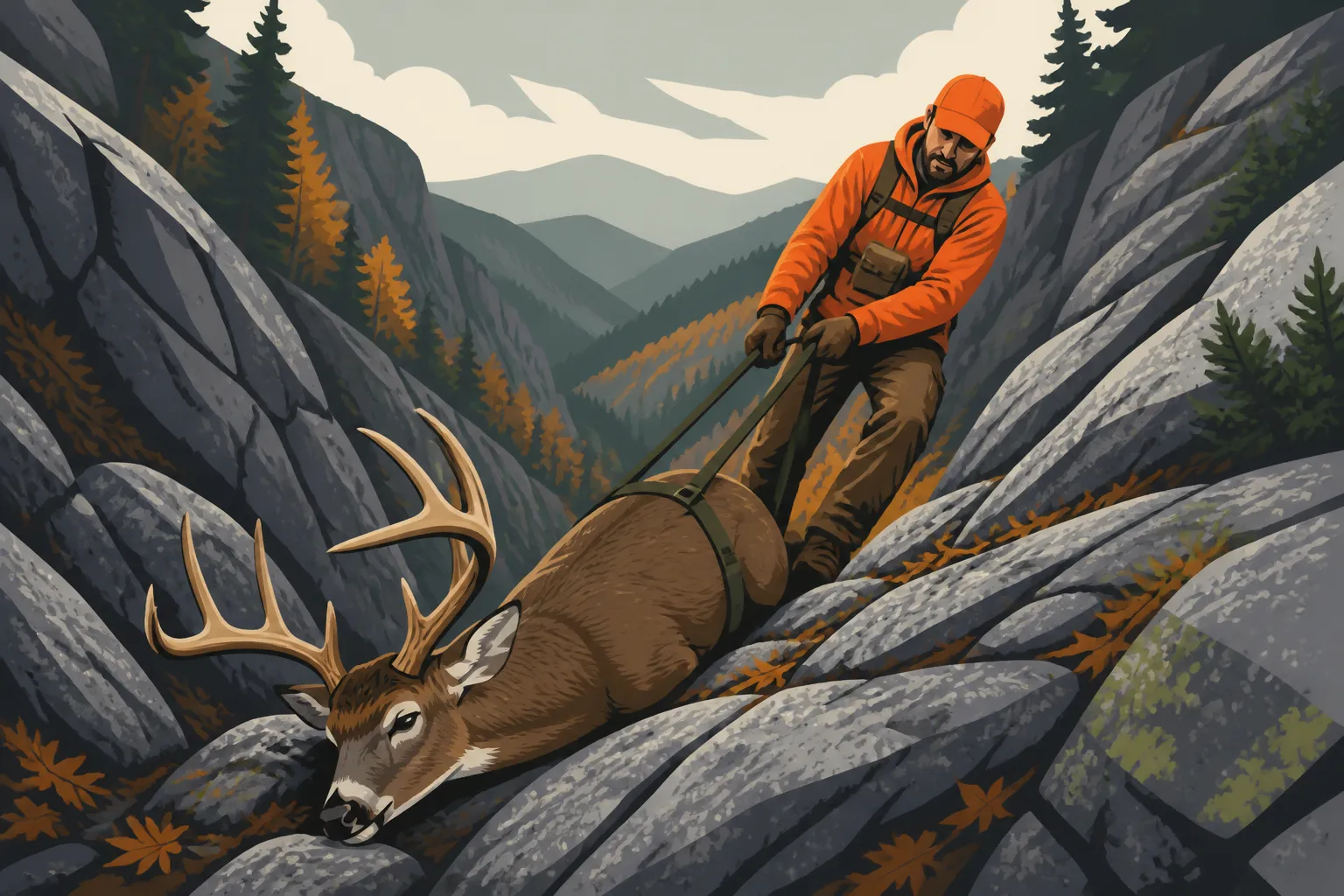
Oh, the sweet taste of success after a hard-earned hunt, quickly followed by the sinking feeling in your gut when you realize your prize has piled up in the absolute worst, most inaccessible spot imaginable. We've all been there, standing at the edge of a steep, rocky abyss, staring down at a magnificent deer, and instantly knowing the real work, the grueling work, is just beginning. Getting a deer out of a New Hampshire granite ravine isn't just a physical challenge; it's a mental game, a test of will against some of the most unforgiving terrain Mother Nature can throw at you. This isn't just about pulling; it's about strategy, safety, and a whole lot of grit.
Understanding the Challenge of Granite Ravines
New Hampshire is a state of breathtaking beauty, but that beauty often comes with a rugged, unforgiving edge, especially when you venture off the beaten path. Our granite ravines are notorious among hunters for being the ultimate test of endurance and ingenuity. You might think you’re prepared for anything, but a deer down in one of these spots will quickly humble you.
The Brutal Terrain of New Hampshire's Backcountry
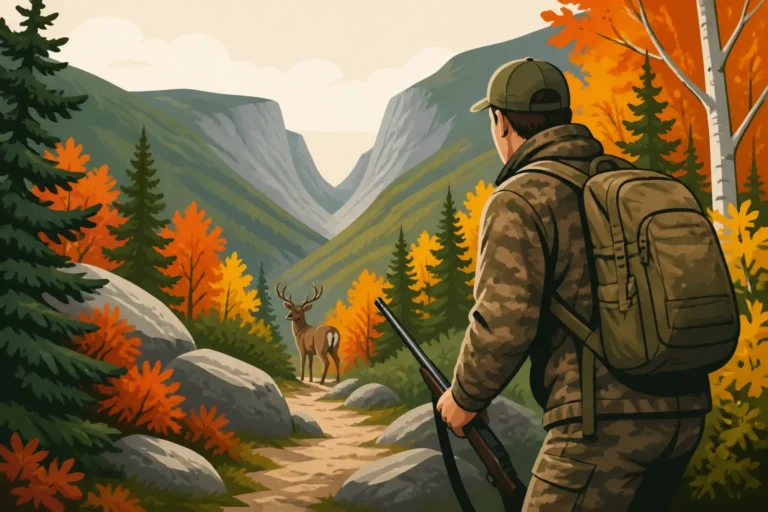
Picture this: you've just made a perfect shot, and the deer drops. You track it, full of anticipation, only to find it at the bottom of a ravine, a tangle of thick alders, slippery moss-covered rocks, and a near-vertical ascent back to anything resembling flat ground. New Hampshire's granite geology means these ravines are often incredibly steep, sometimes with sheer rock faces and loose scree that offers no purchase. The footing is treacherous, with wet leaves concealing unstable rocks and fallen timber. You're not just dealing with elevation change; you're battling slippery pine needles, crumbling ledges, and thick underbrush that grabs at every piece of gear. It’s a physical gauntlet that can quickly drain your energy and test your resolve. The air can feel thick down there, and the sounds of the forest seem to amplify the isolation. You're not just dragging a deer; you're fighting the mountain itself, every step of the way. It's a humbling reminder of why scouting is so critical.
Why Deer End Up in the Toughest Spots
It seems like deer have a sixth sense for finding the absolute worst places to expire, doesn't it? But there's a biological and behavioral reason for it. When wounded, deer often seek the thickest cover they can find, instinctively trying to hide from predators. These deep ravines, with their dense vegetation and difficult access, provide exactly that kind of sanctuary. They’re natural travel corridors too; deer will often traverse these ravines to move between feeding areas, bedding grounds, or to escape pressure. So, a deer might be perfectly healthy one moment, caught off guard, and then its last burst of energy carries it over a ridge and down into a steep, rocky drainage. Sometimes, it’s just pure bad luck where they decide to bed down for the day, and that's precisely where you caught them. It’s a frustrating reality of hunting in our state, and why you always need to be prepared for the worst-case scenario after the shot. Understanding this behavior is crucial, as it impacts how you approach the recovery, especially when you're Blood Trailing After Dark in New Hampshire.
Essential Gear and Preparations for the Recovery
Preparing for a difficult recovery starts long before you pull the trigger. It’s about being proactive and having the right tools for the job, especially when you’re venturing into the rugged beauty of the White Mountain National Forest or other equally challenging public lands.
Packing Smart for the Unexpected Recovery
When you head into the New Hampshire woods, your primary hunting gear is obviously with you: your rifle, ammo, knife, and perhaps your thermos of coffee. But when you’re anticipating hunting in areas known for tough terrain, or even if you're just being a smart hunter, you need an "oh-crap" kit for when a deer drops in a nasty spot. A reliable headlamp (or two, with extra batteries!) is non-negotiable, especially as daylight fades quickly in those deep ravines. Imagine trying to navigate crumbling rock ledges with just your phone flashlight—it's a recipe for disaster.
Beyond light, a good length of strong rope (50-100 feet of parachute cord or utility rope) can be a lifesaver for navigating steep sections, lowering gear, or even helping to get the deer over an obstacle. Game bags are crucial if you plan on quartering your animal, which is often the only viable option in a truly brutal ravine. Don't forget a comprehensive first-aid kit; scrapes, twisted ankles, and minor cuts are almost a given when you're battling granite and brush. A sharp folding saw or a small hatchet can also be invaluable for clearing brush or small downed trees that impede your drag path.
And let’s talk about navigation. Your phone's GPS can be great, but a dedicated hunting app like GoHunt or even the New Hampshire Fish and Game app, loaded with offline maps, is superior. These tools allow you to mark the exact spot the deer went down, plot potential extraction routes, and keep you from getting turned around in dense cover or when darkness falls. You don't want to be lost and dragging a deer. Knowing how to use these tools is just as important as having them, so practicing with them while Scouting New Hampshire Public Land Before Season is highly recommended.
Specialized Tools for Difficult Drags
Dragging a deer by its antlers in a granite ravine is often impossible and always inefficient. That’s where specialized tools come into play.
- Deer Sleds: While fantastic for relatively flat, open ground or snow, a traditional hard plastic deer sled can actually be a hindrance in a steep, rocky ravine. It can get snagged on rocks, flip over, or become unwieldy. However, a flexible fabric sled, like those made by Shappell or other brands, can sometimes conform better to the terrain and slide over smaller obstacles. They work best if you can find a somewhat clear path.
- Specialized Harnesses: A good drag harness is paramount. Forget the simple rope over the shoulder. Look for a harness that distributes the weight across your chest and shoulders, or even better, one that utilizes your legs and hips, allowing you to "walk" the deer out. These harnesses, often called "deer drags" or "game harnesses," can dramatically reduce strain and allow you to maintain better balance. Brands like Viking Solutions or even simple homemade versions with robust straps can make a huge difference.
- Block and Tackle Systems: For truly impossible vertical lifts or lowering a deer down a controlled descent, a lightweight block and tackle system can be a game-changer. These pulley systems multiply your pulling power, making a heavy load manageable for one or two people. They require anchor points (sturdy trees or rock formations), but in a ravine, these are often abundant. Understanding how to set one up efficiently, and more importantly, safely, is key. It’s not something you want to learn on the fly at 10 PM in the dark.
- Heavy-Duty Gloves: This might sound minor, but don't underestimate the abuse your hands will take. Gripping rope, pulling antlers, pushing through brush, and scrambling over rocks—it all takes a toll. Tough, well-fitting work gloves are absolutely essential to prevent blisters, cuts, and scrapes.
| Drag Method | Pros | Cons | Best Use Case |
|---|---|---|---|
| Traditional Drag | Simple, no extra gear required | Extremely fatiguing, hard on terrain, inefficient | Short distances, relatively flat ground, open woods |
| Deer Sled/Fabric | Protects carcass, easier gliding | Can snag, difficult on steep slopes/thick brush | Snow, open fields, clear paths |
| Drag Harness (Body) | Distributes weight, frees hands | Still physical, can be restrictive | Moderate distances, varied terrain with some obstacles |
| Quartering & Pack | Most efficient for solo in rough terrain | Takes time, requires game bags/pack, butchering | Steep ravines, long hauls, solo hunter |
| Block & Tackle | Multiplies pulling power, controlled | Requires anchor points, setup time, extra gear | Vertical lifts, controlled lowering, extreme terrain |
Strategic Approaches to the Drag
Once you’ve located your deer, resist the urge to immediately grab an antler and start pulling. A little planning goes a very, very long way when you’re facing a New Hampshire granite ravine. This is where your brain power is just as important as your muscle power.
Scouting the Extraction Route
Before you even touch the deer, take a moment. Breathe. Look around. You've got a fantastic tool in your pocket or pack: your mapping app. Whether you're using GoHunt, onX, or another reputable app, take a few minutes to walk around the perimeter of the ravine (if safe), or at least look uphill and downhill from the deer.
What are you looking for? The path of least resistance, not necessarily the shortest path. Often, a slightly longer route that avoids a sheer rock face, a dense patch of blowdowns, or a treacherous boulder field will save you hours of struggle and potential injury. Look for natural game trails, even faint ones, as deer often find the most efficient routes through their own territory. Are there natural benches or terraces that could offer a flatter path for a stretch? Is there a less steep slope further down the ravine that you could traverse horizontally to reach, even if it adds distance? Use your mapping app to mark your deer's location, then trace a few potential exit routes. Sometimes, the best way out is to go down the ravine a bit to a gentler slope, rather than directly up the steepest section. It’s all about working smarter, not harder, especially when you’re miles deep in an area like the White Mountain National Forest, where Finding Sign in White Mountain Timber is a skill unto itself.
Techniques for Solo vs. Team Drags
The number of hands you have on deck will heavily influence your strategy.
Solo Drags in Ravines:
Let's be real: trying to drag a whole deer (especially a decent-sized buck) solo out of a granite ravine is often an exercise in futility, extreme exhaustion, and potential injury. Unless the deer is very small or the "ravine" is more of a gentle dip, a full-body drag is typically not the best option.
For solo hunters in these challenging situations, quartering the animal and packing it out is almost always the most realistic and efficient strategy. This involves field dressing the deer, then systematically breaking it down into manageable sections (the four quarters, backstraps, tenderloins, neck meat, etc.). You'll need sturdy game bags to keep the meat clean and a robust backpack with a frame system capable of handling heavy, odd-shaped loads. This way, you’re making multiple trips, or one very heavy, but technically manageable, trip, rather than one impossible drag. It's more time-consuming initially, but far less physically taxing overall, and ensures better meat quality. When you're Packing Out a New Hampshire Moose, this technique is non-negotiable, and it often applies to deer in the gnarliest terrain too.
Team Drags:
If you're lucky enough to have hunting partners with you, or if you can call in reinforcements, a team drag opens up more possibilities.
- Rope Systems: With two or more people, you can rig up a rope system. One person can guide the deer from the front using a drag harness, while others are positioned further up the slope, pulling the rope. This distributes the effort and allows for better control, especially on steep or slippery ground. Just make sure you're communicating clearly and loudly; the acoustics in a ravine can be tricky.
- Distributing the Load: If quartering isn't your first choice, having multiple people allows you to switch out on the drag, taking turns pulling the main load. Or, if the deer is field-dressed, one person can hold the hindquarters and another the front, lifting and walking it forward in tandem. This is still incredibly hard work, but definitely more feasible than a solo attempt.
- Leverage and Push/Pull: On short, steep sections or over obstacles, a team can leverage the deer, pushing from behind while pulling from the front. A small sapling or fallen branch can be used as a lever to get the deer over a log or rock. Clear communication and synchronized effort are crucial to avoid anyone getting hurt. Always remember your New Hampshire Hunter Education Requirements and apply safe practices.
Overcoming Obstacles: Ledges, Boulders, and Thick Brush
New Hampshire's granite ravines are essentially obstacle courses. You'll encounter all sorts of natural impediments that will try to stop your progress.
- Ledges: A sudden drop-off or a small rock ledge can halt a drag immediately.
- Tactics: If the ledge isn't too high, and you have enough hands, one person can lift the front of the deer while another pushes from behind, or two people can lift from either side. For higher ledges, consider using your rope to lower the deer carefully over the edge, if the slope beyond is manageable. Always scout for a bypass; often, a few extra yards of walking can lead to a gap or a less steep section where the ledge disappears. Trying to drag directly up a face is almost always a losing battle.
- Boulders: These can be individual giants or entire fields of jumbled rock, making any path seem impossible.
- Tactics: Use the boulders to your advantage. Rather than trying to pull the deer over a large boulder, can you guide it around? Sometimes, you can use a smaller, stable boulder as a pivot point. If it’s unavoidable, carefully lift and roll the deer over the obstacle. Be mindful of pinch points for your hands or body. In extremely dense boulder fields, quartering and packing is often the only sane option, as dragging a whole deer through such terrain is an invitation for injury.
- Thick Brush and Blowdowns: Alders, mountain laurel, dense softwood thickets, and crisscrossing fallen trees can form an impenetrable wall, especially after a storm.
- Tactics: If you have a folding saw or a hatchet, clear a narrow path. Even a few feet of cleared brush can make a huge difference. Sometimes, pushing the deer through the thickest part is faster than trying to go around, but be prepared for your gear (and yourself) to get snagged. A deer sled, if you're using one, will get hung up constantly here, which is another reason why quartering often makes more sense in these situations. Think about how deer Hunting a Beaver Flowage Edge often requires navigating similar dense, wet cover.
Safety First and Post-Recovery Care
The thrill of the hunt quickly fades when exhaustion sets in, and the real challenge of a recovery in a granite ravine can push you to your limits. This is where safety moves from a suggestion to a paramount rule. No deer is worth a broken bone or worse.
Prioritizing Hunter Safety in Challenging Conditions
Hunting alone is a rewarding experience, but in situations like a ravine recovery, it means you're solely responsible for your well-being. This is why planning is so critical.
- Hypothermia and Exhaustion: Even if it's a mild day, the exertion of dragging a deer in a ravine can make you sweat profusely. Once you stop, that sweat can quickly lead to a chill, especially in the shaded, damp confines of a ravine. Always have extra layers of clothing in your pack, ideally non-cotton materials that wick moisture. Layering for New Hampshire's Cold Hunting Season isn't just for sitting in a stand; it's for active recovery too. Take frequent breaks, even if you feel pressed for time. Drink plenty of water; dehydration can creep up on you, especially when you're physically pushing your limits. Pack high-energy snacks like trail mix, granola bars, or jerky.
- Falls and Injuries: Loose rock, slippery moss, hidden roots, and steep grades are all conspiring to make you trip. Take your time. Wear sturdy boots with excellent ankle support and aggressive tread, like those recommended for Best Boots for White Mountain Granite Trails. Use trekking poles for added stability, especially when moving without the deer to scout a path. If you’re pulling a deer, maintain a low center of gravity and use your legs, not just your back. Remember, your safety harness isn't just for tree stands; it's a mindset that applies to all aspects of the hunt.
- Communicate Your Plan: Before you even head into the woods, especially if you’re hunting solo, tell someone reliable exactly where you're going, your planned route, and when you expect to be back. If you have a satellite communicator (like a Garmin InReach or Spot device), bring it and know how to use it. Cell service is often non-existent in deep ravines or our remote backcountry. Having a way to call for help is crucial if you get injured or truly stuck.
- Wildlife Awareness: The smell of a freshly downed deer can attract other animals. While rare, be aware of bears and coyotes in the area. Keep your head on a swivel, especially during low light. While you’re focused on the task at hand, don’t forget you’re still in their territory.
Field Dressing and Meat Care in a Ravine
Getting the deer out is one thing, but ensuring the meat is good when you get it home is just as important, especially in a challenging recovery situation.
- Hygiene and Speed: The sooner you field dress the animal, the faster it begins to cool. In warm weather, every minute counts. In a ravine, finding a flat, clean spot to work can be tough. Do your best to elevate the deer off the ground using logs or rocks if possible, or at least keep it on cleaner vegetation. Use a sharp knife, like one suitable for Best Knife for Field Dressing a Whitetail, and wear gloves to maintain hygiene. Flush the cavity with water if you have it, or wipe it as clean as possible.
- Cooling the Carcass: Once field dressed, if you're not immediately quartering, try to prop the cavity open with a stick to allow air circulation. If you can get the deer into game bags, that helps keep insects and debris off the meat while allowing it to breathe. The cold, shaded environment of a ravine can actually be an advantage for cooling, but don't assume it's enough. Get the deer out and to a cooler place as quickly as safely possible.
- Quartering on a Slope: If you've decided to quarter the deer, doing so on a steep slope presents its own challenges. Look for any level spot, even a small one. Use the deer's body weight to your advantage, or enlist a hunting partner to help hold it in position. Take your time and be methodical. Getting clean cuts and keeping the meat separated and dirt-free is paramount. Use your game bags immediately for each section. When you're dealing with a difficult scenario like this, the effort is certainly worth it to ensure you are Handling Venison From a Healthy Herd properly.
Dragging a deer out of a New Hampshire granite ravine isn't for the faint of heart. It will test your physical limits, your patience, and your problem-solving skills. But with the right gear, a smart strategy, and a commitment to safety, you can turn a potentially disastrous situation into a memorable, hard-won victory. And when you finally get that deer out of the woods, the venison will taste that much sweeter because you truly earned every single bite.
Disclaimer
Please remember that hunting regulations and conditions can change. Always consult the most current New Hampshire Fish and Game Department hunting digest and local ordinances before heading into the field. Safety should always be your top priority.