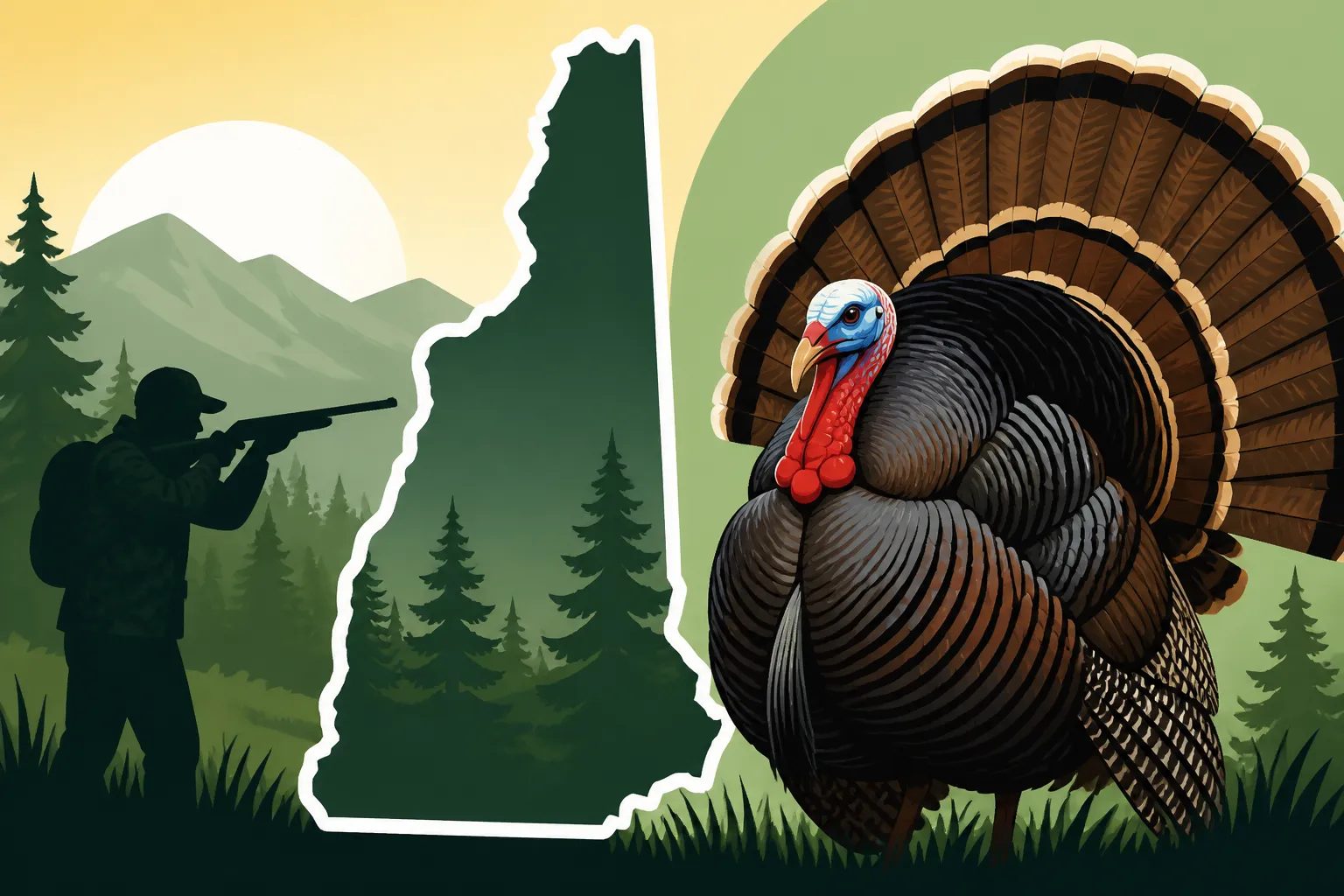
New Hampshire Turkey Season Rules
Hunting turkeys in New Hampshire can be one of the most rewarding experiences in the woods, but trying to navigate all the different rules and regulations can feel like trying to find a lost gobbler in a dense thicket – confusing and frustrating. You've got questions about seasons, permits, and what's legal to use, and often, the official guides can feel a bit overwhelming. This comprehensive guide is here to untangle all of New Hampshire's turkey season rules, breaking down everything you need to know for a successful and compliant hunt.
Understanding New Hampshire's Wild Turkey Seasons
New Hampshire offers distinct hunting opportunities for wild turkeys in both spring and fall, each with its own set of regulations tailored to ensure sustainable populations and quality hunting experiences. It's not a one-size-fits-all approach, and understanding these differences is crucial before you even think about setting foot in the woods. The state's turkey population has seen incredible growth over the decades, a testament to dedicated conservation efforts, and adhering to these rules helps keep it that way for future generations.
The Success Story of New Hampshire's Turkeys
It's hard to imagine, but wild turkeys were once extirpated from New Hampshire by the late 1800s, primarily due to habitat loss and unregulated hunting. Their reintroduction, beginning in the 1970s with birds trapped in New York and Vermont, has been a phenomenal success. Today, these majestic birds thrive across most of the state, from the farmlands of the Connecticut River Valley to the lower slopes of the White Mountains. This comeback story is a huge part of why we have such robust seasons now, but it also highlights the importance of respecting the regulations that protect them.
The efforts to bring turkeys back were meticulous, focusing on strategic releases into suitable habitats and then carefully managing harvest to allow populations to expand. This long-term commitment means that when you're out there chasing gobblers, you're participating in a legacy of successful wildlife management. It’s a good reminder that every permit purchased and every regulation followed contributes to this ongoing success. If you're interested in the deeper history, there's a lot to learn about How Turkeys Were Restored to New Hampshire.
General Season Structure and Zones
New Hampshire divides its hunting opportunities primarily by season (spring and fall) and then often by Wildlife Management Unit (WMU) for specific regulations, particularly in the fall. While the spring season is generally more uniform across the state, the fall season can have significant variations depending on which WMU you plan to hunt. This WMU-specific approach allows the New Hampshire Fish and Game Department to manage local populations more effectively, responding to environmental factors, population densities, and hunter success rates in different regions.
Knowing your WMU isn't just a recommendation; it's a necessity. Maps, whether paper or digital like those found on the GoHunt app, are invaluable for clearly defining these boundaries. Before each season, it’s always wise to double-check the latest hunting digest, as dates and specific rules can be adjusted annually based on biological data and harvest reports. The core structure, however, tends to remain consistent: a spring season focused on gobblers and a more limited fall season for either sex.
Navigating New Hampshire's Spring Turkey Season
The spring turkey season is arguably the most anticipated time of year for many New Hampshire hunters. The woods come alive with gobbling, and the challenge of calling in a wary tom is a thrilling experience. However, this excitement needs to be tempered with a clear understanding of the specific rules that govern this prime hunting period. These regulations are designed to protect nesting hens and ensure the continuation of robust turkey populations.
Spring Season Dates and Bag Limits
New Hampshire's spring turkey season typically kicks off in early May and runs for several weeks, usually through the end of the month. The exact dates can shift slightly year to year, so always confirm with the official New Hampshire Fish and Game digest. During this season, hunters are allowed to harvest a maximum of two bearded turkeys. This means only males (toms or jakes) are legal, identified by their prominent beard. Hens are protected during the spring to allow them to nest and raise poults without disturbance.
It's a fantastic opportunity to fill the freezer and enjoy the thrill of the hunt, but that "two-bearded-bird" limit isn't just a suggestion. It's a strict rule. Many hunters focus on taking one bird early in the season and then spending the rest of their time trying to call in a second, perhaps a bigger, more challenging tom. Remember that both birds must be legally tagged and reported. Detailed information can be found in a guide like Hunting the Two-Bearded-Bird Spring Limit.
Obtaining Your Spring Turkey Permit
To hunt spring turkeys in New Hampshire, you'll need a valid New Hampshire hunting license and a specific Spring Turkey Permit. These permits are typically available for purchase online through the New Hampshire Fish and Game website, at authorized license agents, or directly from the Fish and Game headquarters. The cost varies for residents and non-residents, but the process is generally straightforward. Don't forget, even if you have a general hunting license, the spring turkey permit is an additional requirement.
It’s always a good idea to purchase your license and permit well in advance of the season opener. Nothing throws a wrench in your opening morning plans quite like realizing you forgot a crucial piece of paperwork. Keep both your general hunting license and your spring turkey permit easily accessible while hunting – either a physical copy or stored digitally on your phone, though a physical copy is always a safe bet, especially in areas with no cell service. Checking for details on New Hampshire Spring Turkey Permit Rules is a smart pre-season move.
Youth Hunting Opportunities in Spring
New Hampshire is committed to fostering the next generation of hunters, and youth hunting opportunities are a prime example. The state usually offers a special youth turkey hunting weekend preceding the general spring season opener. This allows young hunters (typically 12-15 years old, though exact age ranges and requirements should always be checked in the current digest) to experience the excitement of spring turkey hunting under the direct supervision of a licensed adult.
This youth weekend is a fantastic way to introduce new hunters to the sport in a less pressured environment. The adult mentor cannot carry a firearm or bow, allowing the youth hunter to have the full experience and focus. All applicable bag limits and regulations still apply to the youth hunter. It's a wonderful tradition that creates lasting memories and teaches vital skills and ethics. Ensure you understand the New Hampshire Mentored Youth Hunting Rules if you plan to take a young hunter afield.
Decoding New Hampshire's Fall Turkey Season
While spring turkey hunting often gets the spotlight, New Hampshire's fall turkey season offers a different, equally challenging, and rewarding experience. Fall hunting often involves different tactics, such as breaking up a flock and then calling birds back together, or still-hunting through acorn-rich hardwoods. However, the fall season comes with more localized rules, particularly concerning which WMUs are open and the legal methods of take.
Fall Season Dates and WMU Restrictions
The fall turkey season typically takes place in October, though the precise dates and duration can vary significantly by WMU. Crucially, not all WMUs are open for fall turkey hunting. The New Hampshire Fish and Game Department carefully designates specific WMUs for fall turkey hunting each year based on local population dynamics, harvest data, and overall turkey health. It is absolutely imperative to check the official digest for the current year to confirm if your intended hunting area is open and what the exact dates are.
Ignoring WMU restrictions in the fall can lead to serious legal trouble. What's legal in one part of the state might be completely off-limits just a few miles away. This targeted management helps maintain healthy populations where they might be more vulnerable, while allowing harvest in areas with robust numbers. A tool like GoHunt, with its WMU overlays, can be extremely helpful for identifying these zones accurately. For a clear understanding, refer to New Hampshire's Fall Turkey WMU List.
Fall Turkey Bag Limits and Legal Sex
In WMUs where fall turkey hunting is permitted, the bag limit is usually one bird of either sex. This means you can harvest a hen or a gobbler, a stark contrast to the spring's bearded-only rule. This "either sex" allowance is generally because fall hunting does not interfere with the spring breeding cycle. However, some WMUs might have even more restrictive rules, so again, the annual digest is your bible.
The tactics for hunting an "either sex" bird in the fall can differ. While spring focuses on enticing a gobbler with hen calls, fall often involves locating flocks, scattering them, and then calling them back using a combination of yelps, clucks, and kee-keess to simulate lost birds trying to regroup. It's a completely different mental game and a fantastic way to experience turkey hunting. More advanced strategies are covered in Breaking Up a Fall Turkey Flock.
Specific Fall Archery and Shotgun Seasons
New Hampshire's fall turkey season often has distinct windows for different legal methods of take. There's typically a period dedicated to archery hunters, followed by a shotgun-only week. This staggered approach helps manage hunter pressure and provides diverse opportunities. It's vital to know which period you're in and what weapons are legal during that time.
For instance, the shotgun-only week might have specific ammunition restrictions, such as shot size. Always ensure your equipment complies with the current regulations for the method and season you are hunting. This also means you need to be prepared with the right gear. A guide focusing on Hunting the Shotgun-Only Fall Turkey Week can provide more specific insights into these regulations and tactics.
Legal Methods and Equipment for New Hampshire Turkeys
Understanding when and where you can hunt is only part of the equation. You also need to know how you can legally harvest a turkey in New Hampshire. The state has specific rules regarding firearms, archery equipment, ammunition, and even the use of decoys and calls. These regulations are designed to promote fair chase and ensure hunter safety.
Approved Firearms and Ammunition
For shotgun hunters, New Hampshire generally permits shotguns 10 gauge to 20 gauge, using shot sizes no larger than #2 and no smaller than #8. This means you typically can't use buckshot or slugs for turkey hunting, as those are reserved for larger game or specific deer seasons. The intent is to ensure a humane kill on a turkey while minimizing the risk of over-penetration or harming non-target species. Always check the most current digest for specific shot size restrictions, as these can occasionally be updated.
It's also important to note that, typically, no rifles or pistols are allowed for turkey hunting in New Hampshire. This is a common safety regulation across many states for turkey hunting due to the potential range of these firearms in typically dense turkey habitat. Choosing the right shotgun and choke combination, paired with effective turkey loads, is key to success.
Archery and Crossbow Regulations
Archery hunters have a fantastic opportunity in both spring and fall seasons. For traditional archery, legal equipment includes recurve bows, longbows, and compound bows. Arrows must be fitted with broadheads that meet minimum width requirements, usually 7/8 inch. While crossbows have become more prevalent in New Hampshire, their use in turkey hunting, especially during the archery-only turkey season, has specific restrictions.
Crossbows are currently not permitted during the archery-only portion of the turkey season unless the hunter possesses a specific permit for a permanent disability. However, some WMUs do allow crossbows during the general firearms season for deer, and sometimes during the combined fall turkey and deer season where legal, so this can get confusing quickly. Always verify the most recent regulations regarding crossbows for turkey hunting. If you're planning on Crossbow Hunting New Hampshire's Twelve WMUs for deer, remember that the rules can differ significantly for turkey.
Decoys and Calls
The use of decoys and various turkey calls is perfectly legal and, indeed, a fundamental part of turkey hunting strategy in New Hampshire. From traditional slate and box calls to mouth diaphragms and electronic calls, all are generally permitted. However, it's worth noting that some states restrict electronic calls, so it's good that New Hampshire allows them, giving hunters a variety of tools.
Decoys are an excellent way to draw in a wary bird, giving them something visual to focus on rather than scrutinizing your position. Whether you prefer a single hen decoy, a jake and hen setup, or a full strutter, they can significantly increase your chances. Just be mindful of safety; always set up your decoys in a way that you won't be mistaken for a turkey, and never stalk a gobbling turkey in case someone else is calling it in. Learn more about effective decoy strategies in Decoy Placement for Pressured Spring Birds.
Licensing, Permits, and Registration
Beyond just the season dates and legal weapons, the bureaucratic side of hunting—getting licensed, purchasing permits, and properly registering your harvest—is critical. Skipping any of these steps can invalidate your hunt and lead to penalties. It's not the most glamorous part of hunting, but it's arguably the most important for maintaining your legal standing and contributing to wildlife management.
General Hunting License Requirements
Before you can even consider purchasing a turkey permit, you need a valid New Hampshire hunting license. This means completing a state-approved hunter education course, unless you meet specific exemption criteria (e.g., prior military service, or hunting under a mentored youth program). New Hampshire offers various license options, including resident and non-resident licenses, and depending on your situation, combo licenses for hunting and fishing.
Hunter education covers everything from firearm safety and wildlife identification to ethical hunting practices and game care. It's a foundational step for anyone looking to hunt in the Granite State. If you're new to the state or new to hunting, make sure you look into New Hampshire Hunter Education Requirements. These requirements ensure that everyone entering the woods is equipped with the knowledge to do so safely and responsibly.
Purchasing Your Turkey Permit
As mentioned earlier, a specific turkey permit is required for both spring and fall seasons, in addition to your general hunting license. These permits are typically a small additional fee and can be purchased alongside your annual hunting license. You can usually find these online via the New Hampshire Fish and Game website, through their mobile app, or at any authorized license agent across the state.
It's crucial to ensure you have the correct permit for the specific season you are hunting (Spring Turkey Permit vs. Fall Turkey Permit). Mistakes here can cost you. Keep proof of purchase and your permit with you at all times while hunting.
Turkey Registration and Reporting
Once you've successfully harvested a turkey, the hunt isn't over yet! New Hampshire requires hunters to register their harvest. This data is incredibly important for wildlife biologists to monitor turkey populations, assess harvest success, and make informed management decisions for future seasons. The process is generally quite simple.
You typically have 24 hours from the time of kill to register your turkey. This can often be done online through the New Hampshire Fish and Game website or app, or at an authorized registration station. You'll need to provide details like the date of harvest, WMU, sex of the bird, and what method you used (e.g., shotgun, archery). Failing to register a turkey is a violation, so make it a priority. While this article focuses on turkey, understanding New Hampshire Deer Reporting Requirements can give you an idea of the general process for big game.
| Season | Typical Dates | Bag Limit | Legal Sex | Legal Weapons (General) | WMU Restrictions | Permit Required |
|---|---|---|---|---|---|---|
| Spring | Early May – Late May | 2 Bearded Birds | Males Only (Toms/Jakes) | Shotgun (10-20 ga, #2-#8 shot), Archery (Recurve, Longbow, Compound) | No (Statewide for open WMUs) | Yes (Spring Turkey Permit) |
| Fall | Mid-Oct – Late Oct | 1 Bird | Either Sex | Shotgun (10-20 ga, #2-#8 shot), Archery | Yes (WMU-specific) | Yes (Fall Turkey Permit) |
Note: Always consult the current year's New Hampshire Fish and Game Hunting Digest for precise dates, regulations, and any changes.
Safety and Ethical Hunting Practices
Hunting is an inherently safe activity when done correctly, but safety should always be your top priority. Beyond the official regulations, adhering to ethical hunting practices ensures you're a responsible steward of the land and wildlife. In New Hampshire, where public and private lands often abut, and recreation is diverse, being mindful of your surroundings is paramount.
Blaze Orange Requirements
While New Hampshire has strict blaze orange requirements for deer firearms season, the rules are different for spring turkey hunting. During spring turkey, hunters are not required to wear blaze orange while hunting. In fact, many actively avoid it to enhance camouflage, as turkeys have excellent eyesight. However, it's a good practice to wear blaze orange while walking to and from your hunting spot, especially on public land that might be frequented by other recreational users or during periods that overlap with other hunting seasons where orange is required.
During the fall turkey season, especially if it overlaps with archery or firearms deer season, the rules can become more complex. Always check the digest for current New Hampshire Blaze Orange Requirements if your fall turkey hunt coincides with other seasons, as it might be required depending on the overlap. It's better to be safe and visible when needed.
Hunter Safety in the Woods
Beyond blaze orange, general hunter safety rules apply. Always identify your target positively before shooting – in turkey hunting, this means ensuring it's a legal bird and you have a clear shot. Be aware of your surroundings, including other hunters, hikers, and residences. Never shoot at sound or movement. Knowing your shooting lanes and backstop is crucial, especially when trying to call in a gobbler that might approach from an unexpected direction.
Hunting with a partner, especially when using calls, can be safer as one person can focus on calling while the other remains vigilant for approaching birds and other hunters. When still-hunting or moving through the woods, keep your firearm on safe and pointed in a safe direction. Always treat every firearm as if it were loaded. These fundamental rules save lives.
Respect for Private Property
New Hampshire has a significant amount of public land, including vast tracts of the White Mountain National Forest and various Wildlife Management Areas. However, a lot of prime turkey habitat is also on private land. It is illegal to trespass on private property in New Hampshire without permission. Always obtain written permission from landowners before hunting on their property. This not only keeps you legal but also maintains positive landowner-hunter relations, which are vital for future hunting access.
Using apps like GoHunt that overlay property lines with landowner information can be incredibly helpful in determining land ownership and avoiding accidental trespass. When asking for permission, be polite, respectful, and offer to share your harvest. Understanding New Hampshire Posted Land Rules and Do You Need Written Permission in New Hampshire? is crucial for ethical hunting.
Protecting the Herd: CWD and Carcass Rules
New Hampshire takes great pride in its healthy deer and turkey populations and is proactive in preventing the spread of diseases like Chronic Wasting Disease (CWD). While CWD is primarily a deer and moose disease, the regulations surrounding carcass importation are important for all hunters to understand, as they protect all cervid populations, and indirectly, the ecosystems turkeys inhabit.
New Hampshire's CWD Prevention Regulations
New Hampshire remains one of the few states in the Northeast that is completely CWD-free, and they are dedicated to keeping it that way. To achieve this, the state has implemented strict rules regarding the importation of deer, moose, and elk carcasses or parts from states or provinces where CWD has been detected. Generally, only deboned meat, antlers (cleaned of all brain matter), hides, and teeth can be brought into New Hampshire from CWD-positive areas.
While turkeys are not susceptible to CWD, these rules are vital for maintaining the health of the broader ecosystem that turkeys share with deer. If you hunt other species out of state, be acutely aware of these rules before bringing anything back into New Hampshire. You can find detailed information on New Hampshire's CWD Prevention Rules.
Handling and Transporting Harvested Turkeys
When you harvest a turkey, ethical handling of the carcass is important. Field dressing a turkey usually involves removing the entrails to allow the bird to cool, especially in warmer spring weather. This helps preserve the quality of the meat. Once field dressed, ensure you attach your tag immediately and legibly.
Transporting your turkey should be done in a way that keeps the tag secure and the bird clean. If you're driving a long distance, a cooler with ice (making sure the bird isn't submerged in water) can help maintain meat quality. Always present your turkey for registration with the tag attached. These simple steps ensure a clean, legal, and respectful harvest.
Key Resources and Planning Your Hunt
Successful turkey hunting in New Hampshire, like any hunting, comes down to preparation. Knowing where to find the most up-to-date information and how to leverage modern tools can make a huge difference in your planning and execution. Don't just show up on opening day; do your homework.
Official New Hampshire Fish and Game Resources
The absolute best and most authoritative source for New Hampshire turkey season rules is the New Hampshire Fish and Game Department's official website and their annual hunting digest. The digest is usually released in late summer or early fall and contains all the current dates, regulations, licensing information, and WMU maps for the upcoming seasons. It's available online as a PDF and often in print at license agents.
Their website also offers a wealth of information, including news updates, special announcements, and online license/permit purchasing. Any questions you have can usually be answered by consulting these primary sources. When in doubt, call the Fish and Game Department directly; they are there to help clarify regulations.
Utilizing Mapping and Scouting Tools
Modern technology has revolutionized how hunters plan and execute their hunts. Satellite imagery, GPS-enabled mapping apps, and even cellular trail cameras can provide invaluable insights. For turkey hunting, identifying potential roosting areas, feeding locations (like oak ridges or agricultural fields), and travel corridors is essential.
Apps like GoHunt allow you to overlay WMU boundaries, public and private land ownership, topo maps, and satellite imagery, helping you pinpoint promising areas and avoid trespass. You can mark waypoints for scouting trips, plan your approach routes, and even track your movements in real-time, even without cell service if maps are downloaded. Using these tools for pre-season scouting, both virtually and on the ground, will dramatically increase your chances of success. They also help understand pressure points, especially on Hunting Pressure on New Hampshire Public Land.
Pre-Season Scouting and Habitat Understanding
No amount of digital mapping can replace actual boots-on-the-ground scouting. Before the season, spend time in the woods listening for gobblers, looking for turkey sign (tracks, droppings, feather sheds), and identifying food sources. Turkeys are creatures of habit, often roosting in the same trees or general areas, and feeding in predictable spots.
Understanding the habitat is key. For spring, focus on areas with mature timber for roosting, open woods for strutting, and fields or clearings for feeding. In the fall, food sources become even more critical, with acorn crops being a major draw. Scouting helps you determine not just where the birds are, but also how to approach them silently and set up effectively. For example, knowing Reading Aerial Photos for North Country Deer can also help you identify good turkey habitat.
Disclaimer
Please remember that hunting regulations are subject to change. While this guide aims to be comprehensive and accurate, it is your responsibility to consult the most current New Hampshire Fish and Game Department regulations and official hunting digest before participating in any hunting activity. Always prioritize safety and ethical practices in the field.