New Hampshire Mentored Youth Hunting Rules
It's a familiar scenario for many of us, isn't it? That moment your son, daughter, grandchild, or a young family friend looks at you with wide-eyed excitement after hearing your hunting stories, and you just know it's time to introduce them to the woods. But then the questions start bubbling up: "What are the rules for kids?" "Do they need a license?" "How closely do I need to supervise them?" It can feel like navigating a dense thicket of regulations, and the last thing you want is to accidentally run afoul of the law while trying to share your passion. This guide is here to untangle those complexities, walking you through New Hampshire's mentored youth hunting rules so you can confidently and legally introduce the next generation to our incredible outdoor traditions.
Understanding New Hampshire's Mentored Youth Hunting Program
New Hampshire, like many states, recognizes the immense value in passing down our hunting heritage. They've established a Mentored Youth Hunting Program specifically designed to provide a safe, structured, and legal pathway for young, aspiring hunters to gain experience in the field before completing a full hunter education course. It's a fantastic bridge, allowing them to experience the thrill and responsibility of hunting firsthand, all under the direct guidance of an experienced adult.
What is the Mentored Youth Hunting License?
The Mentored Youth Hunting License is specifically designed for individuals under the age of 16 who haven't yet completed the state's official hunter education course. Think of it as a provisional pass to the field, allowing these young hunters to participate in actual hunting scenarios. This isn't just about tagging along; with this license, the youth can legally carry a firearm or bow and actively participate in the hunt, attempting to harvest game themselves. It's a monumental step, transitioning them from observer to active participant.
This license is an acknowledgment that hands-on experience, guided by a knowledgeable mentor, is an invaluable part of learning to hunt safely and ethically. It removes the initial barrier of mandatory hunter education completion for that first foray into the woods, understanding that the in-field mentorship provides the most immediate and impactful lessons. Without this program, a young person would have to complete the entire course before ever even handling a weapon in a hunting context, which might deter some who are just testing the waters.
Eligibility for Youth and Mentors
The program has clear guidelines for who can participate, both on the youth and the mentor side, all designed to maximize safety and effective learning. For the youth, the primary requirement is age: they must be under 16 years old. There's no minimum age specified, but common sense and the mentor's judgment are paramount for determining when a child is ready to handle a firearm or bow safely and understand the gravity of hunting. It's crucial for the youth to possess the maturity to follow instructions and prioritize safety above all else.
For the mentor, the requirements are equally stringent to ensure the highest level of supervision and knowledge. A mentor must be at least 18 years old, possess a valid New Hampshire hunting license, and, critically, must have successfully completed a state-recognized hunter education course themselves. This ensures that the mentor not only knows the rules but has been formally trained in safety, ethics, and responsible hunting practices. It's a significant responsibility, and the state places that trust in adult hunters to uphold those standards. This is where the foundation of New Hampshire's Hunter Education Requirements truly shines, as it ensures the adults guiding our youth are well-versed in best practices.
The Philosophy Behind Mentored Hunting
At its core, New Hampshire's Mentored Youth Hunting Program is built on a philosophy of fostering responsible hunting traditions and strong conservation ethics from a young age. It's an intentional effort to address the declining participation rates in hunting by making it more accessible for newcomers, particularly youth. By allowing them to experience hunting directly, under the watchful eye of an experienced adult, they develop a profound connection to nature, an understanding of wildlife management, and an appreciation for where their food comes from.
This program acknowledges that hunting is often a generational activity, passed down through families and friends. It formalizes and supports that transfer of knowledge, ensuring that critical lessons in firearm safety, wildlife identification, tracking, field dressing, and ethical decision-making are taught in real-world scenarios. It’s not just about pulling a trigger; it’s about understanding the entire ecosystem, respecting the animal, and appreciating the privilege of being outdoors. For many, it's their first exposure to what it truly means to be a steward of the land, helping them grasp concepts like New Hampshire's CWD-Free Deer Herd and the broader importance of wildlife health.
License Requirements and Application Process
Getting the right paperwork in order is probably the least exciting part of planning a hunt, but it's absolutely non-negotiable, especially when you're involving youth. New Hampshire has streamlined the process, but there are still distinct steps for both the young hunter and their mentor to ensure everything is above board. It’s all about creating a safe and accountable environment for everyone in the woods.
Obtaining the Youth Mentored Hunting License
For the youth, obtaining their Mentored Youth Hunting License is a relatively straightforward process. Residents of New Hampshire can typically acquire this license for free, a fantastic incentive to get young people involved. Non-residents, on the other hand, will find it costs a modest fee, usually around $15. This makes it accessible whether you're a local or visiting family from out of state.
You can purchase these licenses through the New Hampshire Fish and Game Department's online licensing portal, or in person at one of the many authorized license agents across the state, such as sporting goods stores, town clerks, or the Fish and Game headquarters in Concord. Using an online platform like GoHunt can be incredibly helpful for checking current regulations and making sure you have all your ducks in a row before heading out. When applying, you'll need basic information for the youth, and while the youth doesn't need to be present for an online purchase, having their identifying information accurate is key. Always double-check the current New Hampshire Resident License Options or Nonresident License Options to ensure you're getting the correct permit for your situation.
Mentor Licensing and Hunter Education
The mentor's role is absolutely central to the success and legality of the mentored youth hunt. As discussed, the mentor must hold a valid New Hampshire hunting license and have successfully completed an approved hunter education course. This isn't just a suggestion; it's a legal requirement. This course covers everything from firearm safety, hunting ethics, wildlife identification, and state hunting laws to first aid and survival skills. The completion of this course demonstrates a fundamental understanding of responsible hunting, which the mentor is then expected to impart.
It's vital for mentors to carry proof of their own valid hunting license and hunter education certification while in the field. Fish and Game officers often verify these credentials during routine checks. If you've been hunting for years, it's easy to assume your knowledge is current, but laws and best practices can evolve. Taking the time to review the most recent New Hampshire Hunter Education Requirements or even a refresher course can ensure you're providing the best, most up-to-date guidance possible. Remember, you're not just guiding them to a deer; you're guiding them to become a responsible, ethical hunter.
Fees and Validity
When it comes to the costs, New Hampshire makes it very accessible for resident youth, offering the Mentored Youth Hunting License for free. This is a deliberate choice by the state to encourage youth participation without financial burden. For non-residents, there's a small fee of $15, which is still incredibly reasonable compared to many adult non-resident licenses. These licenses are typically valid for the entire hunting season of the year in which they are purchased, generally from the date of purchase through the following year's end, mirroring the standard license year.
It's always a good practice to confirm the exact validity dates when you purchase the license, just to avoid any surprises. You can easily find these details on the New Hampshire Fish and Game website or by calling their licensing division. While the license itself is low-cost or free, remember that the youth hunter must still comply with all other specific permit requirements for certain game species, such as specific turkey permits or bear permits, if those seasons are being pursued. It’s about being prepared, from confirming the dates to understanding the overall New Hampshire's WMU-Based Deer Season Structure for deer hunting.
On-the-Ground Rules for Mentored Hunts
Once licenses are in hand and the excitement is building, shifting focus to the practical, in-the-field rules is paramount. These rules aren't just bureaucratic red tape; they are the bedrock of safety and legality for every mentored youth hunt, ensuring the young hunter gains experience under the most controlled and secure conditions possible.
Direct Supervision Requirements
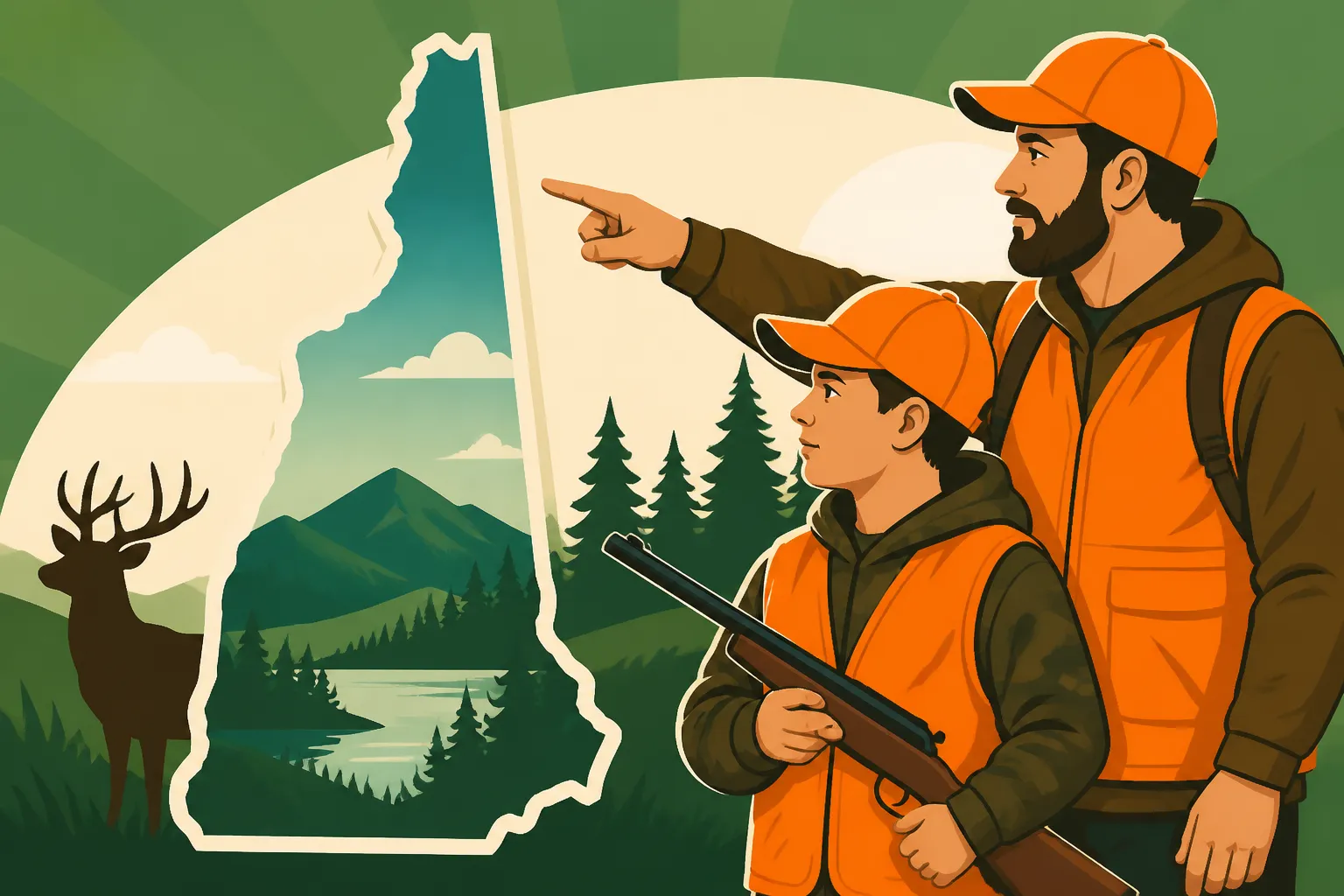
This is perhaps the most critical component of New Hampshire's Mentored Youth Hunting Program: the direct supervision requirement. The law mandates that the mentor must be "at arm's length" of the mentored youth hunter while the youth is actively engaged in hunting. What does "at arm's length" truly mean? It means exactly what it sounds like – close enough to physically reach out and touch them. This isn't an arbitrary distance; it's designed to allow the mentor immediate, direct intervention if a safety issue arises, to provide instant instruction, or to take control of the weapon if necessary.
This means no splitting up, even for a moment, to "circle around" or "push a thicket." If the youth is carrying a weapon and hunting, the mentor must be right there, eyes and ears focused intently on the youth and the surroundings. This level of proximity ensures that the mentor can continuously monitor the youth's weapon handling, shot placement decisions, and overall awareness, making every moment an active teaching opportunity. It also means you're sharing every step of the experience, from Reading New Hampshire Mud for Fresh Deer Movement to the excitement of a squirrel barking.
Weapon and Species Restrictions
While the Mentored Youth Hunting License opens up a world of opportunity, there are still specific considerations regarding what game can be hunted and with what types of weapons. Youth hunters under the mentored program are generally allowed to hunt any species for which the season is open and for which the mentor holds the appropriate licenses or permits, provided the youth also has any required specific permits (like a turkey permit). This includes big game like white-tailed deer and black bears, as well as wild turkeys, small game, and waterfowl.
However, there are important caveats. All legal weapon restrictions for the specific season and species apply. For instance, if you're hunting during the New Hampshire Firearms Season Dates, the youth must use a legal firearm for deer hunting. If you’re archery hunting, they must use a legal bow. The mentor must ensure the youth is using a weapon appropriate for their size, strength, and skill level, and that it meets all legal requirements. It's not about giving them the biggest rifle, but the safest and most manageable one. For species like deer, they must still adhere to the general rules for White-Tailed Deer Across New Hampshire, including specific weapon rules.
Bag Limits and Tagging
Understanding bag limits and tagging procedures is crucial to ensure a legal harvest. Under the Mentored Youth Hunting Program, any game harvested by the youth counts towards the youth's individual bag limit, not the mentor's. This means if a young hunter takes a deer, that deer is registered under their name and counts against their single deer limit for the season. The mentor's own bag limits remain separate. This reinforces the idea that the youth is an active participant responsible for their own harvest.
When it comes to tagging, the usual New Hampshire deer reporting requirements apply. The youth is responsible for properly tagging the animal immediately after harvest, just as an adult hunter would. The mentor must guide them through this process, explaining the importance of proper tagging and prompt reporting. This might mean using the online registration system or visiting a physical check station, depending on the game and time of year. This is a critical learning step, teaching them accountability and adherence to wildlife management regulations, right down to the specifics of Registering a New Hampshire Deer Online.
Benefits and Responsibilities of Mentored Hunting
The New Hampshire Mentored Youth Hunting Program is much more than just a legal framework for kids to hunt; it’s a foundational experience that shapes future conservationists and responsible citizens. It imbues young people with a deep respect for nature and wildlife, while simultaneously placing significant responsibilities on the shoulders of the mentors who guide them.
Fostering Conservation and Ethics
One of the most profound benefits of mentored youth hunting is its ability to directly foster a strong sense of conservation and ethics in young participants. When a youth is in the field with an experienced mentor, they aren't just learning how to hunt; they're learning why we hunt and the role hunting plays in wildlife management. This includes understanding population dynamics, habitat needs, and the importance of responsible harvesting to maintain healthy herds and flocks. A mentor can explain how hunting license fees contribute directly to wildlife habitat projects and research, giving the youth a tangible connection to conservation funding.
For instance, while hunting for small game, a mentor can explain the specific habitat requirements of species like ruffed grouse or snowshoe hare, tying their observations directly back to the importance of managing forests for diverse wildlife. This hands-on education is far more impactful than reading a textbook. The program also instills a strong ethical compass, teaching respect for the animal, fair chase principles, and the importance of only taking clean, ethical shots. It’s about ensuring that every hunt is conducted with integrity, leaving a minimal footprint on the land and a positive impact on the young hunter's character. Discussions about topics like New Hampshire's CWD Prevention Rules also fit perfectly into this educational context.
Developing Skills and Confidence
Beyond the ethical considerations, mentored hunting is an unparalleled opportunity for youth to develop practical outdoor skills and build self-confidence. Under the constant, close supervision of a mentor, young hunters learn fundamental skills such as safe firearm or bow handling, marksmanship, tracking, field dressing, and basic navigation. These aren't just hunting skills; they are life skills that promote self-reliance and outdoor competence.
Imagine a young person learning to patiently still-hunt through a New Hampshire hardwood stand, observing subtle signs of deer movement, or mastering the art of a quiet stalk. Each successful step, no matter how small, builds their confidence. From identifying a legal buck to properly Field Dressing a Deer in Cold Weather, every action is a learning moment. The mentor’s patient guidance allows the youth to make mistakes in a safe environment and learn from them, transforming frustration into newfound competence. This gradual skill development, coupled with the trust and responsibility placed upon them, significantly boosts their self-esteem and fosters a deeper connection to the natural world.
Navigating Public and Private Lands
A critical aspect of a mentor’s responsibility is teaching the youth about land access, distinguishing between public and private lands, and the importance of gaining proper permission. New Hampshire offers a wealth of opportunities across both public and private tracts, but each comes with its own set of rules. For public lands like the White Mountain National Forest or various Wildlife Management Areas, mentors need to explain general access rules, vehicle restrictions, and ethical behavior, such as respecting other users. Understanding Public Hunting Land in New Hampshire is key for successful access planning.
When considering private land, the mentor must meticulously teach the youth about property lines and the absolute necessity of obtaining permission before stepping foot onto someone’s land. This includes showing them how to identify posted land, how to politely approach a landowner, and the legal implications of trespass. This is a vital lesson in respect and community relations. Discussing Getting Private Land Permission in New Hampshire is not just a formality; it's a demonstration of responsible land stewardship and neighborly conduct. The mentor's role here is to not only facilitate the hunt but to model impeccable respect for both the land and its owners.
Common Misconceptions and Troubleshooting
Even with clear rules, questions and misunderstandings inevitably arise, especially when it comes to youth programs. Addressing these head-on can smooth the path for both new and experienced mentors, ensuring the focus remains on the joy and learning of the hunt rather than on confusion or worry.
Age vs. Experience
One common misconception is confusing a specific minimum age with a child's readiness or capability to hunt. While New Hampshire has no official minimum age for the Mentored Youth Hunting License (other than being "under 16"), this doesn't mean a five-year-old should necessarily be in the woods with a loaded firearm. The law wisely places the onus on the mentor to determine if a youth possesses the maturity, physical capability, and understanding of safety protocols required to handle a weapon safely and ethically.
A child's readiness is far more important than their birth date. Can they remain focused? Do they understand and consistently follow safety rules like muzzle control and target identification? Can they handle the recoil of a firearm or the draw weight of a bow? These are the questions a mentor must honestly answer. It’s about validating that the excitement is matched by a level of respect and seriousness for the activity. Some children might be ready at 8, others not until 12 or 14. There's no rush; the goal is a safe and positive introduction, not just an early one. Taking the time to properly fit them for gear, and even practicing with a .22 or an air rifle, can make a huge difference in their comfort and confidence before tackling larger game.
What to Do if Rules Are Unclear
Despite all the guides and regulations, sometimes you hit a grey area, or a new scenario pops up, leaving you wondering, "Am I doing this right?" This frustration is completely normal! When rules feel unclear, the absolute best course of action is to reach out directly to the experts: the New Hampshire Fish and Game Department. They are the definitive source for all regulations and are typically very helpful in clarifying specific situations. You can contact their licensing division, law enforcement division, or check their official website, which often has FAQs and updated digests.
Additionally, online resources and communities, like a forum you might find via a platform such as GoHunt, can be valuable for discussing scenarios and getting different perspectives from experienced hunters. However, always verify any advice with official sources to ensure compliance. Never guess when it comes to hunting regulations, especially when a youth is involved. It's better to make a phone call or send an email than to accidentally violate a rule. For instance, if you're uncertain about New Hampshire Deer Reporting Requirements during an unusual scenario, call Fish and Game directly for the official word.
Ensuring a Positive Experience
Ultimately, the goal of mentored youth hunting is to create a positive, memorable, and safe experience that sparks a lifelong passion for the outdoors. This means prioritizing enjoyment and learning over harvesting an animal. If the young hunter isn't having fun, they won't want to come back. Encourage questions, celebrate small victories (like spotting a deer, tracking a rabbit, or even just sitting quietly and observing nature), and keep the mood light.
Don't push them beyond their limits, whether it's physical endurance, cold weather, or challenging terrain. Be prepared with snacks, warm clothing (remembering Layering for New Hampshire's Cold Hunting Season is vital), and plenty of patience. If the youth gets cold, tired, or simply loses interest for the day, cut the hunt short and try again another time. Focus on the companionship, the lessons learned, and the unique bond that develops in the quiet of the woods. A successful mentored hunt isn't measured by a trophy, but by the spark ignited in a young person's heart for conservation and the outdoor way of life.
| Aspect | Mentored Youth Hunter (Under 16) | Adult Mentor (18+) |
|---|---|---|
| License Type | Mentored Youth Hunting License | Valid New Hampshire Hunting License + Hunter Ed |
| Hunter Education | Not required to participate | Required to be completed and certified |
| Supervision Requirement | Must be within arm's length of mentor | Must remain within arm's length of youth |
| Bag Limits | Harvest counts towards youth's individual limit | Harvest counts towards mentor's individual limit |
| Weapon Restrictions | Must use legal weapon for season/species | Must adhere to all legal weapon restrictions |
| Species Allowed | Any open season with appropriate permits | Any open season with appropriate permits |
| Primary Responsibility | Learning, safety, following instructions | All aspects of safety, legality, and instruction |
| Cost (Resident Youth) | Free | Standard adult hunting license fees apply |
Disclaimer
The information provided in this guide is for general informational purposes only and does not constitute legal advice. Hunting regulations, laws, and fees in New Hampshire are subject to change. It is the responsibility of every hunter, and especially every mentor, to consult the most current New Hampshire Fish and Game Department hunting digest and statutes before engaging in any hunting activities. Always prioritize safety and ethical hunting practices.