New Hampshire Waterfowl on the Atlantic Flyway
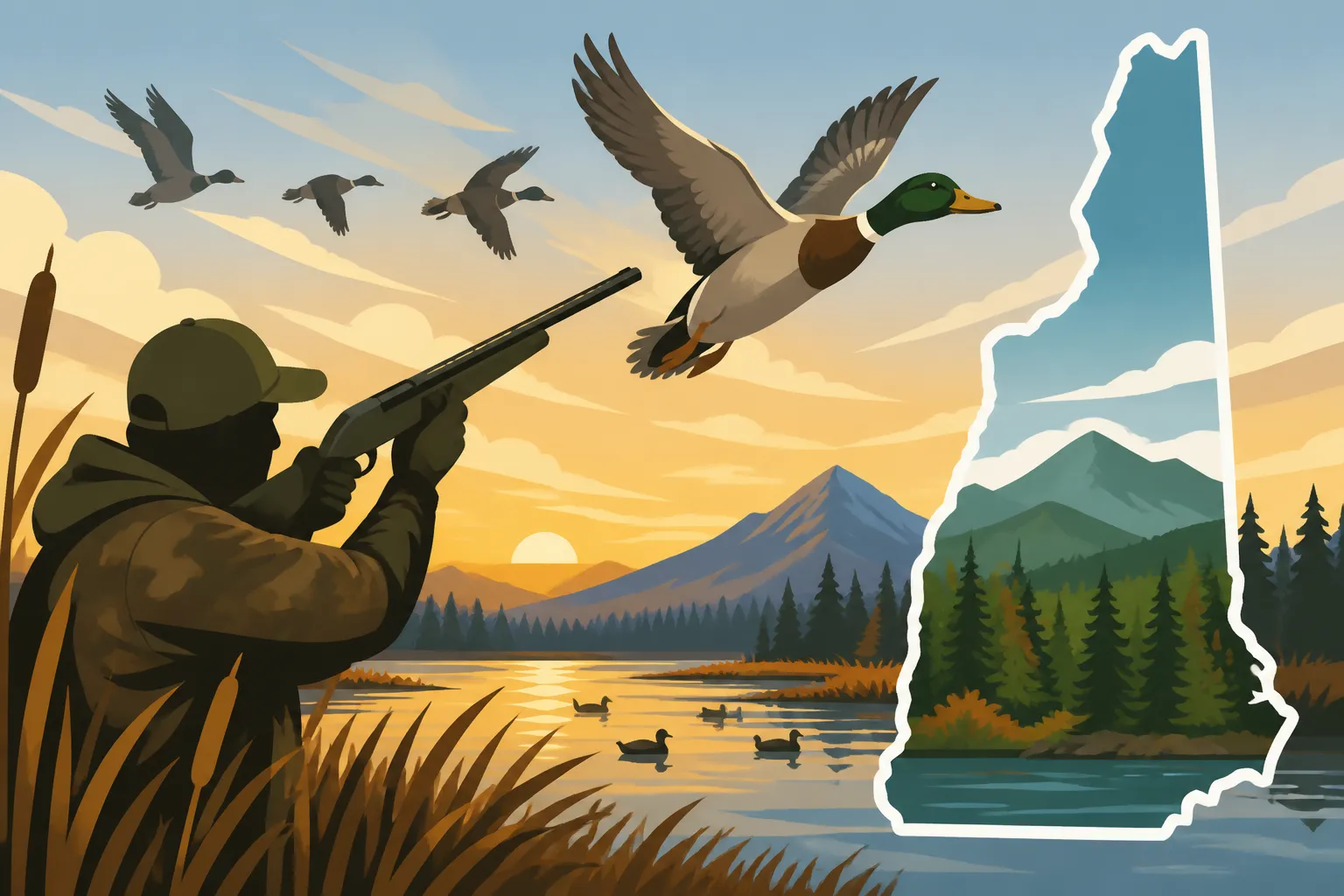
There's a unique challenge and undeniable thrill to hunting waterfowl in New Hampshire. Unlike deer or bear seasons that often feel more predictable, chasing ducks and geese across the Granite State means constantly adapting to ever-changing weather patterns, migratory movements, and the specific quirks of different waterways and fields. It can be frustrating to put in the time scouting only to have a cold front shift everything overnight, but the reward of a perfectly executed decoy spread and a morning flight is second to none. This comprehensive guide is here to help you navigate the rich opportunities for waterfowl hunting in New Hampshire, particularly as it sits squarely within the famed Atlantic Flyway.
Understanding New Hampshire's Place on the Atlantic Flyway
New Hampshire might be known for its granite mountains and dense forests, but it also plays a vital role in the incredible annual migration of countless waterfowl species. For hunters, understanding this larger picture is the first step to consistent success.
The Grand Migration Highway
The Atlantic Flyway is essentially a superhighway in the sky, a major north-south migratory route that stretches from the Arctic breeding grounds of Canada and Greenland all the way down to the wintering grounds of the Caribbean and South America. New Hampshire sits right in the middle of this incredible journey, serving as a critical stopover point for ducks, geese, and other migratory birds. As a hunter in the Granite State, you're not just targeting local birds; you're connecting with a vast, continent-spanning phenomenon.
The birds you pursue here have often traveled hundreds, if not thousands, of miles, driven by instinct and the shortening daylight hours. This means that your hunting success is often intrinsically linked to weather patterns far to the north – a major cold snap in Quebec or New Brunswick can push waves of new birds south into New Hampshire almost overnight. This can be a double-edged sword; while it brings fresh birds, it also makes timing your hunts a constant game of educated guesses and vigilant observation. It can feel like you're always a step behind, but with diligent scouting and an understanding of the bigger picture, you can learn to anticipate these movements.
Key Migration Corridors in New Hampshire
While the entire state is technically part of the flyway, certain geographic features act like natural funnels, concentrating waterfowl and offering prime hunting opportunities. These corridors are where you'll want to focus your scouting and efforts.
One of the most prominent is the Connecticut River, which forms New Hampshire's western border. This mighty river, with its extensive floodplains, oxbows, and adjacent agricultural fields, serves as a crucial staging and feeding area for thousands of ducks and geese. Birds follow its path, utilizing the abundant food sources and sheltered waters. Farther east, the Great Bay estuary and the immediate coastal marshes provide another distinct migration corridor, especially for diving ducks and sea ducks, but also for many dabblers and geese that utilize the brackish waters and tidal flats.
Beyond these major arteries, inland lakes like Lake Winnipesaukee, Lake Squam, and smaller reservoirs, along with their connecting rivers and streams, also act as significant stopover points. Birds will drop down into these waters to rest and feed before continuing their journey. Hunters in these areas often find that understanding local wind patterns and how they influence bird movement over specific bodies of water is just as important as knowing the major flyway routes. It's a constant puzzle, but that's part of the fun.
Prime Waterfowl Species You'll Encounter
New Hampshire offers a diverse array of waterfowl species, each with its own habits, habitats, and challenges for the hunter. Knowing what you're targeting is crucial for effective scouting and setting up your spread.
Dabbling Ducks: Mallards, Black Ducks, and Wood Ducks
Dabbling ducks are probably what most people picture when they think of duck hunting. They feed by tipping their heads down to graze on submerged vegetation and invertebrates in shallow water, rarely diving completely. These are the ducks that will often jump right out of a creek when you're walking along, giving you that adrenaline rush.
The Mallard is arguably the most recognizable and abundant duck in New Hampshire, with both resident and migratory populations. You'll find them in almost any suitable habitat: beaver flowages, small ponds, river backwaters, and even cornfields. Hunting strategies for mallards often involve decoying them into small, sheltered water bodies or jump-shooting them off creeks and small rivers. Their broad diet makes them adaptable, but they can also be very wary, especially later in the season. Learning to read their flight patterns and adapting your spread is key to bringing these greenheads in close.
Black Ducks are another staple of New Hampshire waterfowl hunting, often found alongside mallards but sometimes preferring slightly more brackish or wilder habitats. They are exceptionally cunning and can be notoriously difficult to decoy, often circling multiple times before committing. Many veteran hunters will tell you that a successful black duck hunt feels like a true accomplishment. Focusing on natural camouflage, minimal calling, and patient waiting often pays off with these birds.
Wood Ducks are arguably the most beautiful of the North American ducks, with their iridescent plumage. They are an early-season favorite, often found in wooded swamps, beaver ponds, and small, timbered creeks. They feed heavily on acorns and other mast crops, so scouting for these food sources can lead to incredible early-season action. Their swift, acrobatic flight through the trees makes for challenging but thrilling shooting. As the season progresses and colder weather sets in, most wood ducks migrate south, making them primarily an early-to-mid fall target in New Hampshire.
Diving Ducks: Ringnecks, Buffleheads, and Goldeneyes
Diving ducks are a different breed entirely. As their name suggests, they feed by diving underwater to retrieve food, typically in deeper bodies of water. You'll often find them on larger lakes, wide rivers, and coastal estuaries where food is more abundant in deeper sections.
Ring-necked Ducks, often just called "ringnecks" by hunters, are common migrants through New Hampshire. They prefer freshwater lakes, ponds, and slow-moving rivers, often congregating in large rafts. They're strong flyers and decoy well, making them a popular target. Their distinct ring around their bill (not just their neck, a common misconception!) makes them fairly easy to identify. Hunting them often involves larger spreads on open water, sometimes from a boat blind or shore blind tucked into emergent vegetation.
Buffleheads are small, compact diving ducks known for their distinctive white patches on the head (males) and incredibly fast, erratic flight. They're often found in small groups on protected coastal coves, larger rivers, and deeper inland lakes. They're a favorite among many hunters for their challenging flight and tasty meat. Due to their small size, they require accurate shooting, and they'll often buzz a spread quickly before moving on.
Common Goldeneyes are larger diving ducks with a striking golden eye and, in males, a white spot near the bill. They favor large, open bodies of water, including lakes and coastal areas, and often appear later in the season as colder weather pushes them south. Their powerful flight and preference for rougher water make them a challenging pursuit. You might also encounter their smaller cousin, the Barrow's Goldeneye, though they are less common. Like other divers, they respond to larger decoy spreads, and sometimes a few diver decoys mixed in with a dabbler spread can attract curious birds.
Canada Geese and Other Migratory Birds
Beyond ducks, Canada Geese are a major draw for New Hampshire waterfowl hunters. The state has both significant resident populations that breed here and vast numbers of migratory geese that pass through from northern breeding grounds. Resident geese can be found almost anywhere there's grass and water – farm fields, golf courses, suburban ponds – while migratory geese are often seen in larger flocks, utilizing major river valleys and expansive agricultural lands.
Hunting geese often involves field hunting with large spreads of full-body or shell decoys, typically in cut corn or hay fields where they feed. Layout blinds are commonly used for this method, allowing hunters to hide effectively in the middle of a field. Layout Blind Hunting a Northern Zone Field offers some great insights into this technique. Alternatively, geese can be hunted over water, especially if they are using ponds or river sections for roosting or loafing. The challenge with geese is their exceptional eyesight and wary nature, requiring meticulous hide building and realistic decoy spreads. Don't forget, Pass-Shooting Geese on a Split-Season Field can also be an effective tactic, though it requires specific conditions and safe zones of fire.
While ducks and geese are the primary targets, New Hampshire also sees other migratory birds that can be pursued during waterfowl seasons. Various species of Mergansers (common, hooded, and red-breasted) are often encountered, though they are generally not considered choice table fare due to their fish-eating diet. Green-winged Teal and Blue-winged Teal are swift-flying, small ducks that provide excellent early-season opportunities, particularly over shallow, emergent marshlands. Keep an eye on your bag limits, as teal often have specific regulations.
Navigating New Hampshire's Waterfowl Zones and Seasons
Understanding the specific regulations is paramount to a successful and legal waterfowl hunt in New Hampshire. The state's geography necessitates different rules for different areas.
The Inland and Coastal Zones Explained
New Hampshire's waterfowl regulations are divided into two primary zones: the Inland Zone and the Coastal Zone. This division isn't arbitrary; it reflects the varying migration patterns and habitat availability across the state. The frustration for many hunters is remembering which side of the line they are on, especially if they hunt in multiple areas.
The Inland Zone encompasses the vast majority of the state, including the White Mountains, the Lakes Region, and the Connecticut River Valley. Its boundaries generally follow major roads and geographic features. For instance, the boundary often follows I-95 south of Portsmouth, then Route 101, and other specific roads inland. Hunters here are primarily targeting birds that migrate through freshwater systems and agricultural areas.
The Coastal Zone is a much smaller strip of land along the Atlantic seaboard, including the Great Bay estuary. This zone accounts for the unique influence of saltwater and tidal habitats on bird movements. Birds using this zone may arrive and depart on slightly different schedules than those inland, necessitating separate season dates. It's crucial to consult the official New Hampshire Fish and Game digest or their website for the precise, up-to-date boundary descriptions. A simple mistake of being in the wrong zone on the wrong date can lead to serious legal trouble. For a more detailed look, check out New Hampshire Waterfowl Season and Zones.
Understanding Split Seasons and Bag Limits
New Hampshire, like many states along the Atlantic Flyway, utilizes a "split season" approach for waterfowl. This means the season isn't continuous from start to finish; rather, it opens, closes for a period, and then reopens. The logic behind this is to maximize hunting opportunity by allowing hunters to target early migrants, then taking a break, and reopening later in the fall or early winter for subsequent waves of birds pushed south by colder weather. It can feel a bit fragmented, especially if you miss a window, but it does allow hunters to experience different phases of the migration.
For example, an early segment might target teal and local wood ducks, while a later segment focuses on mallards, black ducks, and geese. The specific dates for these splits vary year to year based on federal frameworks and state biological data. It's absolutely vital to check the current year's hunting digest or the New Hampshire Fish and Game website as soon as it's published. Relying on last year's dates is a recipe for disappointment, or worse, a citation.
Alongside season dates, understanding bag limits is non-negotiable. Bag limits specify the maximum number of birds you can harvest per day, and often there are species-specific restrictions. For instance, you might have a general duck limit, but within that limit, only a certain number can be mallard hens, black ducks, or wood ducks. Goose limits can also vary by species (Canada vs. Snow). These limits are set to ensure sustainable harvest and protect vulnerable populations. Always identify your birds correctly before you shoot, and double-check all regulations to ensure you stay within the law. The article New Hampshire Duck and Goose Bag Limits provides a deeper dive into these specifics. Furthermore, for a broader understanding of how these seasons are structured, read New Hampshire's Split Waterfowl Season Explained.
Essential Licensing and HIP Requirements
Beyond the zones and bag limits, there are several federal and state requirements that every waterfowl hunter in New Hampshire must fulfill. This can sometimes feel like a lot of paperwork, but each component plays a critical role in conservation.
First, you'll need a valid New Hampshire hunting license. This is your basic permit to hunt in the state. For non-residents, these costs can be higher, but the process is similar. Next, every migratory bird hunter 16 years of age or older must purchase a Federal Duck Stamp. This stamp, often referred to as the "Federal Migratory Bird Hunting and Conservation Stamp," is not just a fee; it's a vital conservation tool. Over 98% of the proceeds from duck stamp sales go directly to acquire and protect wetland habitat for waterfowl and other wildlife. This is one of the most successful conservation programs in U.S. history, and every hunter contributes to it. You can learn more about this by reading New Hampshire Federal Duck Stamp Requirement.
In addition to the state license and federal duck stamp, you must also be HIP (Harvest Information Program) certified. This free certification records you as a migratory bird hunter and helps the U.S. Fish and Wildlife Service gather critical harvest data. When you get HIP certified, you'll answer a few simple questions about your previous year's hunting success (or lack thereof). This data is used to set future season dates and bag limits, ensuring sustainable management. Failing to obtain HIP certification, even if you have all your other licenses and stamps, makes your migratory bird hunting illegal. Make sure you understand all the requirements by consulting New Hampshire HIP Certification for Bird Hunters. Keeping track of all these stamps and certifications can be a pain, but platforms like GoHunt can help you consolidate and track your licensing needs digitally.
Key Habitat Types for New Hampshire Waterfowl
Waterfowl are incredibly adaptable, but certain habitats consistently attract them, especially during migration. Understanding these different environments will greatly inform your scouting and hunting strategies.
Rivers, Flooded Timber, and Beaver Flowages
New Hampshire's extensive network of rivers and streams, especially those with adjacent lowlands and flooded timber, are magnets for dabbling ducks like mallards and wood ducks. These areas provide both food and shelter, often holding birds even during periods of heavy hunting pressure on larger, more accessible waters.
Rivers and River Backwaters are dynamic environments. During periods of high water, ducks will often move into the flooded edges, feasting on seeds and invertebrates in the newly inundated areas. As water levels recede, backwaters and oxbows can become isolated pockets, concentrating birds. Hunting these areas might involve jump-shooting from a canoe or setting up a small spread in a secluded bend. The challenge is often access and dealing with current, but the rewards can be excellent.
Flooded Timber provides an incredible, natural habitat. When hard mast trees like oaks are flooded, the acorns become accessible to ducks, creating prime feeding areas. Wood ducks, in particular, adore flooded timber. Hunting these areas requires specialized tactics, often involving wading or shallow-draft boats, and strategically placing decoys among the trees to create open landing zones. This cover also provides excellent concealment for hunters, eliminating the need for elaborate blinds.
Beaver Flowages, ubiquitous across New Hampshire, are perhaps some of the most consistent duck producers. These natural impoundments create ideal shallow-water habitats with abundant emergent vegetation, insects, and seeds. Mallards, wood ducks, and black ducks thrive in these environments. The challenge with flowages is often access – they can be muddy, brushy, and require a bit of effort to reach. However, a well-placed hide and a small spread can be incredibly effective. For those looking to capitalize on these unique areas, tips on Hunting a Beaver Flowage Edge can be invaluable. It's all about finding that overlooked, sheltered spot where birds feel safe.
Coastal Marshes and Tidal Estuaries
The coastal areas of New Hampshire, particularly the Great Bay estuary and its surrounding tidal marshes, offer a completely different waterfowl hunting experience. These brackish and saltwater environments attract a unique mix of species and present distinct challenges.
Coastal marshes are rich in invertebrate life and specific types of vegetation that diving ducks and sea ducks crave. Species like buffleheads, goldeneyes, and mergans are common here, as are significant numbers of black ducks and Canada geese. Hunting these areas often involves dealing with the tides, which dictate when certain flats are exposed or submerged and when birds will feed or roost. A successful hunt here requires diligent scouting to understand the tidal movements and how they influence bird behavior. Setting decoys on outgoing tides in small tidal creeks or over mudflats can be very productive.
Boat access is often crucial in these expansive areas, allowing hunters to reach remote islands, marsh edges, and open water. However, boat safety, especially in cold, choppy tidal waters, is paramount. Hunters must be acutely aware of weather conditions, as high winds and strong tides can make for dangerous situations. The unique opportunities of New Hampshire's coastal waterfowl can be incredibly rewarding, but they demand a different set of skills and preparation than inland hunting.
Agricultural Fields and Large Lakes
While many associate waterfowl with water, vast numbers of geese and even some ducks, especially mallards, utilize agricultural fields for feeding. New Hampshire has pockets of significant agricultural activity, particularly in the Connecticut River Valley and parts of the southern and central regions.
Agricultural Fields, especially those with cut corn, soybeans, or winter wheat, are prime feeding grounds for Canada geese. When geese aren't loafing on water, they are often in fields, gorging themselves to fuel their long migrations. Hunting these fields typically involves extensive scouting to identify active feeding areas, followed by deploying large decoy spreads (often 50+ decoys) and hiding in layout blinds. The key is to blend in perfectly with the field, as geese have incredibly keen eyesight. Entry Routes Through a Cut Cornfield details how to approach and set up on these wary birds effectively. This type of hunting is often highly social, with groups of hunters working together to set up and call birds in.
Large Lakes, such as Lake Winnipesaukee, Lake Umbagog, and others, serve as important staging and resting areas, especially for diving ducks and large flocks of geese. While shore access can be limited on many of these lakes, boat hunting provides opportunities to target divers in open water. Hunting on large, open water bodies requires robust boat blinds, substantial decoy spreads, and a deep understanding of wind and wave conditions. Safety is paramount, as these waters can become dangerous quickly. Birds on these larger lakes often feel very secure, so calling and decoying them effectively requires patience and realism. For those venturing into field hunting, make sure to read about Layout Blind Hunting a Northern Zone Field to prepare for those chilly mornings.
| Species | Average Size (lbs) | Primary Habitat | Common Hunting Method | Preferred Food |
|---|---|---|---|---|
| Mallard | 2.5 – 3.5 | Ponds, rivers, marshes, flooded timber | Decoying, jump shooting | Seeds, grains, aquatic plants, invertebrates |
| Black Duck | 2.5 – 3.5 | Marshes, estuaries, tidal creeks | Decoying, jump shooting | Seeds, aquatic plants, marine invertebrates |
| Wood Duck | 1 – 1.5 | Wooded swamps, beaver ponds | Early season decoying, pass shooting | Acorns, seeds, insects, aquatic plants |
| Ring-necked Duck | 1.5 – 2 | Freshwater lakes, ponds, slow rivers | Open water decoying | Aquatic plants, seeds, invertebrates |
| Bufflehead | 1 – 1.25 | Coastal coves, larger rivers, deep lakes | Open water decoying | Aquatic insects, crustaceans, small fish |
| Common Goldeneye | 1.5 – 2.5 | Large lakes, coastal areas, rivers | Open water decoying | Aquatic insects, crustaceans, mollusks |
| Canada Goose | 6 – 12+ | Agricultural fields, large lakes, rivers | Field decoying, water decoying | Grains, grasses, aquatic plants |
Essential Gear and Tactics for Success
Waterfowl hunting often demands more specialized gear than other forms of hunting, and precise tactics are critical for success. It's about bringing the right tools to the right environment.
Decoys and Spreads for Various Scenarios
Decoys are the cornerstone of most waterfowl hunting strategies. The goal is to create a visual invitation that convinces wary birds to commit to your setup. The type, number, and arrangement of your decoys will vary significantly depending on the species you're targeting and the habitat you're hunting.
For dabbling ducks like mallards and black ducks on smaller waters, a spread of 6 to 24 standard decoys can be very effective. Placement is key: aim to create an open "landing zone" for the birds, often in a "J-hook" or "U-shape" pattern, with the opening facing into the wind. This mimics a natural loafing or feeding area and makes it easy for birds to land. Adding a few confidence decoys, like coots or even a goose, can sometimes help make your spread seem more natural. Using motion decoys, such as spinning wing "Mojo" ducks or jerk strings, can add crucial realism and attract distant birds, particularly on calm days. For specific setups, Decoying Ducks on New Hampshire's Connecticut River provides excellent detail for river hunting.
When targeting diving ducks on larger, open water, you'll generally need more decoys. Spreads of 30, 50, or even 100+ diver decoys are not uncommon. These are often deployed in long lines or large rafts, mimicking the large groups that divers congregate in. Placing them upwind of your position and leaving a landing hole downwind is a common strategy. The visibility of your decoys is critical on big water, so ensure they are clean and well-maintained.
For Canada geese in fields, sheer numbers often make a difference. Spreads can range from a couple dozen full-body or shell decoys to hundreds, depending on local bird numbers and hunting pressure. The "X" or "V" formation is popular, mimicking geese landing in a feeding area. Again, a landing zone should be evident. Motion flags and flyers can also be highly effective in attracting geese from a distance. Consider consulting Goose Decoy Spreads for a Northern Zone Field for insights on setting up for geese. The reality is, sometimes the birds just aren't interested, but a well-designed spread significantly increases your odds.
Calls, Blinds, and Waterfowl Guns
Beyond decoys, effective calling, proper concealment, and the right firearm are essential components of a successful waterfowl hunt. It’s not just about having the gear, but knowing how to use it.
Waterfowl Calls are vital communication tools. Duck calls (mallard, black duck) are used to mimic quacks, greetings, and feeding chatter, while goose calls (short reed, flute) replicate honks and clucks. The key isn't necessarily how loud you can blow a call, but how realistically you can mimic the sounds of live birds. Practice, practice, practice is the only way to get proficient. Listening to real birds and mimicking their cadence and tone is far more effective than just making noise. Knowing when to call and, perhaps more importantly, when to shut up, is an art form developed over many seasons.
Blinds provide crucial concealment. Whether it's a layout blind in a cornfield, a boat blind on a river, or a naturally brushed-in hide along a marsh edge, staying hidden is paramount. Waterfowl have incredible eyesight, and they will flare at the slightest unnatural movement or shape. The best blind is one that blends seamlessly into its surroundings. Manufacturers like Avery or Rogers Sporting Goods offer excellent commercial blinds, but sometimes the best blind is simply taking the time to gather natural vegetation and expertly brush yourself into the environment. Remember, you're not just hiding from the birds, you're hiding in their world.
For Waterfowl Guns, a 12-gauge shotgun is the most popular choice due to its versatility and payload options. Many hunters opt for a semi-automatic action for quick follow-up shots, though pump-actions are also widely used. The most critical component is using non-toxic shot, which is legally required for all waterfowl hunting throughout the U.S. Steel shot is the most common and affordable option, but alternatives like bismuth, tungsten-iron, or pure tungsten offer superior density and performance, albeit at a higher cost. Shot size will vary depending on the species and range; larger shot (e.g., BB, 1, 2) for geese and big ducks, smaller shot (e.g., 2, 3, 4) for dabblers and teal. Patterning your shotgun with your chosen load is absolutely essential to know its effective range and shot distribution.
Scouting and Weather Wisdom
If there's one secret to consistent waterfowl hunting success, it's diligent scouting. Waterfowl are creatures of habit and opportunity, always seeking food, water, and safety. Understanding their daily routines and how they react to changing conditions is paramount.
Scouting isn't just driving around looking for birds; it's about observing their flight lines, identifying active feeding areas, pinpointing loafing and roosting spots, and noting entry and exit points. This often means waking up early to watch birds fly off their roosts to feed, or staying late to see where they return for the night. Use binoculars or a spotting scope to identify species, estimate numbers, and gauge their comfort level in different locations. Sometimes the best spots are those others overlook because they require a bit more effort to access. This can often mean walking into areas that are a mile or more from a road, or paddling a canoe into a remote beaver flowage. Scouting New Hampshire Public Land Before Season provides valuable context applicable to finding good waterfowl spots too. Modern tools, like the GoHunt app or other mapping software, can be incredibly useful for marking potential spots and understanding property lines, helping you find those hidden gems.
Weather wisdom is another critical component. Waterfowl migrations are heavily influenced by weather. Cold fronts, strong winds, and snow events to the north will push new birds into New Hampshire. Locally, wind direction and intensity dramatically affect how birds fly and where they land. Ducks and geese almost always land into the wind, so understanding the prevailing wind direction on your chosen hunting day is crucial for decoy placement and blind setup. Overcast, windy days often provide the best hunting, as birds fly lower and are more susceptible to decoying. Bright, calm days can be challenging, as birds fly high and can spot irregularities in your spread or blind more easily. Learning to interpret weather forecasts and adapt your plans accordingly is a skill that develops over time and through many, many frustrating days in the field.
Safety, Ethics, and Conservation
Waterfowl hunting, like all hunting, comes with significant responsibilities. Prioritizing safety, upholding ethical standards, and contributing to conservation efforts are non-negotiable.
Waterfowl Hunting Safety
Given the environments where waterfowl are often pursued – cold water, boats, and sometimes challenging terrain – safety must always be the top priority. A mishap in a remote marsh or on a cold lake can quickly turn dangerous.
Boat Safety is paramount if you're hunting from a boat or using one for access. Always wear a U.S. Coast Guard-approved Personal Flotation Device (PFD), even if you're an experienced swimmer. Cold water immersion is a serious risk in New Hampshire's late fall and winter seasons; hypothermia can set in quickly. Ensure your boat is properly maintained, has all required safety equipment (lights, paddles, anchor, signaling devices), and is not overloaded. Tell someone where you're going and when you expect to return. Be aware of changing weather conditions and don't take unnecessary risks on choppy water.
Firearm Safety remains the bedrock of all hunting. Always follow the four fundamental rules: treat every firearm as loaded; never point the muzzle at anything you are not willing to destroy; keep your finger off the trigger until your sights are on the target; and be sure of your target and what is beyond it. In a hunting blind, this means being acutely aware of your fellow hunters' positions, having established zones of fire, and communicating clearly when birds are coming in. Never swing on a bird if it means pointing your muzzle at someone. Clear all obstructions from your barrel. If hunting with a dog, ensure it is trained to stay clear of shooting lanes. All hunters in New Hampshire, regardless of age, need to complete a hunter education course. For new hunters, New Hampshire Hunter Education Requirements covers the specifics.
Ethical Hunting Practices and Regulations
Beyond simply following the law, ethical hunting demands respect for the resource, the land, and other users. This means being a responsible and considerate sportsperson.
One of the most important ethical considerations is shot retrieval. It is your responsibility to make every reasonable effort to retrieve every bird you shoot. Wounded birds should be pursued immediately and dispatched humanely. A well-trained retrieving dog is an invaluable asset in this regard, dramatically increasing your retrieval rates and minimizing crippling losses. Leaving crippled birds in the field is simply unethical and a waste of the resource.
Adhere strictly to legal shooting hours, which are typically half an hour before sunrise to sunset. Attempting to shoot birds before or after legal hours is poaching. Respect bag limits and never take more than your legal share. This means accurately identifying birds on the wing before you pull the trigger. If you're unsure of a species, don't shoot.
Finally, show respect for private land and other hunters. If hunting on private land, ensure you have explicit permission. Always clean up after yourself, leaving no trash, spent shells, or decoy debris. Be courteous to other hunters you encounter, giving them space and avoiding "sky-busting" (shooting at birds outside your effective range, often scaring them away from other hunters). Our reputation as hunters relies on our collective ethical conduct.
The Role of Conservation Organizations
Waterfowl hunting in New Hampshire, and across North America, would not be what it is today without the tireless efforts of conservation organizations. As hunters, we are often the staunchest conservationists.
Organizations like Ducks Unlimited (DU), Delta Waterfowl, and local sportsmen's clubs play a monumental role in habitat protection, restoration, and research. DU, for instance, has conserved millions of acres of wetlands across the continent, directly benefiting waterfowl populations and countless other wildlife species. These efforts are often funded by hunters, through license fees, federal duck stamp purchases, and direct donations to these organizations. Every dollar spent on your hunting license or a duck stamp contributes directly to habitat work, scientific research, and enforcement that ensures healthy waterfowl populations for future generations.
By participating in hunting, you are part of this grand conservation tradition. Beyond the required fees, consider becoming a member of one of these organizations, volunteering for local habitat projects, or simply educating others about the importance of wetlands and waterfowl. The future of New Hampshire waterfowl, and the Atlantic Flyway, depends on continued vigilance and dedicated conservation efforts from all of us.
Disclaimer
Please remember that hunting regulations, season dates, and bag limits are subject to change. Always consult the most current New Hampshire Fish and Game Department regulations before heading into the field. This guide is for informational purposes only and does not supersede official state or federal regulations.