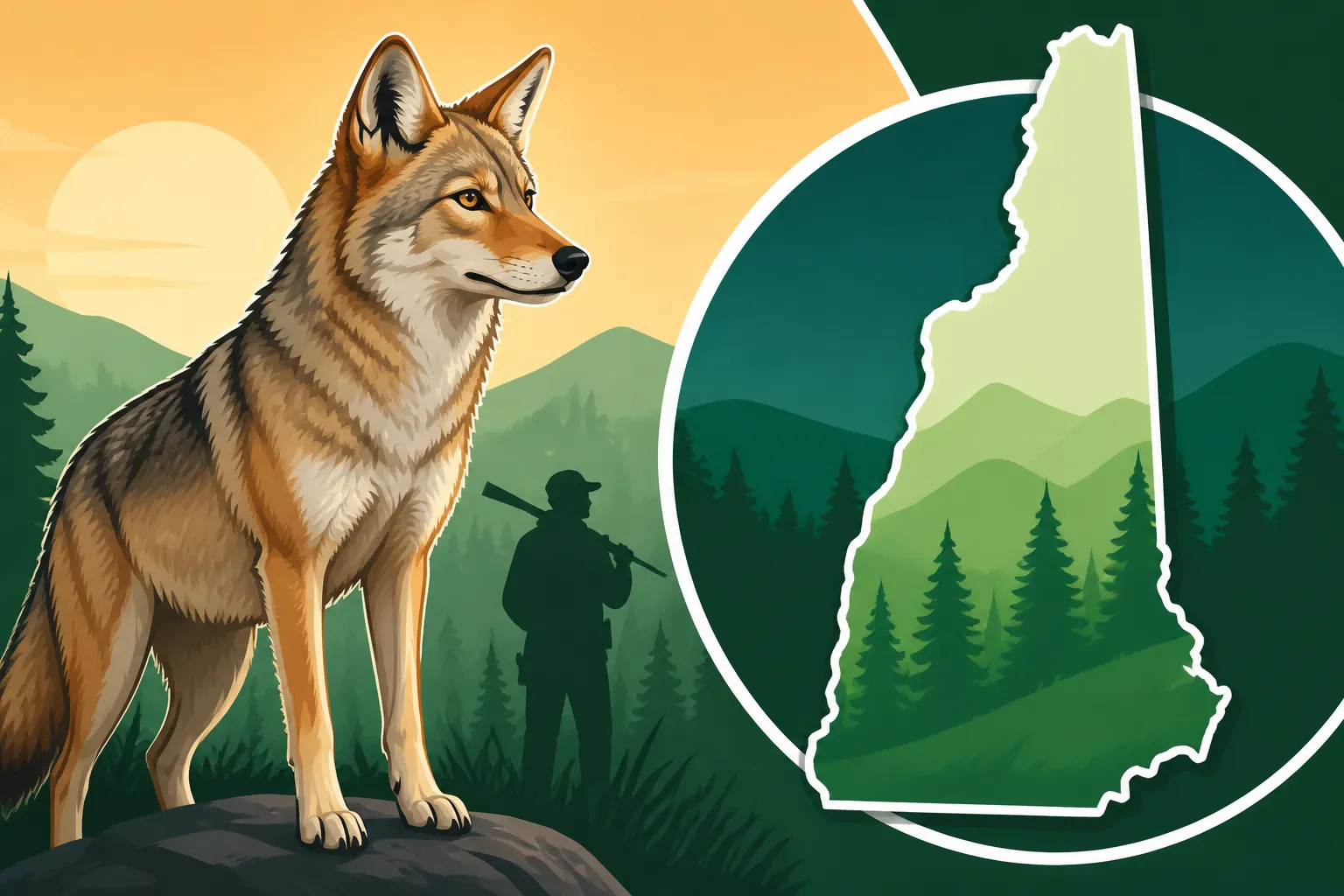
How Many Coyotes New Hampshire Has
It's a common question, and one that often sparks quite a bit of debate around campfires and coffee shops across the Granite State: just how many coyotes are there in New Hampshire? As someone who's spent countless hours exploring our woods, fields, and even the edges of our towns, I know the feeling of wondering about these elusive animals. You hear them howling at dusk, catch a fleeting glimpse of one crossing a logging road, or perhaps find tracks in fresh snow, and you can't help but feel they're everywhere. But getting a real handle on their numbers is a far more complex puzzle than you might imagine, and this guide is going to break down exactly why it's so tricky and what we do know.
The Elusive Nature of New Hampshire's Coyote Population
It's natural to want a clear, concise number for a wildlife population, especially for a species like the coyote that elicits such strong feelings – whether it's admiration for their cunning or concern for their impact on other game. However, when it comes to coyotes in New Hampshire, a precise head count is something of a wild goose chase. These animals are masters of discretion, and their very nature makes them incredibly difficult to tally.
Why Pinpointing Numbers is a Challenge
Imagine trying to count every squirrel in your backyard, let alone every deer in a county. Now, imagine trying to count an animal that actively avoids humans, primarily moves under the cover of darkness, and can traverse vast, rugged territories without leaving much more than a whisper of its passing. That's the challenge wildlife biologists face with coyotes. They are notoriously shy and incredibly adaptable, thriving in environments from dense, remote forests to the fringes of suburban neighborhoods.
Unlike larger, more visible game animals such as deer or moose, which are often counted through aerial surveys in certain habitats or through mandatory registration processes linked to harvest tags, coyotes don't offer such clear data points. Their broad distribution across all of New Hampshire's diverse terrain, from the thick timber of the White Mountains to the open farmlands of the Connecticut River Valley, means no single survey method can capture them all effectively. Hunters often have a gut feeling about coyote numbers in their specific areas, but generalizing that to the entire state is tough. It's frustrating when you just want a straight answer, but the reality of wildlife management, particularly with such a cunning animal, means we're often dealing with highly educated estimations rather than precise counts.
Understanding "Population Estimate" vs. "Exact Count"
When wildlife agencies like the New Hampshire Fish and Game Department talk about animal populations, they almost always refer to "population estimates" rather than "exact counts." The difference is crucial. An exact count would mean literally seeing and tallying every single coyote in the state, which is simply impossible. Instead, biologists employ a variety of scientific methods to gather data, and then use that data to estimate the population size and trends.
These methods can include analyzing harvest data from hunting and trapping seasons, recording roadkill incidents, conducting scat surveys to identify presence and diet, tracking studies in winter, and utilizing trail cameras in strategic locations. Each piece of information acts like a puzzle piece. For example, a consistent increase in reported coyote harvests might suggest a growing or stable population, while a spike in nuisance complaints could indicate increased density in certain human-populated areas. However, even these data points are influenced by other factors, like hunter effort or reporting rates. So, while you won't get a definitive number like "New Hampshire has exactly 15,342 coyotes," the estimates derived from these methods provide invaluable insights into whether the population is increasing, decreasing, or remaining stable, which is what truly matters for effective wildlife management.
Factors Influencing New Hampshire's Coyote Numbers
Coyotes are biological opportunists, and their numbers in New Hampshire are intricately linked to the resources available to them and the pressures they face. It's a delicate balance that shifts with the seasons, the landscape, and even human activity.
Habitat and Food Availability
New Hampshire, with its vast tracts of regenerating forests, diverse agricultural lands, and expansive wilderness areas like the White Mountain National Forest, provides an ideal mosaic of habitats for coyotes. They thrive in "edge" environments – where forests meet fields, or where clear-cuts open up new growth. These areas are prime hunting grounds for small mammals like mice, voles, and rabbits, which form the cornerstone of a coyote's diet.
Beyond small game, coyotes are also known to prey on larger animals, particularly New Hampshire Deer Herd Size fawns during the spring and summer, and sometimes turkeys. A robust prey base means more food for coyotes, which can directly translate to better survival rates for pups and a generally healthier population. For instance, a series of mild winters with good mast crops (acorns, beechnuts) can lead to a boom in rodent populations and healthier deer, which in turn provides more sustenance for coyotes, potentially leading to an increase in their numbers the following year. Conversely, a severe winter with deep snow can make hunting difficult, reducing the prey available and potentially impacting coyote survival. New Hampshire offers an abundance of opportunity for them to find food, even in unexpected places.
The Role of Human Interaction and Hunting Pressure
Humans play a significant, albeit sometimes complex, role in influencing coyote numbers. New Hampshire has a year-round hunting season for coyotes, and they can also be trapped, making them a legal target for sportsmen and women. Many hunters, especially those concerned about deer populations, feel that hunting coyotes is a necessary form of population control. This often leads to efforts like Coyote Calling New Hampshire Farm Country, which can be effective in reducing localized coyote presence.
However, coyotes are incredibly resilient. They exhibit what's known as compensatory reproduction. This means that if a population experiences a significant reduction due to hunting or trapping, the remaining females might respond by having larger litters, and a higher percentage of pups might survive due to reduced competition for resources. This makes it challenging to significantly depress their overall numbers through hunting alone. While localized hunting pressure can certainly reduce coyote presence in specific areas, the statewide population often remains stable or even grows due to this biological adaptability.
Furthermore, human development, ironically, can sometimes create more optimal habitat for coyotes. As we build homes and communities, we often create more forest edges and fragmented landscapes, which are precisely the environments coyotes prefer for hunting and denning. Access to discarded food scraps, pet food, and even small domestic animals if left unattended, can also supplement their diet, especially in suburban settings. Wildlife agencies like New Hampshire Fish and Game often collect data on harvest rates and nuisance complaints, which can be useful when trying to get a picture of coyote activity and density across different regions. For example, you might see trends in a tool like GoHunt that indicate where deer populations are high, which could indirectly suggest areas where coyotes might also thrive.
Historical Perspective and Current Trends
Understanding where New Hampshire's coyotes came from and how they established themselves helps us make sense of their current presence and population dynamics. They haven't always been here in their current form, and their journey is quite a fascinating one.
The Eastern Coyote's Arrival and Expansion
The coyotes we see in New Hampshire today are not quite the same as their Western counterparts. These "Eastern Coyotes" are a unique blend, often described as a hybrid, carrying genetics from Western coyotes, but also from wolves and even domestic dogs. This genetic mixing occurred as Western coyotes expanded their range eastward in the late 19th and early 20th centuries, migrating into areas where wolves had been largely extirpated. This genetic infusion likely contributed to the Eastern coyote's larger size and greater adaptability to forested environments compared to the coyotes of the plains.
Their expansion into New Hampshire was a gradual process, occurring over the last century. They moved through river valleys, followed logging roads, and colonized the vast, regenerating timberlands. By the latter half of the 20th century, they were firmly established across the entire state. This historical context is important because it shows their incredible ability to adapt and fill an ecological niche that had been left vacant by the disappearance of larger predators like wolves and mountain lions. When we talk about New Hampshire's Eastern Coyote Origins, we're really discussing a remarkable success story of wildlife adaptation and resilience. They might not be "native" in the same historical sense as a white-tailed deer, but they are now an integral and permanent part of New Hampshire's wild landscape.
Current Estimates and Density Considerations
While obtaining a precise statewide number for New Hampshire's coyote population remains elusive for the reasons discussed, the New Hampshire Fish and Game Department constantly monitors trends through various data collection efforts. These efforts allow them to gauge whether the population is generally stable, increasing, or decreasing over time. Rather than a single number, it's more useful to think in terms of density – how many coyotes are living within a given area.
Coyote density isn't uniform across the state. Areas with abundant prey, good cover, and perhaps less human disturbance might support higher densities. For example, remote regions of the North Country, with vast tracts of unbroken forest and healthy deer populations, might have a higher density of coyotes than the more fragmented, suburbanized areas of the Southern Tier. Conversely, areas with intense Small Game and Predator Hunting in New Hampshire pressure might see localized dips in density. The agency relies on a compilation of harvest reports, road mortality data, and public observations to build a comprehensive picture. Utilizing resources like the Scouting With the New Hampshire Fish and Game App can help hunters and wildlife enthusiasts understand habitat characteristics in different WMUs (Wildlife Management Units) and potentially infer where coyotes might be more prevalent.
Here’s a general overview of factors influencing coyote density across different New Hampshire regions:
| Factor | Effect on Coyote Population | Example New Hampshire Regions |
|---|---|---|
| Prey Abundance | High prey = higher density | Connecticut River Valley, areas bordering agricultural land |
| Hunting/Trapping Pressure | High pressure = lower localized density | Areas with high human population and access for hunting/trapping |
| Habitat (Dense Cover) | Good cover = higher survival & density | White Mountain Foothills, extensive regenerating clear-cuts |
| Human Development/Edge | Can increase food sources (waste) | Suburban fringes, exurban areas, rural-residential |
| Severe Winters | Can decrease survival, especially for young | Remote North Country, high-elevation White Mountains |
Understanding these regional variations is key to appreciating the complex nature of coyote populations. Their impact on other species, such as the concern for New Hampshire Predator Impact on Fawn Recruitment, often drives public interest in their numbers. This ongoing monitoring by Fish and Game is crucial for managing this important predator within our ecosystem and is supported by data from hunters who participate in activities like Trapping New Hampshire Furbearers.
Coexisting with New Hampshire's Coyotes
Coyotes are a permanent fixture in the New Hampshire landscape. Learning to coexist with them, whether you live in a rural setting or on the edge of a more developed area, is a critical part of living in the Granite State. Understanding their behavior and taking proactive steps can minimize potential conflicts.
Minimizing Conflicts in Rural and Suburban Settings
It's completely understandable to feel a pang of concern when you see a coyote too close to your home, especially if you have small children or pets. These are legitimate worries, and responsible wildlife management involves educating the public on how to reduce potential interactions. The vast majority of coyotes are naturally wary of humans and prefer to keep their distance. Problems typically arise when coyotes become habituated to human presence, often due to accessible food sources.
To minimize conflicts, there are several actionable steps you can take:
- Secure your trash: Use tightly sealed, animal-proof containers.
- Never leave pet food outside: This is a major attractant.
- Supervise small pets: Keep cats indoors and walk small dogs on a leash, especially during dawn and dusk hours when coyotes are most active.
- Fence in livestock: If you have chickens, sheep, or other small livestock, secure them in predator-proof enclosures.
- Haze bold coyotes: If a coyote approaches you or seems unafraid, make yourself large, make loud noises, and throw small objects. This helps reinforce their natural fear of humans.
- Clear fallen fruit: If you have apple trees, pick up any fallen fruit, as it can attract small prey animals which in turn attract coyotes.
Remember, a habituated coyote is a problem coyote, not just for humans but for the animal itself, as it often leads to removal. The New Hampshire Fish and Game Department offers guidance on these practices, and understanding the nuances of New Hampshire Coyote Hunting Season Rules can also be part of a broader approach to management in certain areas. Observing coyotes in natural areas, such as Public Hunting Land in New Hampshire, is part of the wild experience, but encouraging them into human spaces is a different story.
The Ecological Role of Coyotes in the Ecosystem
Despite sometimes being viewed as pests, coyotes play a vital and beneficial ecological role in New Hampshire's ecosystems. As apex predators, they help keep other wildlife populations in check. Their primary diet often consists of rodents, rabbits, and other small mammals, which means they are helping to control populations that could otherwise cause significant damage to agricultural crops or forest health. Think of them as nature's clean-up crew for these abundant small game species.
Coyotes are also scavengers. They help clean up carrion, whether it's an animal that died naturally or a roadkill incident. This natural recycling process helps keep the environment healthy and reduces the spread of disease. While their impact on deer populations is often debated, particularly concerning New Hampshire Deer and Moose Disease Monitoring or fawn predation, they are known to target weaker or diseased individuals, which can, in theory, contribute to a healthier overall deer herd by promoting natural selection.
Their presence is a strong indicator of a healthy, functioning ecosystem. They are adaptable, intelligent, and a true testament to the resilience of wildlife. So, while you might not get a precise number for how many coyotes call New Hampshire home, rest assured that they are out there, quietly playing their part in maintaining the balance of nature in our beautiful state. The ability to use tools like GoHunt to analyze habitat and terrain, for instance, can sometimes reveal the kinds of areas where these clever creatures thrive.
Disclaimer
This article is for general informational purposes only and does not constitute professional advice. Laws, prices and regulations vary by location and change over time. Consult a qualified professional for guidance on your specific situation.