New Hampshire Ruffed Grouse Harvest Numbers
For those of us who cherish the crisp autumn air, the vibrant foliage, and the explosive flush of a ruffed grouse, understanding the health of New Hampshire's populations is a constant quest. It's frustrating when you've walked miles of promising cover only to hear nothing, making you wonder what's really happening with these magnificent birds. This guide aims to pull back the curtain on how we look at New Hampshire's ruffed grouse harvest numbers, what they truly tell us, and how you can use this insight to improve your hunting strategy.
Understanding New Hampshire's Ruffed Grouse Population Dynamics
Ruffed grouse hunting in New Hampshire isn't just about bagging a bird; it's about being immersed in the unique habitat these birds call home. But to consistently find them, you need to have at least a basic understanding of what makes their numbers rise and fall. It’s not as simple as year-to-year good or bad luck; there are deeper, cyclical forces at play, intertwined with the very woods we walk.
The Elusive Cycle of Grouse Populations
Anyone who's chased ruffed grouse for a while has noticed it: some years are simply phenomenal, with flushes seemingly around every bend, while others feel like a long, silent walk in the woods. This isn't just your imagination; ruffed grouse populations are famous for their cyclical nature, often experiencing an 8-10 year boom-and-bust pattern. This cycle is influenced by a complex interplay of factors, including predator populations (like coyotes, bobcats, and raptors), disease, and weather patterns that impact nesting success and chick survival.
During a "boom" year, it feels like the woods are alive, and success rates for hunters generally climb. These are the years you tell stories about for decades. Conversely, in the "bust" years, grouse can be incredibly hard to find, leading to lower harvest numbers and, understandably, a lot of head-scratching among hunters. Recognizing where we might be in this cycle, even if it's just a general feeling from local reports, can help manage expectations. You can dive deeper into this fascinating phenomenon by reading about New Hampshire Ruffed Grouse Population Cycles.
Habitat and Its Influence on Grouse Numbers
More than any other factor, robust ruffed grouse populations are directly tied to the availability of quality habitat. In New Hampshire, that means a mosaic of young, regenerating forest stands, often a mix of hardwoods and softwoods, providing dense understory cover. These areas offer the crucial escape cover from predators and the diverse food sources (like buds, catkins, and berries) grouse need to thrive. Think about the thick new growth after a timber harvest or a natural disturbance – that's prime grouse country.
Without this specific type of habitat, even during a population upswing, grouse numbers will struggle. Mature, open timber, while beautiful, typically lacks the dense cover grouse require for nesting, raising broods, and evading aerial predators. Land use changes, development, and the natural aging of forests without active management can slowly erode these critical habitats, leading to localized declines in grouse numbers, regardless of the broader population cycle. So, while you're focused on the birds, remember to keep an eye on the habitat around you. It's the ultimate indicator of where grouse might be.
Deciphering New Hampshire's Grouse Harvest Data
When you're out in the woods, the thought of "harvest numbers" might seem a bit academic. But understanding how these numbers are gathered and what their fluctuations actually mean can give you a better grasp of the overall health of the ruffed grouse population in New Hampshire. It's not about counting every single bird, but rather gathering insights from the hunting community itself.
How Harvest Numbers Are Collected
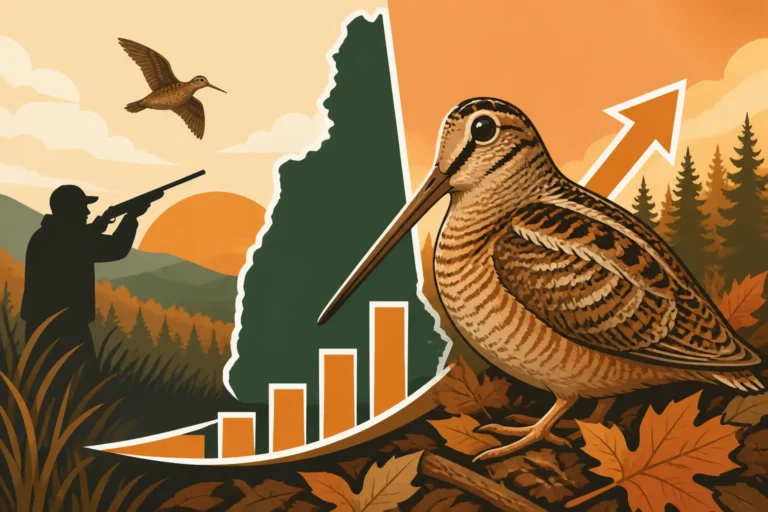
Unlike deer or moose, where mandatory registration provides solid harvest figures, ruffed grouse harvest data in New Hampshire is primarily collected through hunter surveys. Each year, New Hampshire Fish and Game surveys a sample of licensed hunters, asking them to report on their hunting effort (days hunted), success (birds harvested), and observations. These voluntary surveys, while not a census, provide valuable indices. Wildlife biologists then use statistical methods to extrapolate these survey responses to estimate the total statewide harvest.
Additionally, some states might collect wing and tail samples from harvested birds to gather data on age ratios and reproductive success, although the direct impact of this specific data collection on the published harvest numbers for grouse might vary by year or program. The key takeaway is that these figures are estimates, reflecting hunter participation and reported success rather than a strict count of every bird taken. This means that a dip in harvest numbers could sometimes reflect fewer hunters going out, or less successful hunters, rather than an absolute crash in the grouse population. It’s a nuanced picture, for sure.
Interpreting Annual Harvest Fluctuations
Annual harvest numbers for ruffed grouse can jump around quite a bit, and it’s rarely due to just one thing. When you see a spike in harvest, it could mean the population is indeed strong, perhaps recovering from a previous low in its cycle, or it could simply mean more hunters were out, or conditions were particularly favorable for hunting. For instance, an early, heavy snow cover can sometimes push birds into more predictable patterns, making them easier for hunters to locate, potentially leading to higher harvest numbers even if the underlying population isn't at its absolute peak.
Conversely, a decline in harvest might indicate a population low, possibly due to poor breeding seasons caused by late frosts, heavy spring rains, or increased predator pressure. It could also simply mean difficult hunting conditions – a mild fall with no snow can make finding birds incredibly challenging, leading hunters to spend less time afield or simply have less success. When considering your hunting plans, looking at the long-term trends alongside anecdotal reports from your local hunting circles can give you a more complete picture. Tools like GoHunt can help you visualize historical data and identify trends that might not be immediately obvious, helping you to form a more informed strategy.
Here's a simplified look at how hypothetical harvest trends might fluctuate across different regions, and some of the factors contributing to those changes:
| Region/WMU Type | Year 1 Harvest Trend | Year 2 Harvest Trend | Year 3 Harvest Trend | Contributing Factors (Hypothetical) |
|---|---|---|---|---|
| Northern Forests (e.g., WMU A, B) | Stable | Slight Increase | Moderate Increase | Consistent young forest regeneration from logging, lower hunting pressure, good weather for early broods. |
| Central Highlands (e.g., WMU E, F) | Slight Decrease | Stable | Stable | Aging forest stands reducing prime cover, consistent hunter effort, some impact from localized habitat loss. |
| Southern Valleys (e.g., WMU H, I) | Moderate Decrease | Stable | Slight Decrease | Increased development pressure on small woodlots, higher hunting pressure on accessible parcels, less ideal habitat connectivity. |
| Connecticut River Valley (e.g., WMU D2) | Increase | Stable | Stable | Abundant mixed habitat along river corridors and agricultural edges, consistent habitat through periodic cuts, strong mast crops. |
Keep in mind that these are generalizations, and specific data would be collected and analyzed by New Hampshire Fish and Game. Understanding Reading a New Hampshire Harvest Report in general will give you the tools to interpret the real reports when they come out.
Regional Harvest Trends and WMU Insights
New Hampshire is a diverse state, from the rugged peaks of the White Mountains to the rolling hills of the Monadnock region and the mixed forests of the Seacoast. It stands to reason that ruffed grouse populations and subsequent harvest numbers will vary significantly depending on where you focus your efforts. A grouse hunter's experience in the North Country might be entirely different from someone hunting closer to the more populated southern towns.
North Country vs. Southern New Hampshire Grouse Hunting
When we talk about ruffed grouse hunting in New Hampshire, the North Country (think Coos and northern Grafton counties, encompassing WMUs A, B, and parts of E) often comes up as prime territory. This region typically boasts vast tracts of public land, including the White Mountain National Forest, and a landscape historically shaped by timber harvesting. This constant cycle of logging creates the crucial young forest habitat that grouse absolutely thrive in. Consequently, harvest numbers in these areas tend to be more consistent and often higher, relative to hunter effort, during peak years of the grouse cycle. Here, you'll often find more remote, less pressured hunting opportunities. You can learn more about specific hunting opportunities in Hunting the North Country.
Conversely, hunting in Southern New Hampshire (closer to cities like Manchester, Nashua, or Concord, encompassing WMUs I, J, K, M) presents a different challenge. While grouse certainly exist here, habitat is often more fragmented due to development, and hunting pressure on accessible public land can be higher. Private land makes up a larger percentage of the landscape, requiring more effort to gain permission. Harvest numbers here might be lower overall, and success can be highly localized, dependent on finding those small pockets of ideal habitat that haven't been swallowed by progress. However, dedicated hunters can still find success by focusing on river corridors, utility easements, and less-traveled woodlots. For specific areas, checking out Best New Hampshire Counties for Grouse can provide valuable hints.
Factors Affecting Localized Harvest Success
Beyond the broad regional differences, several localized factors can dramatically influence your personal harvest success and, collectively, impact the overall harvest numbers reported for smaller areas. Micro-habitat conditions are paramount: a specific clear-cut from 5-15 years ago might be a grouse haven, while an adjacent, older timber stand could be devoid of birds. Recent logging activity can create new opportunities for grouse habitat, but it takes a few years for the cover to grow in sufficiently. This highlights the importance of scouting.
Access, whether it's public land or gaining permission on private parcels, also plays a huge role. Areas with easy road access often see more hunting pressure, which can make birds warier. Tools like the New Hampshire Fish and Game app, or mapping services like GoHunt (which offers detailed land ownership and habitat overlays), can be invaluable for identifying potential hotspots and finding ground that others might overlook. Knowing how to use Using the Fish and Game App Without Cell Service can be a game-changer when you're deep in the woods. Additionally, local weather patterns, specific mast crops (like beechnuts or acorns), and even localized predator densities can all affect grouse availability in a given year. The most successful grouse hunters are often those who are willing to put in the time to scout and understand these localized nuances, allowing them to find success even during less productive regional years.
Implications for New Hampshire Grouse Hunters
Understanding harvest numbers and population trends isn't just about satisfying curiosity; it's about becoming a more effective hunter and a more engaged conservationist. With a bit of strategic thinking and a commitment to responsible hunting, you can adapt to the ever-changing dynamics of ruffed grouse in New Hampshire.
Planning Your Hunt Based on Data
While broad harvest numbers don't tell you exactly where to find a bird, they can absolutely inform your overall hunting strategy. If statewide or regional harvest numbers are trending down, it might indicate that you need to put in more effort, expand your scouting, or focus on areas known for consistently holding birds, rather than expecting a "birdy" day everywhere you go. Conversely, in years with higher harvest numbers, you might find success in a wider variety of covers. Using tools that display land features, like GoHunt, can help you pinpoint areas with optimal habitat characteristics, such as younger timber stands or dense shrubby cover. This kind of mapping can be a powerful asset for Scouting New Hampshire Public Land Before Season.
Moreover, by looking at historical data, you can anticipate potential hotspots. For instance, if a particular Wildlife Management Area (WMA) consistently produces good grouse numbers, it suggests stable habitat conditions. Familiarize yourself with New Hampshire Wildlife Management Areas and their management goals. This doesn't mean ignoring your tried-and-true spots, but rather using data to either double down on known productive areas or explore new, promising territories. Paying attention to local conditions, like recent timber harvests or specific berry crops, can further refine your game plan, allowing you to focus your precious hunting time where it's most likely to pay off. Even seemingly minor details, such as where you choose to Hanging a Stand on a Granite Ridge for other species, can often lead you to discovering new grouse cover.
Conservation and the Future of Grouse Hunting
As hunters, we are often the first to notice changes in wildlife populations and habitats. The trends in ruffed grouse harvest numbers, whether up or down, serve as important indicators of the health of our forests. Declining numbers, particularly when sustained, can signal a need for more active habitat management. Ruffed grouse, perhaps more than any other game bird in New Hampshire, rely on specific forest stages that are created through disturbance, whether natural (like fire or ice storms) or man-made (like timber harvesting).
Supporting conservation efforts that promote responsible forest management, creating young, regenerating forest stands, is crucial for the long-term health of our grouse populations. This includes advocating for habitat projects on public lands, promoting sustainable forestry practices on private lands, and participating in hunter surveys. Our pursuit of the ruffed grouse connects us deeply to the land, and with that connection comes a responsibility to ensure these incredible birds continue to thrive for future generations of hunters. Every time we head out, whether we bag a bird or not, we're part of a larger picture, contributing to the understanding and appreciation of New Hampshire's wild resources. Don't forget to explore other small game opportunities in similar habitats, such as Squirrel Hunting New Hampshire Hardwoods, as healthy forest ecosystems support a variety of species.
Disclaimer
This article is for general informational purposes only and does not constitute professional advice. Laws, prices and regulations vary by location and change over time. Consult a qualified professional for guidance on your specific situation.