Where New Hampshire Hare Populations Hold Up Best
Finding those elusive snowshoe hare in New Hampshire can feel like a genuine quest, especially if you're used to seeing them only as quick flashes disappearing into the thickets. It's frustrating when you spend a day busting brush without cutting a track, making you wonder if they're even around in healthy numbers. This guide is here to cut through that frustration, revealing the specific types of habitats and geographical regions across New Hampshire where snowshoe hare populations truly hold their own, giving you a much better chance at a successful hunt.
Understanding Snowshoe Hare Habitat Preferences
Snowshoe hares aren't just found anywhere in the woods; they are creatures of specific, dense habitats. Think of it from their perspective: they're relatively small prey animals, constantly on the lookout for danger, and their survival hinges on their ability to disappear into thick cover. Their environment is their fortress, providing both refuge from predators and a consistent food supply. Understanding these critical habitat needs is the first step to pinpointing where they'll be.
The Importance of Dense Conifer and Young Growth
If you're looking for snowshoe hare, you're essentially looking for incredibly dense vegetation. They absolutely thrive in thick coniferous stands – think spruce, fir, and cedar swamps. These areas offer a year-round canopy, which is crucial. In winter, the heavy boughs collect snow, creating a subnivean layer (under-snow tunnels) that offers warmth and concealment from aerial predators like owls, and ground predators alike. It’s like a natural, insulated fort for them.
Beyond mature conifers, young, regenerating forests are also hare magnets. Clear-cuts that are a few years old, where saplings and brush have sprung up into an almost impenetrable tangle, are prime real estate. Alders, willow thickets, and dense hardwood regeneration that might be a nightmare for a hunter to walk through are exactly what a hare looks for. This dense growth provides an intricate maze of escape routes, making it incredibly difficult for a coyote or bobcat to pursue them effectively. They'll also feed on the tender buds and bark of these young plants, so the cover serves a dual purpose as a diner. If you find yourself in woods so thick you can barely move, you're likely in good hare country.
Wetlands and Waterways as Hare Havens
Another key habitat feature for strong snowshoe hare populations is proximity to wetlands and waterways. Beaver flowages, the edges of bogs, and stream bottoms are often incredibly productive. These damp areas typically support a profusion of dense, regenerating growth, including alders, willows, and various other shrubs that are high on a hare's dietary list. The consistent moisture encourages lush vegetation, meaning a steady food supply.
Beaver flowages, in particular, create dynamic ecosystems that are perfect for hares. As beavers cut down trees, new growth sprouts up around the edges of the ponds and dams. This constant cycle of cutting and regrowth creates a mosaic of dense, young habitat that hares exploit. The edges of these wetlands, where the forest transitions from upland to damp, boggy ground, often have the most impenetrable thickets. These transitions offer a blend of food sources and cover that is hard to beat. When you're scouting, don't overlook those marshy, wet areas that might seem unappealing to humans; they're often gold mines for hares. Hunting a Beaver Flowage Edge
New Hampshire's Prime Regions for Robust Hare Populations
Given their specific habitat preferences, it stands to reason that certain parts of New Hampshire, with their particular land compositions and forest types, will naturally hold more snowshoe hares than others. While you might find a scattered hare almost anywhere with the right patch of cover, some regions consistently offer the extensive, high-quality habitat needed for truly robust populations.
The North Country's Vast Woodlands
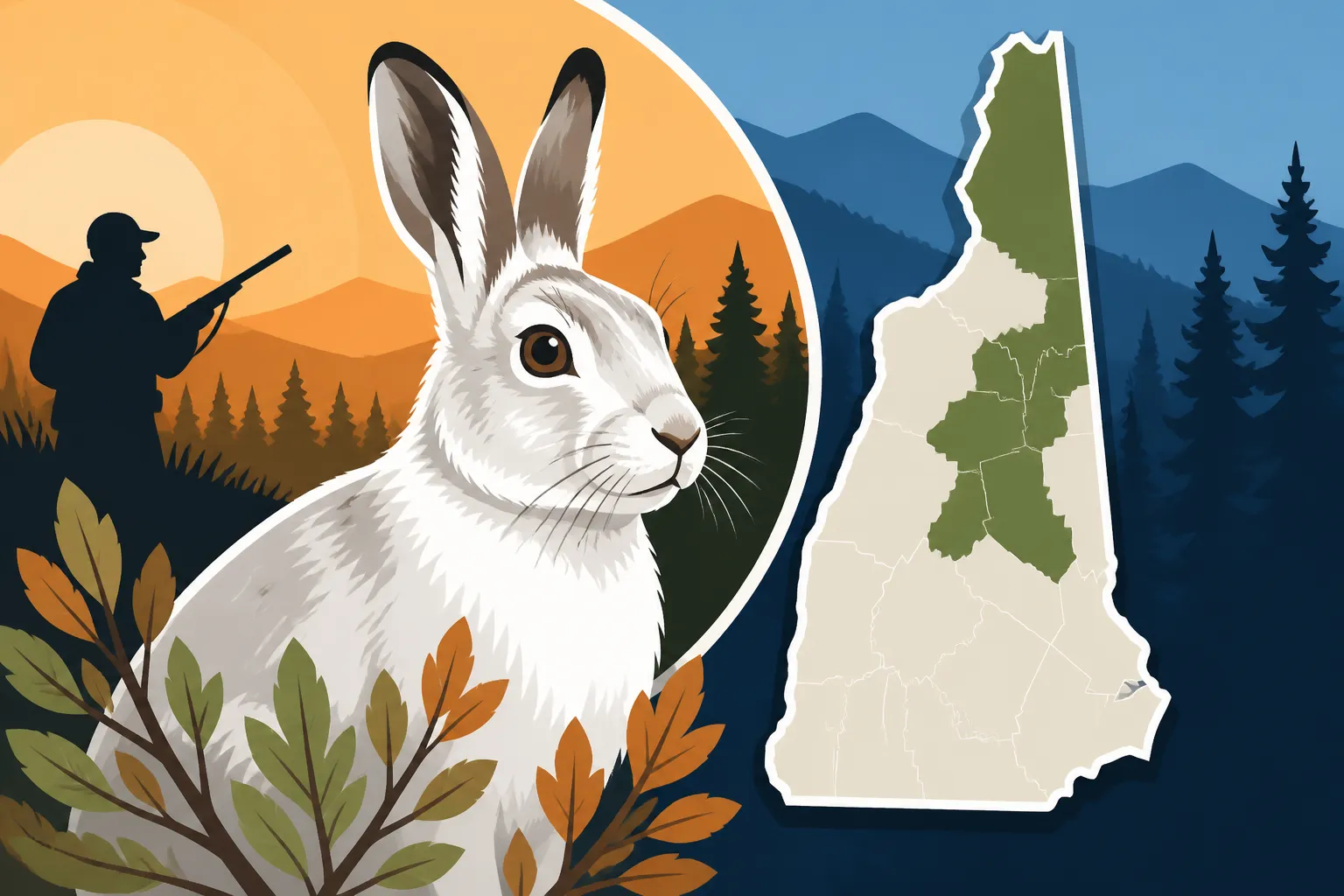
Without a doubt, New Hampshire's North Country — primarily Coos County and the northern reaches of Grafton and Carroll counties — is often considered the undisputed king of snowshoe hare habitat. This expansive region is characterized by vast, unbroken tracts of timberland, much of which is public or managed industrial forest. Here, you'll find extensive spruce-fir forests, particularly in higher elevations and cooler, wetter areas. These coniferous strongholds provide that critical dense cover that hares absolutely depend on for survival, especially through the deep New Hampshire winters.
The scale of these woodlands means there are always areas in various stages of regeneration, from recent clear-cuts bursting with young alders and saplings to older stands with dense understories. This creates a mosaic of ideal hare habitat. Hunters often find less pressure in these remote areas, allowing hare populations to thrive more consistently. The colder climate and deeper, longer-lasting snow cover in the North Country also play a significant role, providing the natural advantages hares need, such as access to higher browse and insulation from the elements. When you're thinking about chasing hare, the North Country should be high on your list. Hunting the North Country
White Mountain Foothills and Managed Forests
While the high, exposed peaks of the White Mountains aren't typically good hare country, the lower elevations and surrounding managed forests certainly can be. Areas bordering the White Mountain National Forest, particularly in the foothills and valleys, often contain significant patches of prime hare habitat. Look for state forests and other publicly managed lands where timber harvesting is a regular practice. These managed forests are constantly creating successional habitats — those dense, young growth areas that hares love.
The key here is to differentiate between open, mature timber and those specific dense pockets. Within these larger regions, focus your scouting on areas that have seen recent disturbances, whether from logging, wind events, or natural fire. These events lead to vigorous regrowth of shrubs and young trees, creating the tangled thickets that provide both food and security for hares. Utilize mapping tools like GoHunt to examine aerial imagery, looking for areas with a noticeably different texture of vegetation, indicating younger, denser growth. Even within seemingly mature forests, you can find cedar swamps or low-lying areas that are perfect microhabitats for a thriving hare population. Hunting New Hampshire's White Mountain National Forest
Specific Wildlife Management Areas and Conservation Lands
New Hampshire boasts a number of Wildlife Management Areas (WMAs) and conservation lands that are strategically managed to support a variety of game species, including small game like snowshoe hare. While not every WMA will be a hare hotspot, many are designed to enhance habitat diversity, which often benefits species that rely on dense cover. These areas can be excellent choices, especially if you're looking for public land that's relatively accessible.
When researching WMAs, look for those known for their wetland components, such as extensive marshlands, beaver flowages, or river bottomlands. These areas are often rich in the dense, shrubby growth that hares prefer. Additionally, WMAs where timber stand improvement or specific forestry practices are implemented can create excellent hare habitat. These might include cuts designed to promote early successional forests. It's always a good idea to check the New Hampshire Fish and Game website or reach out to local biologists for information on specific WMAs and their management goals, as some may have particular focuses that align well with hare habitat. Remember, the management in these areas can create pockets of fantastic cover even if the surrounding landscape isn't ideal. New Hampshire Wildlife Management Areas
Factors Influencing Hare Distribution and Population Health
Snowshoe hare populations aren't static; they ebb and flow, and their distribution can shift based on a variety of environmental factors. Understanding these dynamics can give you an edge in predicting where they'll be most abundant and healthy in any given year. It's not just about finding the right type of woods, but also understanding what makes those woods truly suitable for hares to thrive.
The Role of Snow Depth and Winter Conditions
For a creature named "snowshoe" hare, it's probably no surprise that snow plays an absolutely crucial role in their survival and distribution. Deep, consistent snow cover acts as both a protective blanket and an elevated dining table for these animals. When the snow piles up several feet, hares can reach higher branches and browse that would otherwise be out of reach. This expanded food availability is vital during the lean winter months.
Even more importantly, deep snow provides critical insulation and escape routes from predators. Hares create intricate networks of tunnels beneath the snow, known as subnivean tunnels, where they can move, feed, and rest in relative warmth and safety. This subnivean layer shields them from chilling winds and freezing temperatures, as well as from the keen eyes of owls and the tracking abilities of coyotes and bobcats. A winter with scant or inconsistent snow cover can severely impact hare survival rates, making them more vulnerable to predation and exposure. Conversely, a winter with abundant, consistent snowfall often correlates with healthier, more robust hare populations in the following spring.
Predation and Habitat Connectivity
Snowshoe hares are a fundamental prey species in the New Hampshire ecosystem, meaning they face constant pressure from a variety of predators. Coyotes, bobcats, fox, fisher, and various avian predators like great horned owls all rely on hares as a food source. The sheer density of cover in their preferred habitats is their primary defense mechanism against these threats. The more tangled and impenetrable the thicket, the harder it is for a predator to catch them.
This highlights the importance of habitat connectivity. Large, continuous tracts of suitable habitat allow hares to disperse, find mates, and establish territories without encountering significant barriers. When habitats become fragmented – broken up by roads, developments, or large expanses of unsuitable open land – hare populations can become isolated. These isolated pockets are more vulnerable to local extinction from disease, harsh winters, or intense localized predation, as they lack the ability to be replenished by hares from adjacent areas. Areas with large, unbroken patches of dense cover, often found in New Hampshire's more rural and northern regions, tend to support healthier hare populations due to this connectivity. Coyotes and Predators in New Hampshire
Timber Harvest Practices and Regeneration
Timber harvesting, often viewed as disruptive, can actually be a significant boon for snowshoe hare populations when managed appropriately. Certain logging practices, particularly clear-cuts that are then allowed to regenerate naturally or are replanted with conifers, create ideal early successional habitat. After a few years, these areas transform into dense thickets of young trees, shrubs, and brush – exactly the kind of cover and browse that hares need.
The timing and type of harvest are crucial. A clear-cut that's 5-15 years old can be a hare paradise, but once the trees grow too tall and shade out the understory, the habitat quality declines. This means that hare populations can be somewhat transient, following the progression of forest regeneration. Hunters who understand this can use mapping tools like GoHunt to identify recent timber sales or clear-cuts on public land and then scout those areas a few years down the line. Look for areas with a mix of different aged stands, ensuring there’s always a fresh supply of dense, young cover. This cyclical nature of forestry can be a key factor in where you find the best hare numbers year after year.
Tips for Scouting and Hunting New Hampshire's Best Hare Spots
Now that you understand where hares should be, the next step is actually finding them and putting yourself in a position for a successful hunt. This involves a combination of pre-season scouting, smart use of modern tools, and an understanding of hare behavior.
Reading the Landscape for Hare Sign
Once you've identified a promising area based on habitat, it's time to hit the ground and look for actual sign. Snowshoe hares leave distinct clues, especially in the winter. Their tracks are unmistakable: large, broad prints that look almost like snowshoes, with the hind feet often landing in front of the front feet during a bounding gait. Look for fresh tracks around dense cover, leading into and out of thickets. Shed Hunting on New Hampshire Public Land
Beyond tracks, hares leave other signs. They are browsers, so look for clipped branches or twigs, particularly on young hardwoods, evergreens, and shrubs. These cuts will be clean and at an angle, often appearing above the snow line in winter. Droppings are another tell-tale sign: small, round, pellet-like, and often found in concentrations where hares have been feeding or resting. Pay attention to well-used runways – faint paths through the dense underbrush or tunnels under the snow. These indicate consistent hare activity. If you find an area with abundant fresh tracks, clipped browse, and droppings, you've likely found a hare hotspot.
Utilizing Mapping Tools and Local Knowledge
In today's hunting world, mapping applications are invaluable, and for snowshoe hare, they can save you countless hours. Platforms like GoHunt allow you to scrutinize aerial imagery to identify those dense patches of cover, clear-cuts, cedar swamps, and beaver flowages that are hare magnets. You can use property line overlays to ensure you're on public land or land where you have permission. Look for contrasting textures in the vegetation: lighter, uniform green might indicate conifers, while patchy, younger-looking areas could be regenerating clear-cuts. Reading Aerial Photos for North Country Deer
Beyond the digital tools, don't underestimate the power of local knowledge. Talking to New Hampshire Fish and Game wardens, foresters, or even seasoned locals can provide invaluable insights into specific areas that consistently hold hares. They often know about lesser-known logging roads, recent timber operations, or particular swamps that are overlooked by others. Combining your map reconnaissance with this boots-on-the-ground intelligence is a powerful combination for locating the best hare country.
Timing Your Hunt for Optimal Success
The best time to hunt snowshoe hare in New Hampshire is generally from late fall through the winter, especially after the first significant snowfall. The white snow provides the perfect backdrop to spot their tracks, and their white winter coats make for excellent camouflage, adding to the challenge and reward. Early morning and late afternoon are typically the most active times for hares as they move from bedding areas to feeding grounds.
For hunters using beagles, consistent snow cover is even more crucial, as it allows the dogs to scent-track more effectively. Cold, clear days after a fresh snowfall can be absolutely ideal for a hare hunt. The crisp air, the silence of the woods, and the tell-tale tracks laid out on the pristine snow make for an unforgettable experience. Be sure to check the specific Snowshoe Hare Hunting Season Dates for the current year, as these can vary slightly. Also, consider the specific challenges of hunting in deep snow and cold weather, and prepare accordingly with proper clothing and gear. Running Beagles on a New Hampshire Snowshoe Hare
| Habitat Feature | Why it's Good for Hares | Prime New Hampshire Regions | Scouting Tip |
|---|---|---|---|
| Dense Conifer Thickets | Year-round cover, thermal protection, escape routes, food source (browse) | North Country (Coos, N. Grafton, N. Carroll), White Mountain Foothills | Look for dark green, uniform patches on aerial maps; check for spruce, fir, cedar. |
| Young Regenerating Forests | Impenetrable cover, abundant browse after clear-cuts/disturbances | Managed forests statewide, especially after recent logging, North Country | Identify areas with recent timber activity (5-15 years post-cut) on maps. |
| Beaver Flowages & Wetlands | Dense shrubby growth (alders, willows), consistent food, unique cover | Statewide, but prevalent in North Country and areas with active beaver populations | Look for bodies of water with irregular shorelines, evidence of dams/lodges on maps. |
| Thick Stream Bottoms | Linear corridors of dense cover, rich browse, escape routes | Throughout the state, often connect larger patches of habitat | Trace stream courses on maps, looking for accompanying thick vegetation. |
| Rocky Outcroppings with Cover | Provides additional predator evasion, often supports thick brush | White Mountain Foothills, Monadnock Region | Look for areas with mixed terrain and dense undergrowth on map contours. |
Disclaimer
This article is for general informational purposes only and does not constitute professional advice. Laws, prices and regulations vary by location and change over time. Consult a qualified professional for guidance on your specific situation.