New Hampshire Deer Weight Averages by Region
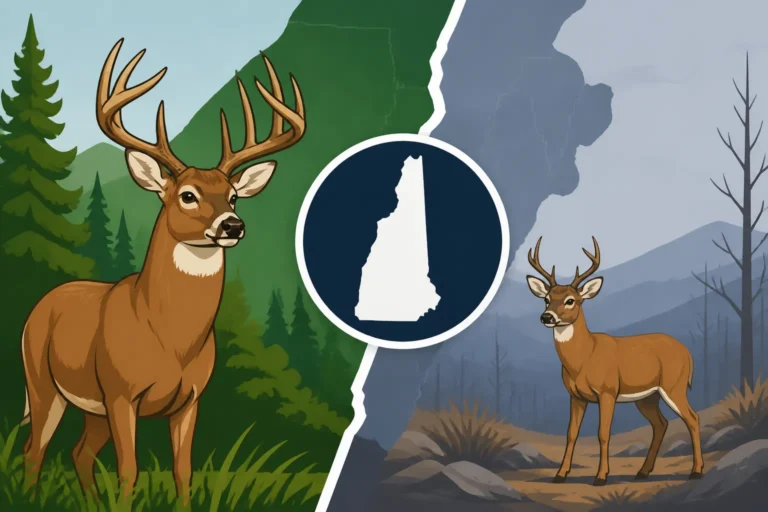
If you’ve spent any time at all chasing deer here in New Hampshire, you've probably noticed something: a deer shot up in Pittsburg often looks quite different from one tagged down near Nashua. It's a common observation that sparks many a deer camp debate – are the deer really bigger down south, or is it just a trick of the eye? This guide aims to clear up some of that mystery, diving deep into the average field-dressed weights of white-tailed deer across our diverse regions, and exploring the factors that contribute to these fascinating differences.
Understanding Deer Weight: More Than Just the Scale
When we talk about deer weight, it’s not just about a number on a scale; it's a window into the health of the herd, the quality of the habitat, and even the challenges and rewards of hunting in a particular area. It’s a concept deeply intertwined with the entire hunting experience.
Why Average Weights Matter to Hunters
For many hunters, knowing the average field-dressed weight of deer in their hunting area is far from just a trivial fact. It’s practical, actionable information. Imagine you’re heading out for a week-long hunt in the remote Pemi wilderness versus a short afternoon sit on a friend’s farm in Merrimack County. The kind of deer you expect to encounter, in terms of size and weight, will heavily influence your preparations. Are you bringing a heavy-duty game cart, or will a simple drag rope suffice? Will you need to quarter the animal in the field to get it out, or can you manage a whole carcass? These are not minor details; they can make or break a successful recovery.
Beyond logistics, understanding regional weight averages helps manage expectations. We all dream of that giant buck, but knowing that a mature 150-pound deer in the North Country is a phenomenal animal, while a 150-pound deer in the southern tier might be a younger one, helps you appreciate your harvest for what it truly is. It fosters a realistic perspective, preventing disappointment and enhancing your connection to the specific environment you're hunting. It also plays into shot placement and knowing what kind of penetration you might need from your broadhead or bullet on a potentially larger-bodied animal versus a smaller one.
Factors Influencing Deer Weight in New Hampshire
Deer weight is a complex equation, influenced by a multitude of variables. It's not just a matter of "North vs. South"; there are intricate biological and environmental factors at play, which contribute to the observed differences across our state. Understanding these helps us become better, more informed hunters and stewards of the land.
First and foremost is nutrition. Just like any animal, deer thrive on a diverse, high-quality diet. Areas rich in agricultural crops, abundant mast (acorns, beechnuts), and lush browse provide the protein, carbohydrates, and minerals necessary for maximum body growth and antler development. Conversely, regions with limited food sources or poor soil quality will typically produce smaller, lighter deer. A hard winter can also severely impact a deer's ability to maintain weight, sometimes leading to significant losses that can carry over into the next season. The availability of Late-Season Food Sources for New Hampshire Whitetails can be critical for winter survival and spring recovery.
Age is another critical factor. Younger deer, such as fawns or yearlings (1.5 years old), will naturally weigh less than mature animals (3.5 years and older). Regions with a younger buck age structure, perhaps due to higher hunting pressure or specific management goals, might have lower average buck weights overall, even if the habitat is good. Conversely, areas with lower pressure or management focused on older age classes tend to yield heavier, more mature deer. Finally, genetics and environmental stress play roles. While all New Hampshire deer are white-tailed deer, subtle genetic differences can exist. Beyond that, deep snow, extreme cold, and widespread parasitic loads (like winter ticks, which sadly impact our moose herd but can affect deer too) can all limit a deer's ability to reach its full weight potential. Thankfully, New Hampshire's deer herd remains New Hampshire's CWD-Free Deer Herd.
Regional Breakdown: New Hampshire's Deer Weight Averages
New Hampshire is a state of incredible contrasts, from the rugged peaks of the White Mountains to the fertile river valleys and burgeoning suburban landscapes. These geographical and habitat differences are directly reflected in the average body weights of our deer.
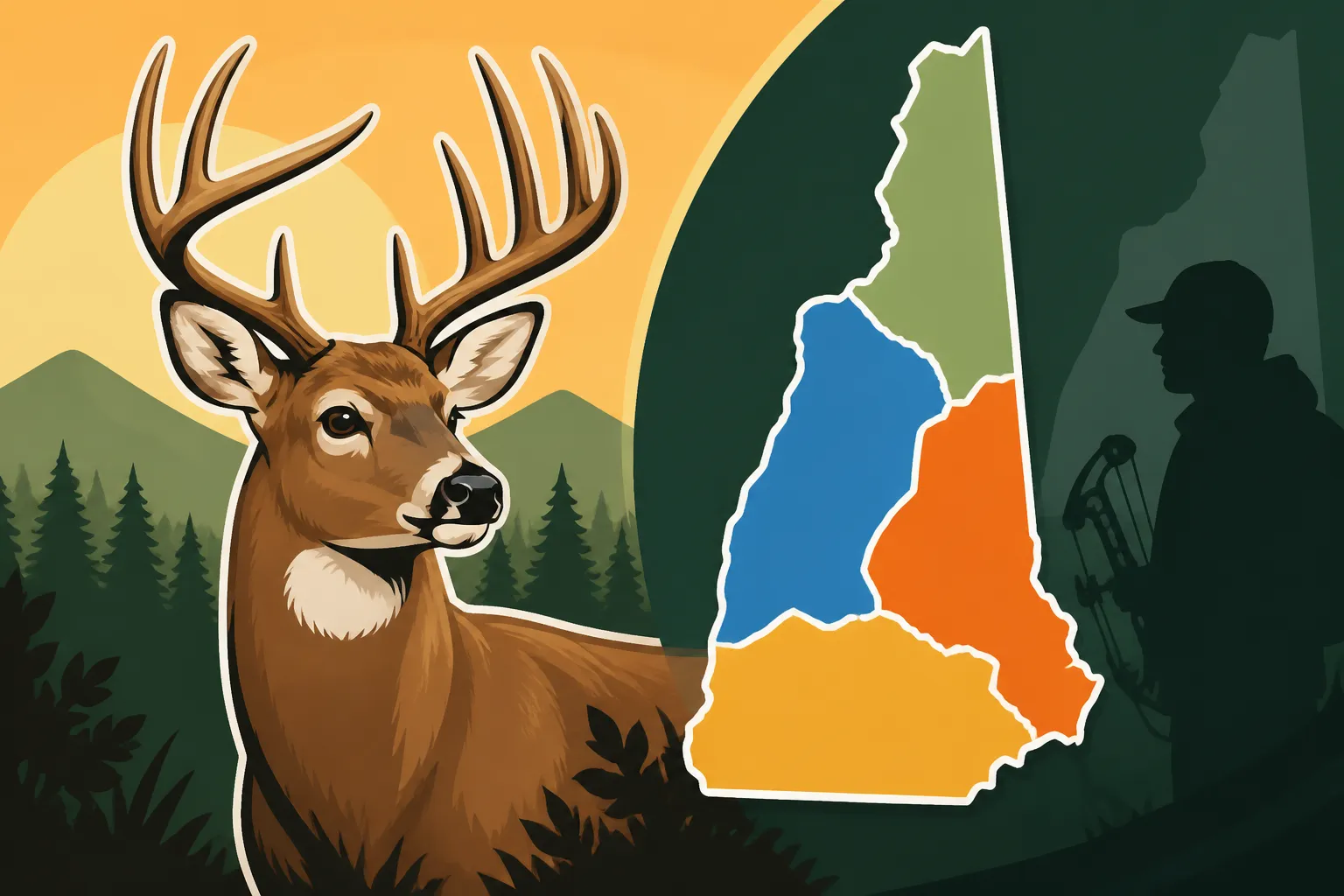
The North Country (WMUs A, B, C)
If you've ever hunted up in places like Pittsburg or Errol, in Wildlife Management Units (WMUs) A, B, and C, you know this is a wild and unforgiving landscape. The terrain is often steep and rocky, dominated by dense softwood and mixed hardwood forests. Agricultural land is sparse, and winter arrives early and stays late, often dumping feet of snow. These conditions present significant challenges for deer to find consistent, high-quality forage throughout the year.
As a result, deer in the North Country tend to be leaner and, on average, lighter-bodied than their southern relatives. A mature buck in these remote regions might field-dress in the range of 130 to 160 pounds. While certainly a respectable animal, it’s often noticeably lighter than what you’d find further south. Does, too, follow this trend, typically dressing out at 90 to 110 pounds. These weights are a testament to the deer's hardiness and ability to survive in a tougher environment. Don't let the average weight fool you, though; finding and harvesting a deer in the North Country can be one of the most physically demanding and rewarding hunts in the state. Hunting the North Country requires a unique set of skills.
The White Mountains and Central Regions (WMUs D1, D2, E, F)
Moving south into the heart of the state, encompassing WMUs like D1 (Lakes Region), D2 (Connecticut River Valley), E (White Mountains core), and F (much of central New Hampshire), we begin to see a transition. This vast area offers a mix of habitats: the high elevations of the White Mountains still present challenges similar to the North Country, but the lower elevations, particularly along river corridors and in the Lakes Region, can offer more diverse and richer food sources.
In these transitional zones, deer weights often fall into a moderate range. Mature bucks might typically field-dress between 150 and 180 pounds. This slight increase reflects better localized nutrition in some areas, coupled with slightly less severe winters compared to the far north. Does in these WMUs might dress out from 100 to 130 pounds. Hunters here experience a blend of hunting styles, from the deep woods of the White Mountain National Forest to the more accessible lands around the lakes and rivers. A solid understanding of Wind and Thermals in Steep Granite Terrain becomes paramount when hunting this mixed country.
Southern New Hampshire (WMUs G, H1, H2, I1, I2, J1, J2, K, L, M)
Now, we arrive at the regions known for producing New Hampshire’s heaviest deer. Southern New Hampshire, covering WMUs from G (Monadnock Region) all the way down to M (our southeastern corner), benefits from milder winters, longer growing seasons, and, most importantly, a greater abundance of high-quality forage. This includes extensive agricultural lands, mature hardwood forests with consistent mast crops, and even suburban environments that inadvertently provide deer with lush landscaping and garden buffet lines.
In these prime deer habitats, it’s not uncommon to hear of mature bucks field-dressing well over 180 pounds, with some truly exceptional animals pushing or even exceeding the 200-pound mark. These are the deer that frequently appear in local hunting club photos and fuel many a hunter's ambition. Mature does are also notably heavier here, often dressing out at 110 to 140 pounds or more. The sheer volume and quality of food available allow deer in southern New Hampshire to reach their maximum genetic potential in terms of body mass. These bigger animals can present a real challenge when it comes to Dragging a Deer Out of a Granite Ravine, even if the ravine isn't as steep as in the mountains!
Putting Regional Averages into Perspective
Understanding these regional differences in deer weight is just one piece of the puzzle. It helps us appreciate the nuances of New Hampshire's deer herd and the diverse hunting opportunities our state offers.
The "Trophy" Deer: Body Weight vs. Antler Size
When hunters talk about a "trophy" deer, they often conjure images of impressive antler size. And while a large rack is certainly a thrilling sight, it's crucial to remember that body weight and antler size, while related, don't always scale perfectly together. You can absolutely find a North Country buck with a respectable, wide rack that field-dressed at 140 pounds. That's a phenomenal animal for its environment, having used its limited resources to produce strong antlers.
Conversely, a young, well-fed buck from a southern WMU might weigh a hefty 180 pounds but only sport a modest 6-point rack, simply because its body is still growing and prioritizing mass over antler development at that particular age. The term "trophy" is deeply personal; for some, it's about the biggest rack, for others, the heaviest body, and for many, it's about the challenging experience and the meat for the freezer. Appreciating the animal for its unique attributes, given its habitat, enhances the entire hunting experience. Whether it's a big-bodied buck or a wide-racked one, knowing how to properly Field Dressing a Deer in Cold Weather is always important.
Tracking Your Own Regional Trends with GoHunt
While statewide averages provide a valuable framework, your personal hunting experience and the specific properties you frequent will yield the most localized data. I always encourage hunters to keep meticulous records of their harvests: field-dressed weight, age (if you can determine it), and general condition of the animal. Over time, this personal dataset will become an invaluable resource, helping you understand the specific nuances of your hunting grounds.
You can combine your personal records with official harvest reports from the New Hampshire Fish and Game Department, which often break down harvest data by WMU. Tools like GoHunt can also offer great mapping and data overlay capabilities, allowing you to scout and plan your hunts with more precision, taking into account habitat features that might influence deer size. By cross-referencing this information, you can refine your strategies, identify patterns, and become an even more effective hunter, consistently putting yourself in areas known for producing the kind of deer you're after, whether it's a heavy-bodied southern deer or a hard-earned North Country survivor. It’s all about becoming a more knowledgeable and connected participant in New Hampshire’s rich hunting tradition. For broader strategies, check out Scouting New Hampshire Public Land Before Season.
Here's a quick overview of New Hampshire's deer weight averages by region:
| Region | Primary Characteristics | Estimated Average Field-Dressed Mature Buck Weight (lbs) | Estimated Average Field-Dressed Mature Doe Weight (lbs) |
|---|---|---|---|
| North Country (WMUs A, B, C) | Rugged, dense timber, long harsh winters, limited agriculture | 130 – 160 | 90 – 110 |
| White Mountains / Central (WMUs D1, D2, E, F) | Mix of mountainous terrain, some river valleys, moderate winters | 150 – 180 | 100 – 130 |
| Southern New Hampshire (WMUs G-M) | Agricultural lands, suburban edges, milder winters, rich forage | 170 – 200+ | 110 – 140+ |
Regardless of where you hunt in New Hampshire, every deer harvested is a success and a testament to the wildness of our state. The differences in weight are just another part of the story, another layer of understanding that makes our hunting heritage so rich. Whether you're Hunting a Muzzleloader Tag Before Firearms Opens or enjoying the New Hampshire Deer Camp Traditions, enjoy the experience.
Disclaimer
This article is for general informational purposes only and does not constitute professional advice. Laws, prices and regulations vary by location and change over time. Consult a qualified professional for guidance on your specific situation.