Why New Hampshire Grouse Numbers Cycle
If you've spent any time chasing ruffed grouse through the timber of New Hampshire, you've probably noticed it: some years, the woods seem alive with birds, their thunderous flushes rattling your nerves and making your heart pound. Other years, it feels like you're walking miles for a single flush, leaving you scratching your head and wondering where all the birds went. This guide is all about unraveling that mystery, delving into why New Hampshire's ruffed grouse populations aren't a steady line, but rather a fascinating, often frustrating, cycle of ups and downs.
The Ruffed Grouse: A New Hampshire Icon
There's something uniquely captivating about the ruffed grouse. For many of us, the sound of a drumming male on a spring morning or the explosive flush of a bird in thick cover during the fall hunt is the very essence of the New Hampshire woods. They're resilient, wily, and perfectly camouflaged, making them one of the most sought-after small game species in our state. But beneath that rugged exterior lies a delicate balance with their environment, one that dictates their presence and numbers year after year.
Understanding the Life Cycle of the Ruffed Grouse
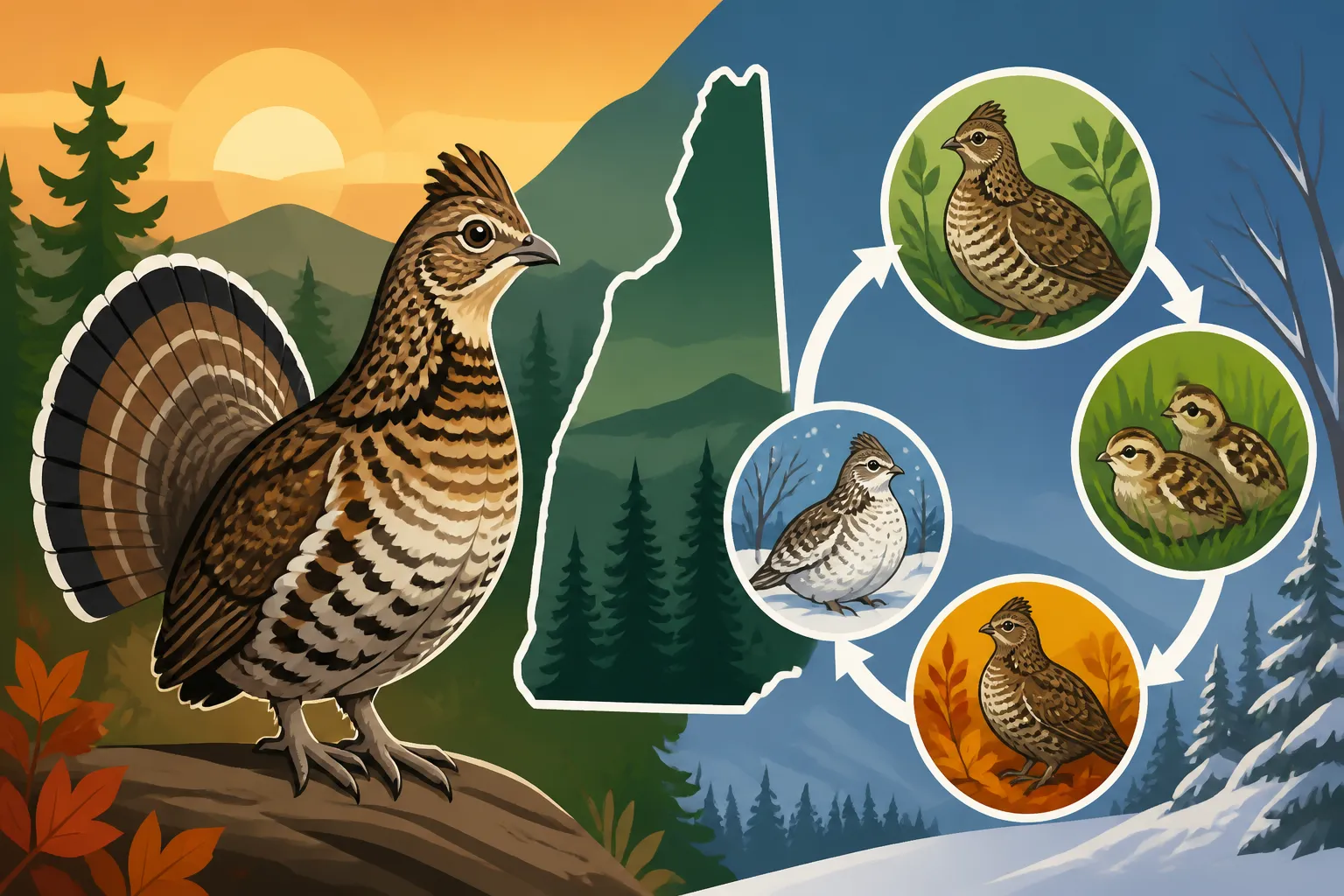
The life of a ruffed grouse in New Hampshire is a constant dance with survival, dictated by the seasons. In spring, males establish their drumming logs, seeking to attract hens with that unmistakable, resonant beat that echoes through the budding forest. Hens will typically lay a clutch of around 8-14 eggs, usually in a well-hidden nest on the forest floor, often at the base of a tree or under a fallen log. Once hatched, the chicks are precocial, meaning they're ready to move and forage almost immediately, though they remain vulnerable. Their diet shifts from primarily insects in their early weeks to a more varied diet of buds, leaves, berries, and catkins as they mature.
These birds are largely non-migratory, sticking to relatively small home ranges throughout their lives. They are masters of blending into their surroundings, using dense cover for protection from predators and the elements. A mature grouse, with its fan-shaped tail and mottled plumage, is a ghost in the New Hampshire hardwoods and mixed forests. However, even with all their adaptations, their numbers are anything but static, often feeling like a roller coaster ride for those of us who follow them.
The Allure and Challenge of Grouse Hunting
Hunting ruffed grouse in New Hampshire isn't just about bagging birds; it's an immersive experience. It's about crisp fall mornings, the smell of decaying leaves, and the camaraderie of walking through prime cover with a good bird dog, or simply enjoying the quiet solitude of a solo still-hunt. The challenge itself is a huge part of the appeal. Grouse are famous for putting obstacles between themselves and the hunter, whether it's a thicket of tangled briars, a dense stand of pines, or a lightning-fast flight path behind a dozen trees. You learn to read the cover, anticipate flushes, and be ready for anything.
Those years when the numbers are up, when you're getting a flush every 100 yards, are truly special. It creates an optimism that fuels the next season's scouting and planning. But then comes a year when the flushes are few and far between, and you start to wonder if you're doing something wrong. It’s a common experience for every grouse hunter, and it’s these fluctuations, these cycles that we're talking about today. It's a testament to the dynamic nature of our wild places, and understanding these patterns can help us appreciate both the bounty and the lean times. If you're looking for new areas to explore, tools like GoHunt can provide valuable mapping data to help you identify promising habitat.
The Science Behind the Cycle: Predation and Habitat
When we talk about why grouse numbers go up and down, two of the biggest factors are often intertwined: who's eating them, and where they're living. It’s a complex equation, but one that wildlife biologists have studied for a long time. It’s not just one thing that pushes populations in a certain direction, but a combination of several, all acting together in the intricate web of a forest ecosystem.
Predator-Prey Dynamics in New Hampshire's Ecosystems
Grouse, especially young grouse, are on the menu for a lot of critters in New Hampshire. Owls, hawks, foxes, coyotes, bobcats, and even fishers all play a role. When predator populations are high, they can exert significant pressure on grouse numbers. For instance, if a mild winter leads to a boom in small rodent populations, predators like foxes and coyotes thrive. But when that rodent population crashes, those predators don't just disappear; they simply shift their focus to other available food sources, and often, that includes grouse. This can lead to a dip in grouse numbers, especially if it coincides with other stressors.
It's a classic ecological dance. Some years, the forest might have a high density of foxes, while other years, it might be more about great horned owls. These predator populations themselves often cycle, albeit sometimes on a different timeline than grouse. For example, if you're interested in understanding the broader picture, you might want to look into New Hampshire Coyote Range and Density or even New Hampshire Bobcat Population Trends, as these animals are significant players in the overall health and balance of our small game populations. The pressure from these predators can be especially impactful during nesting season and when chicks are young and most vulnerable.
The Critical Role of Habitat Succession
Perhaps the single most important factor influencing long-term grouse populations is habitat. Ruffed grouse are famously tied to specific types of forest cover, primarily young, regenerating forests. Think of those areas that were logged 5-20 years ago, creating a dense mosaic of saplings, shrubs, and briars – that's prime grouse habitat. This thick understory provides both food and, crucially, protection from aerial and ground predators. As these young forests mature, the canopy closes, shading out the understory, and the habitat becomes less suitable for grouse. This natural process is called forest succession.
So, if there's a lot of logging or natural disturbance (like a severe windstorm that clears timber) in a region, you might see an increase in grouse numbers a few years down the line, as that habitat regenerates. Conversely, if a region has been unmanaged for decades, with large tracts of mature, open-understory forest, grouse numbers will decline. This is why you often hear about New Hampshire Ruffed Grouse Population Cycles being influenced by forest management practices and the overall age structure of our woodlands. When you're scouting, using mapping tools from GoHunt can help you identify areas with diverse forest ages, which is key to finding consistent grouse.
Environmental Factors and Disease Impacts
Beyond predators and habitat, the unpredictable hand of Mother Nature and the unseen world of pathogens can also significantly sway grouse numbers. These factors often hit hardest when birds are most vulnerable, like during the early stages of life.
Weather Extremes and Their Effect on Brood Survival
Imagine being a tiny grouse chick, barely a few days old. You're dependent on insects for protein, and you need to stay warm and dry. Now, picture a New Hampshire spring with prolonged cold, driving rains, or even late-season snowstorms. This kind of weather can be absolutely devastating for grouse broods. Chicks can succumb to hypothermia, and the wet conditions can make them more susceptible to disease. Heavy rains can also wash away or drown nests.
Additionally, extreme weather can indirectly impact chick survival. For example, a severe drought might reduce insect populations, leaving young grouse without enough food to grow strong and healthy. These weather events are highly localized and variable year to year, which can explain why one valley might have a decent hatch while a neighboring one experiences a terrible one. We tend to focus on the fall hunting season, but the conditions during the spring nesting and brooding period are often the true determinants of the year's grouse population.
Disease and Parasites: A Silent Threat
While not as dramatic or immediately obvious as a hungry hawk or a clear-cut, diseases and parasites can also chip away at grouse populations. Various internal parasites, like gapeworms or cecal worms, can weaken birds, making them more vulnerable to predators, harsh weather, or other illnesses. External parasites, such as ticks or mites, can also cause stress and secondary infections.
In some rare cases, more virulent diseases could sweep through a localized population, though widespread, species-specific epidemics are less commonly observed in grouse than in, say, deer or turkeys. The overall health of the forest ecosystem and the density of the grouse population can influence the prevalence and impact of these diseases. A dense population, for instance, might facilitate easier transmission of certain pathogens. While not always the primary driver of the broad cycles, these silent threats are always present, adding another layer of complexity to the life of a New Hampshire grouse.
How Hunter Activity Fits Into the Picture
It's natural for hunters to wonder if their activity contributes to the ups and downs of game populations. For ruffed grouse in New Hampshire, the scientific consensus suggests that hunter harvest is generally a minor factor compared to the massive influences of habitat, predation, and weather.
Hunter Harvest: A Minor Factor in Population Dynamics
The truth is, grouse are incredibly prolific breeders. In a good year, a single hen can produce a dozen or more chicks. Their high reproductive rate means that if conditions are favorable (good habitat, mild weather, lower predator pressure), populations can rebound remarkably quickly. Wildlife biologists refer to this as compensatory mortality: hunting typically removes birds that would likely have perished anyway due to natural causes like predation, disease, or starvation before the next breeding season.
Because grouse are so challenging to hunt, and much of New Hampshire's prime grouse habitat is rugged and expansive, hunting pressure tends to be dispersed. We don't have the intense, concentrated pressure that might impact other species in certain situations. While individual hunting success definitely varies with the population cycle, the overall annual New Hampshire Ruffed Grouse Harvest Numbers rarely reach a level that impacts the breeding stock enough to cause a population decline. The vast majority of grouse mortality is due to natural factors, not a hunter's shotgun. When planning your hunting trips, remember that GoHunt can help you identify public land or potential private land access points, spreading out pressure even more.
The Role of Conservation Efforts and Data Collection
Even though hunters aren't the primary cause of population cycles, we play a crucial role in conservation. Through license fees, we directly fund the New Hampshire Fish and Game Department's efforts, which include habitat management, research, and population monitoring. Programs like New Hampshire Grouse Drumming Log Surveys collect vital data that helps biologists understand breeding success and population trends. These surveys, often conducted by volunteers, give us a peek into the health of the grouse population before the leaves even change color.
Furthermore, many conservation organizations work tirelessly to improve and maintain grouse habitat. This often involves promoting sustainable forestry practices that create and maintain that critical young forest environment that grouse absolutely need. Hunters, by being passionate advocates for these birds and their habitat, are essential partners in ensuring that the thunderous flush of a ruffed grouse remains a quintessential sound of the New Hampshire woods for generations to come. From public access areas found through GoHunt to local conservation efforts on private lands, every bit helps these cycles stay within a healthy range, even as they fluctuate year to year.
Disclaimer
This article is for general informational purposes only and does not constitute professional advice. Laws, prices and regulations vary by location and change over time. Consult a qualified professional for guidance on your specific situation.