New Hampshire Turkey Gobbling Activity Timing
One of the biggest frustrations for any New Hampshire turkey hunter, especially during spring, is the sheer unpredictability of gobbling activity. You spend hours scouting, set your alarm for way too early, and then sit in the predawn chill only to hear… absolutely nothing. It makes you wonder, "Are they even here?" or "Am I doing something wrong?" This guide is all about helping you understand the rhythms and reasons behind New Hampshire turkey gobbling, so you can adapt your strategy and increase your chances of being in the right place at the right time.
Understanding the Spring Gobble Calendar in New Hampshire
Gobbling isn't just noise; it's a communication tool, primarily used by toms to announce their presence to hens. But the intensity and frequency of this announcement change dramatically throughout the spring season here in the Granite State. It's a dance dictated by biology, weather, and hunting pressure.
Early Season: Roost Gobbles and Cold Mornings
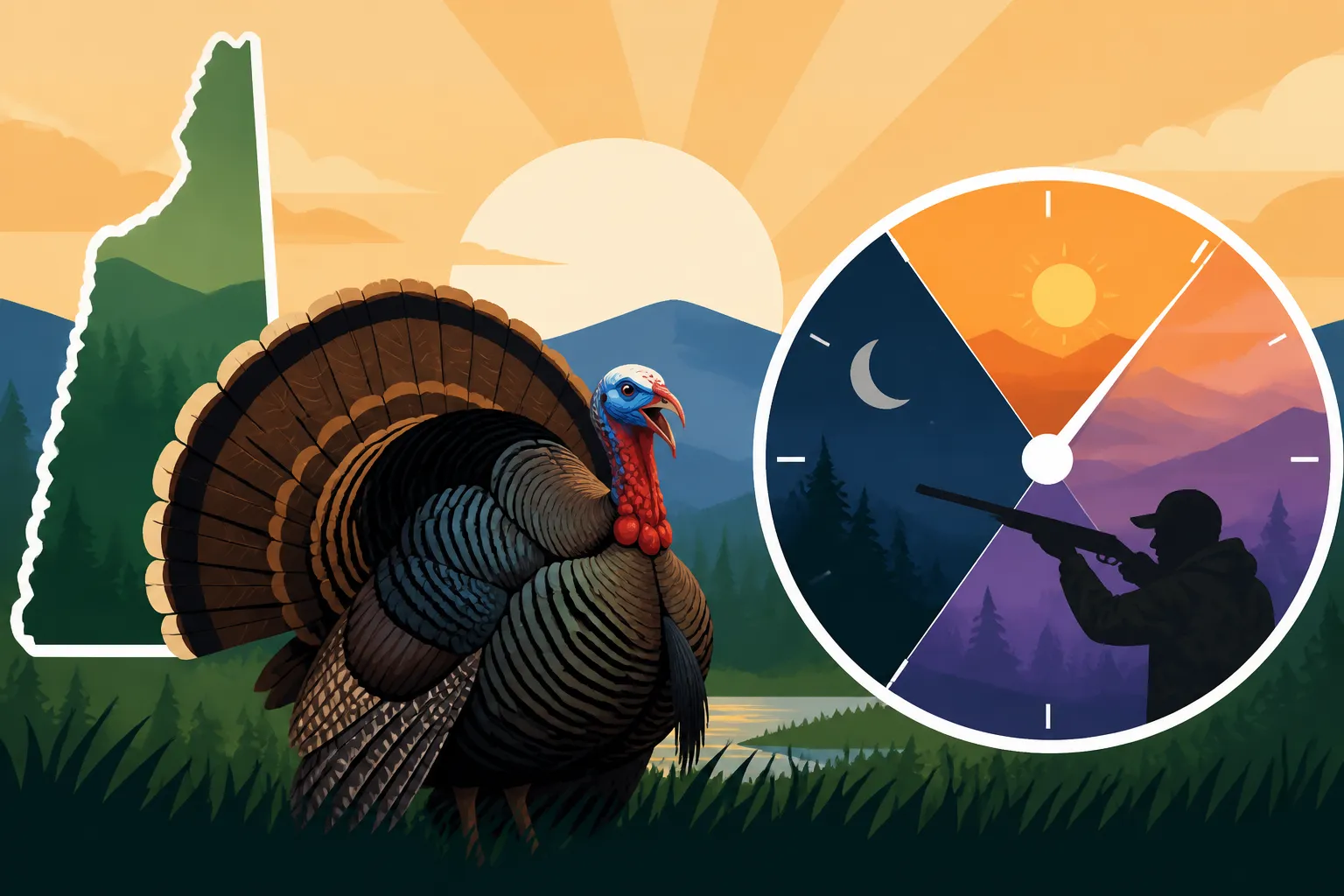
When the New Hampshire spring turkey season first opens, especially in late April or early May, you often hear a burst of enthusiastic gobbling right off the roost. This is when toms are full of vigor, haven't been pressured much, and are actively seeking out the first receptive hens. They're basically shouting, "Hey ladies, I'm over here!" from their high perches.
However, these early season gobblers can also be a bit finicky. Cold snaps, especially frosty mornings or sudden drops in temperature, can sometimes dampen their enthusiasm. You might hear a few courtesy gobblers, then silence as they hit the ground and immediately seek out a hen. It's not uncommon for them to be "henned up" right from the start, meaning they've got their ladies with them, and they're less inclined to come to your calls. Don't be discouraged if they clam up after fly-down; it just means you need to be more patient or try to intercept them as they move. Understanding the early season dynamics can really help you set expectations and avoid frustration, because a quiet morning doesn't always mean no birds.
Peak Gobbling: The Breeding Frenzy
There's typically a sweet spot in the spring, often around mid-May, when gobbling activity can reach its peak. This aligns with the height of the breeding cycle, when hens are laying eggs and toms are still actively trying to round up their harems. During this period, you're more likely to hear multiple toms gobbling frequently, both on the roost and on the ground. They're competing for hens, and their vocalizations are a key part of that display.
This is often the most exciting time to be in the woods. When the weather is mild, skies are clear, and the wind is low, a New Hampshire woodlot can erupt with sound. Gobblers might respond aggressively to calls, and even come charging in, especially if they believe there's a lone hen trying to steal their attention. This peak phase is what many hunters dream of, offering the best chance for those classic, heart-stopping encounters. It's during these few weeks that the woods truly come alive, and your chances of calling in a bird are often at their highest. You might find yourself working a bird for an hour, hearing him gobble twenty times, inching closer with every call. This is prime time to use more aggressive calling sequences, really trying to mimic a hot hen ready to breed.
Late Season: Declining Enthusiasm and Lone Toms
As the calendar turns towards late May and into early June, gobbling activity generally starts to decline. Many hens have been bred and are now sitting on nests, which means fewer receptive hens for the toms to chase. The toms themselves might be a bit "burnt out" from weeks of constant breeding activity, or they might have broken up their larger groups and are now roaming solo or in smaller bachelor groups.
The gobblers you hear in late season might be those that haven't found a hen, or they're simply less vocal overall. They still gobble, but often with less frequency and intensity. They might be harder to pull away from the few remaining hens, or they've become very wary due to sustained hunting pressure. This is when patience and strategic calling really pay off. Instead of aggressive calling, a softer, more subtle approach might work better. You're trying to appeal to a bird that might be lonely or just passing through, rather than one in a full-blown breeding frenzy. You may hear more soft clucks and purrs, or occasional soft yelps, instead of booming gobblers. This is when a tool like GoHunt's mapping features can really shine, helping you identify overlooked pockets of habitat where a lone tom might be holding out, far from the crowds. When New Hampshire Gobblers Go Quiet in Late May delves deeper into these late-season challenges.
Factors Influencing Gobbling Activity
It's not just the calendar that dictates when a tom will gobble. Many environmental and biological factors play a huge role in their daily vocalizations. Understanding these can help you predict behavior and adjust your hunting plans accordingly.
Weather's Impact on a Gobbler's Mood
Oh, New Hampshire weather! It can be a real game-changer for turkey hunting. Turkeys, like us, prefer pleasant conditions.
- Clear, Calm Mornings: These are generally ideal. Low wind, clear skies, and moderate temperatures often lead to the most consistent gobbling activity. Sound carries well, and birds feel comfortable announcing their presence.
- Rain: Light drizzle might not shut them down completely, but heavy rain usually does. Turkeys, especially gobblers, don't like to get soaked. They'll often stay on the roost longer or go quiet on the ground. If you're out in the rain, focus on patience and close-range calling if you hear anything.
- Wind: Wind is a huge deterrent to gobbling. Not only does it make it harder for the birds to hear each other (and you!), but it also makes them feel less secure, as it masks the sound of approaching predators. On windy days, gobblers tend to be much quieter. If you must hunt in windy conditions, focus on sheltered areas, like deep valleys or dense pine stands, where the wind might be less intense.
- Temperature Swings: Drastic temperature changes, especially sudden cold snaps, can put a damper on gobbling. A warm, humid morning followed by a quick drop to near freezing can cause birds to clam up. Stable, mild temperatures tend to be best.
- Barometric Pressure: While harder for us to gauge without a specialized device, stable or rising barometric pressure often corresponds with better gobbling activity. A rapidly dropping barometer, indicative of an approaching storm, can make birds quiet. Keep an eye on the forecast, and if possible, plan your hunts around stable weather patterns.
Breeding Cycle and Hen Availability
The most significant driver of gobbling is the breeding cycle. Early in the spring, toms are aggressively trying to establish dominance and attract hens. There's a lot of competition, so they gobble frequently to stake their claim. As hens become receptive, they'll seek out gobblers, and once bred, they'll begin laying eggs.
During the peak breeding phase, hens might still be in groups with gobblers, making those toms less likely to respond to your calls because they already have what they want. However, as more hens go to nest, some toms might find themselves alone. These "lonely" gobblers can be very receptive to calling, as they're actively searching for a remaining receptive hen. This shift means your calling strategy needs to change. Early on, aggressive hen calls might pull a tom away from a rival; later, a soft, subtle lost hen call might be more effective for a solitary bird. It’s all about reading the situation and understanding where the turkeys are in their annual cycle. You can learn more about New Hampshire Spring Turkey Season Dates to align your expectations.
Roosting Habits and Local Terrain
Where turkeys roost and the kind of terrain they inhabit in New Hampshire significantly impacts how and when they gobble.
- Roost Tree Choice: Turkeys often choose tall, mature trees, particularly pines or oaks, in sheltered areas or along ridge lines. These provide safety from predators and a good vantage point. A gobbler will often sound off before flying down from his roost tree, using the elevation to broadcast his presence.
- Terrain's Influence on Sound: New Hampshire's varied landscape, from rolling hills to steep mountains, influences how far sound carries. In flat, open country or along river bottoms like the Connecticut River Valley, a gobble can travel a long way. In thick, softwood stands or deep, granite ravines, the sound might be muffled and not carry as far, making it seem like birds are quieter even if they're gobbling. This is where understanding your hunting area with a tool like GoHunt is invaluable. Using their satellite imagery, you can identify open timber where sound might carry, or thick draws where turkeys might be roosting in a sheltered spot, but you’ll need to get closer to hear them.
- Pre-Dawn Positioning: Knowing general roosting areas allows you to position yourself strategically before light. If you can get within a few hundred yards of a roosted gobbler without spooking him, you'll be able to hear his initial gobbling and potentially cut him off when he flies down, increasing your chances. But be quiet and deliberate, because if he hears you first, he might just fly down in the opposite direction.
Leveraging Gobbling Activity for Hunting Success
Knowing when and why turkeys gobble is only half the battle. The real trick is using that knowledge to your advantage in the field. It’s about being adaptable, persistent, and smart.
Pre-Season Scouting for Roost Locations
Pre-season scouting is absolutely critical, and it goes beyond just looking for tracks and droppings. It’s about listening. Before the season opens, dedicate some early mornings to simply driving or walking your prospective hunting areas just before dawn. Find a good vantage point, park your truck, and listen. You’ll be amazed at what you can hear, especially on calm mornings.
Listening for roost gobblers helps you pinpoint where birds are spending the night. This information is gold. You might hear multiple birds, giving you an idea of the local population. You’ll also get a feel for the direction the sound is coming from and how far away it seems. Mark these locations on your GoHunt app or a physical map. This allows you to plan your entry routes for opening day, figuring out how to get close to the roost without being detected, and position yourself for a fly-down setup. It’s a reconnaissance mission that pays dividends, because knowing where a bird starts its day gives you a significant head start. Think about those big white pines or stands of mature oak that stand out on a ridge; these are often prime roosting spots.
Adapting Your Calling Strategy
Your calling strategy needs to be dynamic, constantly adjusting to the gobbling activity you're encountering.
- Early Morning Roost: If a tom is hammering on the roost, start with soft, contented tree yelps and clucks. Mimic a hen waking up. Once he flies down, you can increase the intensity, trying to sound like a hen ready to be bred.
- Heavily Henned-Up Toms: If a tom is gobbling but staying with his hens, don't try to out-yelp the real thing. Sometimes, mimicking a distant, submissive hen, or even just soft purrs and clucks, can pique his curiosity enough to pull him away, or at least bring him closer to investigate. Aggressive calling can sometimes send him in the opposite direction, protecting his flock. You might also try a tactic where you sound like a hen moving away from him, making him think he's losing a potential mate.
- Quiet or Wary Toms: For birds that gobble sparingly or have been pressured, less is often more. Soft clucks, purrs, and subtle yelps can work wonders. Avoid loud, excited calling that might spook an already cautious bird. Sometimes, just setting up silently in a known travel corridor and waiting can be the most effective "calling" strategy. Be patient and wait for them to come to you on their terms. This often happens later in the morning after hens have moved off to nest.
Patience and Persistence in Quiet Woods
Perhaps the hardest lesson in New Hampshire turkey hunting is learning to deal with quiet woods. It's easy to get discouraged when you don't hear a single gobble, but silence doesn't always mean there are no turkeys. It just means they're not talking.
Don't Give Up: A bird might gobble once an hour, or not at all, but still be in the area. Keep calling softly, periodically, and listen intently. Use your ears for other sounds: drumming, wing beats, scratching in the leaves. These can all indicate a tom's presence, even if he's not gobbling. Sometimes, you might even spot a silent gobbler strutting through the woods, his intentions clear even without a sound.
Move Strategically: If a spot stays silent for an hour or so, make a move. Don't just pack up and go home; relocate to a new area, perhaps a different habitat type or a different ridge line. Sometimes, changing your vantage point by just a few hundred yards can put you in earshot of a previously unheard gobbler. Use terrain features and natural funnels to your advantage. A little patience in one spot, followed by an aggressive move to another, can be a winning combination. Run-and-Gun Turkey Tactics on Public Land can provide more insights into this approach.
Trust Your Scouting: If you know birds are in an area from prior scouting, stick with it. They might be quiet today, but tomorrow could be different. Your knowledge of their usual travel routes, feeding areas, and dusting bowls can still lead to success, even without auditory confirmation.
Common Misconceptions About Turkey Gobbling
Like any highly anticipated hunting season, New Hampshire turkey hunting comes with its share of myths and misunderstandings, especially regarding gobbling activity. Dispelling these can lead to more realistic expectations and better hunting strategies.
The "Always Gobbling at Dawn" Myth
It's a romantic notion – every spring morning, turkeys erupt in a symphony of gobbling as the sun rises. And yes, sometimes that happens! But it's far from a universal truth. Many hunters get discouraged when they're out at prime time and hear nothing, assuming the woods are empty.
The reality is that several factors can suppress morning gobbling:
- Heavy Rain or High Winds: As discussed, bad weather can make turkeys clam up. They'd rather stay quiet and safe than broadcast their location in adverse conditions.
- Heavy Hen Pressure: If a tom has several hens roosted near him or flies down directly into a large group of hens, he might not feel the need to gobble much. He's already got what he wants! His focus immediately shifts from advertising his presence to breeding the hens he has.
- Hunting Pressure: Later in the season, or in areas with high hunter traffic, gobblers can become very wary. They learn that gobbling often brings danger, so they might choose to be silent, particularly on the ground.
- Mid-Season Lulls: There can be periods, even during peak breeding, where gobbling just isn't as intense. Maybe the hens are off nesting, or the toms are simply taking a break.
So, while dawn is definitely a great time to listen, don't assume a silent morning means no birds. It just means you need to adjust your approach and rely more on calling, subtle sounds, and your scouting knowledge. You can find more detail on When New Hampshire Gobblers Go Quiet in Late May for further understanding.
Gobbling Equals Coming In
Another common misconception, especially for new turkey hunters, is that if a tom is gobbling, he's definitely coming to your calls. While it's exciting to hear a bird respond, it's just one piece of the puzzle. A gobbler's response often means he's aware of your presence and interested, but it doesn't guarantee he'll close the distance.
Here's why a gobbler might sound off but hang up or go the other way:
- He Has Hens: This is perhaps the most frequent reason. If a tom is surrounded by real hens, he expects them to come to him. He's challenging your "hen" to join his flock, not the other way around. He'll gobble to confirm your location, but won't budge.
- Obstacles: Turkeys are wary creatures. A fence line, a creek, a thick brush pile, or even a slight rise in terrain can be enough for a gobbler to "hang up." He might not want to cross a perceived barrier, or he needs to see the "hen" before committing.
- Safety Concerns: If a tom detects anything suspicious – your subtle movement, a flash of reflective material, or an unnatural sound – he might gobble once as a warning or a sign of nervousness, then bolt.
- Dominance Display: Sometimes, a tom is simply gobbling to assert dominance to other potential toms in the area. He's letting everyone know he's there, but he's not necessarily looking for a new hen, or he's waiting for her to prove herself by coming to him.
This is where your setup, camouflage, and patience become paramount. If a bird is gobbling hard but not moving, try adjusting your calling (softer, less frequent), waiting him out, or making a small, strategic move to get a better angle or clear an obstacle. Sometimes, the best call is no call at all, just letting his curiosity get the better of him. And remember, tools like GoHunt can help you visualize the terrain between you and the bird, identifying potential hang-up spots before you even set up.
Here's a quick summary of New Hampshire turkey gobbling activity by season phase:
| Season Phase | Typical Timing | Gobbling Activity Description | Hunter Strategy |
|---|---|---|---|
| Early Season | Late April – Early May | Enthusiastic roost gobbling, often quiets after fly-down due to hens. Can be weather-dependent. | Focus on pre-dawn setup near roosts. Start with soft tree yelps, then try to intercept after fly-down. Be patient if birds are hen-up. Listen for Calling a May Gobbler Off the Roost. |
| Peak Breeding | Mid-May | Most consistent and intense gobbling, both on roost and ground. High competition among toms. | Aggressive calling can be effective. Set up in high-activity areas. Be ready for fast action. Take advantage of stable, clear weather. |
| Late Season | Late May – Early June | Declining frequency and intensity. More lone toms, often wary. Can be very quiet some days. | Soft, subtle calling. Patience is key. Focus on scouting for lone birds after hens have gone to nest. Consider longer waits in known travel corridors. Learn about Decoy Placement for Pressured Spring Birds. |
| Weather Influence | Throughout Season | Clear, calm days are best. Rain and wind suppress gobbling significantly. | Check forecast and plan accordingly. On windy days, hunt sheltered areas. In rain, focus on patience and close-range tactics. |
| Pressure Influence | Throughout Season | Heavily hunted areas may have quieter, warier birds. | Adapt calling, move strategically, or target less-pressured areas. Utilize Finding Ground That Sees Fewer Hunters. |
Disclaimer
This article is for general informational purposes only and does not constitute professional advice. Laws, prices and regulations vary by location and change over time. Consult a qualified professional for guidance on your specific situation.