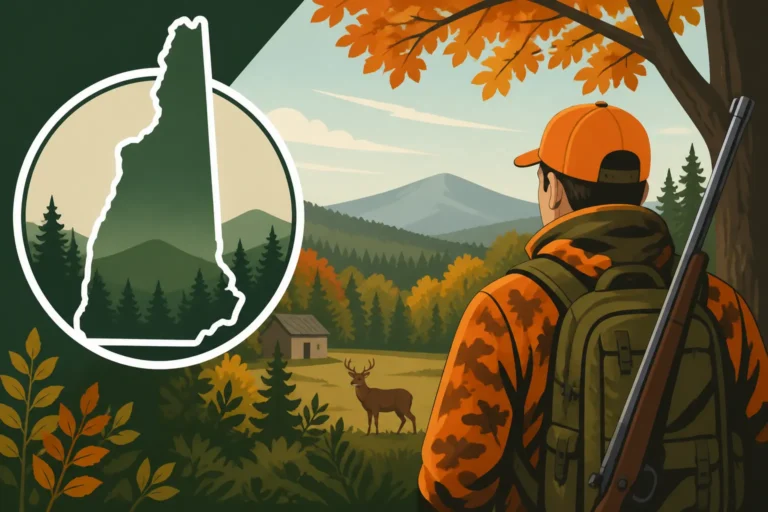
Setting Up in the Twelve Crossbow-Legal WMUs
Navigating the specific regulations for crossbow hunting in New Hampshire can feel like solving a complicated puzzle, especially when you're just eager to get out into the woods. The frustration of trying to figure out which Wildlife Management Units (WMUs) allow this method, and how to properly prepare, is a common hurdle for many hunters. This comprehensive guide will meticulously break down New Hampshire's crossbow-legal WMUs, walk you through the essential gear setup, and equip you with the pre-season preparation and in-field tactics you need to pursue whitetails successfully with a crossbow in the Granite State.
Understanding New Hampshire's Crossbow Regulations and Approved WMUs
For years, crossbows in New Hampshire were primarily reserved for hunters with specific disabilities, or limited to the short firearms season. However, recognizing the growing interest and the effectiveness of modern crossbows as a hunting tool, the state has incrementally expanded their legal use. This shift reflects a balance between traditional hunting methods, increasing hunter participation, and sound deer management practices. The key is understanding where and when you can legally use them during the archery season.
Why Some WMUs Allow Crossbows and Others Don't
The decision to allow crossbows in specific WMUs, rather than statewide, is rooted in careful deer management considerations by the New Hampshire Fish and Game Department. It's not arbitrary; it's a strategic choice. Generally, the WMUs where crossbows are permitted are areas where deer populations can sustain additional hunting pressure, or where increasing harvest opportunities is a management goal. This often includes areas with higher deer densities, more agricultural land, or less wilderness terrain compared to the sparsely populated northern regions.
For instance, many of the southern and central WMUs, which tend to have more fragmented habitat, suburban interfaces, and robust deer numbers, were among the first to see expanded crossbow access. The idea is to provide another effective tool for hunters to manage deer populations, especially in areas where traditional archery equipment might be less appealing to new hunters, or where achieving management objectives requires a broader scope of methods. This can be a point of confusion for hunters who travel between different regions of the state, but it’s a system designed to tailor hunting pressure to local deer herd dynamics. Understanding the overarching New Hampshire's WMU-Based Deer Season Structure is crucial for any hunter.
Identifying the Twelve Crossbow-Legal WMUs
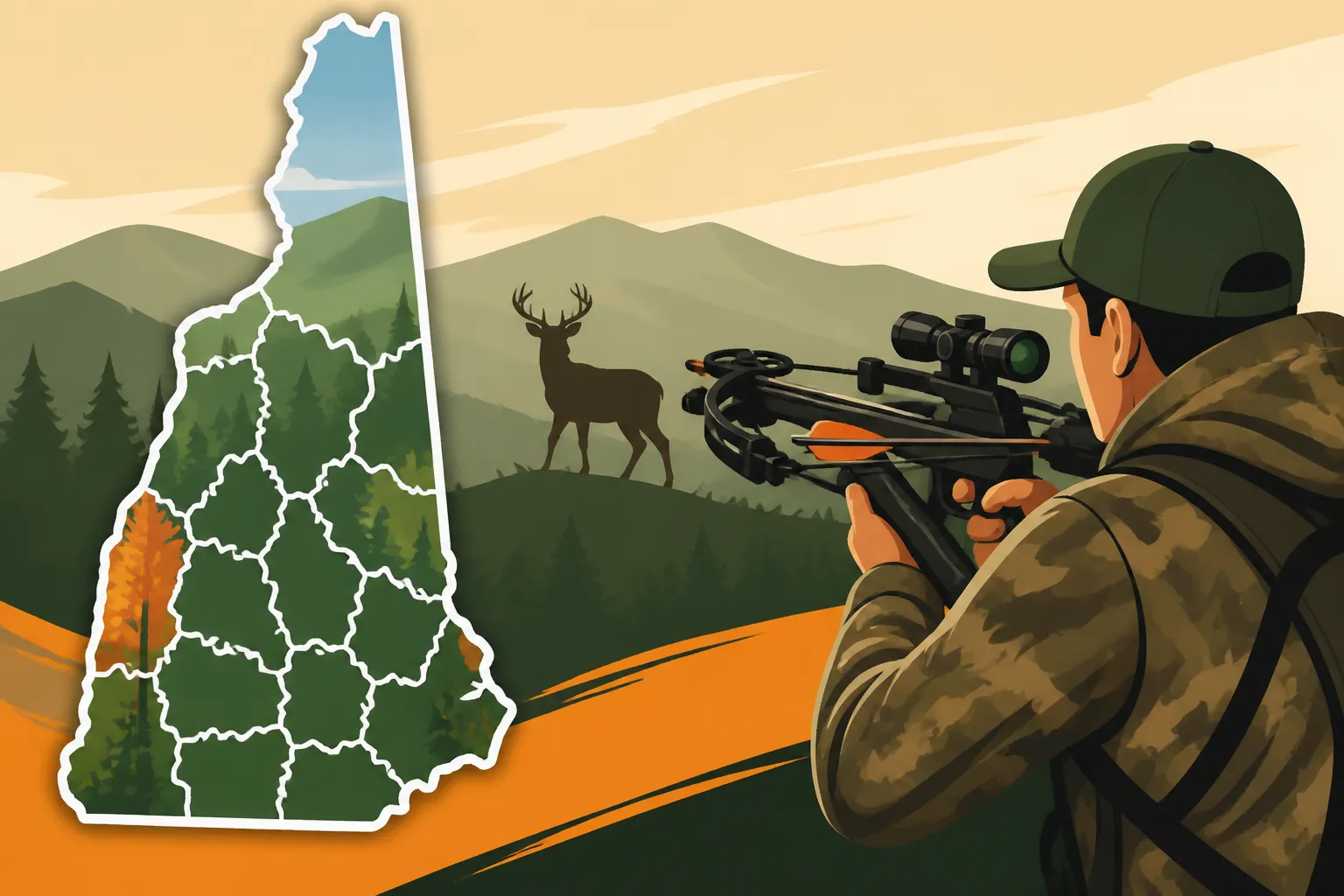
Currently, New Hampshire permits crossbow use during the regular archery deer season in twelve specific WMUs. It's vital to commit these to memory or at least keep them handy in your hunting digest or on your mapping app. These WMUs are primarily located in the southern and central parts of the state, avoiding some of the more remote, lower-deer-density areas up north. Knowing which WMUs are open to crossbows is the absolute first step before you even start thinking about gear.
The approved WMUs are: D2, G, H1, H2, I1, I2, J1, J2, K, L, M, and C2.
Let's break down where these generally sit:
- D2: Part of the Connecticut River Valley, known for its mix of agricultural land and river bottoms.
- G: Covers much of the Monadnock Region in the southwest, characterized by rolling hills and mixed forests.
- H1 & H2: Primarily in the south-central part of the state, including parts of Merrimack and Hillsborough counties, often featuring a blend of rural and suburban landscapes.
- I1 & I2: Encompasses the lower Merrimack Valley and extends into the southeastern part of the state, areas with significant human population and fragmented forest.
- J1 & J2: These are the Seacoast and near-coastal plain WMUs, often denser in population and with smaller, more numerous woodlots.
- K, L, M: These WMUs make up the southeastern corner of New Hampshire, including parts of Rockingham and Strafford counties, which have substantial deer populations in mixed habitats.
- C2: This is a newer addition and covers parts of the central Lakes Region, offering diverse terrain around bodies of water and mixed forests.
For the most up-to-date and precise boundaries, always consult the current New Hampshire Hunting & Trapping Digest. Using a mapping application like GoHunt can be incredibly useful here. You can overlay WMU boundaries directly onto satellite imagery and topographic maps, ensuring you're always on legal ground. This prevents accidental trespass into an archery-only WMU where crossbows aren't permitted during the specific season. For a deeper dive into these specifics, check out New Hampshire's Twelve Crossbow-Legal WMUs.
| WMU | General Location (Region) | Primary Habitat Characteristics | Crossbow Legal (Archery Season) |
|---|---|---|---|
| C2 | Central Lakes Region | Mixed forest, lake shorelines, rural areas | Yes |
| D2 | Connecticut River Valley | Agricultural fields, river bottoms, mixed hardwoods | Yes |
| G | Monadnock Region (Southwest) | Rolling hills, mixed hardwoods, smaller farms | Yes |
| H1 | South Central (Merrimack/Hills.) | Mixed forest, suburban edges, open fields | Yes |
| H2 | South Central (Merrimack/Hills.) | More heavily forested, some suburban influence | Yes |
| I1 | Lower Merrimack Valley | Fragmented forest, suburban, some agricultural | Yes |
| I2 | Southeastern (Coastal Plain) | Coastal plain, mixed forest, suburban | Yes |
| J1 | Seacoast (Near-Coastal) | Coastal, suburban, smaller woodlots | Yes |
| J2 | Seacoast (Inland) | Inland from coast, mixed forest, residential | Yes |
| K | Southeastern (Rockingham/Straff.) | Mixed forest, residential, agricultural | Yes |
| L | Southeastern (Rockingham/Straff.) | Dense residential, fragmented forest, some open areas | Yes |
| M | Far Southeast (Rockingham) | Heavily populated, small woodlots, suburban | Yes |
Essential Crossbow Setup for New Hampshire's Legal WMUs
Once you know which WMUs you're targeting, the next step is ensuring your equipment is up to snuff. A properly set up crossbow is paramount for ethical and successful hunting. It's not just about having a powerful bow; it's about having one that's accurate, reliable, and tailored to the conditions you'll face in New Hampshire's diverse terrain.
Choosing the Right Crossbow and Accessories
When it comes to selecting a crossbow for hunting whitetails in New Hampshire, you'll encounter two main types: recurve and compound. Recurve crossbows are generally simpler, often lighter, and easier to maintain in the field, making them very reliable. Their wider limbs can be a consideration in dense cover, however. Compound crossbows, on the other hand, typically offer higher speeds and more compact designs, thanks to their cam systems, but they are mechanically more complex. Both are highly effective, so the choice often comes down to personal preference, budget, and desired features.
Consider crossbows with draw weights that you can comfortably cock, especially if you're not using an integrated cranking device. While higher draw weights often translate to faster bolt speeds, modern crossbows are incredibly efficient. A good balance of speed (around 350-400 feet per second) and manageable size is ideal for hunting deer. Don't get caught up in the "fastest bow" marketing; focus on accuracy and comfortable handling. Essential accessories include a good quality scope with clear optics and illuminated reticles for low-light conditions, a sturdy quiver that holds your bolts securely, and a reliable cocking device, whether it's a rope cocker or an integrated crank. A comfortable sling is also a game-changer when hiking into remote spots within those approved WMUs. You can find more detailed discussions on this in Crossbow Gear for New Hampshire's Legal WMUs.
Selecting Appropriate Bolts and Broadheads
Your bolts and broadheads are the business end of your crossbow, and their selection is critical for clean, ethical kills. For bolts, consistency is key. Look for carbon bolts that are straight, have good spine consistency, and are properly fletched. The weight of your bolt will influence its kinetic energy and trajectory. For whitetail deer, a total bolt weight (including broadhead) between 400 and 500 grains is a solid choice, offering a good balance of penetration and a relatively flat trajectory out to typical hunting distances. Pay attention to the Front of Center (FOC) balance, which influences flight stability and penetration.
Broadhead selection is often a hot topic, but for New Hampshire deer, both fixed-blade and mechanical (expandable) broadheads can be highly effective. Fixed-blade broadheads are known for their ruggedness and reliability; they're always "open" and ready. They require more precise tuning to ensure they fly identically to your field points. Mechanical broadheads offer superior aerodynamics during flight, flying more like field points, and deploy upon impact to create a large cutting diameter. However, ensure any mechanical broadhead you choose is designed for high-speed crossbows and has a reputation for reliable deployment and structural integrity. Whichever you choose, ensure they are razor sharp. For an in-depth look, see Crossbow Bolt Weight for New Hampshire Deer.
Pre-Season Preparation and In-Field Tactics for Crossbow Hunting
Having the right gear is only half the battle; knowing how to use it effectively and strategically is what truly leads to success. Pre-season preparation is non-negotiable for any hunter, and crossbow hunting is no exception. This isn't just about shooting; it's about scouting, understanding the land, and setting yourself up for that one, critical shot opportunity.
Sighting In and Practice Regimen
You simply cannot overstate the importance of a meticulous sighting-in process. Your crossbow's accuracy depends on it. Start at a close range, say 20 yards, and gradually move out to your maximum ethical shooting distance – typically 40-50 yards for most crossbow hunters on deer. Don't just shoot from a bench; practice from various positions you might encounter in the woods, such as kneeling, standing, and especially from an elevated treestand. Many of the legal WMUs have mixed terrain, meaning you could find yourself in a treestand overlooking a field edge or tucked into a ground blind in thick cover.
Practice shooting with your actual hunting broadheads well before the season. Broadheads can sometimes fly differently than field points, and you need to know exactly how your setup performs. Simulate real hunting scenarios: quick shots, shots after a period of stillness, and shots in varying light conditions. Familiarity breeds confidence, and that confidence is invaluable when a wary whitetail steps into your shooting lane. Consider the terrain in WMU G, for example, where elevation changes mean you might be shooting at steep angles; practice those shots too. Proper Tuning a Crossbow Before Archery Season is a skill every crossbow hunter needs to master.
Scouting and Stand Placement in Approved WMUs
Scouting is the cornerstone of successful deer hunting, regardless of your weapon. In New Hampshire's crossbow-legal WMUs, understanding deer movement patterns is paramount. Start by using high-quality mapping software, like GoHunt, to identify potential hotspots. Look for natural funnels, pinch points, bedding areas, and food sources. These digital tools allow you to analyze terrain, identify cover, and even mark potential stand locations from the comfort of your home. You can often discern subtle elevation changes and dense cover that might be bedding areas, or identify prime travel corridors between feeding and bedding.
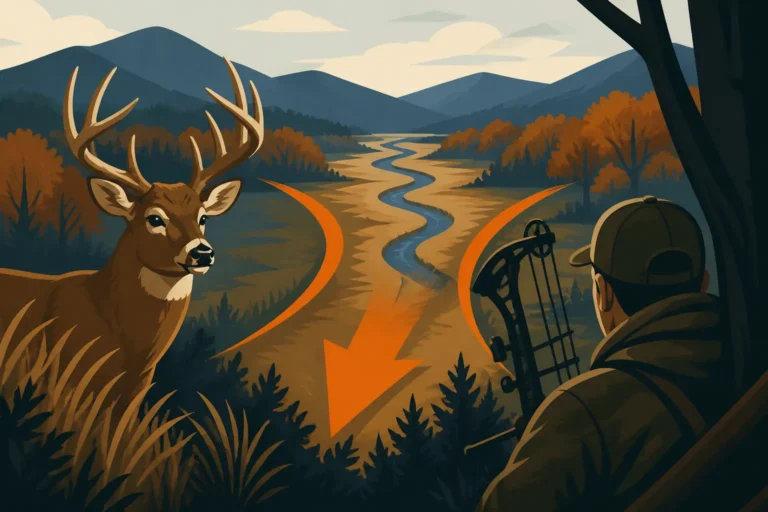
Once you have identified promising spots on a map, boots on the ground scouting becomes crucial. Look for fresh deer sign: tracks, rubs, scrapes, and droppings. In the southern WMUs, like I1 or J2, you'll often find deer utilizing small woodlots and corridors between suburban developments. Pay attention to wind direction and thermal currents when choosing your stand site. Crossbow hunting often involves shorter-range shots than rifle hunting, so precise stand placement to ensure clear shooting lanes and minimize detection is even more critical. Setting up on a Hunting a Funnel Between Two Woodlots is often a highly effective tactic.
Specific Considerations for Crossbow Hunting Success
Crossbow hunting, while sharing many principles with traditional archery, also comes with its own unique set of considerations. Mastering these nuances can significantly improve your chances of success in New Hampshire's diverse hunting landscape. It's about precision, patience, and adapting to the environment around you.
Understanding Shot Angles and Ethical Harvesting
With a crossbow, just as with a vertical bow, shot placement is king. Due to the nature of archery equipment, shot angles become incredibly important for achieving a quick, humane kill. Always strive for a broadside or slightly quartering-away shot. These angles offer the best opportunity to hit both lungs and the heart, ensuring maximum internal damage and a fast recovery. A steeply quartering-to shot or a straight-on frontal shot should generally be avoided, as they significantly reduce the chances of hitting vital organs and increase the risk of wounding the animal.
Before you even draw (or rather, brace and aim) your crossbow, mentally visualize the arrow's path through the animal. This is especially important if you're hunting from an elevated position, like a treestand. The angle of descent means your entry and exit wounds will be lower than if you were shooting from the ground, so aim accordingly to still hit those vitals. Know your ethical range and stick to it. If a deer is beyond that distance, or the shot angle isn't ideal, wait for a better opportunity. Patience is a virtue in crossbow hunting, especially in the more open, mixed habitats you'll encounter in WMUs like K or L.
Adapting to New Hampshire's Varied Terrain
New Hampshire's crossbow-legal WMUs offer a wide array of terrain, from the rolling hills and dense mixed hardwoods of the Monadnock region (WMU G) to the more fragmented suburban woodlots and agricultural edges of the Seacoast (WMUs J1, J2, M). Your crossbow hunting strategy needs to adapt to these varied environments. In dense timber, where shots are typically closer, a more compact crossbow might be advantageous, allowing for easier maneuverability. For example, if you're trying to still-hunt through a thick cedar swamp Where New Hampshire Bucks Bed in Thick Cover, a shorter axle-to-axle crossbow will be less likely to snag.
When hunting open field edges or powerline cuts, where deer might offer slightly longer shots, focus on maximizing accuracy and ensuring your crossbow is sighted in for those extended ranges. Consider using a ground blind that blends seamlessly with the environment to conceal your movements. In the hillier regions, like parts of WMU C2 or G, wind and thermals play a crucial role. Always be mindful of them when setting up your stand or blind, as deer will often use these air currents to detect danger. Proper footwear, like durable Boots for New Hampshire's Granite Terrain, is also essential for navigating this varied topography, ensuring you can access those remote, unpressured spots. Remember, scouting with tools like GoHunt can help you identify these terrain features and plan your approach effectively.
Disclaimer
Always consult the most current New Hampshire Fish and Game Hunting & Trapping Digest for the precise and up-to-date regulations, season dates, and WMU boundaries. Wildlife laws can change, and it is the hunter's responsibility to be fully informed and compliant.