Hunting a White Mountain Notch Pass
Hunting the White Mountain Notch Passes in New Hampshire can feel like trying to find a needle in a vast, rugged haystack. The beauty of these areas is undeniable, but the sheer scale and challenging terrain often leave even seasoned hunters wondering where to begin. This guide is dedicated to breaking down the unique complexities of pursuing game, particularly whitetail deer, in these iconic, unforgiving landscapes, offering practical strategies to increase your chances of success.
Understanding the Unique Challenges of Notch Passes
When you look at a map of New Hampshire's White Mountains, those deep V-shaped cuts – the "notches" – stand out. They represent ancient pathways carved by glaciers and rivers, creating dramatic geological features. But for a hunter, they present a whole different set of puzzles. It's not like still-hunting a woodlot or sitting on a field edge. This is a game of elevation, weather, and often, patience.
Steep Terrain and Elevation Changes
The most immediate challenge of a notch pass is the terrain itself. You're not dealing with rolling hills; you're often looking at near-vertical rock faces, tumbling talus slopes, and steep, broken timber. Just getting to where you want to hunt can be a grueling climb, and then you have to figure out how to move quietly and safely. This isn't for the faint of heart or those unprepared physically. The sheer effort involved in navigating these slopes means you expend more energy, move slower, and can cover less ground than you might in flatter country. It also drastically changes how deer move through the landscape; they’ll often opt for paths of least resistance, which are rarely obvious to the untrained eye.
Furthermore, the ground underfoot can be incredibly varied. You might go from soft duff to loose rock to dense evergreen thickets, all within a few hundred yards. This makes maintaining a steady pace and remaining silent incredibly difficult. A misplaced foot can send rocks clattering, alerting every deer within a quarter-mile. And let's not forget the descent with a loaded pack, which can be even more taxing than the climb up. It's a true test of endurance and careful planning.
Unpredictable Weather Patterns
New Hampshire's White Mountains are legendary for their rapidly changing weather, and the notch passes amplify this unpredictability. One moment you might be enjoying crisp, clear sunshine, and the next, a dense fog rolls in, or a squall dumps rain or snow, often with a significant drop in temperature. This isn't just an inconvenience; it can be a serious safety concern and can drastically impact deer movement. A sudden cold front can put deer down in sheltered areas, or a fresh blanket of snow might get them up and moving to feed.
Understanding how to Wind and Thermals in Steep Granite Terrain becomes paramount here. The topography of a notch creates its own microclimates and wind tunnels. What the weather app says for the nearest town might be completely irrelevant when you're tucked into a high basin. Strong winds can swirl, making it impossible to predict your scent cone, and thermals will shift dramatically from morning to mid-day and evening, carrying your scent up with the rising sun and down into the valleys as temperatures drop. Being prepared for anything from sleet to sun is not just smart, it’s essential for both comfort and safety, and can mean the difference between staying on stand or heading back to the truck.
Limited Deer Density and Movement Patterns
Let's be realistic: the White Mountain Notch Passes aren't known for high deer densities. You're generally not going to find the numbers you might see in the gentler, more agricultural regions to the south. The deer that do inhabit these areas are often hardier, more solitary, and incredibly wary. They've learned to survive in a tough environment with limited readily available food sources, constantly adapting to the extremes. This means their patterns are often more subtle and less predictable than deer in other habitats.
Instead of browsing lush agricultural fields, these deer rely on acorns from scattered oak pockets, browse on young timber growth in clear-cuts or blowdowns, and seek out specific wintering yards when the snow gets deep. You'll often find them utilizing thick cover along steep ridges, in deep drainages, or in the dense conifer stands that offer shelter from the elements. Their movement corridors will typically follow contours, natural benches, or subtle saddles, avoiding the most exposed or steepest sections. Identifying these specific travel routes, bedding areas, and scarce food sources is critical, because you're unlikely to stumble upon deer purely by chance.
Essential Scouting and Planning for a Notch Pass Hunt
Hunting a White Mountain Notch Pass is largely a scouting game. You can't just show up on opening day and expect to fill your tag. The sheer scale and difficulty of the terrain demand meticulous pre-season work, both from the comfort of your home and with boots on the ground. Think of it as detective work, piecing together clues to understand how deer survive in this challenging environment.
Leveraging Topographical Maps and Satellite Imagery
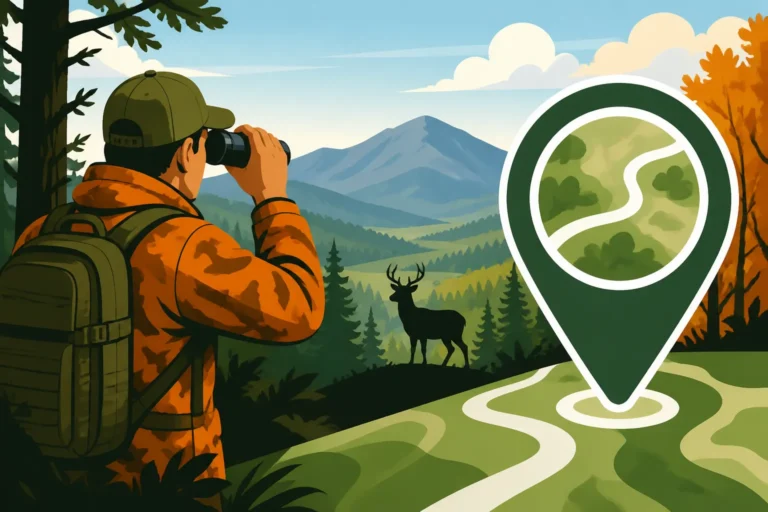
Before you ever set foot in the woods, your computer or tablet should be your first point of attack. Tools like onX Hunt or GoHunt are invaluable for breaking down these vast landscapes. Start by looking for subtle features: benches on steep slopes, saddles between peaks, fingers of timber extending into open areas, or creek bottoms. These are natural funnels and travel corridors that deer will exploit. Look for areas where different cover types meet – say, a hardwood ridge transitioning into a thick softwood stand – as these ecotones often hold deer.
Pay close attention to elevation changes. Contour lines are your best friend. Look for spots where the contours broaden out slightly on a steep slope, indicating a potential bench where a deer might bed or travel. Identify natural escape routes and areas of dense thermal cover that would offer protection from wind and snow. Satellite imagery will help you pinpoint specific stands of timber, clear-cuts, or areas of recent logging that might provide new browse. Zoom in to identify potential water sources or isolated pockets of mast-producing trees. This digital reconnaissance helps you narrow down vast areas into manageable sections, saving you countless hours of unproductive hiking. Reading these images can provide crucial insight, especially when combined with a deep understanding of Reading Aerial Photos for North Country Deer.
Pre-Season On-Foot Reconnaissance
Once you've identified promising areas on your maps, it's time to put boots on the ground. Pre-season scouting in the White Mountain Notch Passes is grueling but absolutely necessary. You need to verify what you saw on the map and look for fresh sign. Look for old rub lines, recent scrapes, well-worn trails, and droppings. Pay attention to bedding areas, which are often found on leeward sides of ridges, sheltered from prevailing winds, or within dense conifer thickets offering thermal cover.
During your scouting trips, don't just walk the trails. Get off-trail and climb those steep slopes, pushing through the thick stuff. This is where the deer live. Look for subtle deer trails winding along contours, often just below the crest of a ridge, allowing deer to utilize the wind to their advantage. Try to locate historical deer yards or areas with mature mast-producing trees. Pay attention to natural pinch points, where terrain funnels deer into a smaller area. Every detail contributes to building a mental map of deer movement. As you venture out, you'll inevitably be Finding Sign in White Mountain Timber, which is a crucial skill in this rugged country.
Understanding Wind and Thermals in Mountain Passes
This cannot be stressed enough: wind and thermals dictate everything when hunting mountain passes. Your scent is your biggest enemy. In the valleys and on open plains, wind might be fairly consistent, but in the notches, it's a swirling, unpredictable beast. Thermals play an equally critical role. As the sun rises and warms the earth, air begins to flow uphill (an updraft). In the evening, as the air cools, it flows downhill (a downdraft). Deer instinctively understand this and use it to their advantage, often bedding high to catch updrafts during the day, smelling danger below, and moving down in the evening as thermals drop.
Before every hunt, and throughout the day, use a wind checker to constantly monitor conditions. Don't rely solely on a prevailing wind direction; observe how your scent is actually moving within the specific micro-terrain you're in. This means you might need to adjust your approach or stand location multiple times during a single hunt. A perfect stand location can become useless in minutes if the thermals shift unexpectedly. It takes practice and a keen awareness of your surroundings to effectively use wind and thermals to your advantage, or at least minimize your disadvantage, in these complex environments.
Strategies for Hunting Notch Passes Effectively
Once you've done your homework and understand the unique environment, it's time to put a plan into action. Hunting a White Mountain Notch Pass is less about waiting and more about active pursuit, strategic movement, and constant adaptation.
Still-Hunting the Edges and Drainages
Still-hunting is a highly effective tactic in these rugged areas, but it's a slow, deliberate process. Think "still-hunt," not "walk." You're moving at a snail's pace, pausing frequently, scanning every shadow, and listening intently. Focus your efforts on the transition zones – the edges where thick cover meets more open timber, or where a steep slope levels out into a bench. Deer often feel secure in the thick stuff but will move along these edges.
Drainages and creek bottoms are also prime still-hunting territory. They offer deer a path of least resistance through otherwise difficult terrain and often provide consistent water sources and pockets of better browse. Move into the wind, or with crosswinds that favor your approach, constantly checking your scent. Utilize the terrain to break up your silhouette, always being aware of what's ahead. Remember, in these low-density areas, your primary goal is to find the deer, not necessarily to wait for them to come to you. You'll be practicing the art of Still-Hunting White Mountain National Forest Timber with every slow step.
Identifying and Hunting Travel Corridors
Deer in notch passes are incredibly efficient movers. They aren't going to waste energy scrambling over unnecessary obstacles. Instead, they’ll follow the path of least resistance. These paths, or travel corridors, are often subtle: a bench along a steep hillside, a slight saddle connecting two ridges, a narrow strip of hardwoods through a spruce thicket, or even an old logging road that has grown over. Finding these corridors and understanding why deer use them is paramount.
Once identified, these corridors become prime ambush points. Consider setting up a ground blind, carefully brushed in, or finding a natural hide that offers good concealment and a clear shot opportunity. Position yourself to observe the corridor, always keeping the wind and thermals in mind. These spots can be particularly productive during the rut, when bucks are actively cruising for does, or during periods of heavy snowfall when deer are forced to move along established paths to access food or shelter.
Adapting to Changing Conditions
Flexibility is key when hunting in the White Mountains. What worked yesterday might not work today, and what the forecast says can change in an hour. Be prepared to shift your strategy based on weather, deer sign, and even hunting pressure. If a fresh blanket of snow falls, consider Tracking a Deer in Fresh White Mountain Snow to locate a moving animal. If the wind suddenly switches 180 degrees, you might need to move your entire setup or change your approach to a different drainage.
Pay attention to subtle cues from the landscape. Are squirrels actively feeding on beech nuts or acorns? That's where deer might be headed. Has a recent storm created new blowdowns that offer fresh browse? Adjust your focus. The deer that survive in these rugged environments are masters of adaptation, and to hunt them successfully, you must be too. Don't be afraid to pull up stakes and move to a different area if your initial plan isn't yielding results. Sometimes, finding ground that others walk past is the secret to success.
Gear and Safety Considerations for Mountain Hunting
Hunting a White Mountain Notch Pass is not a casual outing. It requires the right gear, a focus on safety, and a realistic understanding of what it takes to be self-sufficient in remote, challenging terrain. The beauty can quickly turn brutal if you're unprepared.
Proper Layering and Footwear
The temperature swings in the notches, combined with the strenuous activity of climbing, demand a meticulous approach to Layering for New Hampshire's Cold Hunting Season. Start with a good moisture-wicking base layer to manage sweat, followed by insulating layers (fleece or down) that can be easily added or removed, and topped with a waterproof and windproof outer shell. You'll sweat profusely climbing, then cool down rapidly when you stop. Being able to regulate your body temperature is crucial to staying comfortable and preventing hypothermia.
Footwear is arguably the most critical piece of gear. You need sturdy, waterproof, and well-broken-in boots that provide excellent ankle support for navigating uneven, rocky terrain. Traction is paramount. Think aggressive outsoles that can grip wet rock, mud, and slippery leaves. Poor footwear can lead to blisters, falls, and a miserable hunt. My personal preference leans towards a high-cut boot that offers maximum support. Consider the advice in Boots for New Hampshire's Granite Terrain when making your selection; it makes a huge difference.
Navigation and Emergency Preparedness
Getting lost in a White Mountain Notch Pass is a serious concern. Cell service is often nonexistent. A reliable GPS unit, or a smartphone app like onX Hunt or GoHunt with downloaded offline maps, is absolutely essential. Don't just rely on technology; carry a physical map and a compass and know how to use them. Mark your starting point, your vehicle, and any potential stand locations.
Beyond navigation, a comprehensive emergency kit is a must. This should include a first-aid kit, fire-starting materials, a headlamp with extra batteries, an emergency shelter or space blanket, extra food and water, and a way to communicate in an emergency, such as a satellite messenger. Let someone know your exact hunting plans, including your expected return time and where you'll be. It's not about being paranoid; it's about being responsible and ensuring you can handle unexpected situations.
Packing for Success and Recovery
Every item in your pack should serve a purpose, especially when you consider the uphill climb. You'll need enough food and water for the duration of your hunt, plus extra for emergencies. Essential tools like a sharp knife, game bags, and perhaps a bone saw are vital for field dressing. If you're fortunate enough to harvest an animal, especially a deer, in steep terrain, the work has just begun. Dragging a deer out of a granite ravine is incredibly difficult. Consider a lightweight game cart if the terrain allows for it, or be prepared for quartering the animal and making multiple trips, as discussed in Packing Meat Out of a North Country Bog.
Also, don't forget the small but important items: binoculars for scanning distant slopes, a rangefinder, and a small sitting pad for comfort. Every ounce matters, but so does being prepared for success and the arduous task of recovery. Think about what you absolutely need versus what would be nice to have when you're loading up your pack for a hunt in this challenging region.
Here's a quick look at some key gear considerations for your Notch Pass adventures:
| Category | Essential Items | Why It's Important |
|---|---|---|
| Apparel | Layered clothing (base, mid, outer shell) | Regulates body temperature; adapts to changing weather and exertion levels. |
| Waterproof, sturdy hiking boots with ankle support | Traction on varied terrain; prevents injury; keeps feet dry. | |
| Blaze orange/pink (per regulations) | Safety and visibility, especially during firearms season. | |
| Navigation | GPS unit/Smartphone with offline maps (onX Hunt) | Prevents getting lost in remote areas; tracks movement; identifies features. |
| Physical map & compass | Backup navigation; no reliance on batteries. | |
| Safety | First-aid kit | Addresses minor injuries and emergencies. |
| Fire starter (lighter, waterproof matches) | Survival in cold, wet conditions. | |
| Headlamp with extra batteries | Essential for pre-dawn starts, post-dusk recovery, and emergencies. | |
| Emergency shelter/space blanket | Protection from elements in unexpected overnight situations. | |
| Satellite messenger (Garmin InReach, Zoleo) | Emergency communication where cell service is absent. | |
| Hunting Tools | Quality hunting knife | Field dressing and processing game. |
| Binoculars/Rangefinder | Scouting, identifying game, accurate shot placement. | |
| Game bags | Protects meat during transport, especially when quartering. | |
| Water filter/purifier | Access to safe drinking water from natural sources. | |
| Miscellaneous | Extra food and water | Sustenance and emergency reserves. |
| Whistle | Signaling for help. | |
| Trekking poles | Improves balance and reduces strain on steep terrain. |
Hunting a White Mountain Notch Pass is an experience unlike any other. It challenges you physically and mentally, but the rewards of connecting with nature and potentially harvesting an animal in such a wild setting are truly unforgettable. With careful planning, the right gear, and a deep understanding of the unique environment, you can turn those frustrations into a fulfilling and successful adventure.
Disclaimer
This article is for general informational purposes only and does not constitute professional advice. Laws, prices and regulations vary by location and change over time. Consult a qualified professional for guidance on your specific situation.