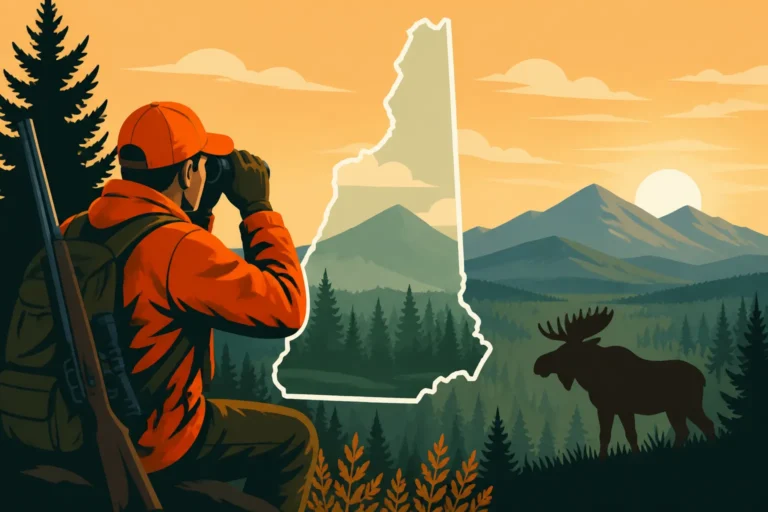
Hunting the Ossipee Mountains
The Ossipee Mountains, often overshadowed by the majestic White Mountains to their north or the bustling agricultural lands to their south, present a unique and often overlooked hunting challenge in New Hampshire. Many hunters might drive past them, heading for more advertised destinations, but for those willing to put in the effort, the Ossipees offer a distinct blend of terrain, habitat, and solitude. This guide is dedicated to shedding light on what makes hunting this region special, offering practical advice and strategies to help you navigate its ancient caldera and discover its hidden gems for a successful hunting season.
Understanding the Ossipee Mountains' Unique Terrain and Habitat
The Ossipee Mountains aren't just another range; they're the remnants of an ancient, eroded volcanic caldera, which gives them a distinct, almost circular shape in places, and a rugged, complex interior. This geological history profoundly impacts the hunting experience here, creating a landscape that demands respect and a well-thought-out approach.
Geographic Features and Forest Types
When you venture into the Ossipees, you'll immediately notice the dramatic elevation changes and a mosaic of forest types that provide diverse habitats. Steep slopes, often littered with granite boulders and ledges, give way to deep ravines and small, hidden valleys. The forest itself is a rich mix: you'll find stands of mature hardwoods, particularly oak and maple, dominating the mid-slopes and ridges, offering crucial mast crops for deer and bear. Lower elevations and wetter areas tend to hold softwoods like hemlock and pine, creating dense thermal cover and bedding areas.
This varied topography means game animals have a wide array of options for bedding, feeding, and travel. Deer will often utilize the benches and saddles along ridge lines as travel corridors, moving between feeding areas in the hardwoods and the dense cover of the softwoods. The north-facing slopes, holding snow longer, might be less appealing in early season but can offer cooler bedding in warmer periods. Bears, with their keen sense of smell, will gravitate towards those oak ridges during the fall, gorging on acorns before denning. Understanding these subtle shifts in habitat and elevation is your first key to unlocking the Ossipees' potential.
Primary Game Species and Their Habits
While the Ossipees aren't known for any single species exclusivity, they offer excellent opportunities for white-tailed deer, black bear, and wild turkey. Each species interacts with this unique landscape in its own way, requiring hunters to adapt their strategies accordingly.
White-tailed deer in the Ossipees are often tough, resilient animals, well-adapted to the steep terrain. They tend to be more spread out than in flatter agricultural areas, making them a challenge for still-hunters. Look for their sign – rubs, scrapes, and tracks – along old logging roads, natural funnels formed by terrain features, and where different forest types merge. During the rut, bucks will often cruise these ridge lines and saddles, scent-checking for does. Remember that deer in this kind of terrain often don't travel in straight lines; they'll use contours, benches, and thickets to their advantage.
Black bears are common in the Ossipees, drawn by the abundant mast crops and dense cover. Finding fresh bear sign, like torn-up logs, scat full of berry seeds, or claw marks on beech trees, is a good indicator of their presence. Baiting is a popular and effective method for bear hunting in New Hampshire, but understanding the specific rules for Bear Hunting New Hampshire's Bait and Hound Season and checking your WMU is paramount. Spot-and-stalk can also be effective during the early fall, especially on south-facing slopes heavy with berries or oak ridges.
Wild turkeys thrive in the mixed hardwood and conifer forests of the Ossipees. In spring, gobblers will announce their presence from roosts in tall pines or hardwoods, descending to feed in open areas, old logging decks, or field edges on the fringes of the range. Fall hunting involves breaking up flocks and calling birds back, a strategy that works well in the scattered timber and varied topography. Understanding Spring Turkey Hunting in New Hampshire or Fall Turkey Hunting New Hampshire's Eight WMUs will be crucial for success.
Gaining Access: Public and Private Land Strategies in the Ossipees
Hunting the Ossipee Mountains isn't just about understanding the game; it's equally about understanding where you can legally access the land. New Hampshire offers a mix of public and private opportunities, and knowing how to navigate both is key to a productive hunt.
Navigating Public Lands and Easements
While not as vast as the White Mountain National Forest, the Ossipee Mountains do have significant public access through state forests, town forests, and conservation easements. These parcels are often interspersed with private land, creating a checkerboard pattern that can be confusing if you're not prepared. Using a robust mapping tool like onX Hunt is absolutely invaluable here. It allows you to clearly identify public land boundaries, state forests, and even specific conservation lands that might allow hunting. GoHunt also offers some mapping capabilities that can help visualize terrain and land ownership.
Look for tracts managed by the New Hampshire Fish and Game Department or the Department of Natural and Cultural Resources. These areas, like some of the state forests or town-owned conservation lands, are often managed with wildlife in mind and provide excellent hunting opportunities. However, access can be challenging. Many public lands might only be accessible via footpaths, old logging roads that are gated off, or require considerable hiking from a designated parking area. Always check local town ordinances as well, as some towns have specific rules regarding hunting on their lands or discharge setbacks near populated areas. Parking can also be a significant issue, so plan your access points carefully and always respect private property when parking or crossing. You might also want to look into Public Hunting Land in New Hampshire for a broader overview.
Seeking Private Land Permission
Given the fragmented nature of land ownership around the Ossipees, securing private land permission can open up vast tracts that see less hunting pressure. The fringes of the Ossipee range, where the mountains transition into more developed or agricultural areas, often contain smaller woodlots or larger family holdings. Many seasoned hunters will tell you that the most valuable commodity isn't always the biggest public tract, but rather a small, hard-to-access private parcel that consistently holds game.
Approaching landowners respectfully, clearly stating your intentions, and offering to help with chores or share game can go a long way. Always be prepared for a "no," but don't let it discourage you. Persistence and a good reputation are key. It's often helpful to target properties that might be a bit out of the way, or those where the landowner is older and might appreciate some help keeping an eye on their land. Remember, New Hampshire law on trespass means understanding Do You Need Written Permission in New Hampshire? is critical before stepping onto any private property. Always carry a signed permission slip, even if it's not strictly required by law in every situation, as it demonstrates respect and clarity.
Hunting Strategies Tailored for the Ossipee Landscape
Hunting the Ossipee Mountains effectively requires more than just showing up with your gear; it demands specific strategies honed for its unique topography and forest composition.
Scouting and E-Scouting the Ossipee Terrain
Before you even tie on your boots, spend considerable time e-scouting the Ossipees. Tools like onX Hunt or GoHunt with their satellite imagery and topographic maps are indispensable. Look for those ancient caldera features: the steep walls, the more gradual inner slopes, and any major drainages or creeks. Identify potential funnels where terrain pinches down, forcing deer into predictable travel routes. Seek out benches or terraces on steep hillsides where deer might rest or travel horizontally. Pay attention to changes in vegetation visible from aerial photos – mature hardwoods (especially oak) on ridges, thick evergreen cover for bedding, and old clear-cuts or logging roads that offer browse and easier travel.
Once you have some potential spots identified, it’s time for boots-on-the-ground scouting. Hike those ridges, explore those ravines, and find the subtle transitions where deer will feel safe but still have access to food. Look for rub lines, scrape lines, and well-used trails. Pay attention to the prevailing wind directions and how the terrain will influence them. Scouting With the New Hampshire Fish and Game App can also help you identify WMU boundaries and other crucial information for your hunt. The more time you spend understanding the ground, the better your chances will be when season opens.
Effective Hunting Methods and Gear Considerations
Given the Ossipees' challenging terrain, a flexible approach to hunting methods is often most successful. Still-hunting, moving slowly and deliberately through the woods, can be incredibly effective, allowing you to cover ground and adapt to fresh sign. Focus on moving into the wind or with a slight crosswind, pausing frequently to listen and scan. For stand hunting, carefully selected treestand or ground blind placements in natural funnels, saddles, or near active feeding areas (like an oak ridge after a good mast year) can pay off. Keep in mind that for a ground blind, you'll want to ensure it's well-brushed in and camouflaged against the often rocky and diverse background.
Gear is paramount when hunting the Ossipees:
- Footwear: Forget your flimsy hiking boots. You need sturdy, waterproof boots with excellent ankle support and aggressive tread. The steep, rocky, and often wet terrain demands it. Consider boots designed for mountaineering or serious backcountry hunting. For more on this, check out Boots for New Hampshire's Granite Terrain.
- Optics: Binoculars are essential for scanning thick timber and distant ridges. A good quality rangefinder is also vital, as judging distances in varied topography can be deceiving. Optics for New Hampshire's Timber Country can guide you in choosing the right glass.
- Layering: New Hampshire weather is notoriously fickle. Be prepared for rapid changes in temperature, especially if you're gaining or losing significant elevation. Multiple layers, including a good base layer, insulating mid-layers, and a waterproof/windproof outer shell, are a must. Layering for New Hampshire's Cold Hunting Season is a great resource.
- Navigation: While paper maps and compasses are classic, a GPS unit or a reliable mapping app on your phone (like onX Hunt) is highly recommended. Always carry a portable power bank, as cell service can be spotty. Mark your truck, your stand, and any significant game sign.
- Pack: A comfortable hunting pack capable of carrying essential gear, water, food, and potentially game meat is non-negotiable. If you're lucky enough to harvest an animal, you'll appreciate a pack with a good frame for hauling it out of those challenging ravines. While not specific to deer, insights from Packing Meat Out of a North Country Bog can be adapted to tough deer extractions.
Overcoming Common Challenges and Staying Safe
The Ossipee Mountains, for all their beauty and hunting potential, also present unique challenges that every hunter should be prepared for. Safety and preparation are paramount.
Dealing with Steep Slopes and Navigation
The ancient caldera means you're going to encounter steep terrain, plain and simple. This can be physically demanding, especially if you're packing a stand in or, even better, packing game out. Good physical conditioning before the season starts will make a huge difference. Don't underestimate the energy drain of continuous climbs and descents, especially when carrying a heavy load.
Navigation can also be tricky. The dense canopy, winding drainages, and uniform forest can make it easy to get disoriented, particularly in low light or fog. Always have multiple navigation tools: a charged smartphone with a GPS app like onX Hunt, a physical map, and a compass. Learn how to use them together. Pay attention to natural landmarks as you move, and use the "breadcrumbs" or track recording feature on your GPS to mark your path. Understanding Wind and Thermals in Steep Granite Terrain is also crucial, as swirling winds in these valleys can give away your position faster than you'd like. Always tell someone your hunting plan, including where you'll be and when you expect to return.
Hunting Pressure and Ethical Considerations
While generally less pressured than some of New Hampshire's more accessible hunting grounds, the Ossipees are not entirely undiscovered. You will likely encounter other hunters, especially on public land during peak seasons. Maintaining good hunting ethics and respecting others' space is crucial. If you see another vehicle parked near your intended access point, consider finding an alternative spot, or at least give them plenty of room. Communication, when possible and appropriate, can prevent conflicts.
Safety is non-negotiable. Always adhere to New Hampshire's blaze orange requirements, especially during the firearms season. For specific rules, refer to New Hampshire Blaze Orange Requirements. Even during archery season, wearing some blaze orange when traveling to and from your stand is a smart move. When you do harvest an animal in this challenging terrain, efficient field dressing and game recovery are critical. The last thing you want is for your hard-earned venison to spoil because you couldn't get it out in time. Knowing how to efficiently quarter an animal and having the right tools for it can make a huge difference. If you're faced with the daunting task of Dragging a Deer Out of a Granite Ravine, having a plan and the right gear, like a good game cart (where terrain permits) or a robust pack frame, is essential.
Hunting the Ossipee Mountains offers a rewarding experience for those who embrace its unique challenges. With careful planning, proper gear, and a deep respect for both the land and its wildlife, you can unlock some truly memorable hunts in this remarkable part of New Hampshire.
| Aspect | Ossipee Mountains Hunting | Southern NH Farmland Hunting |
|---|---|---|
| Terrain | Steep, rocky, varied elevation, dense woods | Flatter, rolling hills, open fields, woodlots |
| Primary Challenge | Physical exertion, navigation, scattered game | Hunting pressure, limited cover, private land access |
| Habitat Focus | Hardwood ridges (mast), softwood thickets (cover) | Field edges (food), hedgerows (travel), swamp bottoms |
| Typical Hunting Method | Still-hunting, strategic stand placement, patient tracking | Stand hunting over food sources, deer drives |
| Gear Emphasis | Rugged boots, good optics, reliable GPS, sturdy pack | Warm clothing for static sits, longer range optics (sometimes) |
| Hunter Density | Generally lower, but concentrated near access points | Higher, especially during firearms season |
Disclaimer
This article is for general informational purposes only and does not constitute professional advice. Laws, prices and regulations vary by location and change over time. Consult a qualified professional for guidance on your specific situation.