Rifles and Calibers for New Hampshire Big Game
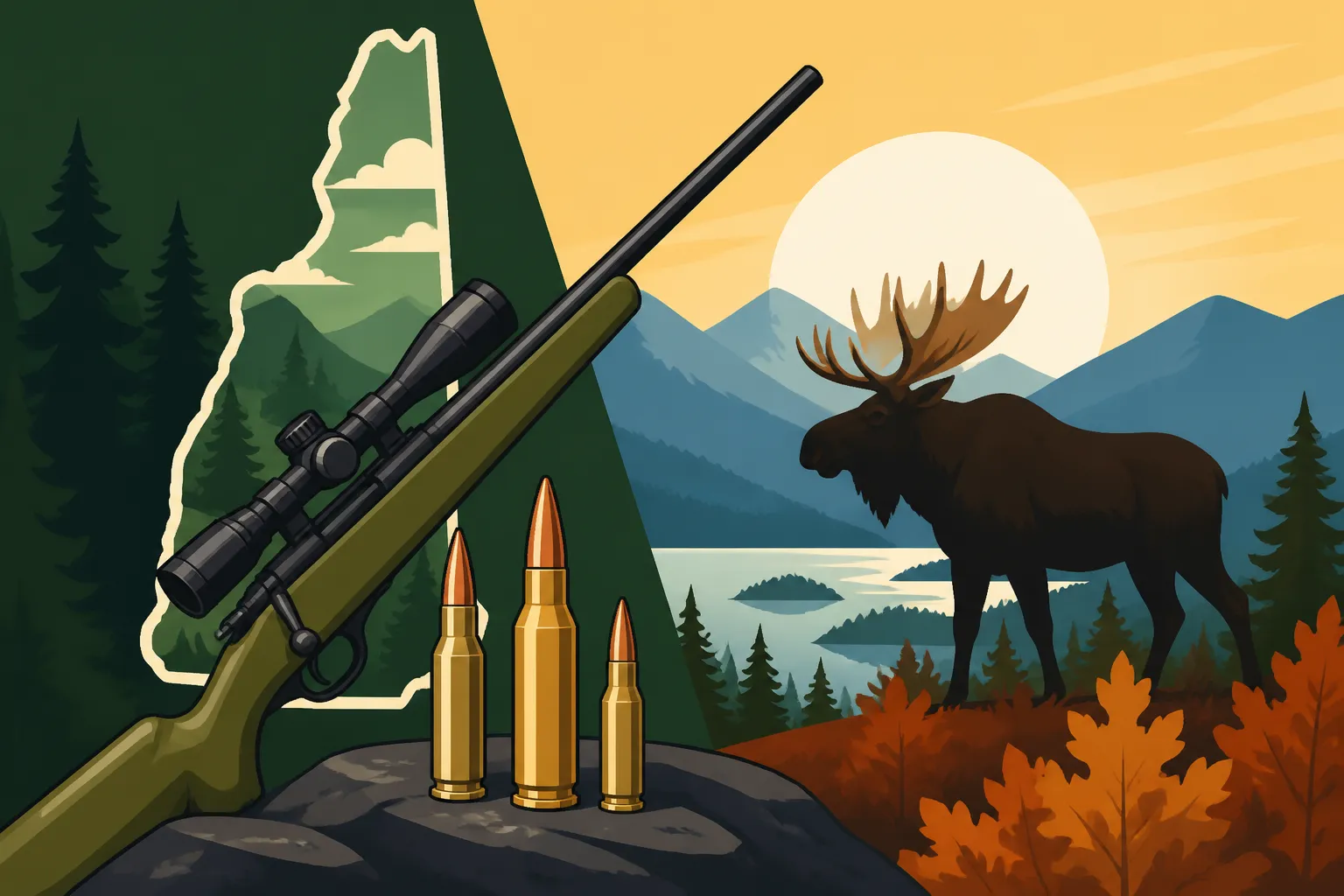
Choosing the right rifle and caliber for hunting New Hampshire's diverse big game can feel like navigating a dense patch of balsam fir – overwhelming and easy to get turned around in. With deer, moose, and bear presenting unique challenges across our rugged terrain, selecting the ideal firearm is crucial for both success and ethical hunting. This guide will cut through the noise, offering detailed insights into the rifles and calibers that will serve you best in the Granite State, ensuring you're well-equipped for whatever the New Hampshire woods throw your way.
Understanding New Hampshire's Big Game
Before we even talk about specific rifles or calibers, it’s vital to understand the animals you'll be pursuing here in New Hampshire. Each species presents a different set of challenges and requires a different approach, not just in terms of hunting tactics but also in the terminal performance needed from your chosen cartridge.
The Whitetail Deer Challenge
New Hampshire's whitetail deer are, for many, the primary target. Our deer herd varies significantly from the smaller, leaner deer of the deep North Country to the often larger-bodied deer found in the more fertile southern regions and along river bottoms like the Connecticut River Valley. You might be still-hunting thick softwood cover, sitting a field edge in late season, or hunting a ridge-top saddle for rutting bucks.
When hunting deer, shot distances can vary wildly. You might have a close-quarters encounter in a dense spruce thicket, where a quick, accurate shot is paramount, or a longer shot across an open hardwood ridge. The deer themselves, while not as large as their western cousins, are still robust animals. A well-placed shot with an appropriate caliber is essential for a quick, humane harvest and to minimize tracking a deer through our challenging terrain, especially if you're tracking a deer in fresh White Mountain snow.
The Mighty Moose of the North Country
Ah, the New Hampshire moose. For those lucky enough to draw one of our coveted permits, it's truly a once-in-a-lifetime opportunity. These aren't your average deer; moose are immense, resilient animals, primarily found in the rugged, remote North Country of New Hampshire. A bull moose can stand over six feet at the shoulder and weigh upwards of a thousand pounds, requiring a significantly more powerful caliber and bullet construction to ensure a clean, ethical kill.
Hunting moose often involves navigating vast, remote areas, from dense bogs to steep, rocky terrain. Shots can sometimes be at longer distances in clearings or across bogs, but frequently, they are also up close and personal in thick timber where these giants love to feed. Penetration through heavy bone and muscle is absolutely critical, and a caliber that delivers substantial energy is non-negotiable. You'll want to ensure your rifle can handle the deep woods and potentially long treks involved in packing out a New Hampshire moose.
Black Bears: Opportunity and Ethics
New Hampshire's black bear population has been thriving, offering fantastic hunting opportunities across much of the state, whether you're baiting New Hampshire bears legally by WMU or hunting bear with hounds by WMU. Bears are tough animals, covered in dense fur, thick hide, and often a substantial layer of fat. Their bone structure is robust, and they can be incredibly tenacious, especially if not hit well.
Like deer, shot distances on bear can vary, but often when hunting over bait or pursuing them with hounds, shots can be quite close. While not as massive as a moose, a large boar bear can easily tip the scales at 300-400 pounds, requiring a caliber that can deliver significant kinetic energy and reliable penetration. The goal is always a quick, ethical harvest, preventing a wounded bear from disappearing into dense cover, which can be an incredibly dangerous and difficult recovery scenario.
Legal Considerations for Rifles in New Hampshire
Understanding the letter of the law is just as important as understanding ballistics. New Hampshire has specific regulations regarding firearms use for hunting, and ignorance is no excuse. Always consult the most current New Hampshire Fish and Game Digest, which can be found online or picked up at your local sporting goods store. It’s your official guide and essential reading before heading into the woods.
General Firearms Season Regulations
New Hampshire’s firearms deer season typically runs for a few weeks in November, following the archery and muzzleloader seasons. During this time, most standard hunting rifles are permitted. However, there are distinctions between the general firearms season and special seasons like muzzleloader-only. For example, if you're planning on hunting New Hampshire's muzzleloader-only ten days, you'll need a different class of firearm entirely.
Generally, any centerfire rifle cartridge is allowed for deer, bear, and moose. There aren't specific minimum caliber restrictions for deer or bear like some other states have, but practical and ethical considerations will naturally steer you towards cartridges appropriate for the game. For moose, given their size, ethical hunting practically demands a larger caliber. It's not just about what's legal, but what's right.
Specific Caliber and Magazine Capacity Rules
While New Hampshire is relatively permissive compared to some states, there are still rules to be aware of. For instance, fully automatic firearms are prohibited for hunting, as are shotguns with a capacity of more than three shells unless equipped with a plug. While this primarily pertains to waterfowl, it’s indicative of the types of rules to keep in mind.
When it comes to rifles, there aren't usually restrictive magazine capacity limits for hunting big game, unlike some states where you might be limited to 5-round magazines. However, using a 30-round AR-style magazine for deer hunting, while potentially legal, might not be the most practical or traditional approach in the Granite State's deep woods. The focus here is on ethical hunting and using equipment responsibly. You can always check the New Hampshire Legal Firearms for Deer Hunting section of the official guide for any specific nuances or recent updates.
Blaze Orange and Safety Requirements
This isn't directly about rifles or calibers, but it's crucial for any firearms hunter in New Hampshire. During the firearms deer season, wearing blaze orange is mandatory. This includes a minimum amount of material visible from all sides. The specific requirements are laid out clearly by New Hampshire Fish and Game, often detailed in terms of square inches visible.
The spirit of these rules is safety, not just for you, but for every other person who might be in the woods, whether they are hunting, hiking, or recreating. Wearing your blaze orange properly, ensuring it's visible even when carrying game or a pack, is a fundamental responsibility. It's a simple, yet incredibly effective, way to prevent accidents and ensure everyone returns home safely after a day afield. We take safety seriously here, and a responsible hunter always prioritizes it.
Key Factors in Choosing a Rifle
Selecting a rifle isn't just about picking the biggest caliber or the prettiest stock. It's about finding a tool that fits you, performs reliably, and instills confidence. Many factors play into this decision, and what works for one hunter might not be ideal for another.
Weight, Balance, and Handling
Imagine still-hunting through a thick, snowy clear-cut or navigating dense alders in a moose bog for hours on end. A heavy, unwieldy rifle quickly becomes a burden. A rifle's weight and balance significantly impact how comfortably you can carry it, how quickly you can shoulder it for a shot, and how steadily you can hold it on target. A lightweight rifle might be a joy to carry, but it could also kick harder, impacting your follow-up shots or overall accuracy.
Conversely, a heavier rifle often absorbs more recoil, making it more comfortable to shoot, especially with powerful calibers. However, that extra weight can be a real drag on a long hike through steep terrain like the White Mountains. Consider your typical hunting scenarios in New Hampshire. Are you mostly treestand hunting from a static position, or are you primarily a mobile hunter who covers a lot of ground? The answer will heavily influence your ideal rifle's weight and balance. It's a personal choice, so handling different rifles at a sporting goods store is highly recommended.
Accuracy and Effective Range
Accuracy is paramount. Period. An ethical hunter strives for a clean kill, and that requires hitting precisely where you aim. Modern hunting rifles are incredibly accurate out of the box, but consistent accuracy also depends on the shooter. The effective range of your rifle, combined with your personal shooting skill, dictates how far you can confidently take an ethical shot.
For most New Hampshire deer hunting, shots are often within 150 yards, sometimes much closer in the thick woods. While open fields might offer longer opportunities, dense cover is more common. For moose and bear, typical shot distances can also be relatively close, especially on bait. Don't fall into the trap of thinking you need a rifle that shoots accurately at 500 yards if your realistic hunting shots are almost always under 200. Focus on a rifle that groups well at your expected distances, and then practice, practice, practice at those ranges. A rifle that shoots a consistent 1-inch group at 100 yards is more than sufficient for most big game in our state.
Recoil Management and Shooter Comfort
Let's be honest, nobody likes getting punched in the shoulder. Recoil is a reality of shooting powerful hunting rifles, and managing it is key to accurate shooting. If you flinch or anticipate recoil, your accuracy will suffer. A rifle that's comfortable to shoot allows you to concentrate on the fundamentals of marksmanship: sight picture, breath control, and trigger squeeze.
For smaller-framed shooters or those sensitive to recoil, choosing a lighter-recoiling caliber or a rifle with a heavier barrel, a good recoil pad, or even a muzzle brake can make a huge difference. Don't let ego dictate your caliber choice. A lighter-recoiling caliber that you can shoot accurately is far more effective than a magnum that makes you dread pulling the trigger. Think about the entire hunting experience, from the shooting range to the field. A comfortable rifle equals confidence, and confidence equals better shooting.
Popular Calibers for New Hampshire Deer
When it comes to New Hampshire whitetails, there are a handful of calibers that have proven themselves time and again. These are the workhorses, the ones you see in trucks at deer camps across the state. They offer a great balance of power, recoil, and readily available ammunition.
The All-Around .30-06 Springfield and .308 Winchester
These two are absolute legends in the hunting world, and for good reason. They are incredibly versatile, capable of taking everything from deer to moose with the right bullet.
-
The .30-06 Springfield: Often considered the quintessential American hunting cartridge, the .30-06 (pronounced "thirty ought six") has been around for over a century. It offers a wide range of bullet weights, from 150 grains up to 200 grains, making it incredibly adaptable. With a 180-grain bullet, it hits hard and provides excellent penetration, making it a fantastic choice for any New Hampshire deer, and even a solid option for black bear. Recoil is manageable for most shooters, and ammunition is available just about everywhere. It's a classic for a reason.
-
The .308 Winchester: Essentially the .30-06's slightly younger, more compact brother, the .308 Winchester delivers very similar performance in a shorter case. This allows it to be chambered in shorter, lighter rifle actions, which can be a real plus when navigating thick New Hampshire woods. It's renowned for its inherent accuracy and efficient use of powder. The .308 is perfect for deer and very effective on bear with appropriate bullet selection. Its recoil is often perceived as slightly less than the .30-06, making it a comfortable shooter for many. When considering best rifle caliber for New Hampshire whitetails, these two are always at the top of the list.
Smaller, Faster Rounds: .243 Win, 6.5 Creedmoor
For hunters who prefer less recoil or who prioritize flatter trajectories, these rounds offer excellent performance on New Hampshire deer.
-
The .243 Winchester: This is a fantastic choice for deer, especially for younger hunters, smaller-framed individuals, or anyone who wants minimal recoil without sacrificing effectiveness. Shooting a light, fast 6mm bullet, the .243 Win delivers plenty of energy for deer-sized game and is known for its flat trajectory. It might be on the lighter side for bear, but for whitetails, it’s exceptionally efficient. Shot placement is key with any caliber, but especially with lighter rounds, ensuring you use a quality bullet designed for hunting.
-
The 6.5 Creedmoor: In recent years, the 6.5 Creedmoor has taken the hunting world by storm, and for good reason. It offers a very mild recoil impulse combined with excellent ballistic coefficients, meaning its bullets fly very flat and retain energy well downrange. While not always necessary for the typical close-to-medium range shots in New Hampshire, its accuracy and comfortable shooting experience make it a joy to take to the range. For deer, a 140-grain bullet from a 6.5 Creedmoor is devastatingly effective and a pleasure to shoot. Many find it to be a perfect modern balance for all but the largest game in New Hampshire.
Classic Lever-Action Calibers for Thickets
Sometimes, tradition and practicality align perfectly, especially in the dense cover of New Hampshire. Lever-action rifles chambered in classic calibers are perfect for quick-handling in close quarters.
-
The .30-30 Winchester: This caliber, married to a lever-action rifle, is the epitome of "woods gun" for many New England hunters. It's a brush-buster, designed for quick, successive shots in thick timber where ranges are short. While its effective range is generally limited to about 150-175 yards due to its rainbow trajectory and flatter-nosed bullets (necessary for tube magazines), within those distances, the .30-30 Winchester is exceptionally effective on deer. Its mild recoil and fast-handling nature make it a joy to carry and shoot, especially if you're still-hunting White Mountain National Forest timber. It's a tool that connects hunters to generations past.
-
The .35 Remington: Another superb choice for dense cover, the .35 Remington delivers a heavier, larger diameter bullet than the .30-30, providing a bit more punch on deer and black bear at similar short ranges. It’s also often found in lever-action rifles and offers a great combination of terminal performance and comfortable recoil. For those who hunt thickets and want a little more knockdown power than the .30-30, the .35 Remington is an excellent, time-tested option.
Here’s a quick overview of some popular deer calibers:
| Caliber | Common Bullet Weights (Grains) | Typical Use Case | Pros | Cons |
|---|---|---|---|---|
| .30-06 Springfield | 150-180 | All-around deer, bear, moose (with heavy bullets) | Versatile, powerful, widely available ammo | More recoil than lighter options |
| .308 Winchester | 150-180 | All-around deer, bear | Accurate, efficient, good for compact rifles | Slightly less power than .30-06 for moose |
| .243 Winchester | 80-100 | Deer, varmints, youth/recoil-sensitive hunters | Low recoil, flat trajectory, accurate | Lighter for bear, shot placement is critical |
| 6.5 Creedmoor | 120-143 | Deer, long-range accuracy | Mild recoil, excellent ballistics, accurate | Not as common for older "traditional" hunting |
| .30-30 Winchester | 150-170 | Thick woods, lever-action rifles, close range | Fast handling, classic, effective at short range | Limited effective range, less versatile |
| .35 Remington | 150-200 | Thick woods, lever-action, close range | Good knockdown power, mild recoil for caliber | Limited effective range, less common ammo |
Calibers for New Hampshire Moose and Bear
When you step up to moose and larger black bears, the demands on your rifle and caliber increase significantly. These animals require more energy, deeper penetration, and robust bullet construction to ensure a quick, ethical kill.
Heavy Hitters for Moose: .300 Win Mag, .338 Win Mag
For New Hampshire moose, you want a caliber that delivers authority. While a well-placed shot with a .30-06 can certainly take a moose, the larger magnums offer an extra margin of error and significantly more knockdown power, which is reassuring when you’re hours from the truck deep in the North Country.
-
The .300 Winchester Magnum: This is a powerful, flat-shooting cartridge that truly excels on large game. With bullet weights ranging from 180 to 200 grains, the .300 Win Mag delivers substantial energy and excellent penetration. It's an ideal choice for moose, especially if you anticipate longer shots across bogs or clear-cuts. Recoil is stout, but manageable for most experienced shooters, especially in a rifle with some weight and a good recoil pad. If you're going on a New Hampshire moose hunt, this caliber is a serious contender.
-
The .338 Winchester Magnum: Stepping up in bullet diameter and power, the .338 Win Mag is a quintessential big-game cartridge. It launches heavy 200-250 grain bullets with immense energy, providing superior penetration and bone-crushing power. For the truly massive North Country moose, especially if you're not an expert marksman or prefer maximum insurance, the .338 Win Mag is an outstanding choice. Its recoil is substantial, so a properly fitted rifle and plenty of practice are essential. It's overkill for deer, but for moose, it's right in its element.
Effective Bear Calibers: .30-06, .45-70
Black bears, while not as large as moose, are incredibly tough. They have dense muscle, thick hide, and often a layer of fat, all of which require a bullet that holds together and penetrates deeply.
-
The .30-06 Springfield: We mentioned it for deer, but the versatile .30-06 shines for black bear too, especially with 180-grain or heavier premium bullets. It offers plenty of punch for New Hampshire black bears, whether you're hunting over bait, stalking, or pursuing them with hounds. Its widespread availability and proven track record make it a reliable choice. The key is to select a bullet designed for deep penetration and controlled expansion, not just rapid expansion on deer.
-
The .45-70 Government: This classic cartridge, often found in robust lever-action rifles, is a fantastic choice for black bear, particularly in close-quarters scenarios. The .45-70 launches a very heavy, large-diameter bullet (typically 300-405 grains) at moderate velocities. While it has a significant drop at longer ranges, within 150 yards, it delivers tremendous hydrostatic shock and bone-breaking power. It’s an ideal "thicket gun" for bear and excellent for follow-up shots in dense cover. Recoil can be hefty with stout loads, but its raw power is undeniable and highly effective on big bears.
Understanding Ballistics for Larger Game
Beyond just choosing a caliber, understanding ballistics and bullet construction is crucial for moose and bear. These animals have heavier bones and denser muscle structures than deer, meaning your bullet needs to perform differently.
You're not just looking for expansion; you're looking for controlled expansion and deep penetration. Bullets designed with bonded cores, monolithic construction, or partition designs are generally preferred. These bullets are engineered to retain a high percentage of their weight as they penetrate, ensuring they reach vital organs even after encountering heavy bone. GoHunt, for example, often features articles and guides that delve into specific bullet performance for various game animals, helping hunters make informed decisions. Don't skimp on ammunition quality when pursuing these formidable animals. A cheaper bullet might perform flawlessly on a deer, but fail to penetrate deeply enough on a large bear or moose, leading to a prolonged and difficult recovery.
Rifle Types and Actions for Different Hunting Styles
The type of rifle action you choose can significantly impact your hunting experience. Each has its pros and cons, suiting different styles of hunting and personal preferences.
Bolt-Action Rifles: Precision and Power
Bolt-action rifles are, by far, the most popular choice for big game hunting in New Hampshire and across North America. Their design is inherently simple, robust, and incredibly accurate.
-
Accuracy and Reliability: The rigid design of a bolt-action rifle, with its strong locking lugs and single-piece stock, contributes to its exceptional accuracy. This precision is invaluable for making ethical shots on game, whether at close range or across a longer clearing. They are also incredibly reliable, functioning well in all sorts of weather conditions, from freezing rain to deep snow, common challenges during New Hampshire's November firearms deer season. The simple mechanics mean fewer parts to potentially fail in harsh conditions.
-
Variety and Caliber Options: Bolt-action rifles are available in virtually every centerfire hunting caliber imaginable, from the light .243 Winchester to the powerful .338 Win Mag. This wide selection means you can find a rifle perfectly matched to your intended game and preferred shooting experience. They also come in a vast array of stock materials, barrel lengths, and finishes, allowing for significant customization to fit your body type and hunting style. Their strength also means they can handle magnum cartridges safely and effectively.
Lever-Action Rifles: Fast and Nimble in the Woods
Lever-action rifles hold a special place in the hearts of many New England hunters. They are synonymous with "woods guns" and are perfectly suited for certain types of hunting.
-
Quick Follow-Up Shots and Handling: The defining characteristic of a lever-action is its ability to chamber a new round quickly without breaking your cheek weld, allowing for rapid follow-up shots if needed. This speed, combined with their typically shorter barrel lengths and overall compact size, makes them incredibly fast-handling in dense cover. If you're still-hunting a thick patch of pines or negotiating heavy brush, a lever-action can be quicker to shoulder and point than a longer bolt-action rifle.
-
Traditional Appeal and Practicality: There’s an undeniable romanticism about hunting with a lever-action, connecting you to generations of hunters before. Beyond sentiment, they are genuinely practical for the specific challenges of New Hampshire's thick woods. They are often chambered in traditional calibers like the .30-30 Winchester or .45-70 Government, which are highly effective at the shorter ranges commonly encountered in dense timber. The lack of a protruding box magazine also makes them less prone to snagging on brush. For walking the ridges and lowlands, they are a fantastic choice.
Semi-Automatic and Pump-Action Options (where legal)
While less common for big game in New Hampshire than bolt or lever actions, semi-automatic and pump-action rifles do have their place and their proponents.
-
Rapid Fire Capability: Both semi-automatic and pump-action rifles offer the ability to fire multiple shots very quickly. Semi-automatics automatically load the next round after each shot, while pump-actions require a manual slide of the forearm. This rapid-fire capability can be advantageous in certain situations, such as when dealing with multiple targets (like small game or predators) or if a quick follow-up shot on a big game animal is necessary. However, for most single-animal big game hunting, precision over speed is often prioritized.
-
Specific Uses and Legalities: In New Hampshire, most standard semi-automatic hunting rifles are legal for big game, but always double-check specific regulations, especially regarding magazine capacity for certain game animals or areas. For deer hunting, AR-15 style rifles chambered in appropriate calibers like .223/5.56 (though this is considered light for deer by many, and bullet selection is critical), .300 Blackout, or .450 Bushmaster are sometimes used. Pump-action rifles, though rarer, function similarly to a pump shotgun and can be reliable and fast. Their main appeal often lies in familiarity for those who grew up shooting pump shotguns. For scenarios like coyote calling New Hampshire farm country, the rapid follow-up shot capability could be very appealing.
Optics and Accessories: Completing Your Setup
A rifle is only part of the equation. To truly be effective in the field, you need the right optics and accessories to complement your firearm. A great rifle with poor optics is like a fast car with bad tires – it won’t perform to its potential.
Choosing the Right Scope for New Hampshire Terrain
Selecting a scope for hunting in New Hampshire requires careful consideration of our diverse environments. From the vast, open logging cuts of the North Country to the dense, dark timber of the White Mountains, your optic needs to perform.
-
Magnification Ranges: For most New Hampshire deer hunting, where shots are often under 200 yards in thick cover, a lower-magnification scope is often ideal. Something in the 1-4x, 2-7x, or 3-9x range is very versatile. A lower minimum magnification (like 1x or 2x) provides a wider field of view, which is incredibly helpful for quickly acquiring a target in dense woods or when a deer jumps up close. Higher maximum magnifications (like 9x or 10x) are more than enough for longer shots. For moose hunting in more open areas, you might consider something with a bit more top-end magnification, like a 4-12x or 3-15x, but again, the vast majority of shots will not require extreme power. You certainly don't need a scope designed for 1000-yard precision shooting for New Hampshire's typical hunting distances.
-
Light Gathering and Durability: Early mornings and late evenings are prime hunting times, especially when hunting a beaver flowage edge at dusk or hunting a clover plot at first light. A scope with good light-gathering capabilities, typically indicated by a larger objective lens (e.g., 40mm or 44mm), will give you precious extra minutes of shooting light. More importantly, your scope needs to be incredibly durable to withstand the bumps, scrapes, and harsh weather conditions common in our woods. Look for scopes that are waterproof, fogproof, and shockproof. Reputable brands like Leupold, Vortex, and Zeiss are known for their robust construction and excellent optical quality. Don't cheap out on your scope; it's often more important than the rifle itself for accurate shot placement.
Slings, Bipods, and Other Essential Gear
Beyond the scope, several other accessories can make your hunting experience more comfortable, safer, and more effective.
-
Rifle Sling: A good rifle sling is an absolute must. It allows you to comfortably carry your rifle for extended periods, freeing up your hands for navigating rough terrain, using binoculars, or carrying other gear. Look for a wide, padded sling that distributes the weight evenly and is made from durable, quiet material. Having a sling also allows you to quickly get the rifle into a shooting position when needed.
-
Bipods/Shooting Sticks: While perhaps not essential for every hunting scenario in New Hampshire, a bipod or shooting sticks can dramatically improve your stability and accuracy, especially for longer shots or when hunting from an elevated position. If you're sitting a field edge in late season or glassing a powerline cut for deer, a stable rest can turn a marginal shot into a confident one. They are particularly useful if you are using a higher-powered magnum for moose and need to maximize stability. Even a simple set of lightweight shooting sticks can make a huge difference in an unplanned field scenario. GoHunt's gear reviews often feature different types of shooting rests and their applicability to various hunting situations, a great resource for hunters looking to optimize their setup.
-
Ammunition Carrier and Cleaning Kit: Always carry extra ammunition, stored securely and quietly in a pouch on your belt or pack. You never know when you might need it, whether for a follow-up shot or simply replacing a dropped round. A basic cleaning kit for the field, including a bore snake and some oil, can also be invaluable for addressing any issues that might arise during a multi-day hunt or after a particularly wet day.
Ammunition Selection for Optimal Performance
Choosing the right ammunition is just as critical as choosing the right rifle and scope. The bullet is what actually hits the animal, and its performance can make or break an ethical harvest.
-
Bullet Construction for Specific Game: As discussed earlier, different game animals require different bullet characteristics. For deer, a bullet that expands reliably and transfers energy quickly is often ideal. For bear and especially moose, you need a bullet designed for deep penetration and controlled expansion, even through heavy bone. Brands like Barnes (TSX, TTSX), Nosler (AccuBond, Partition), and Hornady (Interbond, ELD-X) offer excellent premium hunting bullets designed to perform reliably on tough game. Don't just grab the cheapest box on the shelf; invest in quality ammunition that matches your game and caliber.
-
Testing and Consistency: Once you've chosen a few types of ammunition, take them to the range and test them in your rifle. Every rifle has a preference, and what shoots accurately in one rifle might not in another, even of the same make and model. Find the load that consistently groups best in your rifle. Shoot enough of it to verify zero and build confidence. Consistency is key. Knowing your rifle's zero with your chosen ammunition at various ranges is fundamental to ethical hunting. Don't switch ammunition types without re-zeroing and verifying accuracy, as even slight variations can lead to significant differences in point of impact at hunting distances.
Practice and Preparation: The Hunter's Responsibility
Having the best rifle, caliber, and optics means absolutely nothing if you can't shoot it accurately and ethically. The most crucial piece of gear is always the hunter's skill and commitment to responsible practice.
Range Time and Marksmanship Drills
Your rifle's true potential is only unleashed through diligent practice. Regular trips to the shooting range are non-negotiable for any responsible hunter.
-
Mastering the Fundamentals: Focus on the core principles of marksmanship: proper stance or position (prone, sitting, kneeling, standing), consistent cheek weld, natural point of aim, breath control, sight picture, and a smooth, deliberate trigger squeeze. These fundamentals are the building blocks of accurate shooting. Don't rush your shots; instead, focus on making each one count, just as you would in the field. Vary your shooting positions. While bench shooting is great for sighting in, deer rarely stand still and perfectly presented like a target on a bench. Practice shooting from positions you might realistically encounter in the woods.
-
Simulating Hunting Scenarios: Go beyond just punching paper from a bench. Set up targets at various distances, mimicking your typical hunting ranges (e.g., 50, 100, 150 yards). Practice quick target acquisition, especially if you anticipate close-range shots in thick cover. Work on shooting from cold bore, meaning the first shot from a cold barrel, as this is often your first (and sometimes only) opportunity in a hunting situation. Practice shooting in hunting clothes and with your actual hunting pack to get a realistic feel for how your setup performs. Organizations like New Hampshire Fish and Game and various private clubs offer hunter education and advanced marksmanship clinics that can greatly enhance your skills.
Field Practice and Ethical Shot Placement
The range is just the beginning. True preparation involves understanding how to apply your marksmanship skills ethically in the field.
-
Knowing Your Anatomy: Intimately understanding the anatomy of the animals you hunt—deer, moose, and bear—is paramount. Know where the vitals (heart, lungs) are located, how they relate to external landmarks, and how they shift with different body angles. Practice visualizing these vital zones on targets. Ethical hunting demands that you aim for the vitals to ensure a quick, humane kill. Never take a shot at an animal merely to wound it or chase it down.
-
Developing Shot Discipline: This is perhaps the hardest lesson for a hunter: knowing when not to shoot. It means passing up marginal shots at moving animals, shots that are too far for your skill level, or shots obstructed by brush. It means waiting for the animal to present a clear, ethical shot opportunity. No trophy is worth a wounded animal. Use resources like the GoHunt platform to visualize shot angles and practice making those critical decisions before you are under pressure in the field. A responsible hunter understands their limitations and acts within them, always prioritizing a clean, ethical harvest.
Maintenance and Care for Your Hunting Rifle
Your hunting rifle is a tool, and like any tool, it performs best when properly cared for. Neglecting it can lead to malfunctions, rust, and decreased accuracy, all of which can ruin a hunt and compromise safety.
-
Routine Cleaning and Inspection: After every trip to the range or the field, especially if it's been exposed to moisture, your rifle needs a thorough cleaning. Remove any fouling from the bore, wipe down all metal surfaces with a lightly oiled cloth, and check for any signs of rust or damage. Inspect your scope mounts to ensure they are tight, and check your sling for wear. Pay particular attention to the crown of the barrel, as damage there can severely impact accuracy.
-
Proper Storage: Store your rifle in a dry, secure location, preferably in a quality gun safe. Avoid storing it in a soft case for extended periods, as soft cases can trap moisture and promote rust. When storing long-term, ensure it's lightly oiled. Periodically take it out, inspect it, and ensure all functions are still smooth. A well-maintained rifle is a reliable rifle, and reliability is key when you've hiked miles into the North Country for a shot at a moose. Keeping your gear in top shape is an extension of being a prepared, responsible hunter in New Hampshire.
Disclaimer
This article is for general informational purposes only and does not constitute professional advice. Laws, prices and regulations vary by location and change over time. Consult a qualified professional for guidance on your specific situation.