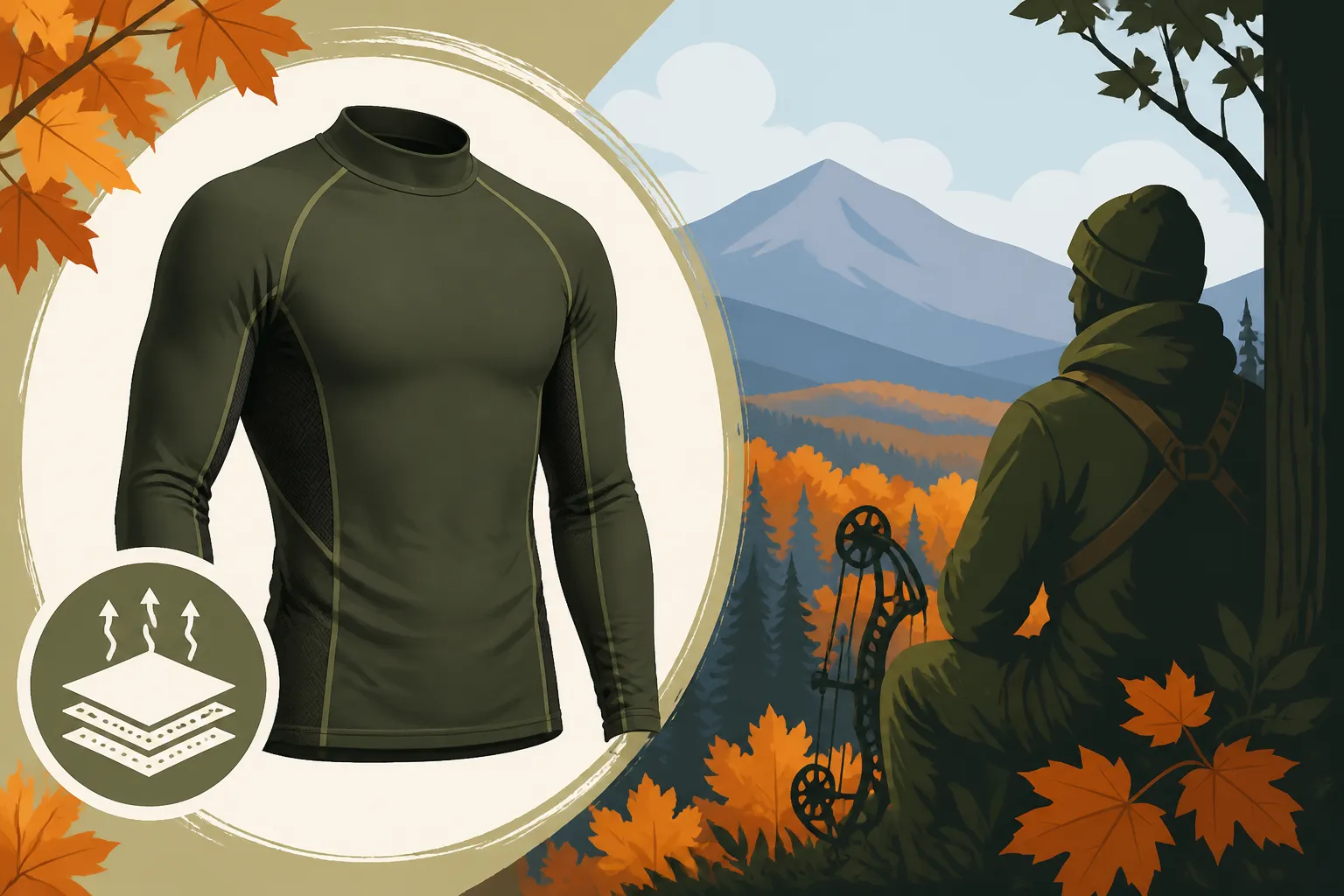
Base Layers for a Cold September Sit
The crisp, clean air of a New Hampshire September morning is something truly special for hunters. You wake up before the sun, the stars still bright, and the ground often holds a heavy dew or even a touch of frost. It feels like deep fall, right? But then, by mid-morning, that beautiful sun is beating down, and suddenly you're sweating, uncomfortably warm in the very layers that felt perfect an hour ago. This rapid swing from chilly dawn to mild midday is a classic New Hampshire challenge, and it's precisely why understanding base layers is so crucial for comfort and success in the early archery season. This guide will walk you through everything you need to know about choosing the right base layers for those unpredictable September sits in the Granite State.
Understanding New Hampshire's September Climate for Hunting
New Hampshire's weather in September can be a real rollercoaster, especially when you're out in the woods. It's not like the consistent cold of late November; it's a transition month, full of surprises that can make or break your comfort on a hunt.
The Early Morning Chill and Midday Warmth
You know the drill: you crawl out of your truck, the thermometer might read in the low 40s or even upper 30s. The air feels heavy with moisture, and a shiver runs down your spine as you walk to your stand. You bundle up, feeling great, ready for that first light. Then, as the sun clears the eastern ridge, it starts. Slowly at first, then more rapidly, the temperature climbs. By 9 or 10 AM, you might be looking at 60 degrees, maybe even 70 if it's a particularly mild day. That heavy fleece you wore in? Now it's a sweat trap, and that sweat, once it cools, will make you shiver even worse later in the day.
This dramatic temperature swing is the primary antagonist when it comes to layering in early season New Hampshire. It's a dance between staying warm enough during the initial chill and being able to manage your body's heat as the day progresses without shedding so much gear that you disturb the woods or expose yourself unnecessarily. Hunters often find themselves in a bind, either shivering in the pre-dawn darkness or sweating profusely by mid-morning, both of which can compromise focus and scent control. It’s not just about comfort; it's about minimizing movement and scent, both critical for success.
Elevation and Microclimates
Beyond the general temperature swings, New Hampshire offers a diverse landscape that creates its own set of microclimates. If you're hunting in the valleys and lowlands of the southern tier, like parts of the Merrimack Valley, the morning chill might not be as biting, and the midday warmth can be even more pronounced. However, if you're venturing into the White Mountains High Country or even the foothills of the Monadnock Region, elevation plays a huge role. Higher elevations mean colder mornings and evenings, and often a slower warm-up through the day.
Think about a ridge top versus a valley bottom. A ridge might catch the first rays of sun and warm up faster, but it's also exposed to more wind, which can amplify the cold. A valley or a low-lying beaver flowage, on the other hand, will often trap cold air, making for a much colder initial sit, but it might also stay cooler for longer as the sun struggles to penetrate. Even a dense softwood stand can hold onto cold and dampness longer than an open hardwood ridge. Understanding these subtle differences in your specific hunting spot is paramount. Many hunters use mapping tools like GoHunt to study topographical features and predict how sun exposure and wind might affect their chosen location, which in turn influences their layering choices. This localized knowledge empowers you to adapt your base layers, sometimes choosing a slightly heavier weight for a shaded, low-lying stand or a lighter option for an exposed ridge.
The Core Purpose of Base Layers in Hunting
When we talk about base layers, we're not just discussing an extra shirt. We're talking about the foundational element of your entire hunting apparel system. These aren't just for warmth; their true magic lies in managing your body's moisture and regulating temperature, which is especially critical in New Hampshire's variable early season.
Wicking Moisture Away
Your body sweats, especially when you're hiking to your stand, carrying gear, or just from the exertion of being active in the woods. This is completely natural. However, if that sweat stays on your skin, it cools down, and that's when you get "sweat cold." This is a miserable feeling, often worse than being simply cold, because it's an internal chill that's hard to shake. A good base layer's primary job is to wick that moisture away from your skin. It pulls the sweat through its fibers to the outer surface of the fabric, where it can then evaporate or be transferred to your next layer.
Imagine a tough hike in to Hunting a Granite Ridge Saddle or packing out a deer. You're working hard, your core temperature rises, and your body's natural cooling system kicks in. If you're wearing something like cotton, that fabric absorbs the moisture and holds it right against your skin. But a performance base layer, whether it's merino wool or a synthetic, acts like a one-way street for sweat. It moves it out, keeping your skin dry and, consequently, keeping you much warmer and more comfortable once you stop moving and cool down. This is the unsung hero quality of a good base layer: it prevents the chilling effect that can happen after exertion.
Providing Insulation Without Bulk
While wicking is critical, base layers also contribute to insulation, but they do it intelligently. They're designed to trap a thin layer of warm air close to your skin without adding significant bulk. This is why a snug fit is so important – it maximizes the efficiency of this trapped air. In New Hampshire's early September, you might not need the heaviest insulation, but that light layer against your skin makes a profound difference when temperatures dip.
Consider a still-hunt through the hardwoods in the pre-dawn. You're moving slowly, deliberately, but still generating some body heat. A thin base layer acts as that first barrier against the cold air, holding your natural warmth close. As the day warms, its low-profile nature means you don't feel overheated, and it pairs perfectly with lighter mid-layers or simply your outer shell. It's about smart insulation, not just piling on thick garments. This balance is key to adapting to those sudden shifts in temperature that are so common in early season hunting in the Granite State. It’s that initial warmth that prevents you from feeling the bite, but it’s the lack of bulk that allows you to remain flexible as the morning progresses.
Odor Control Considerations
Let's be honest, as hunters, we're always thinking about scent. You spend hours meticulously cleaning your gear and showering with scent-free soap, only to have your base layer betray you after an hour of exertion. Some materials are notorious for holding onto body odor, which can be a real problem when you're trying to fool a wary buck. This is where modern base layer technology shines, particularly with materials like merino wool or treated synthetics.
Merino wool naturally resists the growth of odor-causing bacteria, meaning you can wear it for multiple days without it smelling like a locker room. This is a huge advantage, especially on multi-day hunts or if you're trying to keep your laundry routine minimal. Synthetics, while traditionally more prone to odor, have made huge strides with antimicrobial treatments that help to inhibit bacterial growth. These treatments are often silver-based and can significantly extend the wearability of a synthetic base layer before it needs a wash. Choosing a base layer with good odor control is an often-overlooked aspect, but it's vital for maintaining your stealth and confidence in the field, whether you're Hunting a Funnel Between Two Woodlots or trying to slip unnoticed through dense cover.
Material Deep Dive: What Your Base Layer Is Made Of
The material of your base layer is arguably the most critical decision you'll make. It directly impacts its ability to wick moisture, insulate, and control odor. Let's break down the most common options available to New Hampshire hunters.
Merino Wool: The Hunter's Favorite
For many serious hunters, merino wool is the gold standard for base layers, and for good reason. It's a natural fiber known for its incredibly fine, soft strands that feel comfortable against the skin, unlike the scratchy wool sweaters of old. Merino excels in several key areas that make it ideal for the variable New Hampshire hunting environment. Firstly, it has an exceptional warmth-to-weight ratio, meaning it provides significant insulation without being bulky. This is perfect for those cold September mornings where you need warmth but don't want to feel weighed down.
Secondly, and perhaps most importantly, merino wool is a master at thermoregulation. It helps to keep you warm when it's cold, and surprisingly, it helps keep you cool when it's warm. This is due to its natural crimp and how its fibers manage moisture vapor. It can absorb a significant amount of moisture (up to 30% of its weight) without feeling wet, and it continues to insulate even when damp. This is a huge advantage if you get caught in a sudden shower or work up a sweat on a long stalk. The natural lanolin and complex fiber structure of merino also gives it superior odor resistance. You can wear a merino base layer for days on end without it developing that tell-tale funk, which is invaluable when you're trying to remain undetected by game. While it tends to be more expensive and slightly less durable than synthetics over the long term, its performance benefits often outweigh these considerations for dedicated hunters.
Synthetics: Fast-Drying and Durable
Synthetic base layers, typically made from polyester, nylon, or blends, offer a compelling alternative to merino wool. Their primary advantages lie in their durability, quick-drying properties, and often a more budget-friendly price point. Modern synthetics have come a long way from the clammy, plastic-feeling versions of the past. They're designed with advanced fiber technologies that create channels and textures to enhance wicking performance. They pull moisture away from your skin incredibly quickly, spreading it across the fabric surface to evaporate rapidly.
This fast-drying capability is a huge benefit if you're expecting heavy exertion, frequent rain, or need layers that can be washed and dried quickly at camp. Synthetics are also generally more resistant to abrasion and snagging than merino wool, making them a robust choice for busting through brush or navigating rough terrain. While they traditionally had a reputation for holding onto odor, many high-quality synthetic base layers now incorporate antimicrobial treatments (like silver ions) to combat bacterial growth and extend their odor resistance. Brands like Sitka, First Lite, and Kuiu all offer excellent synthetic options tailored for hunting, demonstrating how far these materials have advanced. If you're looking for a workhorse base layer that can stand up to repeated abuse and dry in a flash, synthetics are an excellent choice, particularly for the active hunter constantly on the move through various New Hampshire landscapes.
Cotton: The Layer to Avoid
Let's just be blunt: cotton has no place in a serious hunter's layering system, especially for those cold September mornings in New Hampshire. While it feels soft and comfortable around the house, its performance in the field is disastrous. The fundamental problem with cotton is that it absorbs moisture – a lot of it – and holds onto it. Once wet, cotton loses all its insulating properties and takes an agonizingly long time to dry.
Imagine this scenario: you put on a cotton t-shirt as your base layer for your Bowhunting New Hampshire's Long Archery Season. You hike up a steep incline to your treestand, maybe a mile or two in. You're sweating. Your cotton shirt immediately soaks it up, becoming heavy and damp. You get to your stand, the sun is still hidden, and that morning chill sets in. Now, instead of warmth, you have a cold, wet rag clinging to your skin. The moisture draws heat away from your body at an alarming rate, making you feel chilled to the bone and potentially putting you at risk of hypothermia in truly cold conditions. This phenomenon is often referred to as "cotton kills" in the outdoor community. Even if you're not in life-threatening conditions, being cold and wet is simply miserable and will destroy your focus and patience, which are essential for hunting. Always, always, choose merino wool or synthetics for your base layers. Leave the cotton for casual wear.
Choosing the Right Weight for September
The "weight" of a base layer refers to its thickness and, consequently, its warmth. Picking the right weight for September in New Hampshire isn't about finding the coldest option, but the most adaptable one that balances warmth for early mornings with breathability for midday.
Lightweight vs. Midweight Options
For New Hampshire's September hunting, you're primarily looking at lightweight and midweight base layers. Heavyweight options are generally reserved for deep winter hunts, like Hunting Into the December Muzzleloader Close or severe cold.
Lightweight Base Layers: These are your thinnest options, often feeling like a t-shirt. They are designed for high-exertion activities or when temperatures are milder but you still need moisture management. For early September, if you anticipate a lot of hiking, or if the forecast predicts unusually warm days (say, starting in the 50s and climbing into the 70s), a lightweight merino or synthetic base layer is an excellent choice. It excels at wicking sweat rapidly and provides just enough insulation to take the edge off the morning chill without causing you to overheat later. Many hunters opt for a lightweight top and bottom, especially if they plan to layer heavily with a mid-layer fleece or jacket that they can easily shed.
Midweight Base Layers: These are a step up in thickness and offer more insulation. They are often the sweet spot for typical New Hampshire September conditions, especially if mornings are dipping into the low 40s or even upper 30s. A midweight base layer provides that crucial additional warmth without being overly bulky or causing you to sweat profusely during moderate activity. If your hunt involves more sitting than moving, or if you know your spot remains shaded and cooler for longer, a midweight option might be preferred. It gives you a stronger foundation of warmth that can be easily augmented or scaled back with your outer layers. The decision often comes down to your personal metabolism and the specific forecast for your hunt.
Tailoring to Activity Levels
Your activity level is a huge factor in deciding between a lightweight and midweight base layer. This isn't just about the weather; it's about you and your hunt plan.
Consider two different September scenarios:
- Scenario 1: The Active Stalker or Hiker: You plan to be Still-Hunting White Mountain National Forest Timber or covering significant ground on public land, potentially busting brush and climbing hills. You know you're going to generate a lot of body heat. In this case, a lightweight base layer (both top and bottom) will be your best friend. It will wick moisture away more effectively as you sweat, preventing you from becoming chilled later. You can always add a vest or a light jacket over it when you stop to glass or sit, but you can't easily make a heavy base layer "lighter" once you're on the move and overheating. Many successful hunters prioritize staying dry over being overly warm in their base layer when high activity is expected.
- Scenario 2: The Stationary Treestand Hunter: You have a stand perfectly set up over a scrape line or a food source, and your plan is to walk a short distance, climb into your stand, and sit for three or four hours, possibly longer. Your activity level will be minimal once you're settled. Here, a midweight base layer might be more appropriate. It provides a better initial insulating layer for those long, motionless sits in the chilly morning air. The slightly extra warmth will be appreciated as your body cools down. You'll still want to manage your walk in to the stand to avoid sweating, perhaps even carrying your mid-layers and putting them on once you're up in the stand. The key is to avoid sweating before you sit, regardless of base layer weight.
Ultimately, balancing your expected exertion with the forecasted temperatures is how you nail the base layer choice. It's often a personal preference, and many experienced New Hampshire hunters have both lightweight and midweight options in their gear closet, choosing based on the specific conditions of each hunt.
Fit, Care, and Layering Philosophy
Getting the right material and weight is critical, but how your base layer fits, how you care for it, and how it integrates into your overall layering system are equally important for maximizing its performance in the New Hampshire woods.
The Importance of a Snug Fit
When it comes to base layers, fit isn't just about comfort; it's about performance. A base layer needs to be snug against your skin, not tight and restrictive, but definitely not loose and baggy. There's a scientific reason for this: effective moisture-wicking and insulation.
For a base layer to efficiently pull sweat away from your skin, it needs to be in direct contact with it. If there are gaps or areas where the fabric is loose, moisture can linger on your skin, or the wicking process can be significantly less effective. Think of it like a sponge – it needs to touch the water to absorb it. Similarly, for insulation, a base layer works by trapping a thin layer of warm air between the fabric and your body. A snug fit ensures this layer of trapped air is minimal and stable, maximizing its insulating power without adding bulk. If a base layer is too loose, cold air can circulate between the fabric and your skin, negating its insulating properties and leaving you feeling chilled. So, when you're trying on base layers, look for something that feels like a second skin – comfortable, allows for full range of motion, but without excess fabric bunching up. This also helps with your outer layers sliding on smoothly and quietly.
Proper Care for Longevity and Performance
You've invested in quality base layers, so taking care of them properly is essential to maintain their performance and extend their lifespan. Different materials have different care requirements, and ignoring them can quickly degrade your expensive gear.
Merino Wool Care: Merino wool is naturally robust but requires gentle care. Most merino items can be machine washed on a gentle cycle with cold water. It's crucial to use a mild detergent, ideally one specifically designed for wool or performance fabrics, and avoid harsh detergents, bleach, or fabric softeners. Fabric softeners can clog the natural fibers, reducing their wicking and breathability. The biggest enemy of merino is high heat, so never put it in a tumble dryer. Always air dry flat or hang dry. High heat will shrink the fibers and can permanently damage the fabric's structure. Gentle care ensures your merino retains its softness, shape, and critical performance properties season after season.
Synthetic Care: Synthetics are generally more forgiving than merino. They can usually be machine washed with cold water on a regular cycle. Again, avoid fabric softeners as they can leave a residue that hinders wicking and can even trap odor. Most synthetics can be tumble dried on a low heat setting, but air drying is always the safest option to prevent potential heat damage or shrinkage and will extend the life of the garment. If your synthetic base layer has an antimicrobial treatment, proper washing with a performance detergent can help maintain its effectiveness. Always check the care tag on your specific garment, as manufacturers may have unique recommendations for their proprietary fabrics.
By following these simple care instructions, you'll ensure your base layers continue to perform at their best, keeping you dry, warm, and scent-controlled throughout New Hampshire's hunting seasons.
Integrating Base Layers with Outerwear
A base layer is just the beginning of your defense against the elements; it's the foundation upon which your entire layering system is built. How you integrate it with your mid-layers and outerwear is key to adapting to New Hampshire's dynamic conditions. The beauty of a well-chosen base layer is its versatility.
On a typical September morning, you might have your base layer directly under a light fleece or softshell jacket. As the day warms up, you might shed that fleece, relying solely on your base layer and a windproof or waterproof shell if needed. For example, if you're Hunting the December Archery Close, you'd likely layer a much heavier mid-layer over your base, perhaps even two. The base layer's primary job is to manage the moisture right off your skin, keeping you dry. Your subsequent layers, like a fleece vest, an insulated jacket, or a waterproof shell, then work to provide warmth, block wind, and repel precipitation. The system only works if the moisture can move outward through each layer. If your base layer isn't wicking effectively (like cotton), or your outer layers are blocking moisture transfer, you'll end up damp and cold. Thinking about your entire system as a connected unit, where each piece has a specific job, allows you to be truly adaptable and comfortable in the diverse hunting conditions found across New Hampshire, from the lowlands to the highest ridges.
Here's a quick comparison of base layer materials:
| Feature | Merino Wool | Synthetic (Polyester/Nylon) | Cotton |
|---|---|---|---|
| Wicking | Excellent (absorbs moisture vapor, dries slower) | Excellent (transfers liquid moisture, dries fastest) | Poor (absorbs and holds moisture) |
| Insulation | Excellent (even when damp) | Good (less effective when wet) | Poor (insulates poorly when wet) |
| Odor Control | Excellent (naturally antimicrobial) | Good (with treatments, otherwise poor) | Poor (quickly holds body odor) |
| Comfort | Very Soft, comfortable next-to-skin | Smooth, can feel "slick" or "plastic-y" if low quality | Soft, comfortable (when dry) |
| Durability | Good (can be prone to snags/holes) | Excellent (highly resistant to abrasion) | Good (but performance degrades quickly when wet) |
| Cost | Higher | Moderate to High | Low |
| Best Use | All-around, multi-day hunts, variable temps | High-exertion, wet conditions, budget-conscious | Avoid for hunting! |
Disclaimer
This article is for general informational purposes only and does not constitute professional advice. Laws, prices and regulations vary by location and change over time. Consult a qualified professional for guidance on your specific situation.