Camo Patterns for New Hampshire Hardwood Cover
The changing seasons in New Hampshire's hardwood forests can make choosing the right camouflage feel like a never-ending puzzle, leaving many hunters frustrated as their "perfect" pattern from last year suddenly sticks out like a sore thumb. This guide is here to walk you through the nuances of selecting effective camo for the diverse and ever-evolving hardwood cover across the Granite State, helping you blend seamlessly into any hunting scenario.
Understanding New Hampshire Hardwoods
New Hampshire's forests are a tapestry of diverse tree species, but our hardwood stands – think majestic oaks, maples, birches, and beeches – offer a unique hunting environment. Understanding the typical features of these areas and how they transform throughout the hunting season is absolutely critical to choosing effective camouflage. It’s not just about blending in; it’s about becoming part of the landscape.
Seasonal Changes and Their Impact
Our hardwood forests undergo dramatic transformations from early archery season into the late muzzleloader and firearms seasons. What works in September might actively hinder you in November. In early autumn, the canopy is still relatively full, dominated by lush greens that slowly give way to the vibrant reds, oranges, and yellows of peak foliage. This explosion of color creates a complex visual environment. Then, as late fall progresses into early winter, leaves drop, revealing stark grey and brown tree trunks, an open understory, and often a dusting or blanket of snow.
Each of these phases presents a distinct challenge for a hunter. Early season demands patterns that can mimic leafy green cover, while peak foliage calls for a pattern that can break up against a kaleidoscope of colors. The late season, with its skeletal trees and fallen leaves, requires a completely different approach, often favoring greys, browns, and open patterns that blend with bark and shadows. Failing to adapt your camo can mean the difference between seeing a deer approach and having it spot you from a hundred yards out.
Common Tree Species and Undergrowth
New Hampshire’s hardwood stands are often dominated by species like sugar maple, red maple, yellow birch, white ash, and various oaks. These trees contribute significantly to the forest's visual texture. Sugar maples, for instance, have smoother, greyish bark, while oaks tend to be darker and more deeply furrowed. Yellow birch often has its characteristic peeling bark, adding another layer of texture. Beneath these giants, you'll find an understory that varies from dense thickets of young saplings, ferns, and brambles in disturbed areas to a more open forest floor with leaf litter and scattered woody debris in mature stands.
The ground cover is just as important as the tree canopy. In early season, ferns and various green plants might still be vibrant. By late fall, these have withered, leaving behind a mosaic of dry, crunchy leaves – mostly browns, tans, and dull reds. Your camouflage needs to account for this vertical layering, from the ground up through the understory and into the tree trunks themselves. A pattern that looks great against a distant tree trunk might stand out glaringly when you're sitting with your back against a cluster of young maples or when Hunting a Beaver Flowage Edge. Thinking about the overall "color palette" and texture of your specific hunting area, down to the actual bark and ground clutter, is key.
Key Principles of Effective Camouflage
Choosing a camo pattern isn't just about picking something that looks "woodsy." There are fundamental principles at play that dictate how well a pattern performs in the field. Understanding these principles will empower you to make smarter choices, regardless of the brand or specific design. It's about outsmarting the keen eyesight of New Hampshire whitetails and other game.
Breaking Up Your Silhouette
The number one goal of any camouflage is to break up the distinct outline of the human form. Humans have very recognizable shapes – a vertical torso, horizontal shoulders, a round head. These shapes are unnatural in the forest. Good camouflage uses a combination of patterns, colors, and shapes to disrupt these clear lines, making it harder for an animal to perceive you as a solid, unified object. Instead, the animal's eye should see disparate elements that don't coalesce into a recognizable threat.
Think about a deer looking into the woods. It's not necessarily looking for a specific pattern; it's looking for movement and unnatural shapes. A pattern with large, contrasting elements and varying depths helps achieve this disruption. It creates false edges and blurs your form against the background. Even if the colors aren't a perfect match, if the pattern effectively breaks up your silhouette, you'll be far more concealed than someone in solid colors, no matter how "natural" those solid colors might seem. This is especially vital when Hunting a Ridge-Top Saddle for Rutting Bucks where visibility can be greater.
Mimicking Natural Textures and Colors
Beyond breaking up your outline, effective camouflage strives to mimic the actual textures and colors found in the natural environment. In New Hampshire hardwoods, this means a palette of browns, greys, tans, dull greens, and even some muted purples or reds, depending on the season. The textures should reflect bark, leaf litter, branches, and shadows. A pattern that features realistic tree bark, dead leaves, or branches often performs well because it uses elements that the animal's brain is accustomed to seeing.
It's not just about the dominant colors, but the subtle variations. Take a moment to really look at the forest floor or a tree trunk up close. You'll see a myriad of shades and tones, not just one solid brown. A good camo pattern will incorporate this complexity, using irregular shapes and gradients to create a sense of depth and realism. When you’re planning your hunt, consider using a mapping tool like GoHunt to analyze satellite imagery of your chosen spot – seeing the real colors and textures from above can inform your camo choice.
Considering Light and Shadow
Light and shadow play a huge role in how effective your camouflage will be. On a bright, sunny day, strong shadows can create deep contrast, making flat, one-dimensional camo stand out. Conversely, on an overcast day or in deep timber, darker patterns might blend better into the subdued lighting. The angle of the sun, the density of the canopy, and even the time of day will all affect how your camo appears to an animal.
Patterns that incorporate elements of light and shadow within their design tend to be more versatile. These "negative spaces" or darker areas in the pattern help to create an illusion of depth, mimicking the natural play of light in the woods. This is why many patterns are designed with both light and dark elements, preventing them from appearing as a solid blob in varying light conditions. Remember, you're not just trying to blend with the objects in the forest, but also with the conditions of light and shadow around those objects. This principle is critical whether you're Still-Hunting White Mountain National Forest Timber or sitting in a treestand overlooking an open woodlot.
Popular Camo Patterns for Hardwoods
The market is flooded with camouflage patterns, each claiming to be the best. For New Hampshire's hardwood cover, certain categories of patterns tend to perform consistently well across various seasons and conditions. It's helpful to understand the philosophy behind these different styles of camo to pick the right one for your needs.
Traditional Woodland and Treebark Designs
Traditional woodland patterns, often characterized by irregular blobs of green, brown, black, and tan, have been around for decades for a good reason: they work. These patterns excel at breaking up the human outline using contrasting colors and shapes that mimic natural foliage and shadows. While they might not be "photo-realistic," their disruptive nature is highly effective, especially in areas with varied cover. They tend to be versatile, performing reasonably well from early fall through the bare woods, especially if the color balance leans more towards browns and greys.
Treebark designs take this a step further, specifically mimicking the textures and tones of tree trunks. These patterns often feature vertical elements and a tight, intricate pattern of greys, browns, and greens. They are particularly effective when hunting from a treestand or when still-hunting close to mature trees, allowing you to disappear against the very trunks you're trying to use for cover. Brands like Mossy Oak's Bottomland or specific treebark patterns are perennial favorites for their ability to melt into the upright structure of a hardwood forest.
Realistic Photo-Realistic Patterns
The advent of digital printing has led to a boom in photo-realistic camouflage. These patterns feature incredibly detailed images of actual leaves, branches, and bark, often layered to create a convincing sense of depth. Patterns like RealTree Edge or Mossy Oak Break-Up Country are prime examples. They aim to perfectly replicate specific environments, making them incredibly effective when those environments match your hunting location precisely.
The advantage of photo-realistic patterns is their ability to blend in at close ranges, deceiving even the most keen-eyed game. They work by making your body literally disappear into the detailed background. However, the downside can be versatility; a pattern designed for lush green woods might stand out in bare winter timber, and vice versa. Many hunters opt for multiple sets of photo-realistic camo to match the progression of the seasons, ensuring they always have the right look for the current conditions. It’s definitely worth considering a pattern that emphasizes the bare branch and grey bark look for hunting into the late season, especially when you are Hunting the December Archery Close.
Digital and Disruptive Patterns
Digital camouflage, often characterized by its pixelated appearance, is another popular choice. While not as common in the civilian hunting market as traditional or photo-realistic patterns, some disruptive patterns leverage similar principles. These patterns use small, rectangular pixels to create a "fractal" effect that breaks up the outline at various distances, from very close to far away. The idea is that the human eye (and animal eye) struggles to pick out a solid form when it's made up of such a chaotic, fragmented design.
The strength of digital and disruptive patterns lies in their versatility across different distances and terrains. They don't try to perfectly mimic a specific leaf or branch, but rather to create visual "noise" that confuses the eye. Some hybrid patterns incorporate both realistic elements and disruptive shapes. When you're searching for specific gear, browsing online stores, or researching patterns, remember that reputable platforms like GoHunt often feature user reviews and articles that can shed light on the real-world performance of different pattern types.
Matching Camo to Specific Hardwood Conditions
New Hampshire’s hunting seasons span a wide range of environmental conditions. From the vibrant greens of early fall to the stark, skeletal trees of late season, your camouflage needs to evolve with the landscape. Trying to make one pattern work for every scenario in hardwood cover is often a recipe for disappointment.
Early Season Green-Ups
When New Hampshire's archery season kicks off, especially in September and early October, the hardwoods are often still quite green. While some leaves might be starting to turn, the dominant colors will be various shades of green, with darker browns in the tree trunks and undergrowth. For this period, you want a pattern that emphasizes greens and browns, mimicking dense foliage and shadow.
Patterns with a strong green component, often incorporating leafy elements or mossy textures, will serve you well. Think about patterns that blend with the still-living understory and the leafy canopy above. A pattern that's too brown or too grey at this stage will stand out significantly against the vibrant backdrop. Consider the types of vegetation in your specific hunting spot – are there lots of ferns, young maples, or thick briars? A pattern that can blend with these ground-level greens will keep you concealed even when you're moving through dense cover. This is also a time when insects are still active, so integrating bug-proof layers into your camo system is a smart move.
Peak Fall Foliage
This is arguably the most challenging time to choose camouflage in New Hampshire. The woods erupt in a spectacular display of reds, oranges, and yellows. While beautiful, this creates a very dynamic visual environment. Many hunters make the mistake of wearing a pattern that is too green or too dark, causing them to stand out against the brilliant backdrop.
For peak fall foliage, you'll want patterns that incorporate these warmer tones – reds, oranges, and yellows – along with the underlying browns and greys of tree trunks. Disruptive patterns that don't rely too heavily on specific leaf shapes can work well, as the goal is to break up your outline against a constantly changing, colorful background. Some patterns are specifically designed with fall colors in mind, featuring muted reds, russets, and golden browns. Alternatively, a pattern that relies more on texture and shadow to break up the silhouette, rather than specific colors, can also be effective, allowing you to melt into the busy visual noise of the turning leaves. When scouting for this period, tools like GoHunt can help you visualize areas with higher concentrations of specific tree types that might offer more uniform color palettes.
Late Season Bare Branches and Snow
Once the leaves have fallen, typically by early November and certainly into December, the hardwood forests transform dramatically. What you're left with are stark, skeletal tree trunks, a carpet of fallen leaves (mostly browns, tans, and dull greys), and often patches or blankets of snow. This open environment demands a very different camo approach.
Patterns for late season should primarily feature browns, greys, and even some white if snow is present. The goal is to blend with the bark of the trees and the open understory. Patterns with strong vertical elements that mimic tree trunks are excellent, especially for treestand hunting. Many companies offer "bare branch" or "winter" patterns that are specifically designed for this look. The contrast between dark branches and lighter snow or sky is also important, so patterns with high contrast can be very effective in breaking up your form against a wintry backdrop. Don't forget that even in a 'bare' woods, small evergreens, fallen logs, and rocky outcrops create texture that can be utilized for concealment. For late-season hunts like Hunting Into the December Muzzleloader Close, a pattern that handles both the browns of dormant forest and the whites of snow will be invaluable.
| Season/Condition | Dominant Colors & Textures | Ideal Camo Pattern Focus | Examples (General Type) |
|---|---|---|---|
| Early Archery (Sept-Early Oct) | Lush greens, dark browns, some yellow | Leafy green, shadow, dense foliage | Green-dominant woodland, realistic leafy patterns |
| Peak Fall Foliage (Mid-Oct) | Reds, oranges, yellows, browns, grey | Disruptive, abstract, warm tones | Fall foliage specific, abstract patterns with high contrast |
| Late Firearms/Muzzleloader (Nov-Dec) | Greys, dark browns, tans, bare branches, snow | Bark texture, vertical elements, muted tones, white | Bare branch, winter patterns, grey/brown dominant woodland |
| Snow Cover (Dec) | White, dark brown, black | Snow patterns, high contrast | White/grey patterns, ghost snow patterns |
Beyond the Pattern: Other Camo Considerations
While the actual pattern on your clothing is undeniably important, effective camouflage in New Hampshire's hardwood forests extends far beyond just the visual. True concealment involves a holistic approach, encompassing scent, sound, and how you manage your body in the field. Ignoring these other factors can easily negate the benefits of even the most expensive and perfectly matched camo pattern.
Scent Control and Noise Reduction
Deer, and most game animals, rely heavily on their sense of smell to detect predators. The most visually perfect camo means absolutely nothing if a buck can smell you from 200 yards away. Scent control is a critical, often overlooked, aspect of camouflage. This includes showering with scent-free soap, washing your hunting clothes in scent-free detergent, storing them in airtight containers, and using scent-eliminating sprays in the field. Paying attention to wind direction is paramount, as even the best scent control won't completely eliminate your odor.
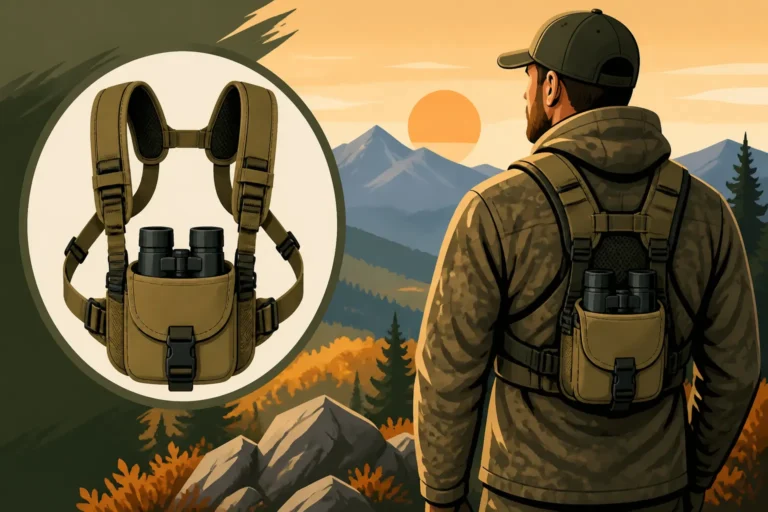
Equally important is noise reduction. New Hampshire's hardwood forests, especially in late fall, are notorious for their crunchy leaf litter. Every step can sound like a cannon shot if you're not careful. Your clothing should be made from quiet fabrics that don't rustle or make noise when you move. Avoid stiff materials that crinkle. This applies not just to your outer layers, but everything from your backpack to your bino harness. When Still-Hunting White Mountain National Forest Timber, a quiet approach is often more important than the visual pattern.
Blaze Orange Requirements and Integration
New Hampshire has strict blaze orange requirements during certain hunting seasons, particularly the firearms deer season. This means that, for a significant portion of the hunting calendar, you cannot be fully camouflaged. You must wear a certain amount of hunter orange (or blaze pink) that is visible from all sides. This might seem to contradict the goal of camouflage, but it's a critical safety measure designed to protect hunters from accidental shootings.
The key is to integrate your blaze orange effectively. Many manufacturers offer blaze orange vests, hats, or even camo patterns with integrated orange that meets the legal requirements. The goal is to make yourself visible to other human hunters, while still breaking up your silhouette to animals. Wear a blaze orange vest over your camo jacket, or a blaze orange hat. The animal's vision processes colors differently than humans, so while they may perceive the orange as a muted shade of grey or brown, the disruptive pattern underneath your orange can still help break up your outline against the background. Make sure to check New Hampshire Blaze Orange Requirements before heading into the woods.
Layering for Comfort and Concealment
New Hampshire weather is notoriously unpredictable, especially during hunting season. One day could be mild and rainy, the next frigid with snow. Effective layering is not just about staying warm and comfortable; it's also about maintaining your concealment. Too many bulky layers can impede movement, create noise, and make your silhouette larger and more cumbersome.
Your layering system should be adaptable. Start with a moisture-wicking base layer, add insulating mid-layers, and top it off with a quiet, weather-resistant outer layer that features your chosen camo pattern. This allows you to add or shed layers as conditions change, regulating your body temperature without having to drastically alter your visual appearance. For instance, when you're making a long hike to your stand, you might shed some layers to avoid sweating, then add them back once you're stationary. This not only keeps you comfortable but minimizes movement and ensures you're ready for varying temperatures, from a mild morning to a truly cold, late-season sit when Layering for New Hampshire's Cold Hunting Season.
Making Your Camo Choice
Navigating the world of camouflage can feel overwhelming, but by taking a methodical approach, you can narrow down the options and select what will truly work best for your New Hampshire hunting adventures. It’s a personal journey, but there are solid guiding principles to follow.
Evaluating Your Hunting Style and Location
Your hunting style and specific locations within New Hampshire's hardwood cover should heavily influence your camo choice. Are you a treestand hunter who spends most of the day elevated? Then a pattern with strong vertical elements that mimic tree bark and branches will be critical. If you're Still-Hunting White Mountain National Forest Timber on the ground, a pattern that blends with the forest floor, undergrowth, and fallen leaves will be more important.
Consider the typical terrain you hunt. Are you in dense, brushy bottomlands with lots of ground cover, or higher, more open ridges with mature trees? Each calls for a slightly different emphasis in your pattern. For example, if you often hunt near agricultural fields that border hardwoods, a pattern that also has some open-country elements (like those found in certain "transitional" camo designs) might give you an edge during your entry and exit routes. Think about where you expect to encounter game and what the background will look like at that moment.
The Importance of Field Testing
The best way to truly know if a camo pattern works for you and your hunting spots is to field test it. Don't just rely on how it looks in the store or online. Take photos of yourself (or a friend) in different patterns against various backgrounds at different times of day and in different light conditions. Look at these photos from a distance, as an animal might perceive you. You might be surprised by what stands out and what disappears.
Walk around your hunting area with different pieces of camo, observing how they blend with the specific tree bark, leaf litter, and undergrowth. Pay attention to how the pattern performs when you're in shadow versus direct sunlight. A pattern might look fantastic when you're standing in the sun, but become a solid blob in deep shade. This hands-on, realistic assessment will provide far more valuable insight than any marketing material ever could. Ultimately, the confidence you gain from knowing your camo truly works for your specific New Hampshire hardwood hunting environment is an invaluable asset in the field.
Disclaimer
This article is for general informational purposes only and does not constitute professional advice. Laws, prices and regulations vary by location and change over time. Consult a qualified professional for guidance on your specific situation.