Hunting Bear With Hounds by WMU
There’s nothing quite like the sound of a well-trained pack of hounds giving voice to a fresh bear track, echoing through the New Hampshire hardwoods. However, if you’re considering heading afield with your dogs for black bear, you know the regulations aren't always a simple one-size-fits-all across our diverse landscape. This guide is dedicated to breaking down the intricacies of hunting bear with hounds by Wildlife Management Unit (WMU) in New Hampshire, helping you navigate the rules and prepare for a successful, ethical hunt.
The Unique Challenge of Bear Hunting with Hounds in New Hampshire
Bear hunting with hounds in New Hampshire is a thrilling, physically demanding, and deeply traditional pursuit. It’s a far cry from sitting in a treestand over a bait barrel; it involves constant movement, quick decision-making, and an intimate understanding of both bear behavior and your canine partners. But before you can experience the rush, you need to grasp the foundational principles that govern this specific method in the Granite State.
Understanding New Hampshire's Bear Management Philosophy
New Hampshire Fish and Game manages its black bear population with a keen eye on balancing population health, public safety, and hunting opportunities. Bear numbers have been robust and, in many areas, growing steadily, leading to some impressive harvest numbers in recent years. This success is due in part to thoughtful management strategies that include hound hunting as a crucial tool. Unlike some states where hound hunting is highly restricted, New Hampshire recognizes its value in controlling local populations, especially in areas where bears might become accustomed to human presence or where their numbers could impact other wildlife.
The management philosophy often means that the more remote, higher-density bear populations in the North Country typically have longer and more accessible hound seasons. This helps distribute hunting pressure and effectively manage these robust populations. Conversely, WMUs closer to urban centers or with lower bear densities might see more restrictive regulations or outright prohibitions on hound hunting, primarily to mitigate conflicts with landowners and ensure a sustainable local harvest. It’s a dynamic system designed to adapt to regional conditions, which is why understanding the WMU specifics is so critical.
The Role of Hounds in Bear Hunting Tradition
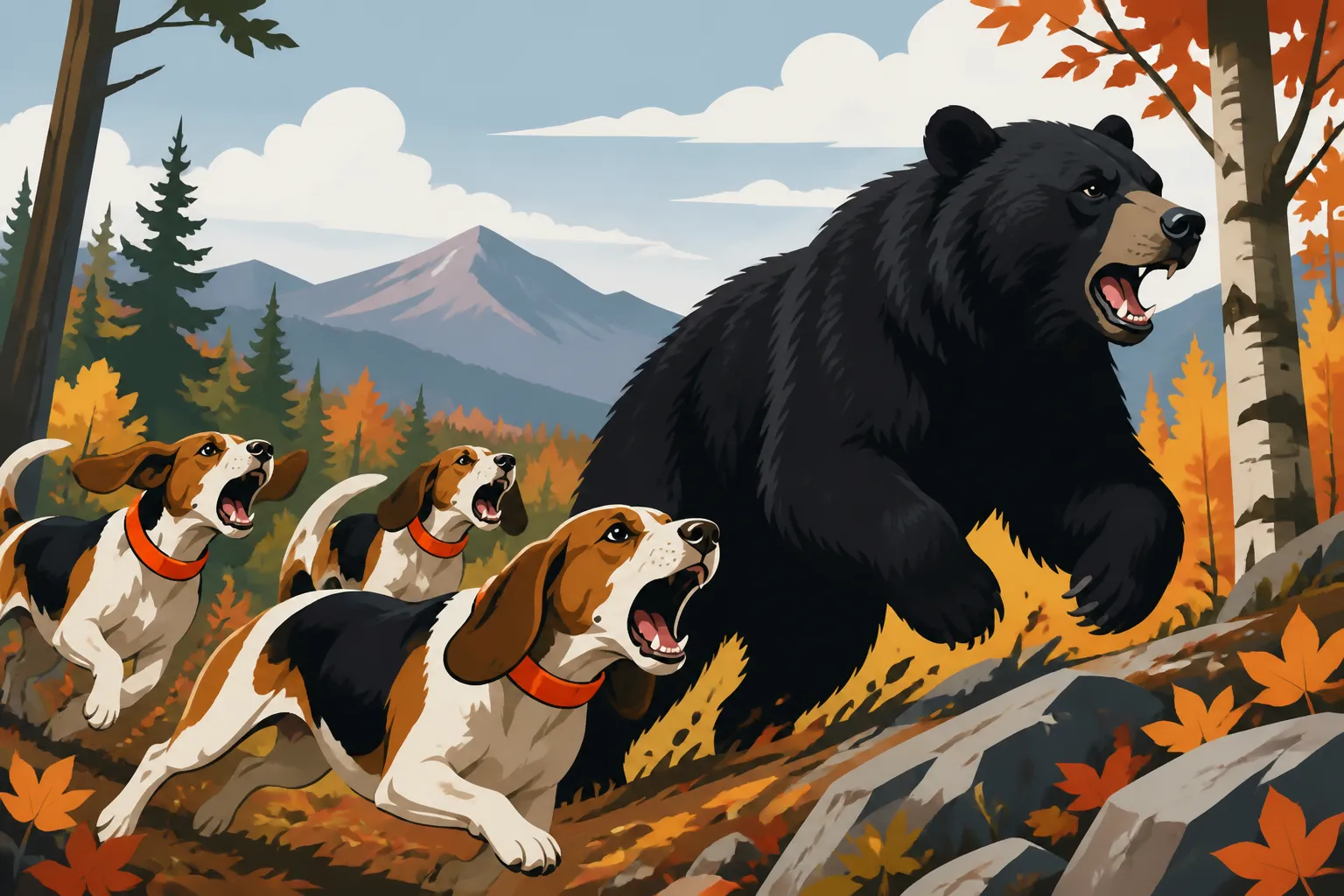
For many, bear hunting with hounds isn't just a method; it's a way of life, steeped in tradition and requiring incredible dedication. It’s a partnership between hunter and dog, built on trust, training, and a shared passion for the chase. Unlike still-hunting or hunting over bait, hound hunting involves actively pursuing a bear, often for miles, through challenging terrain. The dogs locate a track, then follow the scent until they either bay the bear on the ground or, more commonly, tree it. This active engagement requires a deep knowledge of your dogs' individual hunting styles, their voices, and their limits.
The tradition extends beyond the hunt itself, often involving a tight-knit community of hunters who share knowledge, assist with training, and come together for the arduous task of tracking and recovery. It’s a testament to patience and perseverance, as hounds can range far and wide, demanding that hunters be equally tenacious in their pursuit. The experience is about more than just harvesting a bear; it’s about the unique bond with your pack and the exhilaration of working together to accomplish a challenging goal.
Navigating Season Dates and Regulations
This is where the rubber meets the road, and honestly, it can feel like trying to untangle a ball of yarn sometimes. New Hampshire's bear season dates, particularly for hound hunting, are not uniform across the state. They vary significantly by WMU, and sometimes even within a WMU depending on the hunting method. This makes careful planning and annual review of the New Hampshire Fish and Game Hunting Digest absolutely essential. Missing a detail can mean an illegal hunt, which nobody wants.
Generally, the northern WMUs tend to have more liberal hound hunting seasons, often starting in early September and running for several weeks. As you move south into more populated or lower bear density areas, the seasons become shorter, or hound hunting might not be permitted at all. For instance, some of the very best bear country in the state, often associated with dense forests and less human encroachment, will offer longer opportunities for hound hunters. It's truly a must-do to consult the official digest each year to confirm the exact dates for your chosen WMU. Don't rely on last year's calendar; those dates can shift. Knowing your WMU's regulations is the first step towards a legal and successful hunt. If you’re ever in doubt, a quick check of resources like Checking Your WMU's Bear Season Dates can help clarify the current year's specifics.
Gear Up Right: Essential Equipment for a Successful Hound Hunt
Bear hunting with hounds is an incredibly dynamic and often unpredictable pursuit. You might start in open hardwoods and end up chest-deep in a bog or scrambling up a steep, rocky hillside. Having the right gear, for both you and your canine companions, isn't just about comfort; it's about safety, efficiency, and increasing your odds of a successful harvest.
Canine Tracking and Protection Gear
Your hounds are the heart of this hunt, and protecting them while ensuring you can always locate them is paramount. High-quality GPS collars are non-negotiable. Brands like Garmin Alpha systems are industry standards, providing real-time tracking, training capabilities, and often invaluable information like dog speed and distance. These systems allow you to monitor your dogs' movements through dense cover, pinpointing exactly where they’re baying or treed, even when miles away. Integrating this GPS data with robust mapping applications, such as those found on platforms like GoHunt, can provide an unparalleled overview of your dogs' location relative to terrain features, property lines, and your own position.
Beyond tracking, consider protective vests for your dogs. While New Hampshire doesn't have grizzly bears, black bears can be formidable opponents, and the rough terrain itself poses hazards. These vests can offer protection from bites, claws, and sharp branches. Bells on collars also serve multiple purposes: they help you hear your dogs when they're working nearby and alert other hunters to their presence. Don't skimp on these items; they are an investment in your dogs' safety and your hunting success.
Hunter Preparedness: Footwear, Navigation, and Safety
As the hunter, you need to be just as prepared as your dogs, if not more so. This style of hunting often demands significant physical exertion, covering miles over challenging, uneven terrain.
- Footwear: Let's talk boots. You absolutely need durable, waterproof, ankle-supporting boots. Forget your casual hiking shoes; you'll be slogging through mud, crossing streams, and climbing over granite ledges. You'll thank yourself for investing in quality footwear, perhaps even insulated ones if hunting later in the season. Consider options designed for serious backcountry travel, like those mentioned when looking at Boots for North Country Bog Hunting.
- Navigation: While your dogs might have GPS collars, you need your own reliable navigation tools. A handheld GPS unit (like a Garmin inReach, which also offers satellite communication) or a robust smartphone app with downloaded offline maps (again, GoHunt excels here with its detailed topo and land ownership layers) is crucial. Always carry a physical compass and paper map as a backup.
- Safety: A comprehensive first-aid kit for both humans and dogs is a must. Carry plenty of water and high-energy snacks. A headlamp with extra batteries is vital, as chases can easily extend into dusk or darkness. Blaze orange is a requirement during many hunting seasons, and it's always a good idea for visibility in the woods, especially when other hunters might be around. Layering clothing is key for adapting to New Hampshire's notoriously changeable weather, keeping you comfortable whether you're actively running or waiting for a tree.
Communication and Recovery Tools
Once your dogs have treed a bear, the real work begins. Effective communication and recovery tools are vital for safely and efficiently reaching your dogs and handling the harvest.
- Satellite Communicators: In many of New Hampshire’s prime bear hunting WMUs, especially in the North Country, cell service is non-existent. A satellite messenger (like a Garmin inReach or Zoleo) is essential for communicating with your hunting party, notifying family of your whereabouts, and, most importantly, calling for emergency assistance if needed.
- Two-Way Radios: For short-range communication within your hunting party, two-way radios (FRS/GMRS) are invaluable, especially when working through thick cover where line-of-sight is limited.
- Treeing Lights: If your dogs tree a bear after dark, a powerful spotlight or headlamp with a long throw is indispensable for safely locating and confirming the bear, as well as for identifying your dogs.
- Haul Ropes and Knives: Once the bear is down, you'll need sturdy ropes for maneuvering it, especially if it's in a difficult-to-access spot. A sharp, durable hunting knife is critical for field dressing. Bear fat can quickly spoil meat, so a swift and thorough job is important, even in cold weather.
- Game Bags: Durable, breathable game bags are excellent for protecting the meat from dirt and flies during the potentially long pack-out. They also allow for better airflow, which aids in cooling the carcass.
WMU-Specific Breakdown: Where and When You Can Run Hounds
New Hampshire's WMU system is designed to manage game populations based on regional ecological factors and human population density. This is particularly evident in bear hunting, where the permissibility and duration of hound seasons can vary dramatically from the remote northern reaches to the more settled southern areas. Understanding these distinctions is critical for planning your hunt.
North Country WMUs: A, B, C, D1, D2, E, F
These WMUs generally encompass the wilder, more heavily forested regions of New Hampshire, often characterized by vast public lands, rugged mountains, dense softwood swamps, and expansive tracts of timberland. This is prime bear habitat, with higher bear densities and, consequently, more liberal hound hunting seasons.
In these northern WMUs (A1, A2, B, C1, C2, D1, D2, E, F), you’ll typically find the longest and most consistent opportunities for hound hunting. Seasons here often open in early September and can run for several weeks, sometimes through mid-October or even longer for specific methods. The terrain is challenging, with steep grades in areas like WMU E (White Mountain National Forest) or the thick bogs and cutovers of WMUs A and B. This landscape provides ample cover for bears and tests the endurance of both hounds and hunters. When planning a hunt in these areas, make sure your navigation tools, possibly enhanced by GoHunt's detailed topographic maps, are ready for off-trail travel. Hunters pursuing bear here are accustomed to long chases, deep woods, and significant physical effort. The reward is often a truly wild bear in some of the most stunning country New Hampshire has to offer. For a deeper dive into the region, consider checking out Hunting the North Country.
Southern/Central WMUs: G, H1, H2, I1, I2, J1, J2, K, L, M
As you move south and east into WMUs G, H1, H2, I1, I2, J1, J2, K, L, and M, the landscape changes. These areas typically feature a mix of smaller woodlots, agricultural fields, and more residential development. While black bears are present in these regions and their populations have expanded, the management strategies for hound hunting are often much more restrictive.
Many of these southern and central WMUs either have significantly shorter hound seasons or do not permit bear hunting with hounds at all. The rationale is usually tied to human population density, smaller contiguous tracts of wild land, and the potential for conflicts with landowners. For instance, a bear chase through a residential neighborhood, while rare, is a scenario wildlife managers aim to prevent. Because of these factors, the focus in these WMUs might shift more towards still-hunting or baiting (where permitted) methods that allow for more controlled harvest. It's imperative that hunters in these areas double-check the current digest to confirm if hound hunting is even an option for their target WMU. If it is, the season will likely be quite short, demanding precision in timing your hunt. Understanding these local nuances is key to staying within the law and maintaining positive relationships with other land users. For specifics on season openers, check New Hampshire Bear Season Opening Day, and then verify for hound specific rules.
To help visualize the general patterns, here's a simplified table. **Please note: These dates are illustrative and may change annually. Always consult the current New Hampshire Fish and Game Hunting Digest for precise, up-to-date regulations. **
| WMU Group | General Location | Hound Hunting Status | Typical Season Dates (Illustrative) | Key Considerations |
|---|---|---|---|---|
| A, B, C, D1, D2, E, F | North Country & White Mountains | Permitted | Early Sept – Mid/Late Oct | Longer seasons, high bear density, rugged terrain. Extensive public land. |
| G, H1, H2, I1, I2, J1, J2, K, L, M | Southern & Central NH | Restricted / Not Permitted | Very short windows or prohibited | Shorter seasons (if allowed), lower bear density, mixed use land, higher residential areas. |
Strategy and Ethics: Mastering the Art of Hound Hunting
Beyond the regulations and gear, the true art of bear hunting with hounds lies in the strategy and the unwavering commitment to ethical practices. It’s a dynamic dance between hunter, dog, and quarry, demanding keen observation, swift decision-making, and profound respect for the animal.
Locating Bear Sign and Starting a Track
A successful hound hunt often begins long before the dogs are unleashed. It starts with meticulous scouting to identify areas with fresh bear activity. This means looking for tracks in mud or dust, overturned rocks, torn-up logs, claw marks on trees, and, of course, fresh scat. Bear activity will often concentrate around food sources: berry patches in late summer, oak or beech stands for mast crops in fall, or even agricultural fields where bears might be raiding corn. Knowing how to read these signs is fundamental.
Some hound hunters also utilize bait sites, where legal, as a way to draw bears into a specific area, providing a more reliable starting point for a track. While baiting and hound hunting are distinct methods, a legal bait site can sometimes be used to pattern bears and find fresh tracks nearby, creating an excellent opportunity to start your hounds on a hot trail. For those interested in the baiting aspect, understanding Baiting New Hampshire Bears Legally by WMU is essential, even if you’re primarily a hound hunter, as it can inform your scouting efforts. Once a fresh track is found, evaluating its age and the size of the bear is crucial to determine if it's worth turning the dogs out. Experience teaches you to differentiate a truly promising track from a cold one.
Following the Chase: Reading Your Hounds and the Terrain
Once the hounds hit a hot track, the chase is on. This is where your ability to "read" your dogs and the terrain becomes paramount. Each dog in your pack will have its own voice and hunting style, and learning to interpret their barks, bays, and movements on your GPS unit is key. A tight, excited bay usually means they're hot on the trail, while a sustained, stationary bay signals they've likely treed or cornered the bear. Utilizing a robust mapping system, such as those integrated with GoHunt (often displaying real-time dog positions from devices like Garmin Alpha), allows you to see the dogs' trajectory, assess the terrain they're traversing, and plan your approach.
The terrain itself plays a huge role. Bears are incredibly adept at navigating dense cover, steep inclines, and water features to try and lose the dogs. They might run through swamps, across clear-cuts, or up rocky ridges. You, as the hunter, must be prepared to follow, often at a rapid pace, for potentially several miles. This means being physically fit, carrying a light but essential pack, and having excellent situational awareness. Understanding the likely escape routes and knowing how bears typically behave when pressured can help you anticipate their movements and cut off the chase, or at least keep pace with your pack.
Ethical Considerations and Responsible Hunting
Ethical hunting is the cornerstone of responsible wildlife management, and bear hunting with hounds demands a high level of ethical conduct. One of the most critical aspects is ensuring you only harvest a legal bear. This means positively identifying the bear before taking a shot, especially when it’s treed and potentially obscured by branches. It is absolutely vital to confirm it is not a sow with cubs, which is illegal to harvest. Taking the time to observe and confirm your target, perhaps by recalling advice from Judging a Legal Bear From a Sow With Cubs, ensures you remain compliant and respectful of wildlife.
Furthermore, hound hunting requires extreme consideration for private property. Dogs can cross property lines quickly, and hunters must have permission to pursue game on private land. This means knowing local land ownership (again, mapping apps from GoHunt can be invaluable for this), respecting posted land, and being prepared to retrieve your dogs even if it means crossing onto private property (after gaining permission, of course). Managing your dogs to minimize stress on the bear and other wildlife, ensuring quick, humane harvests, and cleaning up any signs of your presence are all part of being a responsible hound hunter. The goal is not just to harvest, but to do so in a manner that upholds the integrity of the sport and respects both the animal and the landscape.
Post-Harvest: From Field to Freezer and Beyond
Successfully harvesting a bear after a challenging hound hunt is a monumental achievement, but the work isn't over. Proper post-harvest care is crucial for ensuring the meat is high quality, the hide is preserved, and all legal requirements are met.
Field Dressing and Recovery in Challenging Terrain
Bears, especially large ones, are heavy. And unlike deer, their dense fat layer can insulate body heat, causing meat to spoil quickly if not field dressed promptly. The moment the bear is down, the clock starts ticking. A thorough field dressing is paramount to cool the carcass as rapidly as possible. This means removing all internal organs, including the lungs and heart, and opening the body cavity as wide as possible to allow for airflow. If the weather is warm, you might even consider quartering the bear in the field to allow for even faster cooling and easier transport. While often associated with colder temperatures, many principles from Field Dressing a Deer in Cold Weather about cleanliness and quick cooling are highly applicable to bear, regardless of ambient temperature.
Recovery is often the most physically demanding part. Bears can be treed or bayed in incredibly remote, steep, or swampy locations. Having game carts, sleds (if snow is present), or heavy-duty backpack frames for quartered meat is essential. Many hound hunters work in teams, sharing the burden of packing out hundreds of pounds of meat and hide. It’s a grueling task, but knowing you’ve provided your family with high-quality wild game makes every step worth it.
Reporting Your Harvest and CWD Prevention
After a successful hunt, it’s a legal requirement in New Hampshire to report your bear harvest to Fish and Game. This data is critical for wildlife managers to monitor population trends, assess management strategies, and set future seasons. The process is often straightforward, with options for online reporting or through designated check stations. Using modern conveniences like those mentioned in Registering a New Hampshire Deer Online can make this process efficient and easy, ensuring you meet the reporting deadline.
New Hampshire takes Chronic Wasting Disease (CWD) prevention very seriously, even though the state's deer and moose populations remain CWD-free. While CWD is primarily a concern for cervids (deer, moose, elk), hunters play a vital role in preventing its introduction. This means understanding and adhering to carcass import restrictions if you hunt in other states and avoiding the use of natural urine-based lures. For bears, while not susceptible to CWD, awareness of general wildlife health and reporting any unusual observations to Fish and Game helps maintain a healthy ecosystem for all species.
Processing Your Bear Meat and Hide Care
Bear meat, when properly handled, can be a delicious and versatile wild game protein. However, due to the bear's diet, the flavor can vary, and it's almost always recommended to cook bear meat thoroughly to an internal temperature of at least 160°F (71°C) to kill any potential parasites, such as Trichinella. Many hunters enjoy bear roasts, stews, burgers, and sausages. Rendering the fat can also yield a rich lard useful for cooking or even soap-making. It’s a good practice to separate the fat from the muscle tissue during processing.
If you plan to have the hide tanned or mounted, proper field care is paramount. As soon as possible after field dressing, skin the bear, taking care not to make unnecessary cuts. The hide should then be scraped clean of any excess fat and flesh, thoroughly salted (non-iodized salt is best), rolled up flesh-to-flesh, and ideally refrigerated or frozen until it can be transported to a reputable taxidermist or tanner. Neglecting these steps can lead to hair slippage and ruin the hide. A successful hunt culminates not just in the harvest, but in the respectful and responsible utilization of every part of the animal.
Disclaimer
The information provided in this guide is for general informational purposes only and is not a substitute for the official New Hampshire Fish and Game Department regulations. Hunting laws and season dates are subject to change annually. Always consult the most current New Hampshire Hunting and Trapping Digest or the NH Fish and Game website for precise and up-to-date regulations before heading afield. It is the hunter's responsibility to know and follow all applicable laws.