Scrape Lines Along a Logging Road
For many New Hampshire deer hunters, the endless quest for a mature buck often feels like a riddle wrapped in an enigma, especially when trying to pinpoint their movements. One of the most consistent clues you can find, especially as the fall progresses, lies right underfoot: scrape lines along logging roads. This guide will walk you through how to understand, locate, and effectively hunt these often-overlooked hotspots, helping you unlock key deer activity patterns.
The Allure of Logging Road Scrapes for New Hampshire Hunters
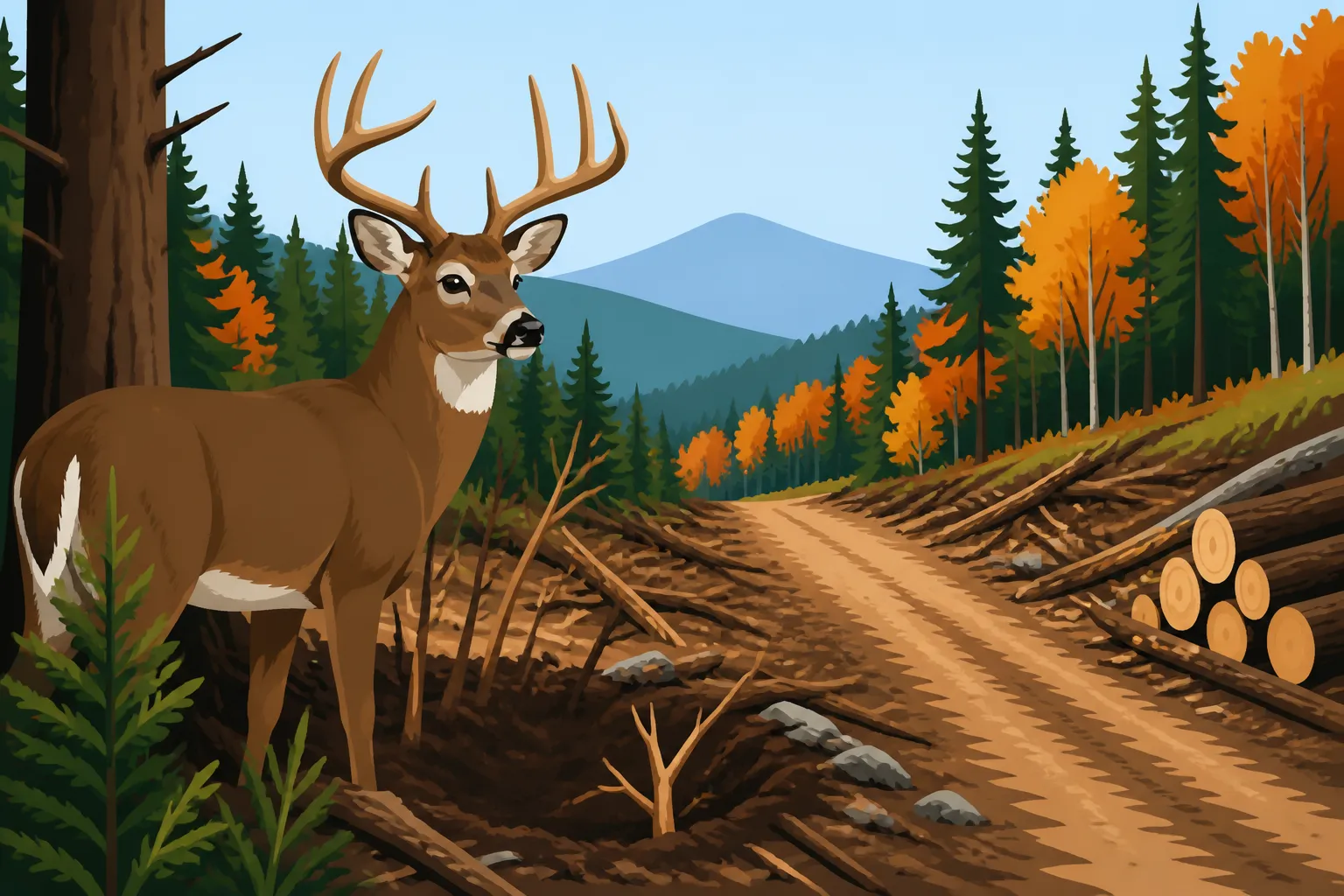
Logging roads, whether active or long-abandoned, are much more than just paths for equipment or forgotten trails in the woods. For white-tailed deer, particularly during the breeding season, they represent vital arteries in their daily routine. Understanding why deer are drawn to these routes, and specifically to the scrapes they leave along them, is crucial for any hunter in the Granite State.
Why Logging Roads Attract Deer Movement
Imagine navigating dense New Hampshire forests, thick with undergrowth, steep terrain, and fallen timber. Now imagine a relatively clear, flat path cutting right through it. That's what a logging road offers a deer: an effortless travel corridor. These roads act like natural highways, connecting different pockets of habitat – from bedding areas in thick softwoods to feeding grounds in mature hardwoods or even agricultural fields. Bucks, especially, will use these roads to cruise, scent-checking for does, moving between core areas, and covering ground efficiently. They provide a predictable line of travel, which is gold for a hunter. Often, these roads also create a distinct "edge" habitat, where the dense cover meets the more open road, a favorite for deer seeking both concealment and ease of travel. Don't underestimate the subtle draw of a less strenuous path through the woods, even for animals as agile as deer. Many hunters stick to the deep woods, overlooking the predictable movement these routes offer.
Logging roads often traverse diverse microclimates and vegetation zones. A single road might pass through a dense pine plantation, open hardwood ridges, and then skirt the edge of a beaver flowage or a regenerating clear-cut. This varied landscape provides a smorgasbord of food sources and cover types within a relatively short distance. Deer are creatures of comfort and efficiency, and a logging road allows them to access these resources with minimal effort. Bucks patrolling these routes are not just looking for does; they're also checking out prime feeding locations and secure bedding areas they might want to use later. These roads are essentially deer superhighways, offering both convenience and strategic advantage in their daily lives.
Understanding Scrape Significance in Deer Communication
Scrapes are essentially a buck's calling card, a highly visual and olfactory communication tool. When you find a scrape, you're looking at a patch of bare earth, typically 1-3 feet in diameter, pawed clean by a buck. But the most important part isn't always on the ground. Directly above it, you'll almost always find a low-hanging branch, known as a "licking branch." The buck rubs his preorbital glands on this branch, urinates into the pawed earth, and sometimes deposits scent from his tarsal glands. This creates a powerful scent cocktail, broadcasting his presence, dominance, and readiness to breed to any deer in the area. It’s an advertisement board for the local deer population, signaling who’s in town and what they’re looking for.
These scrapes are particularly significant during the pre-rut and peak rut phases, acting as communal signposts. Does will visit these scrapes, leaving their own scent, often to indicate their estrous cycle. This two-way communication makes scrapes incredibly powerful attractants for both sexes. While primary scrapes, often larger and more frequently visited, tend to be in more secluded, traditional areas, logging road scrapes can be secondary scrapes or even part of a larger scrape line used by multiple bucks. A line of scrapes along a well-used logging road indicates significant buck activity and routine patrols, signaling that the rut is indeed in full swing. This is where bucks are actively seeking and intercepting does, making them prime hunting locations.
Identifying and Interpreting Scrape Lines on Logging Roads
Finding a scrape is one thing, but understanding its context within a scrape line along a logging road is what truly elevates your hunting strategy. It’s about reading the deer’s language written in the dirt and on the branches. The more clues you can piece together, the better your chances of success.
What to Look For: Fresh Scrapes and Rubs
When you're out scouting New Hampshire's logging roads, the first thing to key in on is freshness. A fresh scrape will have moist, disturbed earth, often with visible hoof prints. The leaves and debris will be pushed aside, exposing dark soil. The licking branch directly above it will also show signs of recent activity – perhaps a broken twig, freshly chewed leaves, or a noticeably wet appearance from glandular secretions. A strong, musky odor might even be detectable. An older scrape will be dry, crusty, and may have leaves or rain-splattered dirt covering it. Finding multiple fresh scrapes strung out along a logging road indicates a scrape line, a route a buck (or several bucks) is regularly patrolling. This isn’t just a random sign; it's a pattern, suggesting a predictable travel corridor.
Beyond scrapes, always look for rubs in conjunction. Rubs, where bucks strip bark from trees with their antlers, serve as another form of communication and a way to mark territory. If you find a line of rubs paralleling a scrape line on a logging road, you’ve hit the jackpot. This tells you the buck is not only leaving scent but also physically marking his presence and, importantly, indicating his travel direction. Fresh rubs will have bright, exposed wood, whereas older rubs will be weathered and discolored. The size of the tree rubbed can also offer clues to the size of the buck. A consistent series of fresh rubs and scrapes along a logging road provides a compelling narrative of buck movement, often linking bedding areas to feeding zones or doe concentrations. This is a tell-tale sign that a buck is actively using this corridor, providing valuable insight for your stand placement.
Using Technology for Scouting and Planning
In today's hunting world, technology is your best friend for uncovering these hidden patterns, especially when dealing with extensive logging road networks. Apps like GoHunt are invaluable for pre-season scouting and in-season adjustments. You can overlay satellite imagery with topographical maps, allowing you to identify logging roads, old skidder trails, and clear-cuts before you even step foot in the woods. This is particularly useful in New Hampshire's rugged terrain, where hiking every potential route can be exhausting and time-consuming. Using these tools, you can pinpoint specific sections of logging roads that connect thick cover with potential food sources, or those that run along natural funnels, making them prime candidates for scrape lines.
A key feature of many mapping apps, including GoHunt, is the ability to mark waypoints for potential scrapes, rubs, or other deer sign. This allows you to build a comprehensive picture of deer activity over time. You can track which scrapes are consistently refreshed, which rubs are new, and how these signs relate to prevailing wind directions or thermals. Many apps also offer property line overlays, which are critical when hunting public land or adjacent to private parcels. Knowing exactly where these logging roads lead, what kind of habitat they connect, and who owns the land is essential for safe and legal hunting. By leveraging these digital scouting tools, you can drastically reduce your time spent aimlessly wandering and significantly increase your chances of finding and successfully hunting an active scrape line along a logging road. For even more detailed scouting, consider delving into topics like Scouting With the New Hampshire Fish and Game App to get the most out of your digital tools.
Effective Strategies for Hunting Logging Road Scrapes
Once you've identified an active scrape line on a logging road, the next step is to strategize your hunt. This isn't just about showing up; it's about making smart decisions regarding your position, the timing, and your approach to maximize your chances of encountering that buck.
Stand Placement and Wind Considerations
The absolute golden rule when hunting any deer sign, especially scrapes, is playing the wind. Bucks are notoriously wary, and their nose is their primary defense. When setting up near a scrape line on a logging road, you must position yourself downwind of where you expect the buck to approach from and where the scrape itself is located. This often means carefully observing the topography and understanding prevailing winds, or even better, daily thermals in New Hampshire's varied terrain. If the road runs along a ridge or through a valley, thermals will dictate deer movement and your scent dispersion. Early mornings, scent often rolls downhill, while in the evenings, it rises. Choosing a stand location where your scent stream is carried away from the scrape and any likely approach routes is non-negotiable.
Consider setting up 20-30 yards downwind of the most active scrape in the line. Don't be right on top of it. This allows the buck to approach and check the scrape without immediately winding you. Look for natural cover that breaks up your silhouette, whether it's a cluster of pines, a thick oak, or even a rock outcrop. If you're on public land, consider Using a Ground Blind on Public Land for concealment, ensuring it's brushed in well. Furthermore, think about how the buck will approach the scrape. Will he follow the road, or cut through the woods parallel to it? Set up to cover both possibilities, allowing for a clear shot at the scrape itself and along the travel corridors leading to and from it. Understanding Wind and Thermals in Steep Granite Terrain can be the difference between success and failure when hunting these areas.
Timing Your Hunt: Peak Rut Activity
The timing of your hunt is paramount when targeting scrape lines. While bucks may check scrapes sporadically throughout the season, they become highly active during the pre-rut and peak rut phases. In much of New Hampshire, this typically means late October through mid-November. This is when bucks are actively seeking does, and scrapes are their communication hubs. During the pre-rut, bucks will start establishing and maintaining these scrape lines. As the peak rut (often around Hunting the Rut in Early-to-Mid November) arrives, they'll check them even more frequently, sometimes several times a day, though often at night.
The best times of day to hunt scrapes are generally early morning and late afternoon, right at legal shooting light. Bucks are often on their feet cruising for does during these times. However, during the peak of the rut, a mature buck might visit a scrape at any time of day, especially if a receptive doe has recently visited it. Keep an eye on weather patterns; a cold front can often trigger increased deer movement, making those days particularly good for sitting over a scrape line. Don't be afraid to sit all day if conditions are right and you have confidence in the area. Remember, consistency is key; the more time you spend in a good spot during prime times, the better your odds.
Calling and Decoying Near Scrapes
While the scrape itself is the primary attractant, you can certainly enhance your setup with judicious use of calls. Grunt calls can be highly effective near active scrape lines, particularly during the pre-rut and early rut. A buck responding to a grunt call near a scrape might think another buck is checking his communication hub, or that a doe is in the vicinity. Use short, soft grunts, mimicking a buck cruising or a tending grunt. If you're feeling bold and the timing is right, especially during the peak rut, rattling antlers can draw a curious or aggressive buck into range. Remember to adjust your Rattling Volume in Thick Softwood Cover or use more aggressive calls depending on the habitat and the stage of the rut.
Decoying can also play a role, though it needs to be carefully considered on a logging road. A single, dominant buck decoy placed within sight of the scrape, facing away (as if he's working the scrape), can sometimes draw in an aggressive buck looking for a fight or another buck asserting dominance. Similarly, a single doe decoy might draw in a cruising buck. The key is realism and minimizing human scent on the decoy. However, the use of decoys on logging roads can be tricky due to visibility and potential human traffic, so always prioritize natural concealment and scent control first. Focus your efforts more on calling, as it's less intrusive and often just as effective when a buck is already in the area. For more insights on vocalizations, explore Grunt Calls in Mature New Hampshire Hardwoods.
Common Mistakes and How to Avoid Them
Even with the best intentions and scouting efforts, hunters can make crucial mistakes that undermine their efforts. Understanding these common pitfalls and learning to avoid them will significantly increase your success rate when hunting scrape lines along logging roads.
Overhunting and Contaminating Scrapes
One of the most common and detrimental mistakes hunters make is overhunting a scrape line or, even worse, contaminating it with their scent. It’s incredibly tempting to walk right up to every scrape, check for freshness, and even poke around. However, every time you do this, you leave a powerful human scent signature. Bucks, especially mature ones, are incredibly sensitive to human intrusion. If they repeatedly smell you near their communication hub, they will quickly shift their patterns, becoming more nocturnal or abandoning the scrape line altogether. The excitement of finding a fresh scrape needs to be balanced with extreme caution.
Instead of walking directly to the scrape, use binoculars from a distance to check for activity. If you must approach, do so sparingly, and only when the wind is in your favor, wearing rubber boots and using scent-eliminating sprays. Consider placing a discreet trail camera (check regulations for Trail Camera Rules on New Hampshire Public Land) on a nearby tree, aimed at the scrape, allowing you to monitor activity without physically visiting. Less is often more when it comes to actively hunting a scrape. Your goal is to be an unseen predator, not a disruptive presence. Constantly disturbing the area can lead to Hunting Pressure on New Hampshire Public Land issues, making deer harder to pattern.
Ignoring the "Why" Behind the Scrape
Another significant mistake is focusing solely on the scrape itself without considering the bigger picture. A scrape is merely a single point in a buck's larger movement pattern. If you simply sit over a scrape without understanding why the buck is there, where he's coming from, and where he's going, you're missing critical pieces of the puzzle. What does this logging road connect? Is it leading from a dense Where New Hampshire Bucks Bed in Thick Cover to a preferred feeding area? Is it a funnel between two distinct woodlots, as detailed in Hunting a Funnel Between Two Woodlots? Or is it part of a larger travel corridor where bucks are consistently cruising for does during Bowhunting New Hampshire's Long Archery Season?
By ignoring the "why," you might be setting up on a scrape that's primarily used at night, or missing the subtle entry and exit points the buck uses to avoid the open road. Take the time to analyze aerial photos (perhaps with GoHunt or similar apps) and topographical maps. Walk the logging road and surrounding timber to identify potential bedding areas, preferred food sources, and subtle terrain features that might funnel deer movement. Look for other signs like tracks, droppings, and older rubs that indicate broader travel patterns. The scrape is an indicator, but the route and the purpose behind that route are what you're truly hunting. By understanding these connections, you can position yourself more strategically, perhaps intercepting the buck before he even reaches the scrape, or as he leaves it. For instance, knowing how to interpret Reading a White Mountain Deer Yard can help you understand where deer might be sheltering and moving to from a logging road.
Disclaimer
Hunting is an inherently dangerous activity. Always prioritize safety, follow all local and state regulations, and obtain proper licenses and permits. Be sure to check the New Hampshire Fish and Game Department's official digest for the most current rules and regulations. The information provided here is for educational purposes and should not replace professional guidance or personal judgment.