Posting a Drive Around a Woodlot
We've all been there: staring at a dense woodlot on a crisp New Hampshire morning, knowing a buck is bedded down inside, but he just won't budge. The frustration of still-hunting through thick cover only to spook deer out the back can be soul-crushing. This guide is all about tackling those challenging situations head-on by organizing a strategic deer drive around a woodlot, helping you understand how to plan, execute, and most importantly, stay safe while effectively moving deer right into your hunting partners' laps.
Understanding the Woodlot and Deer Movement
Before you even think about putting boots on the ground for a drive, you need to understand the woodlot itself and how deer typically move through and around it. Not all woodlots are created equal, and deer will behave differently based on terrain, cover density, and the surrounding environment.
Identifying Key Features: Funnels, Thickets, Escape Routes
Every woodlot has its unique characteristics that influence deer movement. When you're scouting, look for natural funnels – those narrow strips of timber or brush that connect two larger blocks of cover or lead to a food source. Deer often use these as travel corridors, especially when pressured. A small drive can effectively push deer through one of these constricted areas, making them predictable for standers. You might want to consider checking out how to find a Hunting a Funnel Between Two Woodlots for more detailed strategies on this.
Thickets and dense softwood stands within or adjacent to a woodlot are prime bedding areas, offering thermal cover and security. These are often the places you want your drivers to focus on. On the flip side, identify potential escape routes – these are the paths deer want to take when disturbed. They might be subtle trails, drainages, or even the path of least resistance through slightly less dense cover. Knowing these escape routes allows standers to position themselves to intercept, or drivers to subtly adjust their push to steer deer away from undesirable escape points. Using mapping tools like those found on GoHunt can be incredibly helpful for identifying these terrain features and planning your approach digitally before ever stepping foot in the woods.
Predicting Deer Behavior: Where They'll Go Under Pressure
Deer are creatures of habit and instinct. When a drive begins, their primary goal is escape, and they'll usually take the path they perceive as safest. This often means moving downwind to scent any perceived threats, or moving towards thicker cover if available. In New Hampshire's varied terrain, this could mean pushing towards a granite ridge, a dense swamp, or simply the next block of timber.
Consider the time of year and weather conditions. During the peak of Hunting the Rut in Early-to-Mid November, bucks might be less cautious and more focused on does, potentially making them more willing to hold tight or break cover in unexpected directions. On a cold, windy day, deer will often seek the lee side of hills or dense evergreens for shelter, and a drive might push them along these natural windbreaks. Pay attention to wind direction; standers should ideally be positioned downwind of where you expect the deer to emerge, giving them a chance to scent the deer before it's too close, but also ensuring their scent doesn't blow into the woodlot and alert deer prematurely. Remember, deer are incredibly sensitive to changes in their environment, and understanding these nuances will significantly increase your drive's success rate.
Strategic Planning: Before the Drive Begins
A successful woodlot drive is rarely spontaneous. It requires careful planning, good communication, and clear roles for everyone involved. Think of it as a well-choreographed dance, where every participant knows their part.
Scouting the Area: Pre-season and Day-of Observation
The groundwork for a good drive starts long before opening day. Pre-season scouting is invaluable. Walk the edges of the woodlot, looking for active deer trails leading in and out, rub lines, and scrape lines. Pinpoint the thickest bedding areas and potential escape routes. Understanding Reading a White Mountain Deer Yard can give you insights into where deer prefer to spend their time, especially as winter approaches. This deep knowledge allows you to anticipate deer movement patterns and identify the best locations for standers.
On the day of the drive, a quick check of wind direction and a final visual inspection of the woodlot's edges can confirm your plan or prompt last-minute adjustments. This is also where you'll verify that no other hunters have already set up in your intended drive area, especially on public land. Tools like GoHunt can help here, allowing you to mark potential stand locations, driver paths, and even track everyone's position in real-time, minimizing surprises and enhancing safety. It’s critical to confirm all members are present and accounted for before any movement begins.
Assigning Roles: Drivers, Standers, and Communications
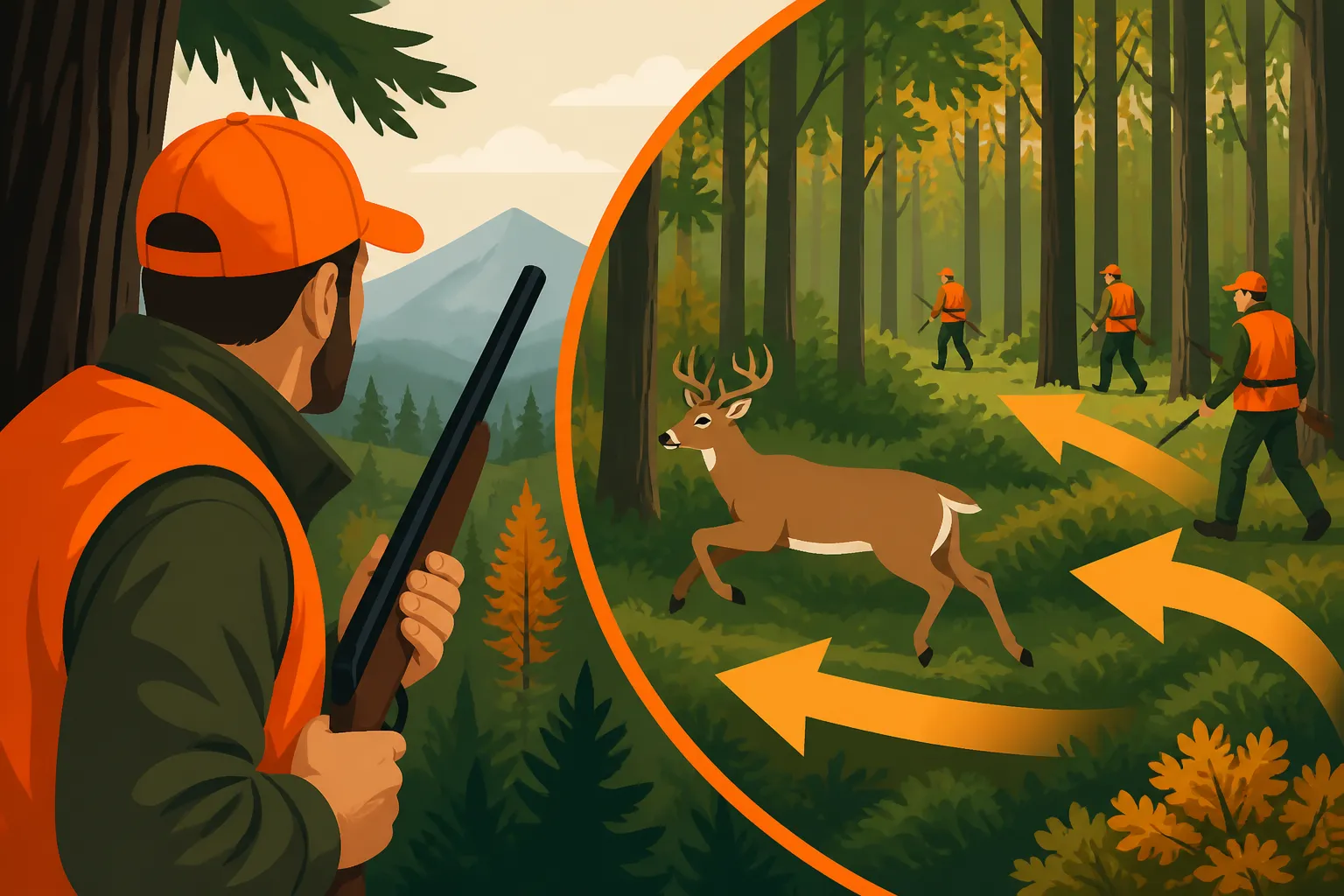
Every person in a deer drive has a crucial role to play. Typically, you'll have "drivers" and "standers" (sometimes called "posters"). Drivers are the ones who walk through the woodlot, pushing the deer out. Their job isn't to blast through making as much noise as possible; it's to move deer intentionally and often subtly towards the standers. Depending on the size of the woodlot and the number of hunters, you might be talking about Deer Drives With Three or Four Hunters, or even more for larger parcels.
Standers, on the other hand, are positioned around the perimeter of the woodlot, waiting silently for deer to emerge. Their patience is paramount. Before the drive, clear communication is absolutely vital. Designate a drive leader who coordinates everything. This person will outline the drive plan, assign specific roles, and establish communication protocols. This often involves two-way radios, especially in dense New Hampshire timber where line of sight is limited. Everyone must understand their starting position, direction of travel (for drivers), and their assigned "zone" for shooting (for standers).
Setting Up the Standers: Ideal Positions for Visibility and Safety
The success of a drive often hinges on the standers' positions. They need to be in places where they have clear shooting lanes, good visibility, and a safe backdrop. Think about the natural escape routes you identified during scouting. Standers should be strategically placed to cover these routes, but also to intercept deer that might try to sneak out. Often, this means posting up on natural funnels, field edges, or along old logging roads.
Consider using a ground blind or even a treestand if available and safe. A well-placed ground blind can offer concealment and a stable rest, which is important when anticipating quick shots. For those who prefer to be elevated, understanding how to Hanging a Stand on a Granite Ridge can be crucial for safely gaining a vantage point, providing a wider field of view and making it easier to see deer approaching through dense underbrush. Ensure that standers are spread out enough to cover the necessary ground but close enough to be aware of each other's presence and potential shot zones. Safety is paramount, so emphasize clear lines of sight and always knowing where other hunters are.
Executing the Drive: Roles and Tactics
Once the planning is done and everyone is in position, it’s time for the drive to commence. This phase requires discipline, awareness, and continuous communication to be effective and safe.
The Drivers' Approach: Pace, Noise, and Direction
Drivers are not meant to be chaotic. Their role is to apply steady, controlled pressure, guiding deer rather than simply flushing them. The pace should be slow and deliberate, allowing deer to move naturally ahead of them. This "soft push" often results in deer walking out in front of standers, rather than bolting in a full sprint, which can make for more challenging shots. While making some noise is necessary to keep deer moving, it doesn't need to be excessive. A steady shuffle of feet, a few well-placed grunts, or even a deliberate tapping of a walking stick against a tree trunk can be enough.
The direction of the drive is critical. Drivers must stay on their predetermined course to ensure deer are pushed towards the standers and away from known un-posted escape routes or unsafe areas. Using GPS on a mapping app like GoHunt is invaluable here, allowing each driver to track their progress and maintain their assigned lane. If drivers veer off course, deer might slip between them or escape through an open flank. It's a team effort, and each driver's discipline directly impacts the success of the whole operation.
The Standers' Responsibilities: Patience, Awareness, and Shot Zones
For standers, the wait can feel long, but patience is their most important virtue. Deer often move cautiously, sometimes pausing just inside the tree line before committing to open ground. Remaining absolutely still and quiet, even for an extended period, is key. Use your binoculars to scan the edges of the woodlot and any likely escape corridors. You're looking for movement, an antler tip, or even just the flick of an ear.
Your awareness of your surroundings is paramount. You need to know not only where you expect the deer to come from but also where your fellow standers are positioned. This defines your "shot zone." Never take a shot if you're unsure of what's beyond your target, especially if it could be another hunter. In New Hampshire's dense timber, visibility can be limited, making this even more crucial. Ensure your weapon is ready, but keep your finger off the trigger until you've positively identified your target and confirmed a safe shot. For those using various setups, like perhaps Using a Ground Blind on Public Land, remember the inherent advantages and limitations of your position.
Communication is Key: Radios, Hand Signals, and Calls
Effective communication is the backbone of any successful deer drive. Two-way radios are often the most reliable method, especially in New Hampshire's rugged terrain where cell service can be spotty. Before the drive, establish clear codes or concise phrases to communicate deer sightings, movement, or any unexpected issues. "Deer moving left at station 3" is much clearer than a frantic yell.
In situations where radios aren't feasible or for quick, close-range alerts, hand signals can be pre-arranged. For example, a raised hand might signal a deer sighting, while a specific arm motion could indicate direction of travel. Drivers can also use subtle vocalizations, like a low whistle or a series of quiet clicks, to communicate their position to each other without overly alarming deer. It’s also important to establish a "drive over" signal. This might be a specific radio call, a series of three loud shouts, or simply everyone meeting back at a designated rendezvous point. Clear communication prevents accidents and ensures everyone stays informed throughout the drive.
Safety First: A Non-Negotiable Aspect
In any group hunting scenario, especially a deer drive, safety isn't just a suggestion; it's the absolute rule. The dynamic nature of a drive with moving hunters and potentially unpredictable deer elevates the need for strict safety protocols.
Blaze Orange and Visibility: Ensuring Everyone is Seen
New Hampshire law requires hunters to wear a certain amount of blaze orange (or blaze pink) during the firearms season, and it’s a wise practice for archery and muzzleloader seasons during overlap periods as well. When conducting a drive, it’s imperative that all participants – drivers and standers alike – wear highly visible blaze orange from head to toe. This means vests, hats, and potentially even substantial amounts of blaze orange on their outer layers. For detailed information, review the specific New Hampshire Blaze Orange Requirements.
The goal is simple: maximize visibility so that every hunter is immediately identifiable as a human, not a deer. Before the drive begins, do a visual check of your group. Can you easily spot everyone, even in dense cover? If not, more blaze orange is needed. It’s a simple, yet profoundly effective way to prevent accidental shootings, which are tragic and entirely avoidable.
Identifying Safe Shooting Lanes: Backstops and Clear Views
Before a stander takes their position, they must carefully assess their shooting lanes. This means more than just having a clear line of sight to where you expect a deer to appear. It means identifying a safe backdrop for your shot. In New Hampshire, this could be a rise in the terrain, a thick stand of trees, or even simply open sky, but never a position where your bullet could travel towards another hunter's known location or a populated area.
Standers should also be acutely aware of their maximum effective range with their chosen firearm and limit their shots to within that range, ensuring a clean kill and preventing wounded game. This is especially important for those taking on New Hampshire's November Firearms Deer Season, where shot opportunities can be quick. Never take a running shot through thick brush where you can't be absolutely certain of your target or what lies beyond it. Your personal safety, and the safety of your hunting partners, far outweighs the urge to take a risky shot.
Communication Protocols: Emergency Procedures and Check-ins
Beyond simply directing deer, communication is crucial for safety. Before the drive begins, establish clear emergency procedures. What happens if someone gets injured? What’s the designated meeting point if the drive needs to be called off prematurely? Who has a first aid kit, and does anyone know basic first aid? Considering a First Aid Kit for a Remote Hunt is always a good idea.
Regular check-ins should be part of the drive plan. Drivers can give periodic updates on their progress ("Driver 1, halfway through," or "Deer just broke right, heading towards station 5"). Standers can confirm they are holding their position or report deer sightings. These consistent updates confirm everyone is safe and aware. If anyone loses contact or doesn't check in when expected, the drive should be paused until their status is confirmed. Establishing clear rules for what constitutes an emergency and how to respond will ensure that everyone acts swiftly and effectively if something goes wrong.
Planning a Successful Deer Drive
To help you organize your next woodlot drive, here’s a simplified breakdown of roles and responsibilities. This will ensure everyone is on the same page and maximize both safety and success.
| Role | Primary Responsibility | Key Actions | Safety Considerations |
|---|---|---|---|
| Drive Leader | Overall coordination and safety oversight | Plans route, assigns roles, establishes communication, sets start/end times | Ensures all blaze orange is worn, reviews emergency plan, final safety check |
| Drivers | Move deer through the woodlot towards standers | Walk slowly, maintain line, create consistent noise, follow GPS/map | Stay aware of stander positions, avoid shooting towards standers, wear max blaze orange |
| Standers | Intercept deer emerging from the woodlot | Remain silent and still, scan shooting lanes, identify safe backdrops | Know shot zones, confirm clear target, never shoot towards unknown areas, wear max blaze orange |
| Communicator | Maintain continuous communication among the group | Monitor radio channels, relay information, initiate check-ins, report issues | Ensures clear signals, tests equipment pre-drive, manages battery life |
No matter the specifics of your hunting party or the woodlot you're targeting, a well-planned and safely executed drive can be one of the most exciting and effective ways to harvest deer in New Hampshire.
Disclaimer
Please remember that hunting regulations, seasons, and rules can change. Always consult the official New Hampshire Fish and Game Department website or their latest hunting digest for the most current and accurate information before planning any hunting activity. Safety is paramount, and responsible hunting practices benefit everyone.