Judging a Legal Bear From a Sow With Cubs
One of the trickiest parts of bear hunting in New Hampshire is making that split-second decision when a dark shape emerges from the thick timber: is it a legal, solitary bear, or a sow with her cubs? The fear of accidentally harvesting a sow, especially when her little ones are hidden or not immediately visible, is a very real and understandable concern that weighs heavily on ethical hunters. This guide is here to walk you through the essential indicators and strategies to confidently distinguish between a legal bear and a sow with cubs, ensuring you make the right call in the field.
The Critical Importance of Proper Bear Identification
Making a correct identification isn't just about following the rules; it's about deeply respecting the wildlife we pursue and ensuring the long-term health of New Hampshire's bear population. Bear populations, while thriving in many parts of the state, are still managed carefully, and protecting breeding females is paramount.
Ethical Hunting and Conservation
Imagine the gut-wrenching feeling of realizing you've mistakenly taken a sow from her cubs. It's a scenario no responsible hunter ever wants to face. Our hunting heritage is built on a foundation of conservation and ethical practice. Protecting sows with cubs directly contributes to the sustainability of the Black Bears in New Hampshire population. Young bears, especially those in their first year, are entirely dependent on their mother for survival. Removing the sow means leaving her cubs orphaned, severely reducing their chances of making it through their first winter. New Hampshire Fish and Game Department places a high value on maintaining a healthy breeding population, and our individual actions in the field directly support those efforts. This responsibility falls squarely on each hunter to exercise patience and diligence.
Legal Ramifications of a Mistake
Beyond the ethical considerations, there are very serious legal consequences for harvesting a sow with cubs in New Hampshire. The regulations are clear: it is illegal. If you mistakenly take a sow with cubs, you could face significant fines, license revocation for a period of years, forfeiture of equipment, and potentially even jail time. These aren't minor penalties; they are designed to deter irresponsible hunting and protect the state's wildlife resources. Knowing the rules and adhering to them is a fundamental part of being a licensed hunter. Always double-check your Checking the Hunting Digest for Your WMU's Bear Dates to stay current on specific regulations, as they can sometimes vary slightly by Wildlife Management Unit (WMU). The last thing anyone wants is to have a fantastic hunting experience turn into a legal nightmare because a moment of impatience led to an avoidable error.
Key Indicators for Identifying a Sow with Cubs
When that moment arrives and a bear steps out, your mind races. But taking a deep breath and systematically looking for specific clues can make all the difference. Bears are incredibly smart, and sows are exceptionally protective, making their behavior and appearance distinct if you know what to look for.
Physical Characteristics
Size is often the first thing people think of, but it can be deceptive. A large, solitary male bear might be easily identifiable by its sheer bulk. However, a younger male or a sub-adult bear can sometimes be similar in size to an adult sow.
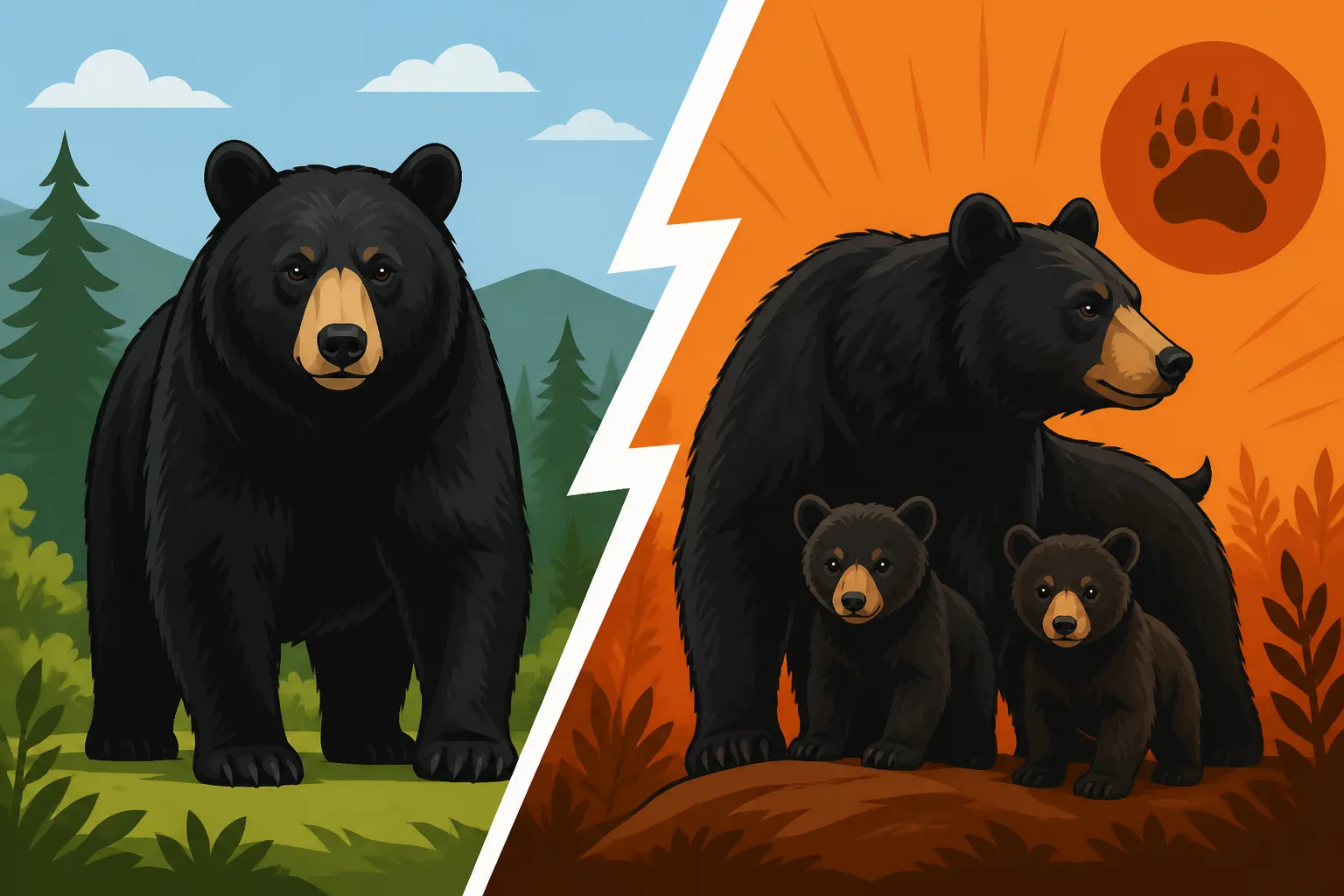
- Sow's Appearance: Sows tend to be more "rangy" or leaner, especially after nursing cubs for months. Their teats might be visible, particularly if she's recently finished nursing or still has larger cubs. Look for a more pronounced "waist" compared to a robust, barrel-chested boar. Her fur might appear a bit rougher or disheveled around the belly area. If she has yearlings with her, she might still carry some of that post-nursing leanness.
- Cub's Appearance and Size: Cubs are, naturally, much smaller. First-year cubs (coy) will appear noticeably small, often described as "fluffy" or "puppy-like." They can range from the size of a small dog to a medium-sized dog. Yearlings, or "2nd year" cubs, are larger, often half the size or more of the sow. They might still have a slightly uncoordinated gait. It's important to remember that cubs can be incredibly stealthy and often follow directly behind the sow, or remain hidden in dense cover nearby. Sometimes, only a brief glimpse of a small, dark shape is all you get.
- Head and Neck Proportions: Boars often have a blockier head and a thicker neck that seems to blend almost seamlessly into their shoulders, giving them a more powerful, robust profile. Sows, while still strong, often have a slightly more refined head shape and a neck that appears a bit more distinct from their shoulders, giving a more angular appearance. This can be subtle but is a good indicator to combine with other observations.
Behavioral Clues
A bear's behavior can be a huge giveaway. Sows with cubs, especially young ones, exhibit very specific patterns of movement, vigilance, and interaction.
- Cub Proximity: This is perhaps the most crucial behavioral clue. Cubs rarely stray far from their mother. If you see a bear, immediately look for other smaller bears. They might be directly behind her, to her sides, or even up a tree nearby. Sometimes they stay in thick cover just out of sight, relying on the sow's vigilance.
- Sow's Protectiveness and Vigilance: A sow with cubs will almost always be more cautious and vigilant than a solitary bear. She'll frequently stop, stand up to scan her surroundings, and appear generally more nervous or alert. She might emit soft grunts or huffs, which are communication signals with her cubs. If she suddenly freezes and stares intensely in one direction, she's likely assessing a potential threat to her young. A solitary bear, particularly an older boar, tends to be more confident and less concerned with its immediate surroundings unless directly threatened.
- Movement Patterns: Sows with cubs often move slowly, stopping frequently to allow cubs to catch up, forage, or investigate. Their movements might appear less direct, sometimes doubling back or pausing for extended periods. A solitary bear, especially one traveling, tends to move with a more determined, consistent pace. They're often focused on getting from one bedding area to a feeding area, or covering ground in search of mates or new territory.
- Vocalizations: Listen intently. Cubs often whimper, squeal, or make soft bleating sounds. Sows might respond with guttural rumbles or huffs. These sounds are subtle but can be a definitive sign that young bears are present, even if you can't see them.
Common Hunting Scenarios and Challenges
New Hampshire's diverse terrain, from dense White Mountain timber to open agricultural fields, presents various challenges for bear identification.
- Visual Obstructions: Thick softwood stands, dense brush, or even the shadows of late afternoon can obscure cubs, making them nearly impossible to see. A sow might step out, but her cubs remain hidden just inside the tree line. Always assume there could be cubs if you can't get a clear, unobstructed view of the entire bear for an extended period.
- Quick Encounters: Bears are often fleeting. They might appear and disappear within seconds, especially if spooked. In such cases, if you don't get a positive identification of it being a solitary bear, do not shoot. This goes against the fundamental principle of "know your target and what is beyond it."
- Using Technology: This is where modern hunting tools truly shine. High-quality binoculars and spotting scopes are invaluable for picking apart a bear's features and observing its surroundings. Devices like the Binoculars for Glassing a North Country Bog or a top-tier rangefinder can provide the clarity needed to see those subtle details, even at a distance or in low light. Trail cameras are another excellent tool. Placing cameras near known bear travel corridors or bait sites (where legal) can give you pre-season intelligence on which bears are frequenting the area, and whether they have cubs. A service like GoHunt can help you analyze terrain and plan where to place these cameras effectively, leveraging satellite imagery to find good spots.
Differentiating a Solitary Bear from a Sow with Cubs
The ultimate goal is to confidently identify a solitary, legal bear. This means not only recognizing the signs of a sow with cubs but also confirming the absence of those signs.
Observing the Bear's Demeanor
A solitary bear, particularly a mature boar, generally carries itself with a different air. They tend to be more independent and less outwardly cautious unless directly confronted.
- Calm vs. Nervous: A solitary bear will often appear more relaxed, sometimes even nonchalant, as it goes about its business, whether foraging, traveling, or scent-checking. A sow with cubs will almost always be more tense, frequently pausing to scan for danger, often looking over her shoulder or darting her gaze around. She might fidget, nervously shift her weight, or emit low growls if she perceives a threat.
- Awareness of Surroundings: While all bears are aware, a solitary bear's awareness is focused more on food sources, potential mates, or other dominant bears. A sow's awareness is hyper-focused on anything that could pose a threat to her cubs, leading to frequent head-swiveling, ear-twitching, and sniffing the air. If the bear is constantly looking behind it or off to the side, it's a huge red flag that cubs might be present.
- Aggressiveness: A solitary boar, especially if challenged by another bear or feeling cornered, might show aggression through posturing, jaw-popping, or bluff charges. A sow with cubs, while also capable of aggression, will often first try to usher her cubs to safety or put herself between you and them. Her aggression is usually a defensive measure for her young.
The "Wait and Watch" Principle
This is perhaps the most critical piece of advice for bear hunting: patience. It's incredibly tempting to rush a shot when a bear finally presents itself, but doing so could lead to a devastating mistake.
- Extended Observation Time: If you see a bear, dedicate a minimum of 5-10 minutes, if possible, to observation before even considering raising your weapon. Watch its movements, its body language, and, most importantly, look for cubs. Cubs might be resting, feeding, or hiding in dense cover and may only become visible after several minutes. They might come out from behind a tree, or pop up from a thicket where they were napping.
- Multiple Viewing Angles: If the bear moves, try to adjust your position to get different viewing angles. What might be hidden from one perspective could be obvious from another. Use your optics to thoroughly scan the area around the bear. Don't just focus on the bear itself; look for any movement, however small, in the surrounding vegetation.
- Confirming Solitude: The only way to truly confirm it's a solitary bear is to observe it long enough to be absolutely certain no cubs are present or associated with it. If you have any doubt, no matter how small, it’s best to let that bear walk. There will always be another opportunity. Remember, a quick shot taken in doubt is a shot you might regret for a lifetime.
Leveraging Technology and Scouting
Pre-season preparation can significantly increase your confidence when it comes time to make the shot. Knowledge is power, especially in the woods.
- Trail Cameras: Deploying trail cameras on public land (where legal and permissible by rules, such as those covered in Trail Camera Placement on Public Land) or private property can provide invaluable intelligence. Reviewing photos and videos of bears frequenting your hunting area will give you a good idea of their size, individual markings, and whether they are traveling with cubs. GoHunt offers mapping features that can help you pinpoint optimal spots for camera placement, considering travel corridors and food sources. You might even capture images of a sow with cubs several times before the season, allowing you to recognize her if she shows up.
- High-Quality Optics: Investing in good optics is non-negotiable for bear hunting. A quality pair of binoculars will allow you to scrutinize a bear's body, look for teats, observe its gait, and scan the surrounding area for cubs without alarming the animal. For those longer shots or for hunting more open areas like certain sections of the Hunting the North Country, a spotting scope can provide even greater detail, helping you judge size and age more accurately.
- Scouting and Sign: Spend time scouting your hunting area before the season. Look for bear scat, tracks, rub trees, and feeding sign. Larger tracks might indicate a mature boar. If you consistently find smaller tracks with larger ones, it's a strong indication of a sow with cubs. Learn to read the sign of what New Hampshire's Bear Population Estimate is doing in your specific WMU.
Here's a quick reference guide to help differentiate:
| Feature/Behavior | Likely Solitary Bear (Legal) | Likely Sow with Cubs (Illegal) |
|---|---|---|
| Size | Often larger, robust, heavy-bodied | Can be variable, often leaner, especially post-nursing |
| Head/Neck | Blockier head, thick neck blending into shoulders | Slightly more refined head, distinct neck |
| Belly | Firm, less prominent | May appear distended or saggy (teats possibly visible) |
| Movement | Purposeful, consistent pace, fewer stops | Slower, frequent stops, cautious, often looking around |
| Vigilance | Aware, but less hyper-alert | Highly vigilant, frequent scanning, nervous, looks over shoulder |
| Vocalizations | Generally quiet, occasional huffs/grunts | Soft grunts, huffs, cubs may whimper, squeal, bleat |
| Proximity | No other bears nearby | Cubs (coy or yearlings) often close by, behind, or hidden |
| Confidence | Appears more confident, deliberate | Appears more cautious, protective, hesitant |
| Observation | Allows for extended, clear observation of solitude | May have hidden cubs, often fleeting glimpses of smaller shapes |
What to Do When in Doubt
Despite all your preparation and careful observation, there will be times when you simply can't be 100% certain. This is when your ethical compass must take over, and you prioritize conservation over opportunity.
Err on the Side of Caution
This is the golden rule of responsible bear hunting. If there is any doubt whatsoever about whether a bear is a sow with cubs, or if you can't get a clear enough view to definitively confirm it's a solitary bear, do not shoot. It's far better to walk away from a potential harvest than to make a mistake that could harm the bear population and land you in serious legal trouble. Think of it this way: the memory of a missed opportunity fades quickly, but the regret of an unethical harvest can last a lifetime. This principle is foundational to hunter education in New Hampshire and applies across all big game, whether you're deer hunting during New Hampshire's November Firearms Deer Season or Moose Hunting New Hampshire's North Country.
Retreat and Re-evaluate
If you're observing a bear and begin to have doubts, carefully and quietly extract yourself from the situation. Don't rush or make sudden movements that could spook the animal or, worse, put you in an unsafe situation if it is a sow with cubs. Retreat to a safe distance, then re-evaluate.
- Change Your Vantage Point: Sometimes a different angle is all you need. Can you move quietly to another spot that offers a clearer line of sight or a better view of the surrounding area? Use natural cover to conceal your movement.
- Wait It Out: If time permits, you can often simply wait. Bears move, and often, after some time, cubs that were previously hidden will reveal themselves. Or, if it's a solitary bear, it might move into a position where you can get a clearer, more confident look at its entire body and confirm its solitude.
- Re-scout Later: If the bear moves off and you still have doubts, come back and scout the area again later. Look for fresh tracks, scat, or other signs that might provide clues. Check your trail cameras if you have them in the area. Reviewing footage from a few days prior might confirm a sow with cubs is indeed using that particular travel route or feeding area. This also allows you to consider if your current setup, perhaps a treestand, is in the optimal spot for visibility, as discussed in guides like Hanging a Stand on a Granite Ridge.
Reporting and Learning from Encounters
Every encounter in the woods is a learning opportunity, regardless of whether you harvest an animal.
- Share Information: If you observe a sow with cubs, especially in an area you or others plan to hunt, consider quietly sharing that information with fellow hunters you trust (without revealing your exact spots, of course!). Knowledge about where sows with cubs are frequenting can help prevent others from making a mistake.
- Debrief Your Experience: After any significant encounter, take time to think through what you saw, what clues led to your decision (or indecision), and what you might do differently next time. Did you rely too heavily on one indicator? Did you not wait long enough? This self-reflection is crucial for improving your judgment in the field. GoHunt offers robust mapping and data tools that can help you log observations, marking locations where you’ve seen bears, and even specific types of bears, aiding in future scouting efforts. Understanding bear behavior and population trends, like the New Hampshire Bear Population Estimate, makes you a more informed and responsible hunter.
Making the call on a bear can be one of the most nerve-wracking moments in New Hampshire hunting, but by prioritizing patience, careful observation of both physical traits and behavior, and always erring on the side of caution, you can ensure that your pursuit of New Hampshire's WMU-Specific Bear Season is both successful and ethical.
Disclaimer
The information provided in this guide is for informational purposes only and is not a substitute for professional advice. Always consult the official New Hampshire Fish and Game Department regulations and refer to current laws before engaging in any hunting activities. Hunting regulations can change, so it's critical to review the most up-to-date information annually.