Working a Fencerow for Late-Season Deer
As the late season chill really sets in here in New Hampshire, often bringing with it a blanket of snow, many hunters start to feel the pressure. Deer movement changes drastically, food sources become scarce, and the woods that felt so abundant in October can now seem eerily quiet. This shift can be incredibly frustrating, leaving you wondering where all the deer have gone. But don't despair! This comprehensive guide is all about one of the most overlooked, yet incredibly productive, late-season hotspots: the humble fencerow. We'll explore why these seemingly minor landscape features become major deer magnets when the temperatures drop and how you can effectively hunt them to tag a New Hampshire whitetail.
Why Fencerows are Late-Season Deer Magnets
When the leaves have fallen and the cold wind howls, deer in New Hampshire aren't just looking for food; they're desperately seeking shelter and efficient travel routes. Fencerows, whether they're old stone walls choked with brush or lines of mature evergreens, provide a perfect trifecta of needs for whitetails enduring the hardships of late fall and early winter. Understanding this fundamental draw is the first step to successfully hunting them.
Thermal Cover and Shelter
One of the primary reasons deer gravitate towards fencerows in the late season is the immediate relief they offer from the biting cold and relentless wind. Think about it: an exposed field might have leftover corn, but standing out in the open on a frigid December morning is a quick way to lose precious body heat. A dense fencerow, however, acts as a natural windbreak, creating a microclimate that can be several degrees warmer than the open air.
If that fencerow is thick with evergreen trees like hemlock or pine, or even dense tangles of multiflora rose, hawthorn, or wild grapevines, it provides critical thermal cover. This isn't just about blocking wind; it’s about physically trapping warm air and insulating deer from the elements. They can bed down in these thickets, conserving energy that would otherwise be spent shivering. I've often seen deer bedded right against an old stone wall, especially on the lee side, soaking up whatever residual heat the rocks might hold and shielding themselves from the prevailing wind. It’s a literal lifeline when temperatures plummet.
Travel Corridors and Connectors
Beyond mere shelter, fencerows serve as vital arteries for deer movement. They are nature’s highways, allowing deer to move between crucial feeding areas and secure bedding cover with a sense of safety and concealment. Imagine a deer needing to travel from a softwood thicket where it’s bedded to a field where it hopes to find some remnant Late-Season Food Sources for New Hampshire Whitetails. Crossing an open field in broad daylight is risky business for a whitetail. A fencerow, especially one bordering a woodlot or extending across an open landscape, offers a continuous line of cover, shielding them from predators (including hunters) and allowing them to travel more confidently.
These linear features often connect different habitat types that are essential for deer survival during winter. They might link a south-facing slope with good bedding cover to a secluded apple orchard, or a dense swamp to a standing cornfield. Deer become incredibly efficient in their movements during this time of year, prioritizing energy conservation and safety. A well-used fencerow, therefore, is a prime location to intercept a deer moving with a purpose. Look for these natural funnels between two woodlots; they are often travel corridors for a reason.
Residual Food Sources
While the major food sources of early fall, like acorns and lush green fields, might be long gone, fencerows often harbor a surprising amount of residual forage that deer will absolutely key in on during the late season. Beyond just providing thermal cover, the dense brush within a fencerow can include wild apple trees, multiflora rose hips, hawthorn berries, or even late-persisting browse species that still offer some nutritional value. Deer are opportunistic feeders, and they will exploit every available calorie when conditions are tough.
Furthermore, fencerows frequently border agricultural fields where corn, soybeans, or hay were harvested. Even after a thorough harvest, there are always leftover kernels or plants, and deer will meticulously pick these clean. A fencerow running adjacent to a cut cornfield, for instance, becomes a natural transition zone where deer can grab a bite to eat while staying close to protective cover. This combination of shelter, safe travel, and overlooked food makes fencerows incredibly attractive to New Hampshire whitetails when the snow flies.
Scouting Fencerows for Active Sign
Finding a fencerow on a map is one thing; identifying one that's actively being used by late-season deer is another. Effective scouting is paramount, and it requires a keen eye for detail, understanding deer behavior in cold weather, and sometimes, a little help from modern technology.
Identifying Productive Fencerow Types
Not all fencerows are created equal. Some might be too sparse to offer adequate cover, while others might be too overgrown to allow for easy deer movement. The most productive fencerows in New Hampshire will typically exhibit a few key characteristics. Look for those that are relatively dense, offering good visual obstruction for deer. This could be a thick line of cedars, a tangle of brush and vines, or even a mature hardwood line with thick undergrowth.
Additionally, consider the "connectivity" of the fencerow. Does it connect two large blocks of timber? Does it run from a known bedding area to a probable feeding area, such as a standing cornfield, an old apple orchard, or a recently logged area where new browse is available? Fencerows that run perpendicular to typical deer travel, or those that create an obvious funnel point, are often goldmines. For example, a fencerow that forces deer into a narrow crossing point between two larger parcels of woods is ideal. An app like GoHunt can be invaluable here, allowing you to quickly analyze aerial photos and topo maps to identify these key connective tissues between different habitat types. Pay close attention to corners or turns in fencerows, as these often create natural pinch points where deer will concentrate their movement.
Reading Late-Season Deer Sign
Once you've identified promising fencerows, it’s time to hit the ground and look for fresh sign. In the late season, deer sign can be subtle, especially if there hasn't been fresh snow. Start by looking for tracks. Fresh tracks in mud or soft earth, especially those indicating heavy traffic, are a clear indicator of recent deer activity. After a fresh snowfall, Reading New Hampshire Mud for Fresh Deer Movement becomes much easier, as tracks are clearly defined. Focus on the edges of the fencerow, and any openings or breaks in the cover where deer might enter or exit.
While rubs and scrapes are usually associated with the rut, you might still find remnants of them, or even fresh, smaller rubs as bucks continue to move and mark territory, albeit with less intensity. More importantly, look for browse lines – areas where deer have been actively feeding on twigs and branches within the fencerow. This is especially prevalent in severe winters when other food sources are buried or depleted. Finally, keep an eye out for droppings. Fresh deer droppings are a definitive sign of recent activity, and their abundance can tell you how heavily the area is being used. If you find multiple piles of droppings of varying freshness, you know deer are consistently frequenting that fencerow. These clues will help you pinpoint exactly where New Hampshire bucks bed in thick cover nearby.
Timing Your Scouting Efforts
The timing of your scouting efforts is crucial for late-season fencerows. Ideally, you want to scout after a fresh snowfall. Not only does snow make tracks incredibly obvious, but it also reveals exactly where deer are concentrating their efforts. You'll see precise travel lanes, feeding spots, and even bedding areas right along the fencerow. The advantage of a tracking snow cannot be overstated; it’s like having a giant, real-time map of deer activity laid out before you.
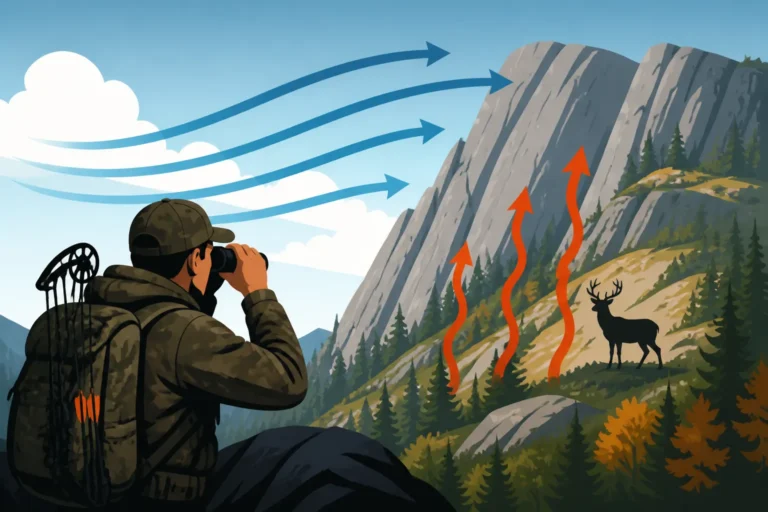
If snow isn't present, scout during periods of cold, clear weather after a hard frost. Deer are often more active during these times, moving to find food and shelter. Pay attention to wind direction during your scouting, too. Note which side of the fencerow offers the best protection from the prevailing winds, as this is where deer are most likely to bed. Using mapping tools like GoHunt can help you mark these observations, overlaying wind direction and thermals in steep granite terrain with potential bedding and feeding areas, giving you a comprehensive plan before you ever set foot in the woods with your hunting gear.
Effective Hunting Strategies for New Hampshire Fencerows
Once you've scouted your chosen fencerow and identified key areas of deer activity, it's time to put a hunting plan into action. Late-season conditions require thoughtful strategies, focusing on stealth, scent control, and understanding how deer will use the fencerow in response to hunting pressure and weather.
Stand Placement and Ground Blind Options
For ambush hunting, strategic stand placement is paramount. Look for locations along the fencerow that offer good visibility into the deer's likely travel path, while also providing adequate concealment for yourself. Often, this means setting up where two fencerows intersect, where a fencerow narrows, or where it comes close to a known bedding or feeding area. Consider prevailing wind direction carefully. In the late season, a deer's nose is its best defense, and you absolutely cannot afford to have your scent blowing into their travel corridor or bedding area. Use an app that shows wind direction or simply carry a small powder bottle to confirm.
If conditions or terrain don't allow for a treestand, or if you prefer a lower profile, a ground blind can be incredibly effective. Using a Ground Blind on Public Land is a great option, especially if you can brush it in naturally with surrounding cover. Place it within bow or rifle range of a well-used trail along the fencerow, ensuring you have clear shooting lanes. Always set up your stand or blind well in advance of your hunt, if possible, to allow deer to get accustomed to its presence. For a Cold-Weather Sitting Strategy in the North Country, ensure your blind offers protection from the wind and elements, allowing you to sit longer and stay focused.
Still-Hunting the Edges
Still-hunting is another highly effective tactic for fencerows, especially if you’re looking to cover more ground or if the fencerow is long and winding. This involves moving slowly, deliberately, and quietly along the edge of the fencerow, pausing frequently to observe and listen. The key is to be incredibly patient, taking only a few steps at a time, and letting your eyes and ears do most of the work. Scan every branch, every shadow, and every movement. Deer will often bed very close to, or even within, the dense cover of a fencerow.
When still-hunting, always try to work into the wind. This keeps your scent from preceding you and allows you to hear approaching deer more easily. Pay close attention to thermals, especially in the mornings and evenings, as they can carry your scent uphill or downhill. Just like Still-Hunting a White Mountains Notch Trail, adapt your pace to the terrain and the amount of cover. Move slowly enough that you could potentially spot a bedded deer before it sees you, giving you time to react. The aim isn't to walk quickly, but to effectively glass and scan the cover for deer.
Strategic Deer Drives
For hunters working with a small group, fencerows can be phenomenal assets for strategic deer drives. The linear nature of a fencerow, especially one that creates a Hunting a Funnel Between Two Woodlots, provides a natural barrier and funnels deer into predictable escape routes. This is particularly useful in late season when deer are often congregated in dense cover to escape pressure or find warmth.
A small drive, perhaps with just three or four hunters, can be incredibly successful. The "posters" or "blockers" should position themselves at the end or along key escape points of the fencerow, while the "drivers" slowly and deliberately push through the cover. Ensure all hunters are aware of safety zones and shooting lanes. Communication is key, especially in thick cover. Fencerows often separate properties, so always be mindful of Finding New Hampshire Property Lines and ensure all members of your party are aware of boundaries. A well-executed drive along a dense fencerow can push deer that are hunkered down right into the path of waiting hunters.
Addressing Common Fencerow Hunting Challenges
While fencerows offer fantastic opportunities, they also present unique challenges. From navigating property boundaries to battling the elements and dealing with hunting pressure, being prepared for these hurdles will significantly increase your success rate.
Navigating Property Lines and Permissions
Perhaps the biggest challenge when hunting fencerows, especially in New Hampshire's more populated areas, is that they often serve as property boundaries. This means a deer might be on public land one minute and private land the next, or your fencerow might sit directly on the line between two private parcels. It is absolutely crucial to know exactly where you are and where the property lines lie. Using a reliable mapping app like GoHunt, which clearly displays property ownership lines, is non-negotiable. Always verify your position before setting up a stand or making a shot.
Even if you're on public land, a deer might cross onto private property after the shot. Always respect private land rights. If a fencerow looks promising but is clearly on posted private land, your only option is to politely Knocking on Doors in New Hampshire Farm Country to request permission. Many landowners are receptive, especially if you approach them respectfully and offer to share some venison. Never assume permission, and never trespass, even to retrieve a downed animal. Knowing where the property lines are before you start hunting eliminates a lot of potential headaches and legal issues.
Weather and Scent Control
Late-season New Hampshire weather is notoriously unpredictable and often harsh. Freezing rain, heavy snow, and bitter winds are common. These conditions not only impact deer behavior but also demand careful consideration for your own comfort and safety, as well as stringent scent control. Deer's noses are always incredible, but in cold, stable air, scent can hang much longer and travel further. Hunting after a cold front can be great for deer movement, but it also often means clear skies and swirling winds that make scent control tricky.
Layering your clothing is essential to stay warm and dry, allowing you to remain on stand for extended periods. Wet and cold will send you home early, missing out on potential opportunities. Pay extra attention to scent elimination: use scent-free detergents for your hunting clothes, shower with scent-eliminating soap, and use scent sprays. Even in freezing temperatures, your body emits odor. Consider your entry and exit routes to and from your stand, always keeping the wind in mind. Approach your stand with the wind in your face or quartering, especially when deer are likely to be bedded in or near the fencerow.
Dealing with Hunting Pressure
Fencerows, because of their obvious advantages, can also attract other hunters. Dealing with hunting pressure is a reality in many areas of New Hampshire, and it can significantly impact deer movement. When pressured, deer will become even more nocturnal and will gravitate towards the thickest, nastiest cover they can find – often within a dense fencerow. They might choose to bed right in the middle of a thick fencerow, only moving during the absolute darkest hours.
To counteract pressure, consider hunting mid-day. Many hunters are out at dawn and dusk, but deer will often move during the quiet hours between 10 AM and 2 PM, especially on very cold days when they need to feed. Focus on the densest parts of the fencerow where other hunters might not want to penetrate. Look for areas where the fencerow passes through swamps, thick clear-cuts, or other difficult-to-access terrain. Deer will use these spots to escape pressure. Understanding Where New Hampshire Bucks Bed in Thick Cover during these times, often in or right adjacent to these fencerows, will give you an edge. Also, be aware of what constitutes a New Hampshire Deer Wintering Yards Explained in the context of fencerows that might connect larger wintering areas; these spots can hold significant numbers of deer.
| Fencerow Type | Late-Season Advantage | Hunting Strategy |
|---|---|---|
| Dense Evergreen | Excellent thermal cover, year-round visual obstruction. | Ideal for ground blinds or elevated stands at pinch points; still-hunt slowly. |
| Brushy Stone Wall | Windbreak, residual warmth from rocks, scattered browse. | Good for quiet still-hunting, look for deer bedded on sunny side. |
| Hardwood Line | Travel corridor, connects timber blocks, potential residual mast. | Stand placement at intersections or where line narrows; consider small drives. |
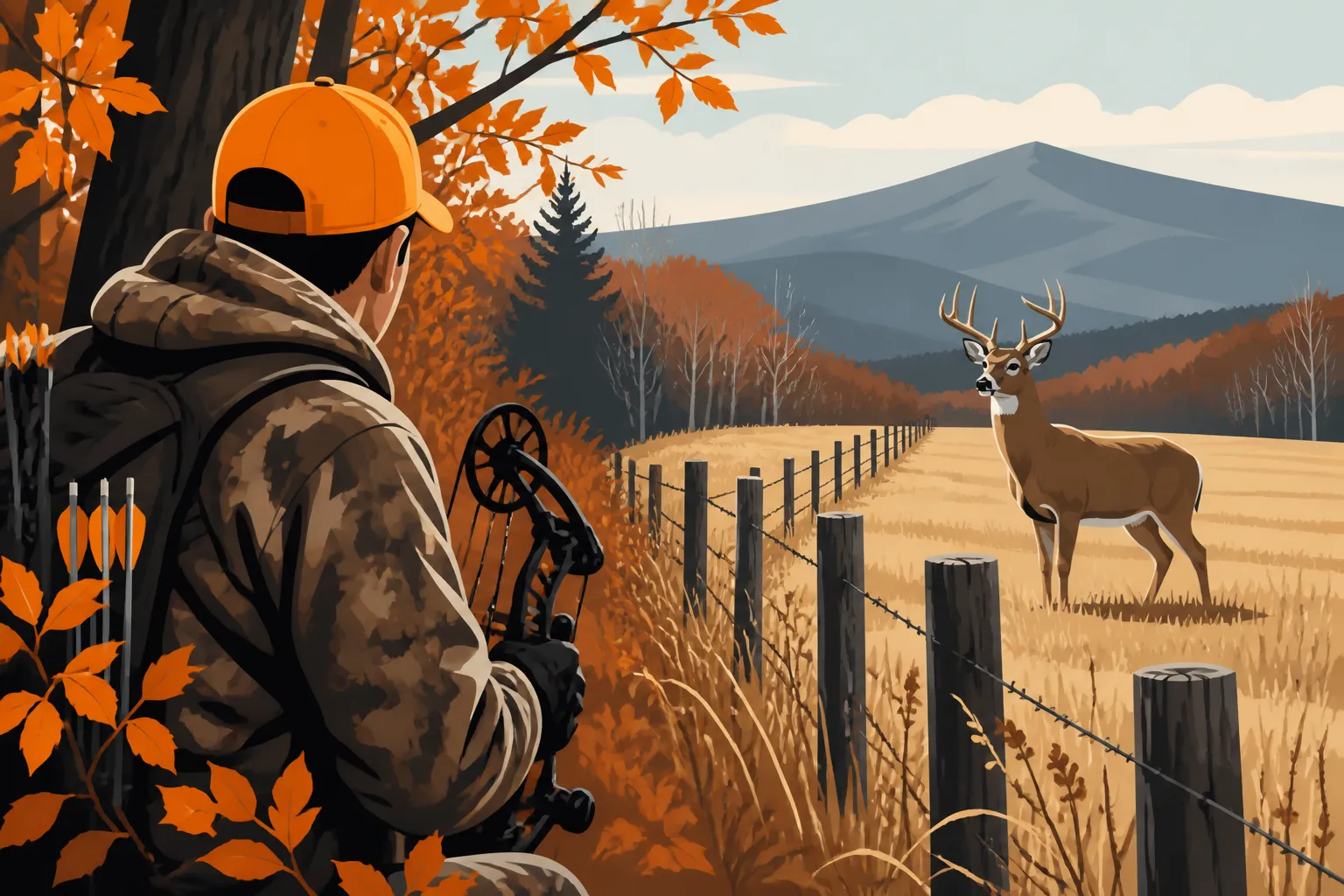
| Field Edge/Fence | Concealed travel to crop fields, leftover forage in ditches. | Ambush from treestand or ground blind overlooking the field edge. |
| Swamp Border | Connects high ground to wetland cover, often less pressured. | Still-hunt quietly from the higher ground, use waders if necessary. |
Disclaimer
Always consult the most recent New Hampshire Fish and Game Department hunting regulations for specific dates, licensing requirements, and any rules pertaining to hunting on public or private land. Regulations can change, and it is the hunter's responsibility to stay informed and compliant with all state laws.