New Hampshire WMU A Firearms Closing Date
Navigating New Hampshire's deer hunting regulations can feel like trying to decipher an ancient map, especially when you're trying to pin down specific season dates for different Wildlife Management Units (WMUs). Many hunters, myself included, have felt that familiar pang of frustration, realizing they might have missed a crucial detail, like when the firearms season actually wraps up in a particular area. It’s a real headache, and nobody wants to prematurely end their season or, worse, hunt out of season unknowingly. This guide is here to untangle the specifics of the New Hampshire WMU A firearms closing date, helping you understand not just when it closes, but why it’s important and how to plan for those crucial final days.
Understanding New Hampshire's WMU System for Deer
New Hampshire's approach to deer management is detailed, relying on a system of Wildlife Management Units (WMUs) that essentially carve the state into distinct regions. This isn't just about drawing lines on a map; it's about tailoring hunting seasons and regulations to the specific ecological conditions, deer populations, and hunting pressure found in each area. For us hunters, it means we can't just assume a statewide opening and closing date. We absolutely have to know which WMU we're in and what the rules are for that specific zone.
Why WMUs Exist and How They Impact Seasons
The New Hampshire Fish and Game Department designs these WMUs for a very good reason: to effectively manage the state's diverse deer herd. Think about it – the deep North Country, with its vast timberlands and harsh winters, presents a completely different set of challenges and opportunities for deer than the more populated, fragmented landscapes of the southern part of the state. If you apply a one-size-fits-all season across such varied habitats, you're either over-harvesting in one area or under-harvesting in another, potentially leading to unhealthy herd dynamics or increased deer-human conflicts.
WMUs allow the state biologists to set specific harvest goals, manage population density, and control hunter effort based on local conditions. This means that factors like winter severity, habitat availability, disease prevalence, and even local land-use patterns all play a role in determining season lengths and bag limits within each WMU. For deer hunters, this directly translates into varying archery, muzzleloader, and firearms season dates depending on where you choose to hunt. It's why knowing your WMU is just as important as knowing your weapon. For a broader overview, you might want to read our comprehensive guide on New Hampshire's WMU-Based Deer Season Structure.
Identifying WMU A on the Map
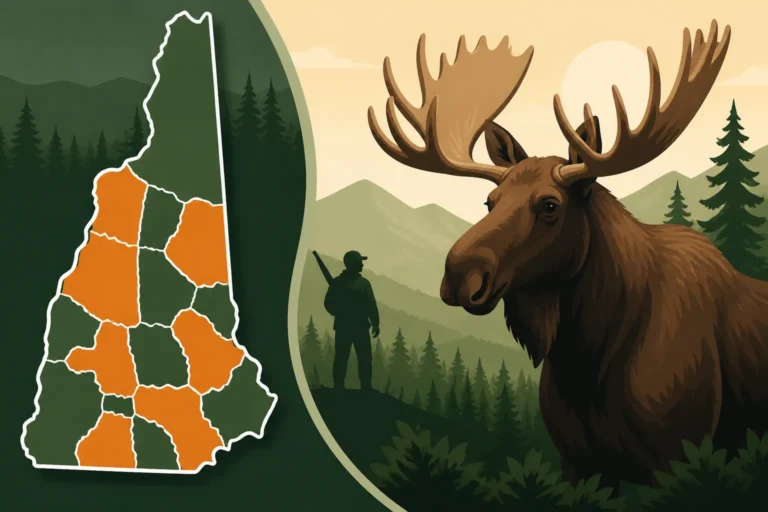
WMU A is one of the state's northernmost WMUs, encompassing a significant portion of what we affectionately call the "North Country." If you're looking at a map, it generally covers areas like Pittsburg, Clarksville, and other towns bordering Quebec, stretching down into the vast expanses of the White Mountain National Forest and parts of Coos County. This region is characterized by extensive timberland, dense softwood thickets, steep terrain, and notoriously harsh winter weather.
Understanding its geographical location is critical because it explains why the season dates might differ from, say, a WMU in the Lakes Region or the Monadnock Region. The deer here face tougher conditions, generally have lower population densities, and often require different hunting strategies. When you're planning a trip, whether you're still-hunting the edges of a beaver flowage or looking for a good vantage point over a clear-cut, make sure you've consulted an official map or used a mapping app like GoHunt to confirm your exact location within WMU A. Getting those boundaries straight before you head out is paramount for a legal and successful hunt.
Specifics of the WMU A Firearms Season Close
Alright, let's get down to brass tacks because this is where the rubber meets the road for many hunters. The firearms deer season in New Hampshire is a cherished tradition, but its end dates are not uniform across the state. WMU A, in particular, often has an earlier closing date compared to many other units, and missing this detail can ruin an otherwise perfect hunt.
The Exact Closing Date for WMU A Firearms
For WMU A, the firearms deer season typically concludes in mid-November. While specific dates can shift slightly year to year based on how the calendar falls, it's generally around the second or third Sunday of November. For instance, in recent years, you might see the season closing on November 12th or November 19th. It's absolutely crucial to consult the current year's New Hampshire Fish and Game Hunting Digest for the precise date. This is not a detail you want to guess at, or rely on memory from last season. That digest is your Bible for all things legal and timely.
This earlier closure reflects the unique challenges and conservation goals for the deer population in the northernmost reaches of the state. Shorter daylight hours, harsher weather, and the desire to protect deer before the most brutal winter conditions set in all contribute to this decision. Planning your hunt around this date means maximizing your time in the woods while staying compliant. Many hunters will target the New Hampshire Firearms Season Opening Day and the initial weeks to take advantage of the peak rut activity, but those last few days in WMU A are prime opportunities if you know how to leverage them.
What Sets WMU A Apart From Other Units
WMU A stands out primarily due to its combination of geography, climate, and deer population dynamics. Unlike the southern WMUs, which might have more agricultural land, suburban edges, and higher deer densities, WMU A is a wilder, more remote landscape. The deer here often have larger home ranges, face more predation from coyotes and bears, and endure much colder, snowier winters. This ecological reality necessitates a more conservative approach to harvest management.
Consider the other side of the state, perhaps a WMU in the southeast that might see its firearms season extend into early December. This longer season is a luxury often afforded by higher deer populations and more temperate conditions. But in WMU A, every deer makes a difference, especially a breeding doe. The earlier closing date is a direct management tool to ensure a healthy fawn crop and stable population numbers heading into the leanest months. As hunters, respecting these nuanced differences is part of being responsible stewards of the resource. Understanding the specific regulations for New Hampshire WMU A Firearms Closing Date is paramount.
| WMU | General Location | Typical Firearms Season Close | Reason for Date |
|---|---|---|---|
| A | North Country | Mid-November | Harsh winters, lower deer density, conservation |
| B | North Country | Mid-November | Similar to WMU A, but slightly less severe |
| H1 | Southern Central | Early December | Higher deer density, milder winters, more habitat |
| J2 | Seacoast | Early December | High deer density, mildest winters, fragmented habitat |
Hunting Strategies for the Late WMU A Firearms Season
Hunting the tail end of the firearms season in WMU A presents its own unique set of challenges and, honestly, some incredible opportunities. The woods will be quieter, deer patterns might have changed, and the weather can be downright brutal. But for those willing to brave the elements and adapt their tactics, these final days can be incredibly rewarding.
Adapting to Late Season Conditions in WMU A
By mid-November in WMU A, you're looking at a completely different landscape than early season. The leaves are definitely off the trees, providing better visibility but also making deer more skittish. Temperatures will be dropping, and you might even have your first significant snowfall. This means your comfort and safety become even more critical. Layering up is non-negotiable – think about your base layers, insulating mid-layers, and a waterproof/windproof outer shell. Our guide on Layering for New Hampshire's Cold Hunting Season can be incredibly helpful here.
Deer will be shifting their focus more heavily towards food sources and bedding areas that offer thermal cover. They've also been pressured for weeks, both by archery and muzzleloader hunters, and now the firearms season. This means they're warier, often moving more during low-light hours or staying bedded in the thickest, nastiest cover they can find. Forget about those easy-to-access field edges unless you're willing to sit from first light to last. Instead, focus on dense softwood stands, thick regenerating clear-cuts, or deep swamps. These are the places deer will retreat to when hunting pressure is high.
Another crucial adaptation is understanding how deer use terrain in cold weather. They'll often seek south-facing slopes to catch what little sun there is, and these areas can also offer a slightly earlier melt of snow, exposing more forage. Keep an eye out for areas where deer can get out of the wind, even a slight ridge or a dip in the topography can provide significant thermal advantage for them.
Key Considerations for Success in the Final Days
Success in the late WMU A firearms season often boils down to patience, perseverance, and precise scouting. Those final days are not for the faint of heart, but they can pay off big.
First, food sources are paramount. With most natural forage depleted or covered in snow, deer will be keying in on anything edible. This could be remnants of acorns or beechnuts if it was a good mast year, or it could be browse in clear-cuts where young saplings are abundant. Identify these limited food sources and focus your efforts around them. Using mapping tools like GoHunt can help you identify potential clear-cuts or specific timber stands that might offer this crucial browse. You might even find success focusing on Late-Season Food Sources for New Hampshire Whitetails if you can locate them.
Second, hunting pressure is a double-edged sword. It can make deer incredibly elusive, but it can also push them into areas they wouldn't normally frequent. If you know there's a lot of activity in one spot, consider setting up on a travel corridor away from the pressure, along a ridge or a thick-cover funnel, anticipating deer being pushed through. This is where a good understanding of Hunting a Funnel Between Two Woodlots can come in handy.
Third, still-hunting or slow-driving can be highly effective. Deer are less likely to respond to rattling or grunting calls by this point, as they're typically more focused on survival. Instead, slow, methodical still-hunting through thick cover can surprise a bedded buck. If you're with a small group, a quiet, well-planned deer drive through a known bedding area can also be productive, but ensure you understand the ethics and safety involved. Remember, visibility might be better with bare trees, but sound travels far on cold, crisp days. Move slowly, scan constantly, and rely on your eyes and ears. Paying attention to Finding Sign in White Mountain Timber will be crucial for these tactics.
Important Regulations Beyond the Closing Date
Even after you've nailed down the WMU A firearms closing date, your regulatory responsibilities don't end. There are several other critical rules and guidelines that every New Hampshire deer hunter must adhere to, not just for legal compliance but for safety and ethical hunting practices.
Blaze Orange and Safety Requirements
Safety is paramount in the woods, especially during the firearms season when multiple hunters might be in the same area. New Hampshire law mandates that all deer hunters (and anyone else in the woods hunting any species during the firearms deer season) wear a minimum amount of blaze orange (or blaze pink) clothing. This isn't just a suggestion; it's a legal requirement and a common-sense safety measure.
Specifically, you need to wear at least 200 square inches of exposed blaze orange (or blaze pink) above the waist, visible from all sides. This typically means a vest, hat, or jacket. While some advanced camouflage patterns incorporate blaze orange, make sure you're meeting the minimum square inch requirement. This bright color isn't meant to spoil your stealth; it's meant to ensure you're visible to other hunters, dramatically reducing the risk of accidental shootings. Even if you're alone in a remote area, you should still wear it. You never know when another hunter might wander into your vicinity, or when a non-hunter might be out enjoying the woods. For a full breakdown, check out the New Hampshire Blaze Orange Requirements guide.
Beyond blaze orange, always practice fundamental firearm safety: treat every firearm as if it's loaded, always point the muzzle in a safe direction, keep your finger off the trigger until ready to shoot, and be sure of your target and what's beyond it. These rules are non-negotiable and save lives.
Reporting Your Harvest in WMU A
So, you've done it! You've navigated the regulations, braved the cold, and successfully harvested a deer in WMU A before the season closed. Congratulations! But your hunt isn't truly over until you've legally reported your harvest. This is a critical step for both legal compliance and for contributing to wildlife management efforts.
New Hampshire requires that all deer harvested be reported within 12 hours of being taken. This data is incredibly valuable to the Fish and Game Department, providing crucial information on population trends, harvest success rates, and the health of the deer herd in specific WMUs. This information helps shape future season dates, bag limits, and management strategies.
You have a few options for reporting your deer. The easiest and most common method for many hunters these days is through the New Hampshire Fish and Game online licensing and registration system or their mobile app. It's quick, efficient, and ensures your information is recorded accurately. Make sure you have your license and tag information readily available. In rare instances, there might be "blackout days" where online registration isn't available, requiring in-person registration at a physical check station. Always be prepared for this possibility by knowing the location of your nearest check station, just in case. Our article on Registering a New Hampshire Deer Online offers more details on this process. Regardless of how you do it, ensure it's done within the legal timeframe. It's the final, responsible act of a successful hunter.
Disclaimer
Always consult the current year's official New Hampshire Fish and Game Hunting Digest for the most up-to-date regulations, season dates, and legal requirements. This article provides general information and should not be considered a substitute for official state publications.