New Hampshire Snowshoe Hare Population Trends
It's tough when you head out into the woods, bundle up for that quiet, crisp winter morning, and find the tracks just aren't there like they used to be. For many New Hampshire hunters, the sight of a snowshoe hare bounding through a thicket or the distinctive "thump" of a beagle on its trail brings a special kind of joy and challenge. But lately, we’ve been hearing a lot of folks wonder where all the hares have gone, or if they’re just getting harder to find. This guide will dive deep into the fascinating world of New Hampshire's snowshoe hare population, exploring the trends, challenges, and what we might expect for these elusive creatures.
Understanding the Snowshoe Hare in New Hampshire
The snowshoe hare, with its incredible seasonal camouflage and knack for navigating dense cover, is a beloved game species in the Granite State. For generations, these quick-footed lagomorphs have provided both sustenance and thrilling hunts, often accompanied by the joyful baying of hounds. But beyond the hunt, they play a vital role in our forest ecosystems.
The Elusive Forest Dweller
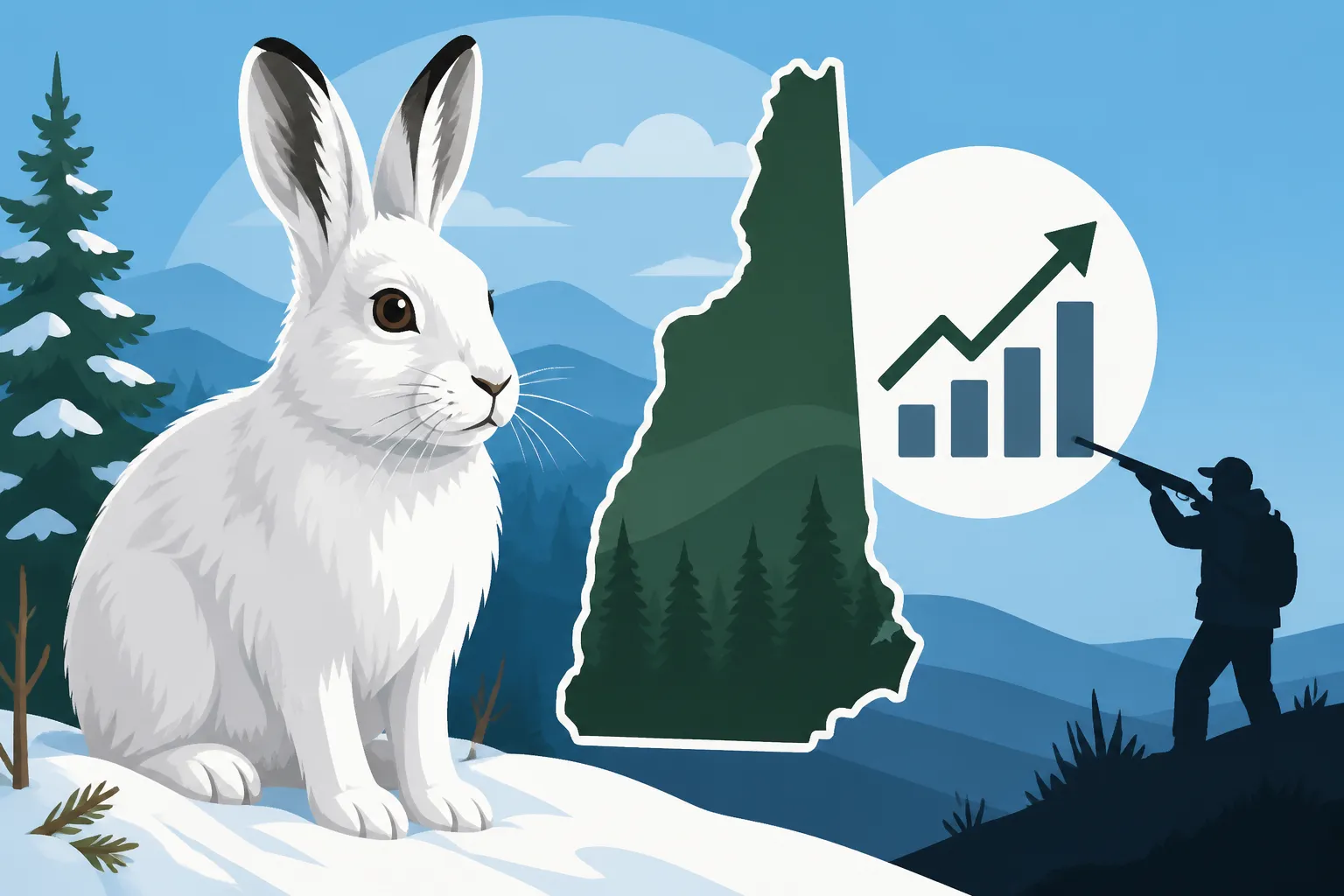
Anyone who has spent time stalking through New Hampshire's wintry woods knows the magic of encountering a snowshoe hare. In summer, their coats are a dappled brown, blending seamlessly with the forest floor and undergrowth. Come winter, they transform, shedding their brown fur for a pristine white, making them nearly invisible against a snowy backdrop. This remarkable adaptation, along with their oversized, "snowshoe" like feet that distribute their weight and prevent them from sinking into deep drifts, makes them perfectly suited for our northern climate. They're not just a fleeting shadow; they're a master of their environment, constantly aware of their surroundings.
Hunting snowshoe hare often means venturing into the densest parts of the forest, the places where thick spruce, fir, and young hardwoods create an almost impenetrable sanctuary. This isn't a sit-and-wait kind of hunt, at least not always. It's an active pursuit, a real test of woodsmanship, patience, and often, endurance. For those of us who cherish these experiences, the thought of fewer hares in our favorite coverts is a genuine concern, impacting not just our hunting opportunities but also a piece of our outdoor heritage. The meat from a snowshoe hare is lean and flavorful, a fantastic reward for the effort, making them a valued part of a successful hunting season alongside New Hampshire Small Game and Furbearers.
Life Cycle and Adaptations to a Granite State Winter
Snowshoe hares are prolific breeders, a necessity given their place low on the food chain. They can have multiple litters, or "broods," throughout the warmer months, typically from early spring through late summer. Each litter can range from one to eight young, though four is a common average. This rapid reproductive rate is what allows their populations to bounce back quickly when conditions are favorable. However, it also means they are highly susceptible to environmental shifts that might disrupt breeding or reduce fawn survival.
Their famous seasonal color change, known as molting, is triggered by changes in day length, not temperature, which can sometimes lead to issues. Imagine a hare that turns white in November when there's no snow on the ground—suddenly, their camouflage is a glaring liability rather than an asset. This timing mismatch is becoming a more frequent problem with our increasingly unpredictable winters. Their large feet also help them navigate the deep snow that is (or was) characteristic of much of New Hampshire, giving them an advantage over many predators. Their diet primarily consists of herbaceous plants in summer, shifting to twigs, bark, and buds of various shrubs and young trees in winter. This adaptability in diet is key, but access to these food sources, especially in deep snow, can still be a limiting factor.
Factors Influencing Snowshoe Hare Populations
Understanding why snowshoe hare populations fluctuate requires looking at a complex web of environmental factors. It's rarely one single thing, but rather a combination of pressures that can lead to booms and busts in their numbers. For hunters who closely observe the land, these shifts are often quite evident over time.
Habitat Loss and Fragmentation
Perhaps the most significant long-term factor affecting snowshoe hare populations in New Hampshire is habitat. Hares thrive in dense, young forests, often characterized by thick stands of spruce, fir, cedar swamps, and areas of regenerating timber. They need this thick cover for protection from predators and harsh weather. However, many parts of New Hampshire have seen changes in forest composition and development patterns.
As suburban sprawl pushes further into rural areas, prime hare habitat can be lost to housing developments, roads, and commercial properties. Even in areas that remain forested, older, more mature stands often lack the dense undergrowth that hares require. While mature forests have their own ecological value, they typically don't provide the optimal living conditions for snowshoe hares. Modern forestry practices, if not specifically designed with hare habitat in mind, can also contribute to fragmentation or temporary habitat loss. Historically, widespread logging practices in the 19th and early 20th centuries inadvertently created vast swaths of prime regenerating habitat, contributing to periods of abundance. Now, careful planning is needed to ensure such habitat is created and maintained. For hunters scouting areas, looking for this specific type of cover is crucial, and mapping tools like those found on GoHunt can be invaluable for identifying potential hare hangouts before you even step foot in the woods. This is especially true when you are trying to find Where New Hampshire Hare Populations Hold Up Best.
Predation Pressures
Snowshoe hares are a foundational prey species, meaning a lot of other animals rely on them for food. Their impressive reproductive rate is nature's way of ensuring their survival against a host of predators. In New Hampshire, hares face threats from a variety of sources, including coyotes, bobcats, fox, fisher, owls, and various hawks.
The balance between predator and prey is a delicate one. If predator populations increase, or if hare habitat becomes less effective at providing cover, hare populations can suffer. For instance, the expansion of coyote populations across New Hampshire has been noted by many hunters over the past few decades. While coyotes are opportunistic hunters, hares are certainly on their menu. Similarly, species like bobcats and fisher, which also thrive in dense forest environments, are efficient hare predators. If a hare population is already stressed by habitat issues or climate effects, increased predation pressure can hit them particularly hard. This dynamic often explains why, even if you find good habitat, the hares might still seem scarce—they could be getting picked off before they can establish a strong presence. The sheer volume of predators, from avian to mammalian, means hares are under constant pressure.
Climate Change and Seasonal Shifts
This is perhaps the newest and most challenging factor impacting snowshoe hares. Their unique adaptation of changing fur color based on day length, not snow presence, is becoming a significant liability. In recent years, New Hampshire has experienced warmer winters with less consistent snow cover.
Imagine a hare that has turned completely white by late November, only for a warm spell to melt all the snow, leaving the ground bare and brown. That hare is now a stark white target against a dark background, easily spotted by any predator flying overhead or stalking through the underbrush. This "camouflage mismatch" can drastically increase their vulnerability to predation for weeks or even months at a time. Furthermore, warmer temperatures can affect their overall energy expenditure, food availability, and even parasite loads. The timing of their breeding cycles, while generally robust, could also be subtly affected by prolonged warm periods or unusual cold snaps that impact early spring vegetation. These climate shifts are not just an academic concern; they are a very real, observable phenomenon for anyone who spends time in the New Hampshire woods, leading to tangible impacts on species like the snowshoe hare.
Historical and Current Population Trends
Looking back at the history of snowshoe hare populations in New Hampshire can offer valuable context for understanding what we're seeing today. Like many wildlife species, their numbers have ebbed and flowed, but the direction of those flows in recent decades has given many hunters pause.
Past Abundance and Traditional Hunting
Anecdotal evidence and old hunting tales often speak of a time when snowshoe hares were far more abundant than they are today. Many veteran hunters can recount stories of flushing multiple hares in a single thicket or having consistent success with their hounds. This era of apparent abundance likely coincided with extensive logging operations across New Hampshire in the late 19th and early 20th centuries. These large-scale timber harvests, while devastating to old-growth forests, inadvertently created vast tracts of young, regenerating forest—perfect habitat for snowshoe hares.
Hunters historically relied heavily on snowshoe hares as a reliable source of winter meat and recreation. The tradition of Running Beagles on a New Hampshire Snowshoe Hare is deeply ingrained in our hunting culture, a cherished activity passed down through generations. These hunts were not just about filling the freezer; they were about camaraderie, the joy of a good dog, and the challenge of navigating the winter woods. The ease with which one could find hares then contrasted sharply with the more challenging hunts of today, fostering a sense of nostalgia and concern among those who remember the "good old days."
Modern Trends and Challenges
Today, the picture for snowshoe hares is more complex, and in many areas, less optimistic. While New Hampshire Fish and Game monitors harvest numbers, direct population surveys for a species as elusive and widespread as the snowshoe hare can be challenging to conduct statewide. However, the consistent feedback from hunters and observations from wildlife biologists point towards a general decline in many areas, particularly in the southern and central parts of the state where habitat fragmentation and development pressures are more intense.
Harvest reports, though not a direct measure of population, can give us an indication of hunter effort and success. When hunters consistently report fewer hares taken, it's often a sign that populations are not as robust as they once were. Modern challenges like climate change, with its erratic snow patterns, coupled with ongoing habitat changes, contribute to this observed decline. It's not a universal crash, but rather a persistent downward trend in many traditional hare hunting grounds. This makes detailed scouting and using resources like GoHunt to analyze land features even more critical for today's hare hunter, as general knowledge alone might not cut it anymore. GoHunt can assist with topographical maps and satellite imagery that might help pinpoint specific habitat pockets.
Here's a simplified look at how various factors might be influencing hare populations:
| Factor | Impact on Hare Population | Specific New Hampshire Context |
|---|---|---|
| Habitat Quality | Decreasing | Loss of dense, young forest to development; maturing forests less ideal. |
| Predation | Increasing Pressure | Healthy populations of coyotes, bobcats, fisher, and owls; less effective hare camouflage. |
| Climate Change | Negative | Unpredictable snow cover leading to camouflage mismatch; warmer winters affecting survival. |
| Disease | Variable | Generally not a primary driver of large-scale decline, but can affect localized populations. |
| Food Availability | Generally Stable | Hares are adaptable, but deep snow or habitat changes can impact access to winter browse. |
Regional Variations Across New Hampshire
It's important to remember that New Hampshire is a diverse state, and snowshoe hare populations don't experience the exact same conditions everywhere. What might be true for a covert in the Seacoast Region could be entirely different from the deep woods of the North Country.
Generally speaking, hare populations tend to be more stable, and in some areas, even robust, in the more remote and heavily forested regions of northern New Hampshire. Areas like the White Mountain National Forest and the larger tracts of public and private timberlands in Coos and northern Grafton counties often still provide the expansive, dense spruce-fir and regenerating hardwood cover that hares need. Here, habitat fragmentation is less of an issue, and while predators are present, the sheer scale of the habitat can sometimes provide enough refuge for hares to maintain healthier numbers. This is why Hunting New Hampshire's North Country can still be a productive venture for hare hunters.
As you move south, closer to the more populated Merrimack Valley and southern tier, hare numbers generally drop off. Here, development pressures are highest, and suitable habitat patches are often smaller and more isolated. These smaller, fragmented patches make hares more vulnerable to predation and less resilient to environmental changes. Even within WMUs, you'll find microclimates and specific habitat types that can either support a decent hare population or leave them struggling. Knowledge of these regional differences is key for any hunter planning a hare trip, and you can delve deeper into areas like New Hampshire Snowshoe Hare Harvest Numbers to see how takes vary by region.
Management and Conservation Efforts
Despite the challenges, the dedicated professionals at New Hampshire Fish and Game, alongside various conservation partners, are working to understand and, where possible, mitigate the pressures on snowshoe hare populations. It’s not just about regulating hunting, but about managing the landscape itself.
Habitat Management Initiatives
Because habitat is such a critical factor for snowshoe hares, much of the management effort focuses on creating and maintaining the dense, young forest environments they depend on. This often involves specific forestry practices designed to promote early successional habitat. Techniques like clear-cutting small patches, creating diverse age classes within a forest stand, and encouraging regeneration of certain shrub species can provide the necessary thick cover.
These efforts often occur on state-owned lands, such as Wildlife Management Areas (WMAs) and State Forests, where habitat for various species is a primary management goal. By strategically managing timber harvests, these areas can be rotated through different stages of growth, ensuring a continuous supply of young forest. Collaborative efforts with private landowners and timber companies are also crucial, as a significant portion of New Hampshire's forests are privately owned. Educating landowners about wildlife-friendly forestry practices, including those beneficial to hares, is a long-term conservation strategy. Hunters themselves can support these efforts by purchasing hunting licenses and equipment, as a portion of those funds often goes directly to conservation programs that benefit species like the snowshoe hare. When Hunting a Beaver Flowage Edge, you might sometimes find good hare habitat emerging in the regrowth.
Research and Monitoring
Effective wildlife management relies on solid scientific data. For snowshoe hares, this means ongoing research and monitoring efforts by New Hampshire Fish and Game biologists. While direct population counts are difficult, various methods are employed to gauge population trends. This can include tracking harvest data (from mandatory registration or voluntary hunter surveys), conducting specific surveys for hare presence (e.g., track counts in winter), and studying the prevalence of predators in hare habitats.
Biologists also track environmental factors like snow depth and duration, trying to correlate these with observed hare numbers and survival rates. Hunter input is incredibly valuable in this process; local observations from folks who are out in the woods regularly can provide crucial ground-truthing for broader trends. This is where apps and platforms that gather hunter data, or even just keen personal observation, become important. Knowing the trends helps state agencies make informed decisions about season lengths, bag limits, and habitat projects. For those interested in deeper data, platforms like GoHunt sometimes aggregate public hunting data or provide resources for state-specific harvest information, offering insights into New Hampshire Snowshoe Hare Harvest Numbers that can inform your own scouting.
What Hunters Can Do and the Future Outlook
While the challenges facing snowshoe hares are significant, hunters can play a vital role in their conservation. Our passion for the species gives us a vested interest in their future, and our actions, both in the field and beyond, can make a difference.
Responsible Hunting Practices
Ethical and responsible hunting is always paramount. For snowshoe hares, this means adhering strictly to all regulations regarding season dates, bag limits, and legal hunting methods. These regulations are set based on the best available scientific data to ensure sustainable harvest levels and prevent overexploitation. Being mindful of your take, especially in areas where hare populations seem to be struggling, is an act of stewardship.
Furthermore, being a responsible hunter involves accurate identification of your quarry. While snowshoe hares are distinctive, understanding their behavior and habitat ensures a clean, ethical shot. It also means respecting the land, whether it's Public Hunting Land in New Hampshire or private property. Leaving no trace, minimizing disturbance, and always prioritizing safety for yourself, your hunting companions, and any dogs you might use, contributes positively to the public perception of hunting and wildlife conservation as a whole. Remember, every hunter is an ambassador for the sport.
Supporting Conservation and Advocating for Habitat
Beyond ethical hunting, active participation in conservation efforts is crucial. Financial support through the purchase of hunting licenses and stamps directly funds state wildlife agencies and their habitat work. Joining conservation organizations that advocate for wildlife and habitat protection, like local chapters of the Ruffed Grouse Society or other forest habitat groups, can also amplify your impact. These organizations often lobby for policies that benefit species like snowshoe hares by promoting beneficial forest management practices.
Hunters can also be advocates themselves, educating others about the importance of early successional habitat and the unique challenges faced by species like the snowshoe hare. Sharing your observations with New Hampshire Fish and Game through their reporting channels can also contribute valuable data to their research. The more informed we are, the better we can advocate for the resources and management strategies that support healthy hare populations. This requires staying up-to-date with current wildlife news, which you might find through resources available on platforms like GoHunt, or by regularly checking the New Hampshire Fish and Game website.
The Outlook for Snowshoe Hare Hunting in New Hampshire
It's natural to feel a bit disheartened when you see declines in a species you cherish. The outlook for snowshoe hares in New Hampshire is a mix of challenges and potential. It's realistic to acknowledge that the days of extremely abundant hares across all but the densest northern regions may be behind us for the foreseeable future, especially with the ongoing impacts of climate change on snow cover.
However, that doesn't mean the end of snowshoe hare hunting. It means it will likely become more localized and require more diligent scouting and a deeper understanding of specific habitats. Areas of consistent, dense young forest, particularly in the North Country or well-managed WMAs, will continue to offer opportunities. Hunters may need to adjust their expectations, focusing more on the quality of the experience and the thrill of the chase than on large bag limits. Efforts in habitat management and continued research offer hope for stabilizing populations and even seeing localized recoveries. The enduring spirit of the New Hampshire hunter, adaptable and resilient, ensures that the pursuit of the snowshoe hare, even if challenging, will continue to be a cherished tradition in the Granite State. So pull on those Boots for North Country Bog Hunting, grab your gear, and keep your eyes peeled for those tell-tale tracks.
Disclaimer
This article is for general informational purposes only and does not constitute professional advice. Laws, prices and regulations vary by location and change over time. Consult a qualified professional for guidance on your specific situation.