New Hampshire Deer Wintering Yards Explained
When the snow piles deep in New Hampshire, and the biting wind whips through the hardwoods, deer face one of their toughest challenges of the year: sheer survival. Many hunters find themselves scratching their heads, wondering where all the deer have gone. This guide will pull back the curtain on one of nature's most critical winter survival strategies for whitetails – the deer wintering yard – helping you understand their importance and how they influence deer movement and your late-season hunting opportunities.
The Critical Role of Wintering Yards for New Hampshire Deer
For anyone who spends time in the New Hampshire woods, especially as the calendar flips into late November and December, you’ve likely noticed a significant shift in deer patterns. That wide-ranging buck you were chasing in October seems to vanish, and the small groups of does and fawns are suddenly nowhere to be found. This isn't magic; it's a strategic move born out of necessity, a testament to the whitetail's incredible adaptability in the face of harsh New England winters. Deer aren't just looking for shelter; they're actively seeking out specific types of habitat that significantly increase their chances of surviving until spring. These crucial areas are what we call deer wintering yards, or often, "deer yards."
What Makes a "Yard" a Sanctuary?
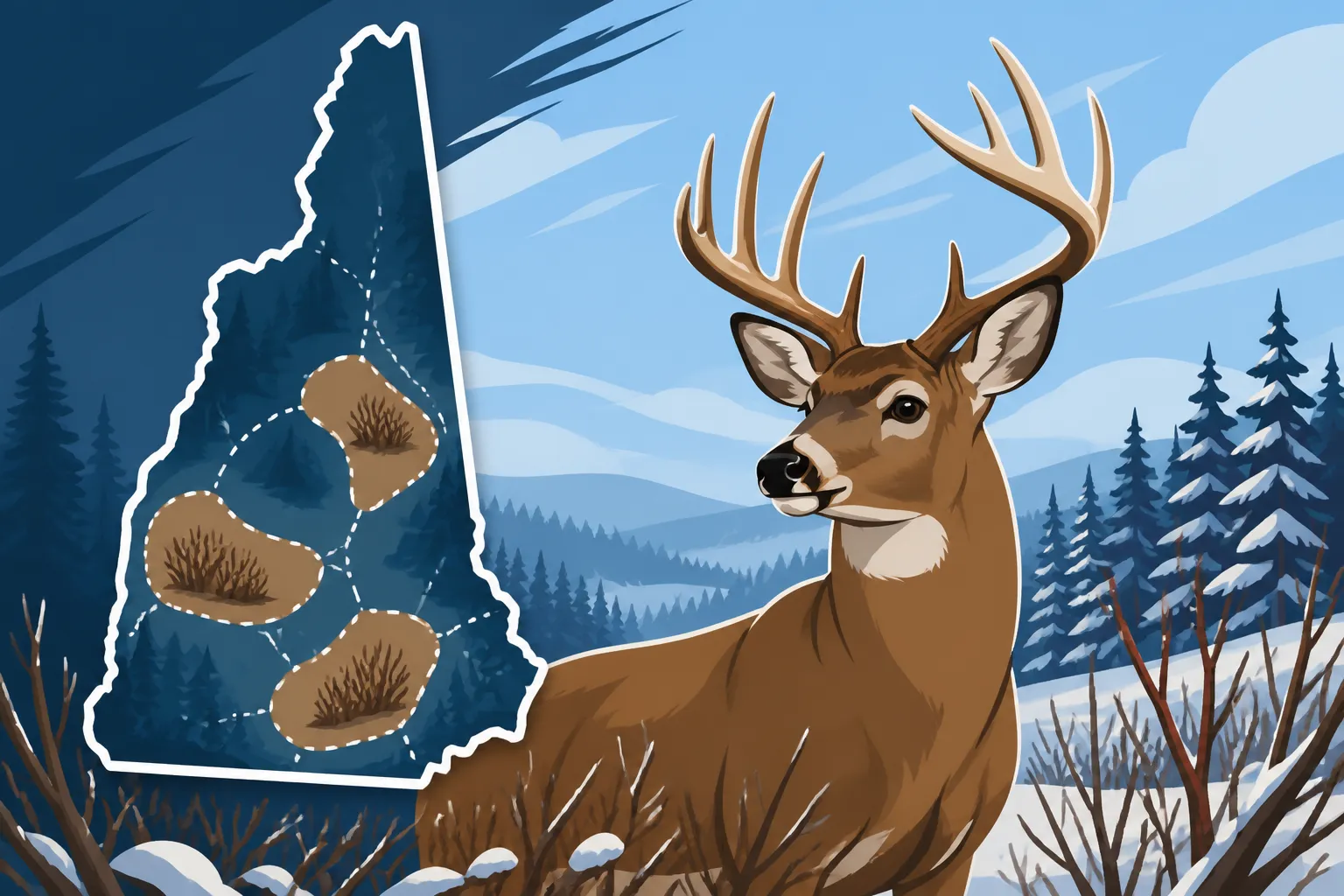
So, what exactly is a deer wintering yard, and why is it so vital? At its core, a wintering yard is a specific area of habitat where deer congregate during periods of deep snow and severe cold. The defining characteristic of a good deer yard is dense softwood cover, primarily stands of hemlock, spruce, and fir. Think about those dark, thick evergreen forests where the snow on the ground seems a foot or two shallower than out in the open hardwoods. That's the magic of the canopy. These evergreens act like a giant umbrella, intercepting falling snow and preventing it from accumulating as deeply on the forest floor. This means deer don't have to expend as much energy plowing through deep drifts, making travel within the yard far more efficient.
Beyond snow interception, the dense canopy also provides crucial thermal cover. On bitter cold days, standing in a thick hemlock grove offers a noticeable buffer against the wind and helps hold in what little warmth the deer's bodies can generate. It’s like their own natural, insulated shelter. In New Hampshire, especially in the central and northern parts of the state where snow depths can be extreme and cold snaps unforgiving, these yards aren't just preferred spots; they are absolute necessities for the survival of the herd. Without them, we'd see significantly higher winter mortality, particularly among fawns and older, weaker deer. Understanding How Deep Snow Affects New Hampshire Deer Survival can give you an even clearer picture of this challenge.
The Energy Conservation Strategy
Deer enter the winter with fat reserves built up during the abundant fall mast crop. Their survival hinges on making those reserves last until spring green-up. Wintering yards are central to this energy conservation strategy. By congregating in these sheltered areas, deer minimize their energy expenditure in several critical ways. First, as mentioned, shallower snow means easier movement. Every calorie saved from not having to break trail is a calorie that prolongs survival. Second, the thermal cover reduces the amount of energy their bodies need to burn just to stay warm. Think of it as a natural windbreak and insulation that slows down heat loss.
Within these yards, deer often create a network of trails, further reducing the effort needed to move between bedding areas and limited food sources. While food isn't the primary reason deer move into yards – thermal cover and reduced snow depth are – they still need to browse. Yards often have some available browse, primarily evergreen twigs, buds, and lichen, which while not high-quality, can sustain them. The goal isn't to gain weight but to simply maintain until spring. This strategic shift in behavior, driven by an instinct to conserve every last bit of energy, is why these yards are so crucial, and why understanding them is key to successful late-season hunting.
How to Identify a Potential Wintering Yard in the Field
Knowing what a deer wintering yard is a great start, but the real challenge for hunters comes in actually finding these elusive havens out in the vast New Hampshire landscape. It’s not always as simple as looking for the densest stand of pines. There are specific characteristics, both in the terrain and in the visible deer sign, that can help you pinpoint these critical areas. Leveraging modern scouting tools can also give you a serious leg up.
Reading the Landscape: Topography and Cover Clues
When you're looking for potential deer yards, you need to think like a deer whose sole purpose is to survive the cold and snow. They're seeking warmth, shelter from the wind, and easier travel. This means certain topographical features and types of cover are magnets for yarding deer.
- Dense Evergreen Stands: As discussed, thick stands of hemlock, spruce, and fir are paramount. Look for areas where the canopy is so thick that little sunlight penetrates, and the undergrowth is sparse. These stands offer the best thermal and snow interception benefits. You’ll often find these alongside rivers, in ravines, or tucked into the lee side of hills.
- South-Facing Slopes: Deer are solar-powered in winter. South-facing slopes receive more direct sunlight throughout the day, melting snow faster and providing a warmer microclimate. A thick softwood stand on a south-facing slope? That's a five-star hotel for a wintering deer.
- Sheltered Valleys and River Bottoms: These areas are often protected from prevailing winds and can accumulate less snow due to wind patterns. They also frequently contain the dense softwood stands that deer seek out. Think about the areas along the Connecticut River or smaller drainages; they can be prime locations.
- Saddles and Ridges that Block Wind: While deer primarily seek thermal cover, they'll also use topographical features to break the wind. A deep saddle or a ridge that creates a lee side (the side protected from the wind) can offer additional shelter, especially if combined with dense evergreens. Hunters often find Hunting a Granite Ridge Saddle effective in the right conditions.
Decoding Deer Sign: Tracks, Browse, and Beds
Once you’re in a promising area, it’s time to slow down and become a detective. Wintering yards are defined by concentrated deer activity, and the sign will reflect that.
- Concentrated Tracks: This is often the most obvious indicator. Instead of scattered tracks, you’ll see a maze of crisscrossing trails, almost like a miniature highway system, weaving through the thick cover. These trails will be packed down, indicating repeated use by many deer.
- Browse Lines: Look for areas where woody vegetation has been heavily browsed. Deer will eat twigs, buds, and small branches of various species, including hemlock, maple, and birch. A clear "browse line" where all palatable vegetation below a certain height has been eaten is a strong indicator of prolonged, heavy deer use. Late-Season Food Sources for New Hampshire Whitetails talks more about what deer are eating when the snow flies.
- Deer Beds: These will be plentiful within the core of a yard, often sheltered beneath thick evergreens or along the edges of dense thickets. Look for depressions in the snow or ground, often with droppings nearby. You might even find where several deer have bedded down together for warmth. Where New Hampshire Bucks Bed in Thick Cover offers more insights into their bedding habits.
- Droppings: High concentrations of deer droppings are another clear sign. While scattered droppings are common year-round, within a yard, you'll find them almost everywhere, indicating sustained presence.
- Rub Lines and Scrapes (less common in deep winter, but possible at edges): While rub lines and scrapes are more prevalent during the rut, you might find some older, dormant rubs along the edges of a yard, marking transition zones or travel routes that bucks used before the deep snow drove them into the core.
Leveraging Technology for Scouting
In today's world, you don't have to walk every acre to find potential deer yards. Modern technology can drastically reduce your scouting time and increase your efficiency.
- Mapping Apps (e.g., GoHunt): Platforms like GoHunt, and others, offer incredible satellite imagery and topographical maps. You can visually identify dense evergreen stands (they appear darker green on satellite imagery) and cross-reference them with south-facing slopes and sheltered terrain features.
- Aerial Photos: Zooming in on aerial photos allows you to see the actual tree canopy. Look for expansive areas of dark green that indicate conifer stands. You can often trace river corridors or major drainages and identify where the timber thickens.
- Topographical Maps: These are essential for identifying those subtle dips, ridges, and slopes that offer protection. Overlaying topo lines with satellite imagery on an app like GoHunt can paint a very clear picture of potential yarding habitat. For those who prefer physical maps, the USGS maps are invaluable. Best GPS App for New Hampshire Public Land can provide more detail on useful tools.
- New Hampshire Fish and Game App: The official app can also offer insights into public land boundaries and sometimes specific habitat features, making it a great companion for scouting. Learning to use Scouting With the New Hampshire Fish and Game App is a crucial skill for any local hunter.
Table: Winter Yard Characteristics vs. Non-Yarding Habitat
| Feature | Typical Wintering Yard | Non-Yarding Habitat (Post-Snow) |
|---|---|---|
| Primary Cover | Dense Hemlock, Spruce, Fir | Open Hardwoods, Young Growth, Agricultural Fields |
| Snow Depth | Significantly shallower (due to canopy interception) | Deep and unbroken drifts |
| Thermal Protection | Excellent (blocks wind, holds warmth) | Poor (exposed to wind and cold) |
| Deer Density | High concentration of deer | Very low, deer typically avoid |
| Deer Sign | Numerous, packed trails; heavy browse lines; many beds | Sparse tracks, occasional browse; few or no beds |
| Topography | Often south-facing slopes, sheltered valleys, river bottoms | Exposed ridges, open flats, north-facing slopes |
| Hunting Potential | High, especially on edges and travel corridors | Very low, unless adjacent to a yard's exit/entry point |
Ethical Considerations and Hunting Strategies Around Wintering Yards
Finding a deer wintering yard can feel like hitting the jackpot, especially late in the season when other areas seem barren. However, these critical habitats require a thoughtful and ethical approach from hunters. While these areas can offer incredible hunting opportunities, it’s crucial to minimize stress on deer during their most vulnerable time of year.
Timing Your Approach: Late Season Opportunities
Deer are primarily driven into wintering yards by significant snow depths and sustained cold. This means that these yards become increasingly important, and therefore more active, as the hunting season progresses deeper into winter. For New Hampshire hunters, this often translates to opportunities during the latter parts of the season.
- Late Archery Season: As November turns into December, and early snows start to accumulate, deer will begin to transition towards their wintering areas. The Hunting the December Archery Close can be particularly effective around the edges of these yards. While deer are not as tightly "yarded up" as they will be in January and February, they are certainly beginning to use the thick cover more consistently.
- Muzzleloader Season: New Hampshire's muzzleloader season typically follows the main firearms season, often coinciding with colder temperatures and deeper snow. This makes Hunting Into the December Muzzleloader Close a prime time to target deer that are consolidating their movements around these thermal refuges. The combination of limited range and the quiet approach of a muzzleloader hunter can be very effective without being overly intrusive.
- Early Firearms Season (less direct): While deer yards aren't typically a primary focus during the main November firearms season, areas adjacent to known yards can see increased activity as deer begin to seek out more cover even before severe weather fully sets in. Hunters should always consult New Hampshire's WMU-Based Deer Season Structure to ensure they are hunting within legal dates for their specific Wildlife Management Unit.
It's important to recognize that once deer are heavily yarded, usually after several feet of snow have accumulated and temperatures have consistently dropped below freezing, disturbing them directly can have severe consequences for their survival. Their stored energy is finite, and undue stress can deplete it rapidly.
Mindful Hunting: Minimizing Stress on Vulnerable Deer
Ethical hunting around wintering yards means prioritizing the well-being of the deer herd. The goal is to harvest an animal efficiently, not to push or scatter a vulnerable herd.
- Avoid Direct Intrusion into the Core: The absolute core of a dense wintering yard, especially during peak severe weather, should generally be avoided. This is their sanctuary, where they are trying to conserve every ounce of energy. Repeatedly pushing deer out of these areas can lead to exhaustion, starvation, and even death.
- Focus on Edges and Transition Zones: The best strategy is to hunt the edges of the wintering yard. Deer will move in and out of the dense cover to access sparse food sources, or simply shift bedding areas within the larger yard complex. These transition zones, where the thick softwoods meet hardwoods or brushy clear-cuts, are excellent places to set up.
- Quick, Clean Kills: This is paramount. A wounded deer that travels a long distance or requires extensive tracking expends critical energy it cannot afford to lose. Prioritize ethical shot placement, and if possible, only take shots where you have a high confidence of a clean kill and quick recovery. Field Dressing a Deer in Cold Weather highlights the practical aspects of handling your harvest efficiently in challenging conditions.
Effective Stand Placement and Approach Routes
Once you've identified a promising wintering yard and committed to hunting its fringes ethically, the next step is strategic stand placement and careful approach planning.
- Identify Funnels and Travel Corridors: Deer will use the path of least resistance. Look for natural funnels created by changes in topography or cover that lead into or out of the yard. This might be a narrow strip of hardwoods between two thick softwood blocks, a natural bench on a hillside, or a creek bottom. These are prime locations for a stand. Hunting a Funnel Between Two Woodlots goes into detail about recognizing and exploiting these natural pathways.
- Scout for Exit and Entry Points: Watch for where deer are consistently entering and exiting the densest cover. These pathways will be heavily worn down, especially in the snow. Setting up a stand or ground blind slightly off these main trails, where you can intercept deer moving naturally, is highly effective.
- Consider Wind and Thermals: This is always crucial, but especially so around deer yards where deer are highly sensitive to perceived threats. Approach your stand with the wind in your face or quartering. In steep terrain, understand how Wind and Thermals in Steep Granite Terrain affect deer movement, especially at dawn and dusk when air currents are most active. You want your scent blowing away from where you expect deer to approach.
- Quiet Entry and Exit: Since deer are concentrated and often sensitive to disturbance, make your approach and exit as quiet and non-intrusive as possible. Avoid breaking branches, minimize talking, and use routes that keep you out of the deer's primary bedding and travel areas until you are on stand. If you do take a deer, have a plan for Dragging a Deer Out of a Granite Ravine without disturbing the entire area.
The Broader Ecological Importance of Deer Wintering Yards
Deer wintering yards are far more than just convenient hunting spots; they are vital ecological components that underpin the health and stability of New Hampshire's deer population. Understanding their broader significance helps underscore the importance of protecting and managing these unique habitats.
Impact on Deer Population Health
The presence, size, and health of deer wintering yards directly correlate with the overall health and population density of the whitetail herd in different regions of New Hampshire.
- Survival Rates: Healthy, well-distributed wintering yards are the primary determinant of fawn survival rates and the overall overwinter survival of the herd. Without adequate thermal cover and reduced snow depths, winter mortality can skyrocket, especially during severe winters. This can significantly impact the following year's hunting opportunities and population numbers.
- Herd Dynamics: The quality of wintering habitat also influences the age structure and overall condition of the deer. Deer that consistently survive harsh winters due to access to good yards are generally healthier, can produce more robust fawns, and grow larger antlers. In areas with poor yarding habitat, even if summer forage is plentiful, the population will struggle to reach its full potential.
- Density and Distribution: The distribution of deer across the New Hampshire landscape is heavily influenced by the availability of wintering yards. Deer will migrate significant distances, sometimes several miles, to reach these preferred winter habitats when the snow dictates. This leads to distinct seasonal shifts in deer density, with concentrations forming around yards during the winter months. These shifts are a key factor when considering New Hampshire Deer Population Estimate and its regional variations.
Winter Yards and Habitat Conservation
Recognizing the indispensable role of deer wintering yards highlights their importance in habitat conservation efforts. These areas are not just important for deer but also provide crucial habitat for other wildlife species that benefit from the sheltered, evergreen environment.
- Forest Management: Landowners and forest managers often incorporate the protection and enhancement of wintering yards into their timber harvesting plans. Selective cutting or long-rotation management in these areas ensures the continued presence of dense softwood stands critical for deer. This might mean retaining hemlock groves, especially on south-facing slopes, even if other timber is harvested.
- Public Land Management: State agencies, like New Hampshire Fish and Game, and federal entities, such as the U.S. Forest Service in the White Mountain National Forest, play a significant role in identifying and protecting these critical habitats on public lands. Their management plans often include specific provisions to maintain and, where possible, expand, suitable wintering habitat.
- Climate Change Considerations: As climate patterns shift, the importance of these resilient habitats may only grow. While winters might become milder overall, periods of extreme cold and heavy snow could still occur, making these thermal refuges even more vital for deer that might otherwise be less adapted to prolonged deep snow. Conservation of these areas helps build resilience into the deer population for future climatic challenges.
Deer wintering yards are truly a marvel of natural adaptation and a cornerstone of successful deer management in New Hampshire. By understanding them, respecting them, and incorporating them into our hunting and conservation strategies, we ensure the continued health and vitality of our state's whitetail herd for generations to come.
Disclaimer
This article is for general informational purposes only and does not constitute professional advice. Laws, prices and regulations vary by location and change over time. Consult a qualified professional for guidance on your specific situation.