New Hampshire Turkey Population Estimate
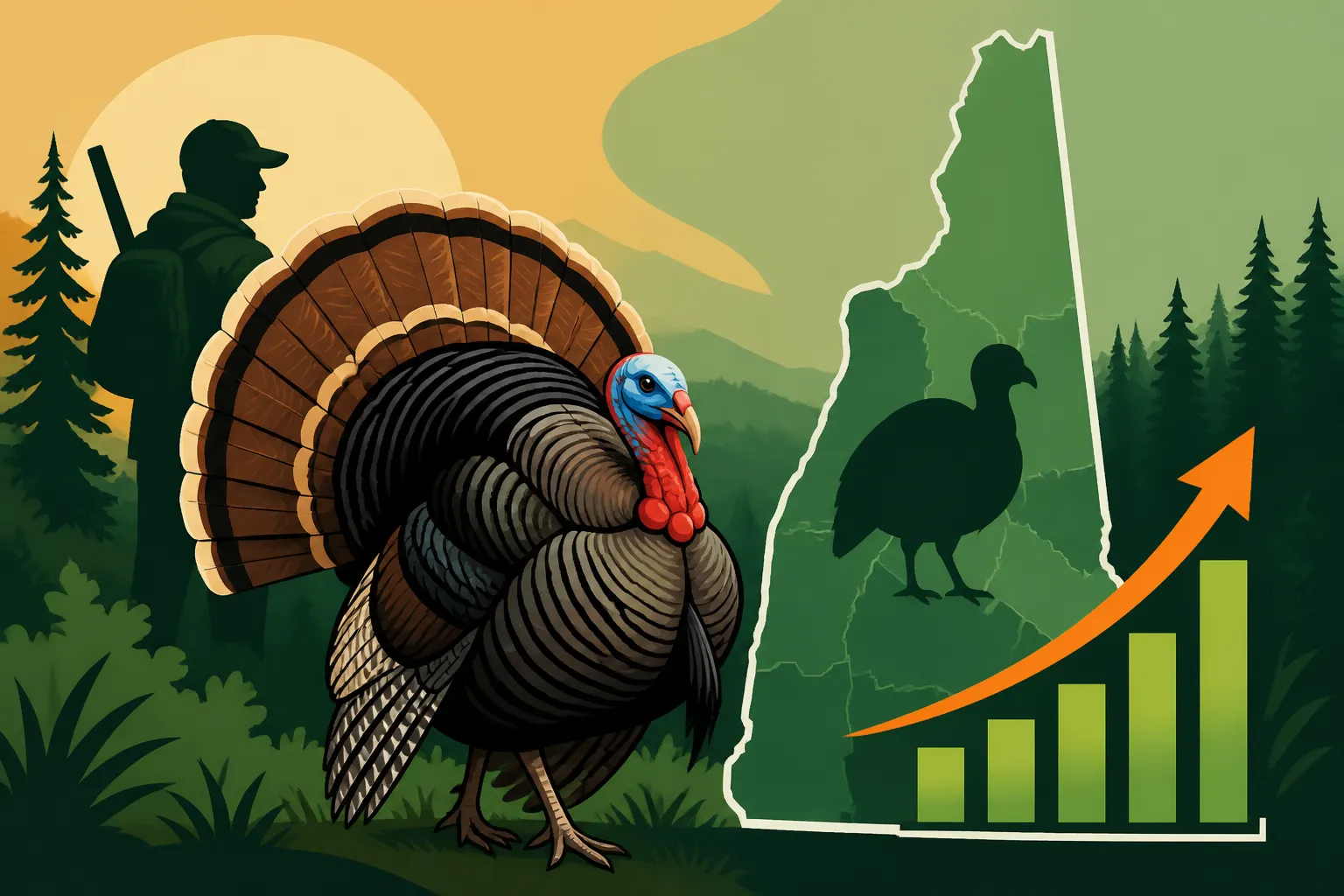
Many New Hampshire hunters, myself included, spend countless hours chasing those elusive spring gobblers or trying to break up a fall flock, and it’s natural to wonder just how many wild turkeys are actually out there. It can feel like some years they’re everywhere, and other years you’re walking miles without hearing a peep, leaving you scratching your head about the overall health of the population. This guide will dive into what we know about the wild turkey population estimate in New Hampshire, exploring the methods used to track them and the factors that influence their numbers, so you can have a clearer picture of this incredible game bird.
Understanding New Hampshire's Wild Turkey Population: More Than Just a Number
It's truly remarkable when you consider the journey of the wild turkey in New Hampshire. For many years, these magnificent birds were largely absent from our landscapes, a stark contrast to the abundant populations we enjoy today. This absence wasn't due to a lack of suitable habitat; rather, it was the result of historical overhunting and dramatic changes in land use that essentially wiped them out by the late 1800s. Imagine a New Hampshire spring without the booming gobble echoing through the hardwoods – it's almost unthinkable now, but that was the reality for generations.
The efforts to bring turkeys back to the Granite State began in earnest decades ago, a testament to dedicated wildlife management and the resilience of the species. Through successful reintroduction programs, bringing birds from other states with thriving populations, and carefully managing burgeoning flocks, we've witnessed an incredible resurgence. This comeback story is a huge point of pride for conservationists and hunters alike, transforming what was once a dream into a vibrant hunting opportunity. If you're interested in the full narrative, there's a fantastic historical account titled How Turkeys Were Restored to New Hampshire that really puts it all into perspective.
Today, New Hampshire boasts a robust and widespread wild turkey population, a far cry from those lean years. While wildlife agencies don't often release a single, concrete number for the entire state's turkey population, they do focus on trends, density, and distribution. What's more important than an exact count is understanding if the population is growing, stable, or declining, and why. This focus allows for adaptive management, ensuring hunting seasons and regulations are tailored to the health of the flocks across different regions. For any serious hunter, understanding these broader trends is invaluable when planning your season, and tools like GoHunt can help you overlay this general knowledge with specific public land maps to identify potential hotspots.
Factors Influencing Turkey Population Dynamics in the Granite State
Wild turkey populations are incredibly dynamic, constantly shifting based on a complex interplay of environmental factors, available resources, and the presence of predators. It’s never as simple as just "more birds" or "fewer birds"; there are always underlying reasons, and as hunters, observing these changes firsthand gives us a real appreciation for the delicate balance of nature.
Habitat and Food Availability
The foundation of any healthy turkey population is, without a doubt, quality habitat. Turkeys need a mix of mature hardwoods for roosting, open fields or forest clearings for foraging, and dense undergrowth for nesting and escape cover. New Hampshire offers a fantastic mosaic of these elements, particularly in its rolling hills and river valleys. Mast crops, like acorns and beech nuts, are critical seasonal food sources, dictating how well birds can put on weight for winter and how successful their breeding efforts might be. A bumper crop means stronger birds heading into the colder months, while a poor mast year can lead to higher mortality rates, especially for poults. You'll often find birds congregating in areas with reliable food sources, and knowing their New Hampshire Turkey Roost Tree Preferences can give you an edge in locating them.
Water sources are also crucial, especially during dry periods. Turkeys don't typically travel far from water, so understanding local creeks, ponds, and even snowmelt patterns can be key to finding active areas. Development, of course, plays a role. As more of our wild spaces are fragmented or paved over, prime turkey habitat can shrink, pushing birds into smaller, more concentrated areas or forcing them to adapt to suburban fringes. This adaptation isn't always successful, and it's a constant challenge for wildlife managers to balance human expansion with the needs of our wild game.
Predation and Weather Challenges
Predation is a natural and constant pressure on turkey populations. Coyotes, bobcats, foxes, raccoons, and even raptors all take their toll, especially on vulnerable poults and nesting hens. While a healthy adult gobbler is a formidable bird, nests and young birds are highly susceptible. The success of a hatch can be significantly impacted by local predator density. For instance, an area with a high raccoon population might see lower nesting success compared to an area where these nest predators are less numerous.
Weather is perhaps the biggest wildcard. Severe winters, particularly those with deep, persistent snow and ice, can make foraging extremely difficult, leading to higher winter mortality, especially in northern regions. More critically, cold, wet springs can devastate turkey broods. Poults are particularly vulnerable to hypothermia in their first few weeks, and a prolonged period of rain and chilly temperatures right after hatching can dramatically reduce recruitment numbers for that year. Hunters often feel this impact a year or two later when fewer jakes and young hens show up in the woods. This is why agencies closely monitor New Hampshire Turkey Brood Survey Results to get an early indication of future population health.
Hunting Pressure and Management
Regulated hunting, far from being a detriment, is a vital tool in wildlife management. New Hampshire's turkey seasons, like the exciting spring hunt where you might try Calling a May Gobbler Off the Roost or the unique Hunting the Shotgun-Only Fall Turkey Week, are carefully structured to align with population goals. By setting bag limits, season lengths, and specific legal methods, biologists ensure that harvest levels are sustainable and don't negatively impact the overall population.
For instance, the emphasis on harvesting male birds (gobblers) in the spring protects the breeding hens, allowing them to raise their broods. Fall seasons are often more liberal or focused on dispersal, allowing for the harvest of birds that might be competing for resources or venturing into less ideal habitat. The success of these management strategies is often reflected in the annual New Hampshire Spring Turkey Harvest Numbers and New Hampshire Fall Turkey Harvest Numbers, which provide crucial data points for biologists. These figures, alongside general population trends, are closely watched to make informed decisions about future regulations, maintaining that delicate balance between opportunity for hunters and the long-term health of the turkey population.
How New Hampshire Tracks Its Turkey Numbers
You might wonder how wildlife agencies estimate something as fluid and widespread as a wild turkey population, especially when you're out there using your GoHunt app and scratching your head over a quiet morning. It's not like counting sheep in a pasture; it requires a combination of several different data collection methods to build a comprehensive picture. These methods allow them to understand not just the numbers, but also the health and distribution of the birds.
Hunter Harvest Data and Reporting
One of the most reliable and long-standing methods for tracking game populations, including turkeys, is through mandatory hunter harvest reporting. When you successfully tag a turkey in New Hampshire, you're required to report that harvest to the state Fish and Game Department. This data, which includes the date, location (often by WMU), and gender of the bird, provides invaluable insight. Over time, these harvest numbers create a clear picture of success rates, population density in different regions, and the overall pressure on the turkey resource.
Consider how these numbers contribute to the bigger picture. If harvest numbers in a specific Wildlife Management Unit (WMU) consistently decline despite similar hunting effort, it can signal a localized population issue. Conversely, sustained high harvest numbers suggest a healthy, thriving population. This data is critical for understanding New Hampshire Turkey Population Trends and helps wildlife managers make informed decisions about future season structures and bag limits. It's truly a collaborative effort between the state and its hunters to gather this vital information.
Brood Surveys and Sighting Reports
Beyond harvest data, wildlife agencies also rely heavily on "citizen science" through brood surveys and general wildlife sighting reports. During the summer months, when poults are young, the Fish and Game Department encourages the public, including hunters, landowners, and outdoor enthusiasts, to report sightings of turkey hens with their broods. This data, often collected through online portals or dedicated survey forms, helps biologists assess nesting success and poult survival rates for the year. The number of poults per hen is a key metric in determining the reproductive success of the flock.
A robust brood survey showing many hens with large clutches of poults is a strong indicator of a healthy, growing population that had a successful breeding season, perhaps due to favorable weather or abundant food. On the other hand, consistently low poult-to-hen ratios can signal challenges, such as high predator pressure or poor spring weather. These surveys are essential for forecasting what the population might look like in the upcoming hunting seasons and inform long-term management strategies.
Long-term Trend Analysis
Ultimately, getting a true "estimate" of the turkey population isn't about counting every single bird, but rather about analyzing all these diverse data points over many years to identify trends. Biologists look at things like changes in statewide harvest, regional variations, poult survival, and even general observation trends to determine if the population is expanding, holding steady, or declining. They combine harvest data, brood survey results, and scientific habitat assessments to draw conclusions about the overall health and trajectory of the turkey population.
This long-term perspective allows them to understand the impact of factors like a series of harsh winters, an exceptional mast crop, or increased predator populations. It’s about seeing the forest for the trees, so to speak. This comprehensive analysis ensures that decisions about things like the total New Hampshire Spring Turkey Permit Rules or fall season lengths are based on solid, historical data rather than just a single year's observations. Tools like GoHunt can help you visualize these trends on a map, giving you a better understanding of Where New Hampshire Turkeys Are Densest and which WMUs are considered the Best New Hampshire WMUs for Turkeys in any given season.
Regional Differences in Turkey Density Across New Hampshire
While we talk about New Hampshire's turkey population as a whole, the reality on the ground is far more nuanced. Just as the landscape varies dramatically from south to north, so too do the turkey numbers and densities. A turkey hunt in the rolling farmlands of the Monadnock region is a vastly different experience from chasing birds in the rugged White Mountain foothills, and the population dynamics reflect that.
From the Seacoast to the North Country
You'll find turkeys pretty much everywhere in New Hampshire these days, a testament to their adaptability and the success of restoration efforts. However, their density often correlates with habitat quality and human population centers. The southern and central regions of the state, with their mix of mature oak and hickory forests, agricultural fields, and suburban edges, tend to hold the highest concentrations of birds. These areas offer ideal foraging grounds, plentiful roosting trees, and often more moderate winter conditions compared to the harsh northern climes.
As you move further north into the Coos and northern Grafton counties, the landscape shifts dramatically to more coniferous forests and higher elevations. While turkeys certainly exist here, their densities tend to be lower. The deep snows and colder temperatures of a North Country winter can be much harder on turkeys, and the habitat, while still beautiful, might offer fewer of those prime mast-producing hardwoods. This doesn't mean you can't find birds in the North Country – you absolutely can – but you might have to work harder, cover more ground, and adjust your expectations compared to hunting the more populated southern regions where Hunting the Two-Bearded-Bird Spring Limit is a more common goal.
Impact of Land Use and Development
The patchwork of land use across New Hampshire plays a significant role in where turkeys thrive. Areas with a healthy mix of agriculture, active timber management, and undeveloped forestland tend to be turkey strongholds. Farmlands provide grain and insect-rich fields, while timber cuts create new growth and bugging areas crucial for poults. Conversely, heavily developed urban centers or vast, unbroken tracts of dense, mature softwood forest that lack clearings and diverse food sources will naturally hold fewer birds.
Even within a single region, local land use can create "turkey pockets." A prime example might be an old apple orchard surrounded by mixed hardwoods in an otherwise dense forest, or a series of powerline cuts that offer open, sunny areas for foraging. Understanding these microhabitats is where tools like GoHunt really shine, allowing hunters to identify potential food sources, roosting areas, and travel corridors even before stepping into the woods. The constant evolution of our landscape, from housing developments to changing agricultural practices, means that turkey populations are always adapting, and understanding these shifts is key to successful and sustainable hunting.
| Factor | General Impact on Turkey Population | Effect on Hunter Opportunity |
|---|---|---|
| Abundant Mast Crop (Acorns, Beech) | Increased survival, better health | More robust birds, wider dispersal |
| Mild Winter (Less Snow/Ice) | Higher overwinter survival, stronger breeders | More mature birds in spring, earlier breeding |
| Dry, Warm Spring (Hatch) | High poult survival, strong recruitment | More jakes/young birds in following seasons |
| High Predator Density | Lower poult/nest survival | Fewer young birds, localized declines |
| Habitat Fragmentation/Loss | Decreased carrying capacity, localized decline | Reduced access, concentrated birds |
| Successful Brood Rearing | Population growth | More birds available in fall and future springs |
| Severe Winter | Increased mortality, weakened breeders | Fewer birds, tougher hunting in spring |
| Cold, Wet Spring | Low poult survival, poor recruitment | Noticeable decline in young birds |
Disclaimer
This article is for general informational purposes only and does not constitute professional advice. Laws, prices and regulations vary by location and change over time. Consult a qualified professional for guidance on your specific situation.