New Hampshire Lynx Sightings in the North Country
The whispers of a ghost cat in New Hampshire's North Country have always fascinated those of us who spend serious time in the deep woods. It's a rare and truly special thing to even think you've caught a glimpse of a Canada lynx, and it's easy to mistake another elusive furbearer, the bobcat, for this incredible creature. This guide is here to help you understand the history, characteristics, habitat, and how to properly confirm and report a sighting of a lynx, should you be lucky enough to cross paths with one.
The Elusive North Country Lynx
There's something almost mythical about the Canada lynx in New Hampshire. For many, it’s a creature heard about in old stories or seen in nature documentaries from much farther north. But every now and then, a report surfaces, reminding us that these magnificent cats could still be out there, making their quiet way through our most remote forests. They are the epitome of wildness, perfectly adapted to deep snow and solitude, and understanding their presence, however fleeting, gives us a deeper appreciation for the Granite State's wildest places.
A History of Lynx in New Hampshire
Historically, Canada lynx were indeed part of New Hampshire's rich wildlife tapestry, especially in the northernmost reaches of the state. These weren't just transient visitors; they were residents, though never in huge numbers. As settlement expanded, and forest habitats changed dramatically due to logging and agriculture over centuries, the lynx population dwindled and eventually disappeared from the state. It's a sad but common story for many of our large predators. For a long time, the only lynx seen here were fleeting dispersals from populations in Maine or farther north in Canada.
However, recent decades have seen a resurgence of suitable habitat in some parts of the North Country, particularly as spruce-fir forests have regrown in areas that were heavily logged. While there isn't a known, established breeding population of lynx in New Hampshire today, the occasional sighting, often of a dispersing individual from thriving populations in neighboring states or provinces, keeps the hope alive for those of us who dream of a more complete ecosystem. These sightings are incredibly valuable to wildlife biologists, offering clues about potential range expansion and habitat connectivity. Every confirmed instance is a testament to the wild heart of our state and the incredible resilience of nature.
Identifying a Canada Lynx
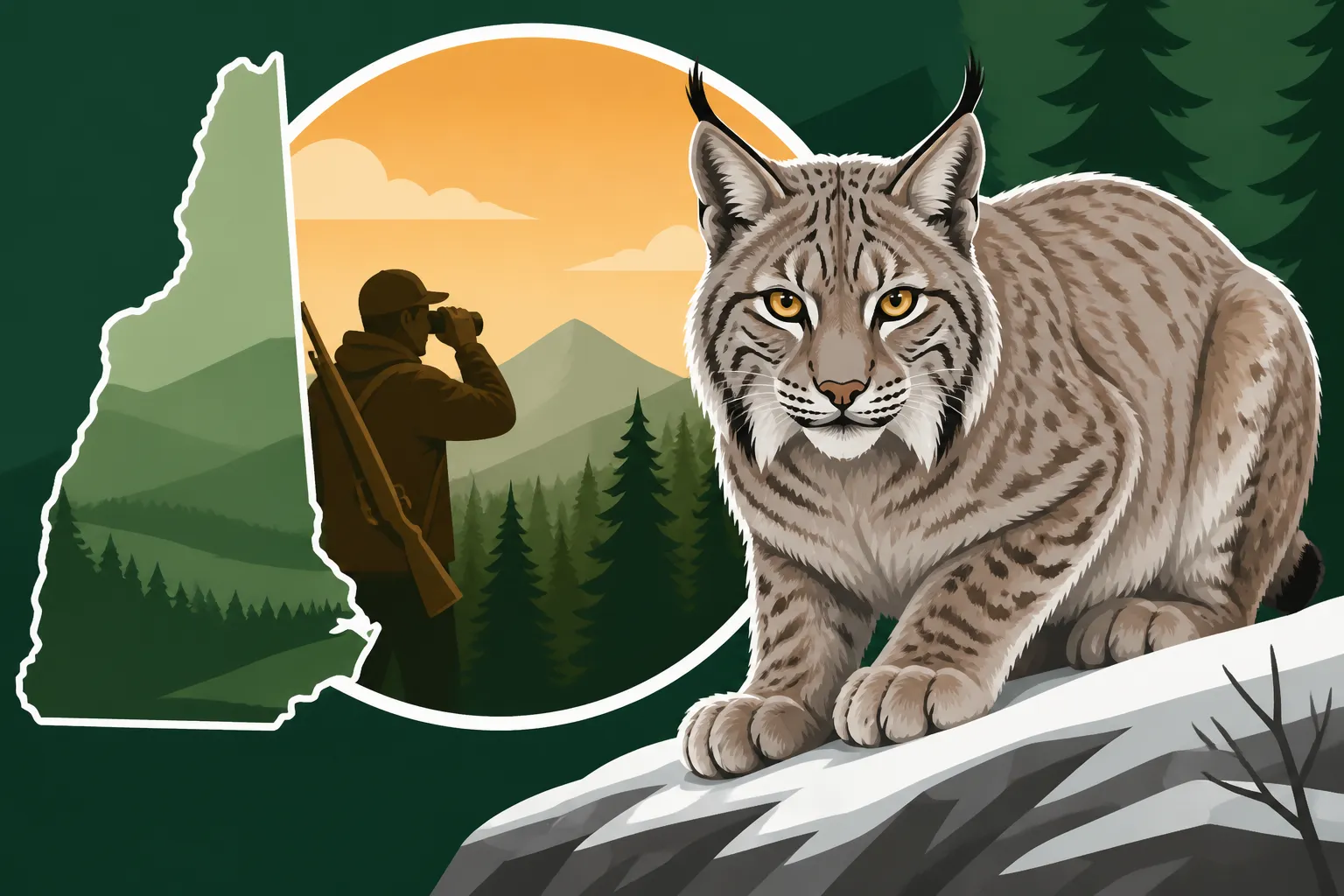
Spotting a lynx is a truly rare event, and it's easy to confuse them with their more common, albeit still reclusive, cousin, the bobcat. To the untrained eye, they can look remarkably similar, but there are distinct characteristics that set the Canada lynx apart. The most striking features are their incredibly large, heavily furred paws, which act like natural snowshoes, allowing them to traverse deep snow without sinking. Think of them as having built-in winter tires. Their coats are typically a grayish-brown, often appearing somewhat mottled, but without the distinct spots or streaks that you might see on many bobcats.
Another dead giveaway is their short, stubby tail, which appears to be "dipped" in black, often with a complete black tip all the way around, unlike the bobcat's tail which usually has black banding and a white underside at the tip. Look closely at their ears too; lynx have prominent, long black tufts on the tips of their ears, far more noticeable than the shorter tufts on a bobcat. Their faces often appear broad and round, framed by a distinctive ruff of fur that can give them a somewhat whiskered appearance. When you put all these features together, a lynx has a uniquely "snow-adapted" look, built for the deep, cold winters of the boreal forest.
Where Lynx Might Be Found in New Hampshire
When we talk about potential lynx habitat in New Hampshire, our eyes immediately turn to the vast, wild expanses of the North Country. This is where the landscape most closely resembles the boreal forests where lynx truly thrive, and it's precisely why any reports or potential sightings come from this remote corner of the state.
Preferred Habitat in the North Country
Canada lynx are specialists when it comes to habitat, and their preference is overwhelmingly for dense, mature spruce-fir forests. These aren't your typical mixed hardwoods or open pine stands you might find further south. We're talking about thick, often swampy, evergreen forests with a dense canopy that shades out much of the undergrowth, creating a dark, secluded environment. These areas often feature a significant amount of downed timber and dense pockets of young growth, providing excellent cover for both the lynx and their primary prey: the snowshoe hare. You'll find these conditions in places like Coos County, particularly around the Connecticut Lakes Headwaters region and extending into the vast public and private timberlands of the very northern tip of the state. Hunting the North Country often means navigating these deep woods, where the chance of encountering truly wild animals is highest.
They also prefer areas with deep, persistent snow cover throughout the winter. Their enormous paws are perfectly designed for navigating this type of terrain, giving them a significant advantage over other predators like coyotes or even bobcats, whose smaller paws cause them to sink more readily. This advantage is crucial for hunting snowshoe hares, which remain active on top of the snow. These remote, high-elevation, or generally inaccessible areas are often the last bastions for species that require minimal human disturbance. Using mapping tools like GoHunt can help you identify these specific types of forest cover and elevation changes that indicate prime habitat, even if you're just looking at a map from home.
The Role of Snowshoe Hare Populations
You absolutely cannot talk about Canada lynx without talking about snowshoe hares. These two species are inextricably linked in a classic predator-prey relationship, so much so that the populations of lynx are directly tied to the cyclic boom and bust of snowshoe hare numbers. Snowshoe hares are the bread and butter, the primary food source, for lynx, often making up 70-90% of their diet. If there aren't enough snowshoe hares, there simply aren't enough lynx.
This means that areas with healthy, abundant snowshoe hare populations are the most likely places to find a lynx. Snowshoe hares prefer young, dense coniferous or mixed forests with plenty of thick cover – perfect for hiding from predators like lynx. These hare habitats are characterized by dense regenerating saplings, especially fir, spruce, and cedar thickets, offering them both food and protection. When you're Snowshoe Hare in New Hampshire hunting, you're essentially walking through lynx grocery stores. Any serious effort to establish or even monitor a lynx presence in New Hampshire would begin with assessing the health and distribution of snowshoe hare populations. Without a robust and widespread hare population, a stable lynx presence remains a distant dream.
Confirming a Lynx Sighting
It's exciting to think you've seen a lynx, but it's crucial to approach such a rare sighting with a critical eye. Misidentifications are common, and getting a confirmed report can provide invaluable data to wildlife agencies. Knowing what to look for, beyond a fleeting glimpse, and how to properly document it is key.
Reporting a Potential Sighting
If you believe you’ve seen a Canada lynx in New Hampshire, the very first thing you should do is resist the urge to immediately share it widely on social media before reporting it to the proper authorities. The New Hampshire Fish and Game Department is the agency responsible for monitoring and managing wildlife in the state. They have biologists who are trained to evaluate sightings and can differentiate between a true lynx and a misidentified bobcat or domestic cat.
When reporting, provide as much detail as possible. Where exactly did you see it? What time of day? How long did you observe it? What was it doing? Most importantly, if you were able to capture any photographs or video, these are incredibly valuable. Even blurry photos can sometimes provide enough diagnostic features (like the ear tufts or tail tip) for an expert to make an identification. Contacting Fish and Game's Nongame and Endangered Wildlife Program is usually the best route, as they are specifically focused on rare and protected species. Your accurate report, however small it seems, contributes to the scientific understanding of these animals in our state. You can often find contact information through resources like the Scouting With the New Hampshire Fish and Game App.
Differentiating from Bobcat Tracks and Sign
Beyond visual sightings, distinguishing lynx from bobcat sign can be a real challenge, especially for tracks in the snow. Both are felines, and their paw prints share similarities. However, there are subtle but important differences that can help you tell them apart.
Here's a quick comparison:
| Feature | Canada Lynx | Bobcat |
|---|---|---|
| Paws/Tracks | Very large, heavily furred, often disproportionate to body size. Pads usually not visible in snow. Toes spread widely. | Smaller, less furred paws. Pads often visible. Toes more compact. |
| Stride | Usually a direct register (hind foot lands in front print), creating a straight line. | Can also direct register, but often slightly less perfect, sometimes a zigzag. |
| Tail | Short, stubby, black all around at the tip. | Short, stubby, black bands with a white underside at the tip. |
| Ear Tufts | Long, prominent black tufts. | Shorter, less prominent tufts. |
| Coat | Grayish-brown, less distinct spotting. | Tawny to reddish-brown, distinct spots/streaks, especially on legs and belly. |
| Ruff | Pronounced facial ruff. | Less pronounced facial ruff. |
| Habitat | Dense spruce-fir forests, deep snow country. | More adaptable, varied habitats, including mixed woods, swamps, suburban fringes. |
When examining tracks, look at the overall size and the amount of fur impression. Lynx tracks will often look remarkably round and large, sometimes appearing larger than a coyote track, even though the animal itself isn't as heavy. The furry paws leave a very distinct, blurry outline without clearly defined toe pads, especially in softer snow. Bobcat tracks, while also roundish, will typically show more distinct toe and heel pad impressions. Pay attention to the "leading" toe – the front two toes on a feline track are slightly ahead of the outer two. If you find scat, lynx scat is generally larger and more robust, often containing a lot of snowshoe hare fur. Learning to differentiate these signs is a skill that takes practice, but it's an exciting part of tracking and understanding wildlife in our northern forests. You might even find some insights on New Hampshire Bobcat Population Trends to understand where their range overlaps and differs from potential lynx areas.
Why Lynx Are So Rare in the Granite State
The rarity of Canada lynx in New Hampshire is not just about their reclusive nature; it’s a complex issue rooted in habitat, history, and the delicate balance of ecological systems. While we all wish they were more prevalent, understanding the factors contributing to their scarcity helps us appreciate the efforts to monitor and potentially conserve them.
Habitat Fragmentation and Range Limitations
One of the biggest hurdles for a stable lynx population in New Hampshire is simply having enough contiguous, high-quality habitat. Lynx are wild animals that require vast, undisturbed tracts of land, particularly those dense spruce-fir forests rich in snowshoe hares. While our North Country certainly has wild areas, the historical and ongoing patterns of logging, road construction, and human development have led to a certain degree of habitat fragmentation. This means that even if a perfect pocket of lynx habitat exists, it might be isolated from other suitable areas by human-dominated landscapes, making it difficult for lynx to disperse, find mates, or establish new territories.
New Hampshire also sits at the very southern edge of the historical range for Canada lynx in the eastern United States. Their core range is much farther north, in Canada and parts of Maine. Being on the fringe means that conditions are naturally less optimal. Small changes in climate, prey availability, or even disease can have a much more pronounced impact on a fringe population than on a robust core population. Think of it like a hardy plant that thrives in a certain climate; it can survive on the edges of that climate, but it’s always more vulnerable. The same applies to specialized predators like the lynx, making every sighting in our state all the more precious and indicative of a truly wild spirit. Exploring areas like The Lakes Corridor Falls Inside WMU D1 or WMU E Covers the White Mountains Core reveals how varied our landscapes are, and how specific a lynx's needs truly are.
Conservation Status and Efforts
Given their rarity, Canada lynx hold a significant conservation status both federally and at the state level. Federally, they are listed as a threatened species under the Endangered Species Act in the contiguous United States, which means they receive special protections aimed at preventing their extinction. In New Hampshire, the lynx is also recognized as an endangered species by the state. This legal protection means it's illegal to harass, harm, or hunt a lynx, and any actions that could negatively impact their habitat are subject to review.
New Hampshire Fish and Game, often in collaboration with federal agencies and conservation groups, actively monitors for lynx presence. This includes investigating credible sightings, assessing habitat suitability, and sometimes deploying remote cameras in prime areas, particularly in the deep woods of the North Country. While there might not be active reintroduction programs in New Hampshire currently, the focus is on maintaining and enhancing habitat where lynx could naturally disperse and potentially establish a foothold. This often means working with landowners on sustainable forestry practices that encourage snowshoe hare habitat and minimizing human disturbance in critical areas. Understanding the conservation landscape for species like the lynx is a crucial part of appreciating New Hampshire's wild side, especially when considering related issues like New Hampshire's CWD Prevention Rules which focus on herd health for other game animals.
Disclaimer
This article is for general informational purposes only and does not constitute professional advice. Laws, prices and regulations vary by location and change over time. Consult a qualified professional for guidance on your specific situation.