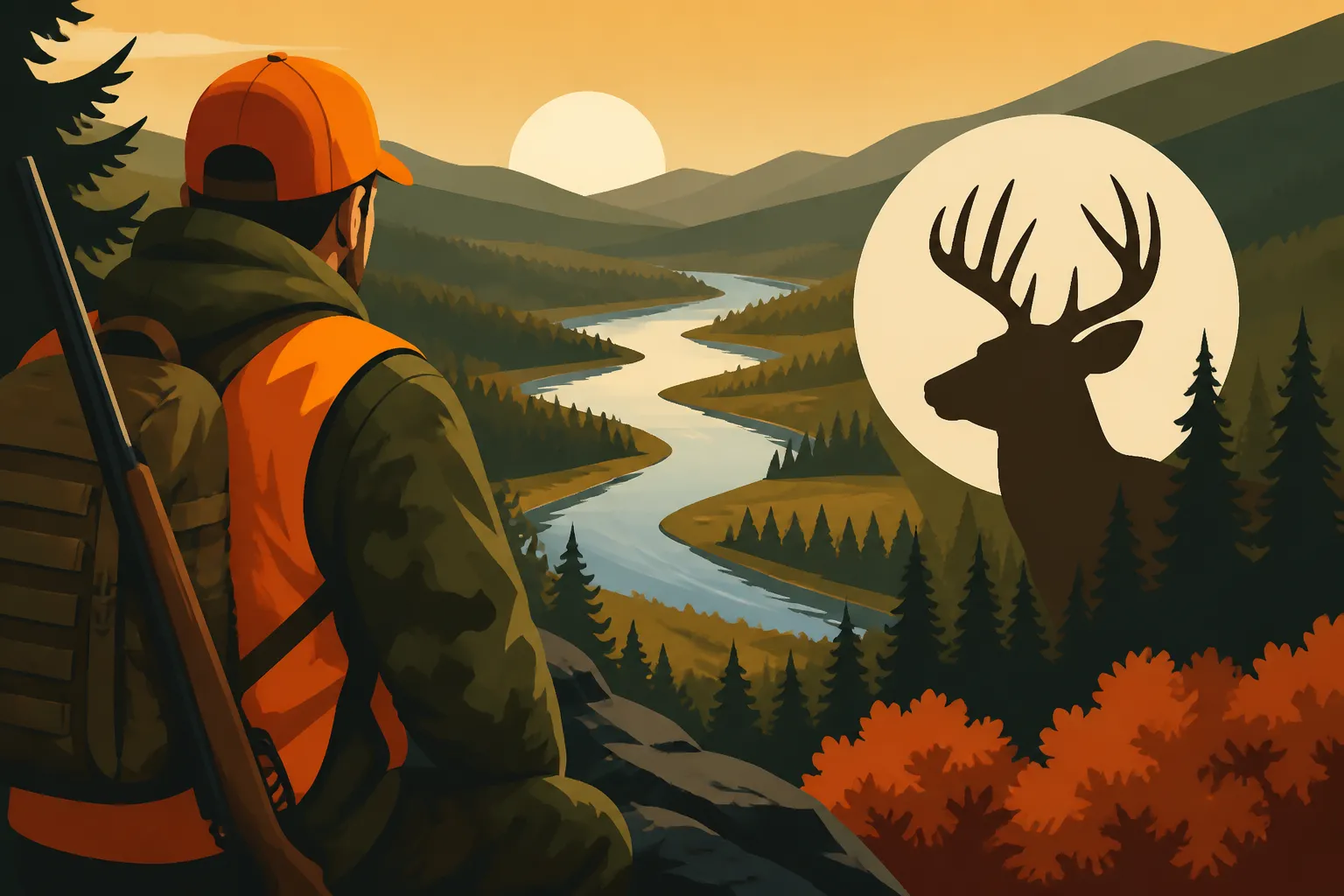
Hunting the Ashuelot River Valley
Hunting a river valley can be one of the most rewarding, yet sometimes frustrating, experiences for a New Hampshire sportsman. The Ashuelot River Valley, stretching through southwestern New Hampshire, is a perfect example of a nuanced landscape that demands a specific approach. This guide is dedicated to helping you unravel the secrets of this fertile region, ensuring you spend less time guessing and more time connecting with the diverse game that calls it home.
The Unique Landscape of the Ashuelot River Valley and Its Wildlife
The Ashuelot River Valley isn't just a linear stretch of water; it's a dynamic ecosystem, a blend of flowing water, rich bottomland, agricultural fields, and connecting woodlands. This varied topography creates a mosaic of habitats that attract and hold a wide array of game species, but understanding how these elements interact is key to consistent success.
Riverine Habitat and Edge Opportunities
Think of the Ashuelot River itself as the lifeblood of this valley. Its winding course, often flanked by dense riparian vegetation – willows, alders, dogwoods – creates natural corridors that game animals instinctively follow. These thick, brushy banks offer not only excellent cover from predators and human disturbance but also a consistent water source. Deer, especially, will use these dense strips as travel routes, moving between bedding areas in adjacent woods and feeding grounds in nearby fields. During the peak of the rut, a wise old buck will often cruise these river edges, checking for does without exposing himself in open terrain.
Beyond the immediate banks, the river's historical meanderings have left behind oxbows and lower-lying areas that can hold seasonal wetlands. These areas, rich in diverse plant life, become prime foraging spots for wild turkeys, which will scratch through the leaf litter for insects and seeds. Waterfowl, too, find these backwaters appealing, offering sheltered resting and feeding areas away from the main flow. The "edge" where this riverine habitat meets a cornfield, a hayfield, or a timber stand is an absolute magnet. These transition zones provide everything a deer needs: food, water, and immediate cover. Learning to recognize these subtle edges on a map or, better yet, on the ground, will drastically improve your chances.
Interspersed Agriculture and Forested Blocks
What truly defines the Ashuelot River Valley, especially in its broader sections, is the quilt work of agricultural land nestled alongside significant forested blocks. You’ll encounter sprawling cornfields, rows of soybeans, and lush hayfields, all providing irresistible draws for whitetails and turkeys. Deer will pour into these fields to feed, particularly in the late evening and early morning, before retreating into the safety of the woods during the day. Turkeys will spend hours strutting and feeding along the field edges, often roosting in the large trees that line these boundaries or stand sentinel along the river itself.
But it’s not just about the open fields. The crucial element is the presence of those timbered blocks and woodlots that punctuate the agricultural landscape. These aren't vast, unbroken forests like you'd find in the North Country; rather, they are often smaller, fragmented parcels. However, they serve as vital bedding areas and security cover for game. A mature stand of oak, a dense cedar swamp, or even a thick patch of young growth can hold a significant number of deer, even within earshot of a busy road. The trick is understanding how deer move between these secure bedding areas and their preferred feeding sites in the fields, often utilizing those riparian corridors or subtle funnels like old fencerows or hedgerows that many hunters overlook. These are the places where a hunter can intercept a deer that feels safe moving under cover.
Primary Game Species of the Valley
While the Ashuelot River Valley boasts a variety of wildlife, white-tailed deer are undoubtedly the main attraction for most hunters. Unlike deer in more mountainous regions of New Hampshire, Ashuelot deer often rely less on significant elevation changes for escape and more on the dense, intertwined cover found in the river bottom and smaller woodlots. They become adept at using every fold in the terrain, every thicket, and every stream bank to their advantage. You'll find good buck numbers here, often growing impressive racks due to the abundant food sources provided by agriculture.
Wild turkeys are also a major draw, especially in the spring. The combination of open fields for strutting and bugging, and large mature trees along the river for roosting, creates ideal turkey habitat. In the fall, large flocks will roam the valley, picking through harvested fields and wooded edges. Beyond big game, the Ashuelot also offers opportunities for waterfowl, with mallards, wood ducks, and geese frequenting the river and its associated wetlands. Small game, such as squirrels and rabbits, thrive in the diverse timber and brushy cover. And, of course, where there's deer and small game, coyotes are never far behind, offering a challenging predator hunting experience for those willing to brave the colder months. Coyote Calling New Hampshire Farm Country
Navigating Access and Understanding Pressure in the Valley
Hunting the Ashuelot River Valley means dealing with a patchwork quilt of land ownership. While some fantastic public hunting opportunities exist, a significant portion of the most productive habitat is on private ground. Understanding how to navigate this reality, and how to deal with hunting pressure, is paramount to success.
Public Land Pockets and State Management Areas
Unlike the vast expanses of the White Mountain National Forest, large, contiguous blocks of public land are less common right along the immediate Ashuelot River corridor. However, that doesn't mean there aren't hidden gems. New Hampshire Fish and Game manages various Wildlife Management Areas (WMAs) throughout the state, and some of these can be found within the broader Ashuelot watershed. These WMAs are often smaller, but they are specifically managed for wildlife habitat and public recreation, including hunting. The trick is to identify these smaller parcels and recognize how they might connect to the river or other habitat features via those often-overlooked riparian corridors or unposted woodlots.
It's absolutely essential to consult the New Hampshire Fish and Game website or annual digest for specific rules pertaining to any WMA you plan to hunt. Some might have special regulations regarding vehicle access, scouting, or even what methods of hunting are allowed. Don't assume; always check first. Spending time Scouting New Hampshire Public Land Before Season on these smaller tracts, even if just by walking the perimeter, can reveal travel corridors, bedding areas, and food sources that other hunters might miss. These smaller public pieces, if scouted thoroughly, can offer surprisingly good hunting, especially if you're willing to walk a bit further than the next guy.
The Importance of Private Land Permission
Let’s be honest: much of the most desirable river valley habitat, particularly the rich agricultural fields and the mature woodlots bordering them, is privately owned. If you want to consistently hunt these prime areas, especially for deer and turkey, gaining private land permission is often your best bet. This isn't a task to be taken lightly; it requires respect, courtesy, and often, a bit of persistence. Start by identifying potential parcels that look promising on maps. Tools like onX Hunt or GoHunt are absolutely invaluable here. They allow you to see property lines clearly and often provide landowner information, so you can respectfully approach the right person.
When you do approach a landowner, be polite, well-groomed, and concise. Explain exactly what you want to hunt (e.g., "I'm looking to archery hunt deer," not "I want to hunt everything"). Offer to help with chores, pick up trash, or even share some of your harvest. Many landowners are simply tired of disrespect or unknown individuals on their property. Building a relationship is key. It might take several attempts, or even a season or two, to secure permission, but once you have it, cherish it. Remember, you're a guest, and your behavior reflects not just on you, but on all hunters. Asking a New Hampshire Landowner for Permission is a skill, and in a valley like the Ashuelot, it's a vital one.
Managing Hunting Pressure and Finding Seclusion
No matter where you hunt, you're going to encounter hunting pressure to some degree. The Ashuelot River Valley is no exception, especially in areas with easily accessible public land or known hotspots. The key isn't to avoid all pressure, but to understand how it impacts game and how you can use that knowledge to your advantage. Areas with obvious parking pull-offs or well-worn trails will likely see more foot traffic. Game animals, particularly deer, adapt quickly to this pressure. They become more nocturnal, stick to the thickest cover, and will often abandon areas that see consistent human intrusion during daylight hours.
To find seclusion, you need to be willing to do what others aren't. This often means walking further, finding less obvious access points, or even utilizing a boat (where legal and safe) to access riverine areas that are cut off from road access. Look for those small, isolated pockets of cover, thickets, or deep draws that might be just a few hundred yards from a road but offer significant security for game. Using a Ground Blind on Public Land in a strategic, brushed-in location can also help you blend into these overlooked areas without needing to hang a stand in pressured timber. Pay close attention to wind and thermals, especially in the mornings and evenings when cold air sinks into the valley bottom or warm air rises. These localized air currents can dictate how and when game moves, allowing you to position yourself for an encounter with a less-pressured animal.
Effective Hunting Strategies for the Ashuelot River Valley
Hunting the Ashuelot River Valley isn't just about showing up; it's about understanding the specific movements and behaviors of game in this unique environment. From meticulous scouting to precise stand placement, every detail can make a difference.
Scouting for Sign and Movement Corridors
Before you ever step foot in the Ashuelot Valley with your weapon, you need to become a master scout. The river and its surrounding landscape create natural funnels and pinch points that are goldmines for deer movement. Look for subtle changes in topography, like a slight rise through a bottomland field, an old logging road that traverses a woodlot, or a narrow strip of timber connecting two larger blocks. These are the highways deer use.
Pay obsessive attention to rub lines and scrape lines. Fresh rubs along the riverbank or on the edge of a cornfield indicate active buck movement. Scrapes, especially during the pre-rut and rut, are like signposts, telling you exactly where bucks are checking for does. Tracks and droppings are also crucial indicators of recent activity. Tools like onX Hunt are invaluable here for Reading Aerial Photos for North Country Deer (or in this case, river valley deer). You can identify potential travel corridors between bedding areas (often thicker, denser cover) and feeding areas (agricultural fields, oak flats, or even river bottom browse). Overlaying historical satellite imagery can also reveal old field edges, fence rows, or creek bottoms that might not be obvious from the ground but still serve as travel routes for game. The more time you spend deciphering these patterns before the season, the better your chances will be when it counts.
Stand Placement and Hunting Tactics for River Bottoms
Once you’ve identified those key movement corridors and pinch points, precise stand placement becomes critical. In the Ashuelot River Valley, you'll often find yourself hunting close to open fields or relatively thick, low-lying cover. For deer, consider setting up on the downwind side of known travel routes, especially where a narrow strip of timber meets a field edge or where the river makes a sharp bend, forcing animals to walk closer to your position. Remember that river valleys can create unique wind patterns; thermals often draw scent down into the valley in the mornings and lift it out in the evenings, so always be mindful of how your scent is traveling.
If you're hunting field edges, especially for deer or turkey, a well-brushed ground blind can be incredibly effective. It allows you to get in and out quietly, offers excellent concealment, and can be moved relatively easily as game patterns change. For situations demanding elevation, a climbing stand can work in mature hardwoods, allowing you to adapt to changing conditions. However, in dense, brushy river bottoms, a hang-on stand might be a better option if you can find a suitable tree. Think about how deer will approach the field, where they feel safest exiting and entering, and position yourself to intercept them without being detected. Working a Creek Bottom for Late-Season Deer is a perfect example of leveraging these natural features; deer will often use these depressions for sheltered travel, especially when other cover thins out.
Leveraging Different Seasons and Game Behaviors
The Ashuelot River Valley offers fantastic hunting throughout New Hampshire’s diverse seasons, each presenting unique opportunities.
- Archery Season: Early archery season is excellent for targeting deer in their predictable patterns, moving from thick bedding cover to agricultural fields or acorn flats. Focus on transition zones and the dense riparian corridors along the river. As the season progresses into late October and early November, the pre-rut kicks in. Bucks will start actively cruising those river edges and woodlot boundaries, checking scrapes and rubs. This is a prime time for calling, rattling, and grunting. Hunting New Hampshire's Archery Season Into December can still yield results as deer seek out remaining food sources and move into wintering areas.
- Muzzleloader and Firearms Season: The general firearms season, especially in early-to-mid November, often coincides with the peak of the rut in New Hampshire. This is when bucks throw caution to the wind, making those river bottom funnels and field edges extremely productive. Hunting the Rut in Early-to-Mid November in the Ashuelot Valley means being ready for fast action. Muzzleloader season, both before and after firearms, provides additional opportunities. The longer range potential of a muzzleloader can be advantageous in some of the more open field setups. If you have permission on larger private tracts, small deer drives with a few hunters can also be effective in moving deer out of thick pockets of cover.
- Turkey Season: Spring turkey hunting in the Ashuelot Valley can be phenomenal. Focus on scouting for roost sites along the river or in large oaks bordering fields. Calling a May Gobbler Off the Roost at first light can be an electrifying experience. Fall turkey hunting offers a different challenge, with flocks often feeding in harvested fields. Breaking up a flock and calling them back in can be a deadly tactic.
- Waterfowl Season: While not as vast as the Connecticut River, the Ashuelot does offer waterfowl opportunities. Jump shooting small bends and oxbows can be productive for wood ducks and mallards. On wider stretches, especially if you have private land access, a small decoy spread can be effective. Just remember to check specific regulations for the Ashuelot River itself, as rules can vary. The principles discussed in Decoying Ducks on New Hampshire's Connecticut River can certainly apply here, albeit on a smaller scale.
Gear and Preparation for the Ashuelot River Hunter
Hunting any river valley means you'll face unique challenges, from wet ground to tricky winds. Having the right gear and being prepared can make all the difference between a miserable trip and a successful one.
Essential Gear for Riverine Terrain
First and foremost, waterproof footwear is non-negotiable. Whether you’re slogging through damp river bottom, crossing small feeder creeks, or navigating dewy fields at dawn, your feet will get wet if you’re not prepared. Invest in high-quality, comfortable, waterproof boots that offer good ankle support, as the terrain can be uneven. Beyond boots, a reliable pair of binoculars is essential for glassing open fields, scanning distant riverbanks for waterfowl, or picking out movement in dense cover. A rangefinder is also extremely helpful, especially when judging distances across fields or the width of the river.
Navigation is absolutely critical, even in seemingly straightforward terrain. While you might know the main roads, property lines and subtle changes in the river's course can be confusing. A GPS unit or, even better, a mapping app like onX Hunt on your phone is a must. These apps allow you to mark waypoints, track your route, and crucially, see property boundaries to ensure you stay on legal hunting ground. Make sure you download offline maps, as cell service can be spotty in some valley pockets. Layered clothing is also key. Temperatures can swing dramatically, especially in New Hampshire. A cool, damp morning near the river can give way to a surprisingly warm afternoon. Being able to add or shed layers allows you to stay comfortable and focused throughout your hunt. Layering for New Hampshire's Cold Hunting Season principles apply regardless of the specific location, ensuring you're ready for anything the New England weather throws at you.
Contingency Planning and Safety
Hunting near water always introduces additional safety considerations. Before heading out, always check river conditions, especially after heavy rains. The Ashuelot can rise quickly, making crossings or retrieving game more difficult and dangerous. Have a solid plan for game retrieval. If you're successful near the river, consider how you’ll get your animal out. Dragging through thick, muddy river bottom is tough work. If permissible and practical, a small game cart can be a lifesaver, especially on flatter terrain. For anything that ends up in the water, having a plan for Recovering a Deer From a Beaver Flowage could translate to recovering one from a river.
Finally, always tell someone where you’re going and when you expect to return. Even in areas that seem close to civilization, a twisted ankle or an unexpected fall can quickly become serious. Carry a fully charged cell phone (with a portable charger), a basic first-aid kit, and a headlamp for those unexpected treks back to the vehicle after dark. The Ashuelot River Valley is a beautiful and bountiful place to hunt, but like any wild environment, it demands respect, preparation, and a keen understanding of its unique character.
| Game Species | Preferred Ashuelot Valley Habitat | Optimal Hunting Methods | Key Considerations |
|---|---|---|---|
| White-tailed Deer | Riverine thickets, field edges, small woodlots | Stand hunting, still-hunting, drives (private) | Leverage funnels, watch wind/thermals, private access |
| Wild Turkey | Field edges, riverbank roosts, open hardwoods | Calling, decoying, run-and-gun | Roosting sites, understanding flock dynamics |
| Waterfowl | River bends, oxbows, small wetlands | Jump shooting, small decoy spreads | Check specific river regulations, access via boat |
| Small Game | Brushy cover, timber edges | Still-hunting, dog hunting (where allowed) | Focus on dense patches near food/water |
| Coyote | Field edges, woodlot boundaries, dense cover | Calling (distress/howler), stand hunting | Night hunting rules, understanding movement patterns |
Disclaimer
This article is for general informational purposes only and does not constitute professional advice. Laws, prices and regulations vary by location and change over time. Consult a qualified professional for guidance on your specific situation.