Hunting a Class VI Forest Road
Finding great hunting spots in New Hampshire can often feel like searching for a needle in a haystack, especially when you're trying to escape the crowds. Many hunters get stuck thinking only about designated wildlife management areas or well-known state forests, but sometimes the best opportunities lie off the beaten path. This guide will help you understand and strategically utilize those elusive, often forgotten ribbons of access: the Class VI forest roads, which can be your ticket to untapped territory and less pressured game.
What Exactly is a Class VI Road in New Hampshire?
When you look at a map of New Hampshire, you'll see a spiderweb of roads. We're all familiar with interstates, state routes, and even local paved town roads. But then there are these other lines, often dotted or faint, that sometimes just seem to vanish into the woods. These are often Class VI roads, and understanding what they are, and what they aren't, is the first critical step to unlocking new hunting potential.
Understanding the Legal Designations and Your Rights
Legally speaking, a Class VI road in New Hampshire is still a public highway, but one that the town has chosen not to maintain. That's a huge distinction. It's not a private drive, even if it looks like one, or a trail that's been taken over by nature. It's a public right-of-way that, due to lack of maintenance, might be impassable by conventional vehicles, or even all vehicles. This means they can be deeply rutted, washed out, overgrown with saplings, or blocked by fallen trees. It can be incredibly frustrating to drive down a promising looking track only to find it abruptly ends in a deep mud bog or a giant beaver dam.
However, the key takeaway is public access. Because they are public, you generally have a right to travel them, typically on foot or by non-motorized means, unless a town has specifically posted otherwise or there are physical barriers installed by the town itself. This is where the confusion often comes in; sometimes landowners adjacent to these roads might try to block access, assuming they're private. Always double-check with the town or look for official postings. Knowing your rights means you can confidently push past those initial signs of neglect and explore further. For hunters, this neglected status is precisely what makes them so valuable.
The Allure of These Roads for Hunters
So, why would anyone want to navigate a forgotten, overgrown road when there are perfectly good paved ones? The answer is simple: less pressure. Most hunters are creatures of habit. They drive the paved roads, park at established trailheads, and walk the well-worn paths. Class VI roads, by their very nature, deter the casual hunter. They demand more effort, more scouting, and often a willingness to walk further or deal with tougher terrain.
This is where the magic happens. By accessing areas via these less-traveled routes, you're often getting into pockets of land that see significantly fewer boots on the ground. Deer, moose, and even bears learn quickly where the human activity is concentrated. The deep woods accessed by a Class VI road might hold mature bucks that have rarely heard a human voice or smelled human scent. It's truly about Finding Ground Others Walk Past. It's an adventure, a challenge, and the reward can be finding an unpressured sanctuary teeming with game. Imagine pushing a few miles past a "Road Closed" sign and finding yourself in a pristine hardwood stand with fresh rubs and scrapes everywhere—that's the allure of a Class VI road.
Scouting and Navigating Class VI Roads Effectively
Successfully hunting a Class VI forest road isn't about blindly driving down every dirt track you see. It requires careful planning and a good dose of boots-on-the-ground investigation. Think of it as detective work, piecing together clues to find the best entry points into prime hunting territory.
Pre-Season Intel Gathering: Maps and Digital Tools
Before you even think about putting tires on a Class VI road, or even your boots on the trail, you need to do your homework. This is where modern technology truly shines, but don't discount the old-school methods either. Start with high-quality topographic maps. These will show you not just the roads, but the elevation changes, water sources, and potential funnels that game might use. Look for roads that parallel natural features like ridgelines, beaver flowages, or dense timber blocks.
Digital mapping apps, like onX Hunt, are an absolute game-changer for this kind of scouting. They allow you to overlay property lines onto satellite imagery and topo maps, making it crystal clear where public land ends and private land begins. You can easily identify Class VI roads, see how far they go before becoming truly impassable, and even mark potential parking spots or areas of interest. Many of these apps also show different land designations, helping you confirm public access. Similarly, platforms like GoHunt provide valuable intel on specific regions and public access opportunities, often highlighting overlooked areas. By using these tools, you can avoid frustrating dead ends, plan precise entry and exit routes, and confidently know you're not trespassing. You can scout from your couch, pinpointing promising areas before you ever leave home.
On-the-Ground Reconnaissance: What to Look For
Once you've identified a few promising Class VI roads on your maps, it's time for some physical reconnaissance. This is often best done in the off-season, long before hunting season opens. Drive or walk the road as far as you can comfortably and legally go. Pay close attention to the conditions:
- Obstacles: Are there deep washouts? Large blowdowns? Gates (and whether they're legally passable)? These dictate how far you can get with a vehicle, ATV, or even a mountain bike. Sometimes, a gate simply means you have to walk in, which is often a good thing for less pressure.
- Parking: Where can you safely and legally park without blocking access for others or upsetting landowners? Remember, just because it's a public road doesn't mean you can park haphazardly. Being a good neighbor goes a long way.
- Game Sign: As you walk, look for deer tracks, droppings, rubs, and scrapes. Class VI roads often act as natural travel corridors for wildlife, especially where they follow a ridge or connect different habitat types. A fresh set of tracks in the mud or snow on one of these forgotten roads can be an immediate indicator that you're in the right neighborhood. Reading New Hampshire Mud for Fresh Deer Movement Look for old logging roads branching off the main Class VI, which can lead to even deeper, unpressured areas. Sometimes, the road itself is the best place to find sign.
Remember, the goal here isn't just to find access; it's to find quality access that leads to game. A Class VI road might be rough, but if it opens up a vast tract of unpressured timber or connects to a remote swamp that holds deer, it's worth the effort.
Hunting Strategies for Class VI Road Systems
Now that you've found and scouted your Class VI roads, how do you actually hunt them? It's not like setting up a stand on a field edge or calling turkeys in an open pasture. These roads demand a specific approach that leverages their unique characteristics.
Utilizing Roads as Access Points and Travel Corridors
For many hunters, the primary value of a Class VI road is simply as an access point. These roads allow you to get much deeper into public land than you ever could from a paved road or designated parking lot. Think of them as your personal, rugged highway into the backcountry. Once you reach the point where the road becomes truly impassable for vehicles, or where you've decided to leave it, that's where your real hunt begins.
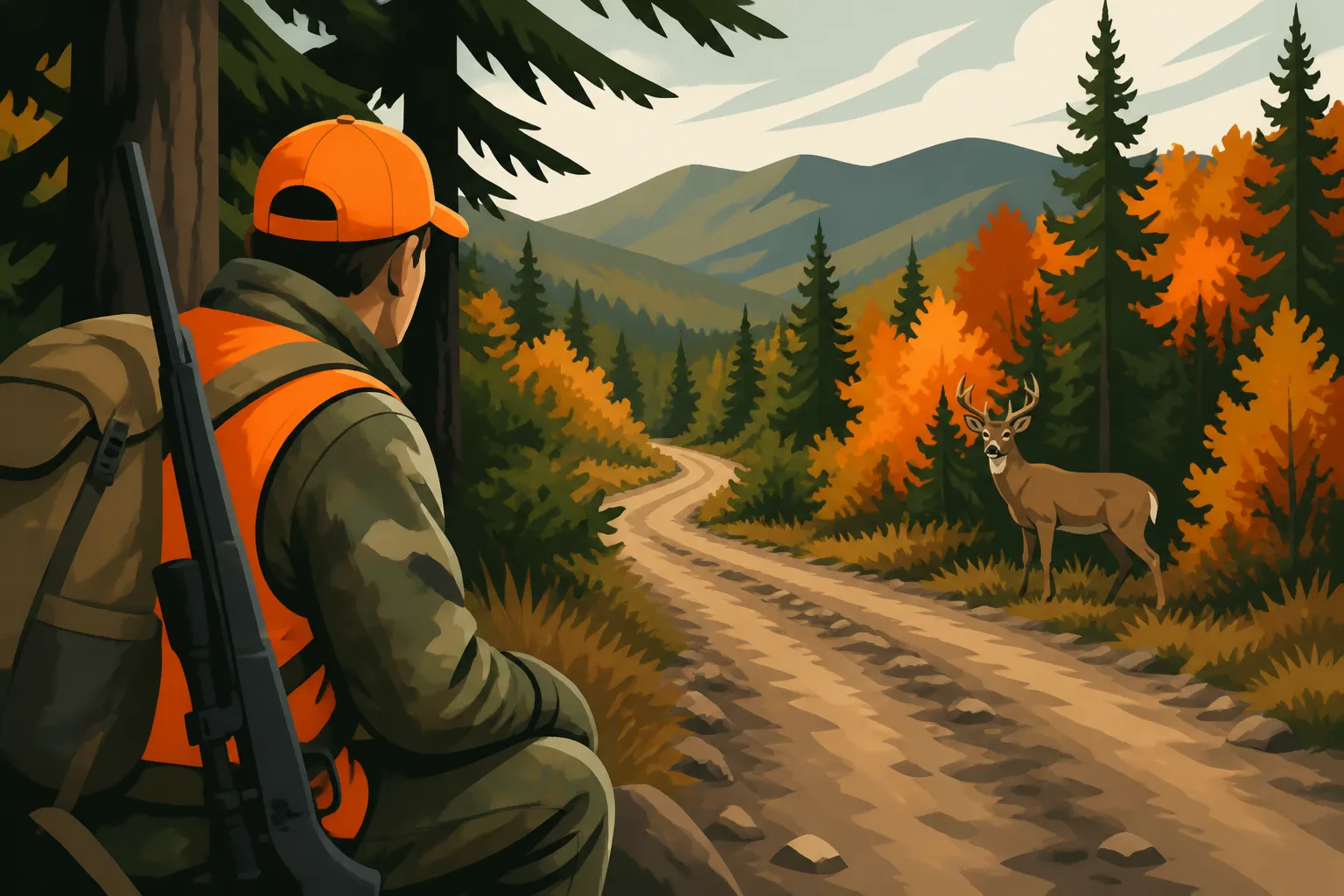
However, don't dismiss the road itself as a viable hunting ground. Game animals frequently use these old roads and trails as travel corridors, especially during low-light hours. They offer easier walking than busting through thick brush and often connect different feeding or bedding areas. This means you can often Still-Hunting White Mountain National Forest Timber right down the middle of a Class VI road, moving slowly, glassing ahead, and listening for sounds. It's a fantastic way to cover ground quietly and efficiently. Pay particular attention to where other deer trails intersect the Class VI, or where the road passes between dense cover and a more open feeding area. These are natural pinch points.
Setting Up on a Class VI Road Edge
While many Class VI roads are just overgrown paths, some might have enough open space or even old clearings along their edges to be prime ambush locations. Imagine a section where the road opens up into a mature hardwood stand, or skirts the edge of a thick spruce swamp. These transitions are magnets for game.
Consider setting up a treestand or ground blind along the edge of a Class VI road, particularly if it's less traveled or if you're deep enough into the woods that human disturbance is minimal. Look for natural funnels created by topography or vegetation, or where the road passes near a known food source like an old apple orchard. Hunting a Standing Apple Orchard Just be mindful of safety. Even if the road is rarely used, another hunter or a hiker could appear. Always position yourself so that your shot is safe, and wear plenty of blaze orange, even if you're deep in the woods, especially during the firearms season. New Hampshire Blaze Orange Requirements A strategically placed trail camera along a section of the road can also tell you a lot about deer movement patterns, helping you decide on the best setup location.
Overcoming the Challenges and Staying Safe
Hunting Class VI forest roads is rewarding, but it's not without its challenges. These aren't manicured trails, and they demand a higher level of preparation and awareness. Being realistic about the difficulties will ensure your hunt is both successful and safe.
Dealing with Variable Road Conditions and Access Restrictions
The "unmaintained" status of Class VI roads means their condition can vary wildly. One road might be a relatively smooth dirt track, while another might be a boulder-strewn, deeply rutted swamp for miles. You could encounter deep mud, especially after a heavy rain, or significant snow and ice during late season hunts. Fallen trees are a constant possibility, blocking your path and requiring you to either go around or cut your way through (if you have the tools and legal right).
Always be prepared for these conditions. This means having appropriate footwear—sturdy, waterproof boots are non-negotiable. Boots for New Hampshire's Granite Terrain If you're going deep, consider packing a small folding saw or axe. Research temporary closures or specific restrictions. Some towns might temporarily close Class VI roads to all access during mud season or other periods. Check local town websites or contact the town clerk's office. Using an app like onX Hunt can often show recent user updates or photos of road conditions, giving you a heads-up before you commit to a long drive. If you plan to use an ATV or side-by-side on one of these roads, always verify local ordinances, as vehicle access can be much more restrictive than foot traffic.
Safety and Ethical Considerations
Because Class VI roads often lead to remote areas, safety should always be paramount. Tell someone exactly where you're going and when you expect to return. Cell service can be spotty or non-existent in these areas, so a satellite communicator is a wise investment for deep backcountry hunts.
Always, always adhere to blaze orange requirements. Even if you don't expect to see another soul, it's about being prepared for the unexpected. You might encounter another hunter who has walked in from a different direction, or a hiker enjoying the solitude. Ethical behavior extends to parking and access. Don't block private driveways or gates, even if they're on a Class VI road. Respect posted private property and ensure you have permission if you intend to cross it, even for game retrieval. What New Hampshire Trespass Law Requires
Finally, consider how you'll get your game out. If you're miles deep on a Class VI road that's barely passable on foot, dragging out a deer, let alone a bear or moose, will be an immense physical challenge. Dragging a Deer Out of a Granite Ravine A game cart can be invaluable if the terrain allows, but be honest about the conditions. Sometimes, it means quartering the animal and packing it out in stages. Always be prepared for the worst-case scenario. The solitude and adventure of hunting Class VI roads are incredible, but they demand respect, preparation, and a commitment to safety and ethical hunting practices.
Disclaimer
This article is for general informational purposes only and does not constitute professional advice. Laws, prices and regulations vary by location and change over time. Consult a qualified professional for guidance on your specific situation.