Best Mid-Layer for a November Firearms Hunt
November in New Hampshire, especially during firearms season, throws a lot at us hunters. One moment, you're hiking up a steep ridge, sweating in a crisp morning air that feels surprisingly mild for late fall. The next, you're sitting absolutely still in a stand, and a biting north wind rips through, dropping the effective temperature by what feels like twenty degrees. The challenge isn't just staying warm, it's staying comfortably warm—warm enough when you're static, cool enough when you're active, and dry no matter what. This guide is all about nailing that crucial element: your mid-layer.
Navigating New Hampshire's Unpredictable November Weather
If you've spent any time chasing whitetails in the Granite State during November, you know that the weather can be a real rollercoaster. It's not uncommon to experience all four seasons in a single week, or even within a long day's hunt. This unpredictability is precisely why your layering strategy, particularly your mid-layer, needs to be well thought out.
The Chill of Early Morning and Late Evening
Those first and last hours of legal shooting light are often the coldest, especially when you're sitting motionless in a treestand or tucked into a ground blind. The air hangs heavy with dampness, and any breeze seems to cut right through lighter clothing. You might start your hunt with a solid frost on the ground, and your breath pluming in the still air. This is where many hunters make the mistake of not having enough insulation, or worse, having too much bulk that restricts movement when that buck finally steps out. It's a delicate balance to achieve warmth without sacrificing stealth or agility.
Consider a typical scenario: you've set up before dawn near a Scrape Lines Along a Logging Road in the Lakes Region. You're bundled up, but the temperature might drop another few degrees just as the sun peeks over the horizon. Without an effective mid-layer, that chill will slowly seep into your core, making you shiver and distract you from the hunt. Then, as evening approaches, the sun dips behind the western hills, and the temperature plummets again, often more rapidly than it rose. Being prepared for these dips is crucial for extending your effective hunting time and maintaining focus.
The Demands of Hiking and Still-Hunting
On the flip side, much of New Hampshire's terrain isn't conducive to static hunting all day. Whether you're still-hunting the timber of the White Mountain National Forest, working a hardwood stand in the Monadnock Region, or crossing a beaver flowage, you're going to be moving. And moving generates heat. A lot of it. The last thing you want is to be soaked in sweat under your layers because your mid-layer isn't breathable enough. Once you stop to glass an opening or set up for a shot, that sweat turns cold, and you're instantly chilled to the bone. This is a common pitfall that can quickly end a hunt.
Imagine a hunt in Grafton County, where you're working a ridge-top saddle, slowly moving through the pines, stopping often to scan. You're expending energy, your body's furnace is running hot. If your mid-layer traps that moisture, not only will you be uncomfortable, but you'll risk hypothermia, even in relatively mild temperatures. Being able to dump excess heat and moisture is just as important as retaining warmth. This dynamic environment requires a mid-layer that can adapt, providing warmth when needed but also ventilating when your activity level rises.
What Makes a Mid-Layer Perfect for Firearms Season
Choosing the right mid-layer isn't just about picking something warm; it's about selecting a piece of gear that integrates seamlessly with your entire hunting system. For New Hampshire's November firearms season, several key characteristics elevate a mid-layer from "just another piece of clothing" to a vital tool in your arsenal.
Balancing Warmth-to-Weight Ratio
Nobody wants to feel like the Michelin Man trying to sneak through the woods. The ideal mid-layer provides substantial warmth without excessive bulk or weight. This is paramount for freedom of movement, especially when shouldering a rifle or making quick adjustments in the stand. A high warmth-to-weight ratio usually comes from materials designed to trap air efficiently in a small volume. Think about how a good sleeping bag works—it's not necessarily thick, but it's incredibly insulative.
When you're packing for a day in the field, every ounce counts, particularly if you're venturing deep into public land like the White Mountains. A mid-layer that can be compressed into a small space in your pack, yet puff up to provide serious warmth, is a game-changer. This allows you to carry it easily and deploy it when you reach your stand or when temperatures drop. Hunting apps like GoHunt can help you visualize your route and estimate your activity level, which can influence how much pack space you can dedicate to a compressible mid-layer.
Breathability and Moisture Management
This is where many hunters falter. We focus so much on staying warm that we forget about staying dry. An excellent mid-layer acts as a conduit, allowing moisture vapor (sweat) to escape from your base layer to your outer shell, rather than trapping it against your skin. If your mid-layer isn't breathable, all that sweat you generated hiking in will condense and saturate the fabric, leading to a rapid and dangerous chill once you stop moving.
The science is simple: wet skin loses heat far more rapidly than dry skin. Therefore, a mid-layer's ability to wick moisture away from your body and allow it to evaporate is crucial. Look for materials that boast good breathability. This is especially critical during the Hunting the November Firearms Opener, when temperatures can still be milder, making it easy to overheat during the initial hike. A mid-layer with good moisture management means you can regulate your body temperature more effectively, preventing those uncomfortable and potentially dangerous hot-then-cold cycles.
Silence and Durability in the Woods
New Hampshire's woods can be incredibly unforgiving, and a noisy garment can blow a hunt faster than anything. Your mid-layer, while not typically your outermost layer, still needs to be quiet. As you move, rub, and shift, any fabric that rustles, crinkles, or scrapes will transmit sound. This is particularly important if your outer layer isn't completely silent, or if you shed your outer layer for a stealthy approach in milder conditions.
Beyond silence, durability is key. Your gear needs to withstand snagging on briars, rubbing against tree bark, and general wear and tear that comes with moving through dense New England cover. A mid-layer that pills excessively, tears easily, or loses its loft after a few seasons isn't a good investment. You want something that will hold up to the rigors of repeated hunting seasons. Think about the thick underbrush you might encounter Hunting a Beaver Flowage Edge or the granite outcroppings you might brush against on a steep climb. Your mid-layer should be able to handle these conditions without compromising its integrity or giving away your position.
Top Mid-Layer Materials and Their Best Uses in New Hampshire
When you start digging into mid-layers, you'll quickly realize there are a few primary contenders, each with its own set of advantages and disadvantages. Understanding these differences will help you pick the perfect fit for your New Hampshire firearms hunt.
Classic Fleece: Versatility and Comfort
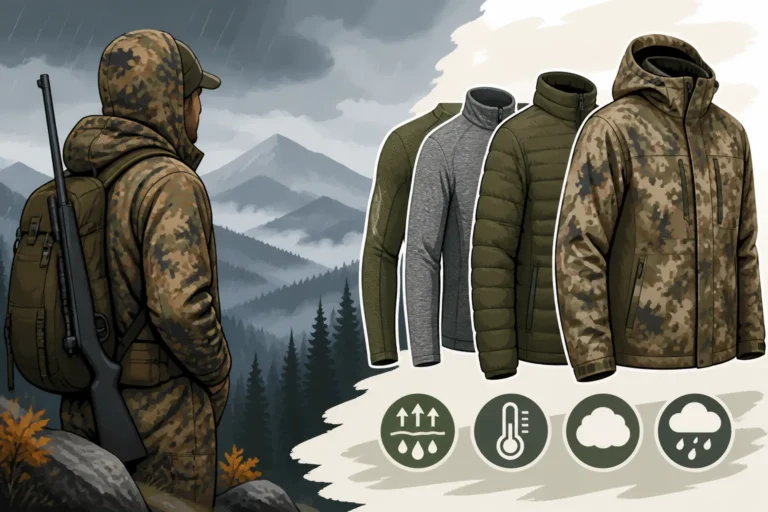
Fleece, particularly polyester fleece, has been a go-to mid-layer for hunters for decades, and for good reason. It's relatively inexpensive, comes in various weights (100-weight, 200-weight, 300-weight), and offers decent warmth even if it gets a little damp. It's soft, comfortable, and generally quiet, making it a solid choice for many hunting scenarios.
- Pros: Good warmth-to-weight for its cost, breathes well for active hunting, fairly quick-drying, and relatively quiet. It's often very comfortable against the skin. Lighter fleeces are excellent for layering under heavier jackets, while heavier weights can serve as a primary mid-layer or even an outer layer on mild, still days.
- Cons: Not very windproof on its own, and if it gets soaked, it loses a significant amount of its insulating properties, though it does dry faster than cotton. It can also be a bit bulky compared to other options.
- Best Use in NH: A 100 or 200-weight fleece is fantastic for active hunting, like still-hunting through a vast state forest parcel or on the milder days of the New Hampshire's November Firearms Deer Season. It's also great as an "active layer" you wear while hiking in, then swap for a warmer option or layer over when you sit down. For a highly active hunter who moves more than they sit, fleece is a superb, budget-friendly option.
Synthetic Insulated Jackets: Warmth for Static Hunting
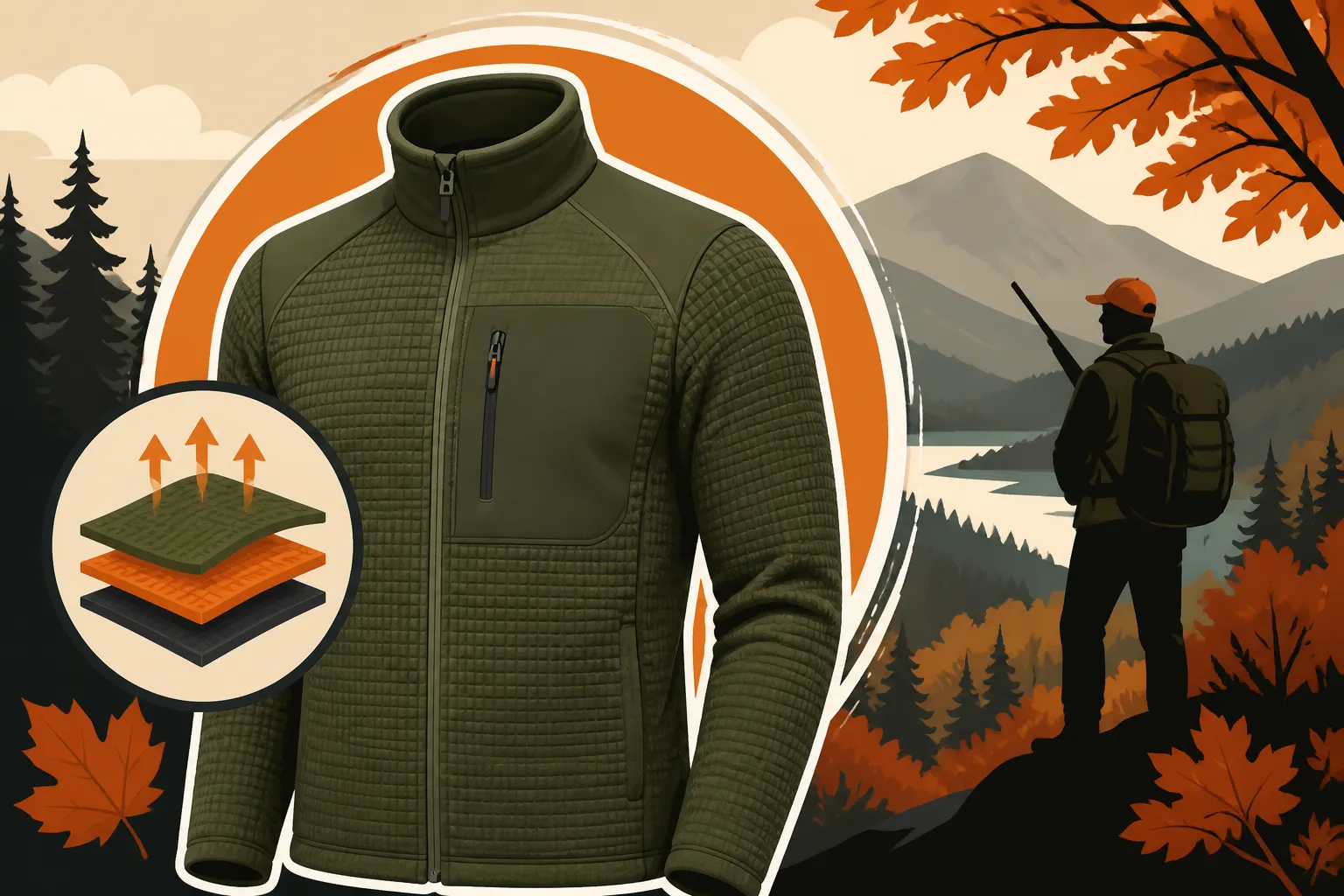
Often referred to as "puffies," these jackets are filled with synthetic fibers designed to mimic the loft and warmth of down, but with one critical advantage: they retain most of their insulating power even when wet. Brands use various proprietary synthetic insulations that are excellent at trapping air, providing incredible warmth for their weight.
- Pros: Outstanding warmth-to-weight ratio, highly compressible (packs down small), retains significant warmth when damp or wet (unlike down), often wind-resistant, and relatively quiet if the face fabric is brushed. This is a game-changer if you get caught in a sudden rain or snow shower.
- Cons: Can be less breathable than fleece, making it easy to overheat during high-exertion activities. The outer shell fabric can sometimes be a bit slick or noisy depending on the weave.
- Best Use in NH: Ideal for static hunting in a treestand, especially during the colder parts of the day or when temperatures really start to plummet. If you're planning on Cold-Weather Sitting Strategy in the North Country, a synthetic puffy is almost a necessity. It's also perfect for layering over your base layer while hiking in, then putting your outer layer on top once you reach your destination. Many hunters carry a synthetic puffy in their pack and only put it on when they stop moving, preventing sweat buildup.
Merino Wool: Natural Performance
Merino wool stands as a premium choice, celebrated for its natural properties. Unlike traditional wool, merino fibers are much finer, making them incredibly soft, non-itchy, and comfortable against the skin. It excels at temperature regulation and moisture management, making it a strong contender for a mid-layer.
- Pros: Exceptional temperature regulation (keeps you warm when it's cold, breathes when it's warm), retains significant warmth when wet (even better than many synthetics), naturally odor-resistant (you can wear it for days without smelling), and incredibly quiet. It's very soft and comfortable.
- Cons: Can be more expensive than synthetic options, takes longer to dry than synthetic fleece, and can be less durable against snags and abrasion than some synthetics, though advancements in weave and fiber blends are improving this.
- Best Use in NH: An excellent all-around choice for hunters who prioritize natural materials, odor control, and comfort. A medium-weight merino sweater or hooded jacket works wonderfully as an active mid-layer for still-hunting or as a static mid-layer in milder conditions. For extended trips or multi-day hunts where laundry isn't an option, its odor-fighting properties are a huge plus. It's particularly well-suited for hunters who might be on the move in and out of thick cover where quietness is paramount, like when trying to sneak up on deer Hunting the Rut in Early-to-Mid November.
Here's a quick comparison of these popular mid-layer materials:
| Feature | Fleece (Polyester) | Synthetic Puffy (Insulated) | Merino Wool |
|---|---|---|---|
| Warmth-to-Weight | Good | Excellent | Very Good |
| Breathability | Very Good | Moderate to Good | Excellent |
| Moisture Retention when Wet | Low (dries fast, less warm) | Low (retains warmth well) | Low (retains warmth very well) |
| Drying Speed | Fast | Moderate | Slow |
| Quietness | Good to Excellent | Good (depending on face fabric) | Excellent |
| Compressibility | Moderate | Excellent | Moderate |
| Odor Resistance | Low (can retain scent) | Low to Moderate | Excellent (naturally antimicrobial) |
| Cost | Low to Moderate | Moderate to High | High |
| Best Use | Active hunting, mild days | Static hunting, cold days | Versatile, active & static, odor control |
Integrating Your Mid-Layer into a Complete System
Your mid-layer is just one piece of the puzzle. For truly effective temperature regulation during New Hampshire's firearms season, it needs to work in harmony with your base and outer layers. This three-layer system (base, mid, outer) is the gold standard for adaptive hunting in variable conditions.
The Foundation: Your Base Layer
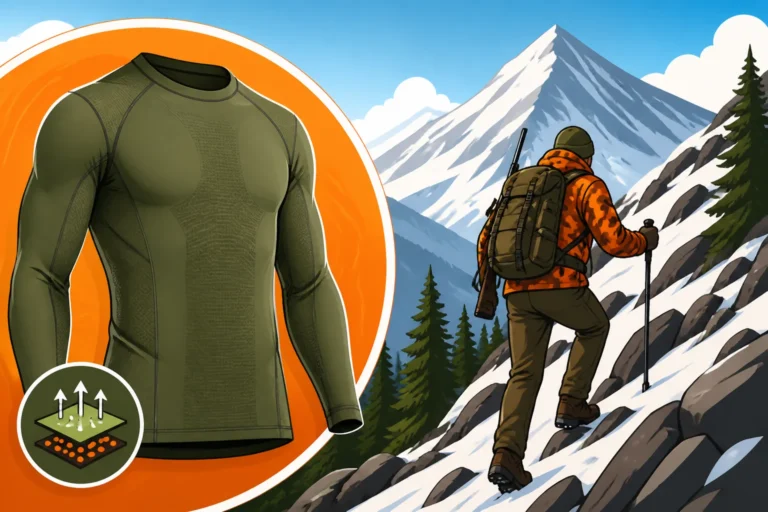
The base layer is your first line of defense against moisture. Its primary job is to wick sweat away from your skin, keeping you dry. If your base layer fails at this, even the best mid-layer won't keep you warm. For November in New Hampshire, avoid cotton entirely. Opt for synthetic materials or merino wool base layers, which excel at moisture management. These fabrics pull moisture away from your skin and transfer it to your mid-layer, where it can then evaporate.
Choosing the right weight of base layer is important too. A lightweight base might be fine for high-activity days or milder early November hunts, while a mid-weight or heavy-weight base layer is better for colder conditions or more static hunting. A good system starts with a solid foundation, so don't skimp on your base layer. Remember, the goal is dry warmth, and that starts right against your skin.
The Barrier: Your Outer Layer
Your outer layer serves two crucial functions: protecting you from the elements (wind, rain, snow) and providing any necessary camouflage or blaze orange. For firearms season, your outer layer will need to incorporate New Hampshire Blaze Orange Requirements. This layer should be durable, quiet, and capable of shedding precipitation while still allowing moisture vapor from your mid-layer to escape.
The outer layer is generally what you put on once you reach your destination or when the weather turns. It traps the warm air created by your mid-layer and shields it from the wind, which is a significant factor in heat loss. Think of it as the shell of a thermos, keeping the warmth inside. For example, if you're wearing a synthetic puffy mid-layer, a windproof and water-resistant outer shell will magnify its effectiveness, especially when sitting exposed in a stand or glassing a field edge. A good outer layer should have enough room to comfortably fit over your base and mid-layers without compressing them too much, which would reduce their insulating power.
Adjusting on the Fly: The Art of Layering
The real magic of layering comes from your ability to adjust throughout the day. This isn't a "set it and forget it" system; it's dynamic.
- Hiking In: When you're actively moving, wear only your base layer and perhaps a lighter fleece mid-layer, or even just your base layer and a very light outer shell if it's not too cold. Stow your heavier mid-layer in your pack. This prevents overheating and sweating.
- Sitting Still: Once you reach your stand or blind and cool down from the hike, quickly add your warmer mid-layer (like a synthetic puffy) and then your full outer layer. This traps the warmth and protects you from the elements. This is especially true for longer waits, such as during New Hampshire's November Firearms Deer Season.
- Changing Conditions: If the sun comes out and warms things up, or you decide to do a short still-hunt, you might shed your outer layer or even your mid-layer temporarily. Keep an eye on the forecast, but also pay attention to how your body feels. Using tools like GoHunt on your phone to check real-time weather can inform these decisions. The key is to add or subtract layers before you get too hot or too cold, preventing those uncomfortable extremes.
Ultimately, mastering your mid-layer for November firearms hunting in New Hampshire means understanding the unique challenges of the season, knowing what makes a material effective, and then integrating that layer into a fluid system that you can adapt moment by moment. It's about staying comfortable, focused, and most importantly, safe out in the beautiful, wild woods.
Disclaimer
This article is for general informational purposes only and does not constitute professional advice. Laws, prices and regulations vary by location and change over time. Consult a qualified professional for guidance on your specific situation.