Best Knife for Field Dressing a Whitetail
There’s nothing quite like the exhilaration of a successful hunt in New Hampshire’s diverse terrain, but that feeling can quickly turn to frustration if you’re not prepared for the crucial next step: field dressing your whitetail. A dull, flimsy, or ill-suited knife can make this essential process messy, dangerous, and far more difficult than it needs to be, taking away from the reverence and efficiency you owe to your harvest. This guide is here to cut through the confusion and help you choose the best knife for field dressing a whitetail, ensuring you’re ready for whatever the Granite State’s woods throw your way.
Why Your Knife Choice Matters for Field Dressing
Field dressing isn't just about removing entrails; it's about preparing your animal for transport and cooling, which directly impacts the quality of the meat you'll eventually bring to the table. In New Hampshire, where temperatures can swing wildly from warm early archery season days to frigid late-season muzzleloader hunts, getting the job done quickly and cleanly is paramount. The right knife isn't a luxury; it's a critical piece of gear that ensures safety, efficiency, and respect for the animal.
More Than Just Sharpness: Blade Geometry and Material
You might think any sharp knife will do, but sharpness is only one part of the equation. The geometry of the blade – its shape, grind, and thickness – significantly impacts how effectively it cuts through hide, muscle, and cartilage without dulling too quickly or getting bogged down. A blade that's too thick might struggle with delicate cuts, while one that's too thin could be prone to breaking on bone or tough joints. Then there’s the steel itself: some steels hold an edge like a dream but are a bear to sharpen in the field, while others are easy to touch up but require frequent attention. For hunters exploring different units, perhaps scouting out potential areas with GoHunt before the season opens, understanding these nuances can be the difference between a smooth operation and a frustrating struggle when the moment of truth arrives.
When you're out there, maybe after a successful hunt where you've been Hunting the Rut in Early-to-Mid November or tracking a deer in fresh snow, you need a blade that performs. You need a knife that can handle the thick hide of a mature New Hampshire buck, slice through muscle with precision, and still have enough backbone to help open the sternum or pelvic bone if needed. It's about finding that balance between surgical precision and rugged durability.
Safety First: A Good Grip in Slippery Conditions
Let's be brutally honest: field dressing is a messy business. Blood, fat, and wet conditions are par for the course, and these can make even the most confident grip feel tenuous. A knife with a poor handle design or an inadequate grip material can easily slip, leading to serious injury. Imagine being miles deep in the White Mountain National Forest, perhaps having just finished Field Dressing a Deer in Cold Weather, and your hand slips on a gut-slick handle. That's a scenario no one wants to face.
A truly good field dressing knife will feature a handle designed for security, even when wet and bloody. This often means textured surfaces, finger grooves, or a prominent guard to prevent your hand from sliding forward onto the blade. Safety is non-negotiable, and your knife should feel like an extension of your hand, giving you confidence in every cut. The last thing you want is to be worried about a slip when you're focusing on processing your hard-earned venison.
Efficiency and Respect for the Harvest
Getting a deer field dressed quickly is not just for your comfort; it’s crucial for preserving the meat, especially in warmer weather. Rapid cooling of the carcass helps inhibit bacterial growth and ensures the best possible flavor and texture for your venison. Dragging a deer out of a granite ravine, only to realize the field dressing wasn't thorough, can be incredibly disheartening. An efficient knife allows you to work systematically and cleanly, honoring the animal and maximizing your harvest.
From the first cut through the hide to the final severing of the esophagus, an effective knife streamlines the entire process. It allows you to focus on the task at hand, making precise cuts and minimizing unnecessary damage or mess. This efficiency directly contributes to a higher quality product and a more respectful handling of the game. When you’re proud to bring that venison to the table, much of that pride stems from how well you managed the initial stages of processing. This is why tools like the right knife are so important, as are resources for understanding the process, such as Butchering a Deer at Camp.
Key Features to Look For in a Whitetail Field Dressing Knife
Choosing the right knife involves considering several design elements that contribute to its performance and safety in the field. It’s not about finding the most expensive knife, but the one that best suits your hands, your hunting style, and the conditions you typically encounter while hunting White-Tailed Deer Across New Hampshire.
Fixed Blade vs. Folder: Durability and Cleanliness
This is often the first decision point for many hunters. Both fixed blades and folding knives have their proponents, but for dedicated field dressing, a fixed blade generally comes out on top.
| Feature | Fixed Blade | Folding Knife |
|---|---|---|
| Durability | Generally stronger, no moving parts to fail. | Can have weak points at the pivot/lock. |
| Cleanliness | Easier to clean thoroughly, no hidden crevices. | Blood and grime can get trapped in the mechanism. |
| Safety | No risk of accidental closing during use. | Locking mechanism failure can be dangerous. |
| Portability | Requires a sheath, can be bulky. | Folds compactly, often fits in a pocket. |
| Maintenance | Simple, direct cleaning. | Requires more meticulous cleaning of mechanism. |
A fixed blade offers superior strength and reliability. There are no locking mechanisms to fail, no pivots to get gunked up with blood and hair, and they are inherently easier to clean thoroughly. This last point is huge for hygiene and preventing bacterial contamination. When you’re miles from camp and need to clean your Knives and Processing Gear for Field Dressing, a simple rinse and wipe on a fixed blade is far more reassuring than trying to dig congealed blood out of a folder's pivot point. For a quick and clean job, especially in rugged New Hampshire backcountry, a fixed blade is often the preferred choice.
Blade Shape and Length: Gut Hook or Drop Point?
The shape and length of your blade are critical for efficient field dressing. Most hunters gravitate towards blade lengths between 3.5 and 5 inches – long enough to reach, but short enough for control.
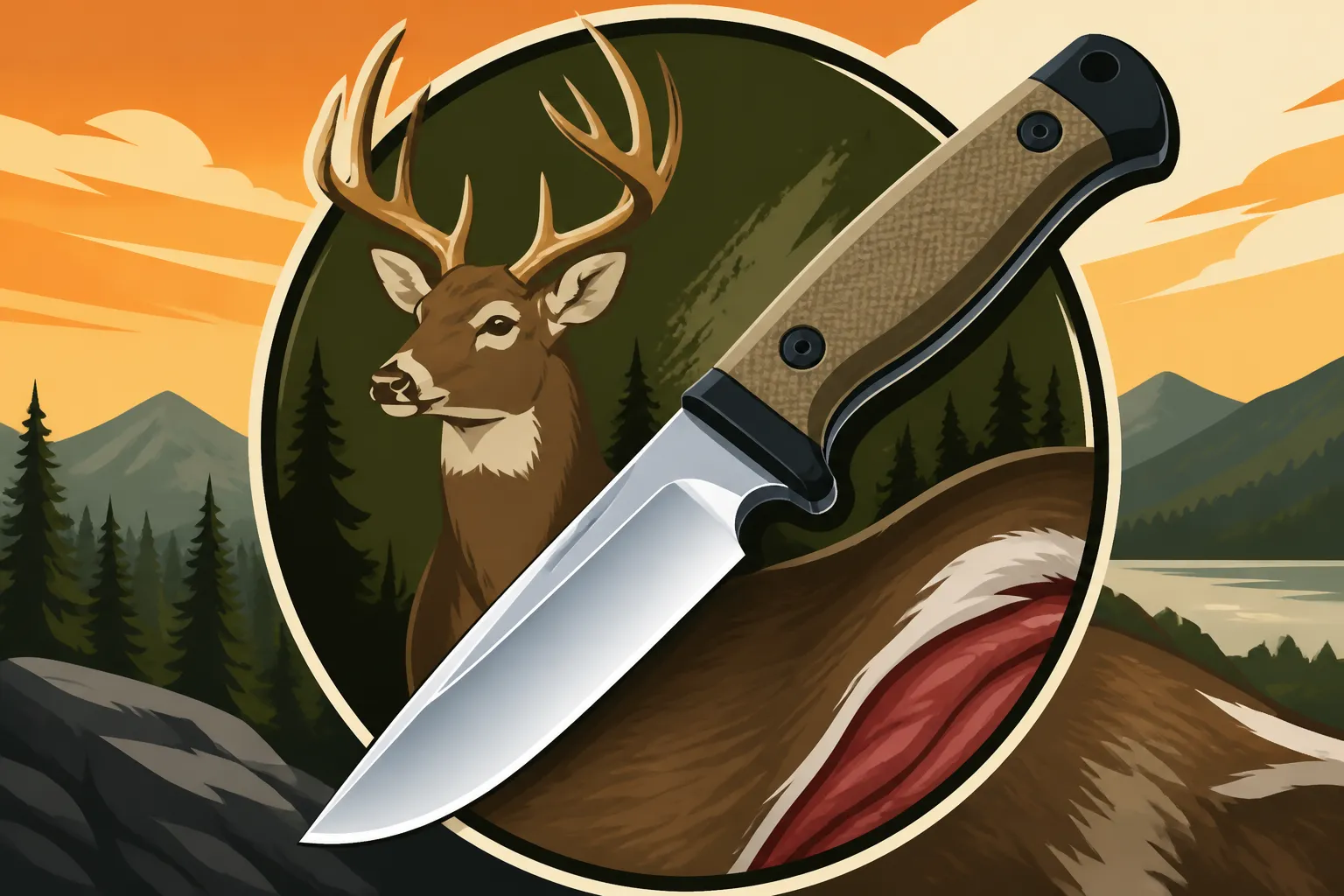
- Drop Point: This is perhaps the most popular and versatile blade shape. It features a convex curve on the spine that drops to meet the cutting edge, creating a strong, controllable point. The belly (the curved part of the cutting edge) is often generous, making it excellent for skinning. Its robust tip is less prone to breaking than a finer point, which is useful if you accidentally hit bone. Many hunters find the drop point ideal for nearly all aspects of field dressing, from opening the hide to separating organs. It’s a workhorse, pure and simple, and highly effective whether you're working on a smaller southern New Hampshire deer or a larger northern buck.
- Gut Hook: Some knives feature a specialized gut hook, a sharpened hook on the spine of the blade. This is designed to open the hide from the pelvis to the sternum without puncturing the internal organs. For those who prioritize a clean initial cut, a gut hook can be a valuable feature. However, it can complicate sharpening the main blade and adds an extra element to the knife that not everyone finds necessary. Some hunters swear by them for speed and cleanliness, while others prefer the simplicity and versatility of a plain drop point blade. If you are regularly hunting in areas where quickly minimizing gut contamination is key, like during early season when the weather is still warm, a gut hook might be worth considering.
For tasks like Field Dressing a Moose in the North Country, you might even consider a slightly longer blade, but for whitetails, staying within that 3.5-5 inch range offers the best balance of leverage and control.
Handle Material and Ergonomics: Grip When It Counts
The handle is your connection to the blade, and its design can make or break a knife's utility in the field.
- Material: Common handle materials include G10, Micarta, Kraton, rubberized polymers, or even stabilized wood. The key is durability, resistance to moisture, and a non-slip texture. G10 and Micarta are known for their strength and stability, offering a good grip when dry or wet. Rubberized materials like Kraton provide excellent traction, conforming to the hand and absorbing some shock. Avoid smooth, polished materials that become slick with moisture or blood.
- Ergonomics: The handle should fit comfortably and securely in your hand, both with and without gloves. Finger grooves can be helpful for some but might not fit everyone's hand perfectly. A slight swell in the palm area often aids in grip security. A prominent finger guard (a hilt) is crucial to prevent your hand from sliding forward onto the blade, especially when pushing or pulling through tough hide. Consider how the knife feels in your hand, how it balances, and if you can maintain a secure grip even when your hands are cold, wet, or covered in blood. When you’re making careful cuts, that secure grip ensures precision and, more importantly, safety.
Steel Type: Edge Retention vs. Ease of Sharpening
The type of steel used in the blade is a deep rabbit hole for knife enthusiasts, but for field dressing, it boils down to a practical trade-off: how long will it stay sharp, and how easy is it to resharpen in the field?
- High Carbon Steels: These steels (like 1095 or O1) are known for their toughness and ease of sharpening. They can take a razor edge quickly, even with simple field sharpeners. The downside is they are more prone to rust and corrosion if not meticulously cleaned and oiled after use. For a hunter who values an easily restored edge and is diligent about maintenance, carbon steel can be an excellent choice.
- Stainless Steels: Steels like 440C, VG-10, S30V, or D2 (a semi-stainless) offer better corrosion resistance, which is a big plus in wet, bloody field conditions. They vary widely in edge retention and ease of sharpening. Premium stainless steels like S30V or S35VN hold an edge for a very long time but can be challenging to sharpen without specialized tools. More common stainless steels like 440C offer a good balance of corrosion resistance, edge retention, and reasonable sharpenability. For New Hampshire hunters who encounter various weather conditions and prioritize low maintenance, a good quality stainless steel is often a practical choice. It's about finding that sweet spot where you don't have to sharpen every five minutes, but you also don't need a professional grinder to restore the edge.
Essential Knife Care and Field Sharpening for New Hampshire Conditions
Even the best knife is useless if it's dull or dirty. Proper care and the ability to sharpen in the field are non-negotiable for any serious New Hampshire hunter. After all the effort put into Tracking a Deer in Fresh White Mountain Snow, you want your tools to be as ready as you are.
Cleaning Your Knife Post-Harvest
Immediately after field dressing, clean your knife thoroughly. This is especially important for carbon steel blades, but even stainless steels benefit greatly.
- Rinse: Use water to rinse off as much blood and tissue as possible. If you’re at camp, hot, soapy water is ideal. In the field, a water bottle can suffice.
- Scrub: Use a small brush or rag to scrub the blade and handle, paying close attention to any textured areas or crevices where grime can hide.
- Dry: Thoroughly dry the knife. Moisture is the enemy of steel, leading to rust and corrosion. A clean cloth or paper towel works well.
- Oil: For carbon steel blades, apply a light coat of food-grade oil (like mineral oil) to prevent rust. Even stainless steel can benefit from a thin layer of oil for long-term storage, especially if you're in a humid environment.
- Sheath: Store your clean, dry, and oiled knife in its sheath, ready for the next adventure. Proper cleaning prevents odor buildup, bacterial growth, and keeps your knife looking and performing its best year after year. This routine is essential whether you're Hunting a Muzzleloader Tag Before Firearms Opens or in the heat of archery season.
Keeping an Edge in the Field: A Hunter's Best Friend
A truly sharp knife makes field dressing easier and safer. You can only get so many deer dressed before even the best steel starts to lose its keen edge.
- Ceramic Rod or Small Stone: A small ceramic sharpening rod or a fine-grit sharpening stone is an invaluable tool to carry in your pack. These allow you to quickly touch up the edge in the field, restoring its sharpness when you notice it starting to drag. You're not looking to re-profile the blade, just refresh the existing edge.
- Technique: Learning a basic sharpening technique is a skill every hunter should master. Maintain a consistent angle as you draw the blade across the stone or rod, using light pressure. A few passes on each side can dramatically improve performance.
- Strop: For an even finer edge, a small leather strop (or even the back of a leather belt) can be used after sharpening to remove any burr and polish the edge.
Being able to maintain your edge means you’re always working with a sharp, safe tool, minimizing effort and maximizing efficiency in the field. This attention to detail extends to all your gear, including your Best Backpack Frame for a Quartered Moose if you're lucky enough to draw a tag. Even if you're just looking for venison, a good edge makes all the difference for Handling Venison From a Healthy Herd.
Different Types of Field Dressing Knives for New Hampshire Hunters
While the general principles remain, there are variations in knives that might appeal to different hunters or for specific aspects of the field dressing process.
The All-Around Workhorse
For many New Hampshire hunters, one good fixed-blade knife is all they need. This "workhorse" knife typically features a drop-point blade between 3.5 and 4.5 inches, made of a good stainless steel for corrosion resistance, and has a comfortable, non-slip handle. Brands like Benchmade, Buck, and SOG are popular choices, offering reliable, well-built options that can withstand the rigors of the field. This knife should be capable of handling every step of the field dressing process, from making the initial cut through the hide to separating the esophagus and trachea. It’s the single tool you grab when the moment comes, a trusted companion that has proven itself worthy of carrying alongside your rifle or bow. This kind of reliability is what makes a piece of gear truly valuable, much like knowing How Much Blaze Orange New Hampshire Requires during firearms season.
Specialized Caping and Detail Knives
While one knife can do it all, some hunters, especially those planning to have their deer caped for a shoulder mount, prefer to carry a smaller, finer-tipped knife specifically for detail work. These knives, often with a blade length of 2-3 inches and a very acute point, are perfect for making delicate cuts around the eyes, ears, and mouth without damaging the cape. They're not for heavy work but excel at precision. Some hunters might even use a replaceable blade knife, like those from Havalon or Outdoor Edge, for this fine work, ensuring a surgically sharp edge every time without the need for field sharpening. These are typically carried as a secondary knife, used only after the main field dressing is complete and the animal is ready for more delicate skinning.
Multi-Tool Options for Convenience
For ultralight hunters or those who prioritize space and versatility, some multi-tools incorporate a decent knife blade. While these often don't match the dedicated performance of a purpose-built fixed blade, they can be a viable option for smaller deer or if you only field dress occasionally. The key here is to ensure the blade is sturdy, sharp, and, most importantly, locks securely in place. Some multi-tools also offer a small saw blade, which can be useful for cutting through the sternum or pelvic bone, though a dedicated bone saw is usually much more efficient. If you choose this route, practice with your multi-tool beforehand to understand its limitations and how best to use its various functions. Whether you're considering a minimalist setup or a full array of gear, checking out resources like Packing for a Nine-Day Moose Hunt can give you ideas for optimizing your pack.
Ultimately, the best knife for field dressing a whitetail in New Hampshire is the one you trust, the one that fits your hand, stays sharp, and gets the job done safely and efficiently. It’s a tool that should inspire confidence, not concern, when you’re standing over your hard-earned harvest.
Disclaimer
This article is for general informational purposes only and does not constitute professional advice. Laws, prices and regulations vary by location and change over time. Consult a qualified professional for guidance on your specific situation.