Decoying Mallards on the Connecticut River
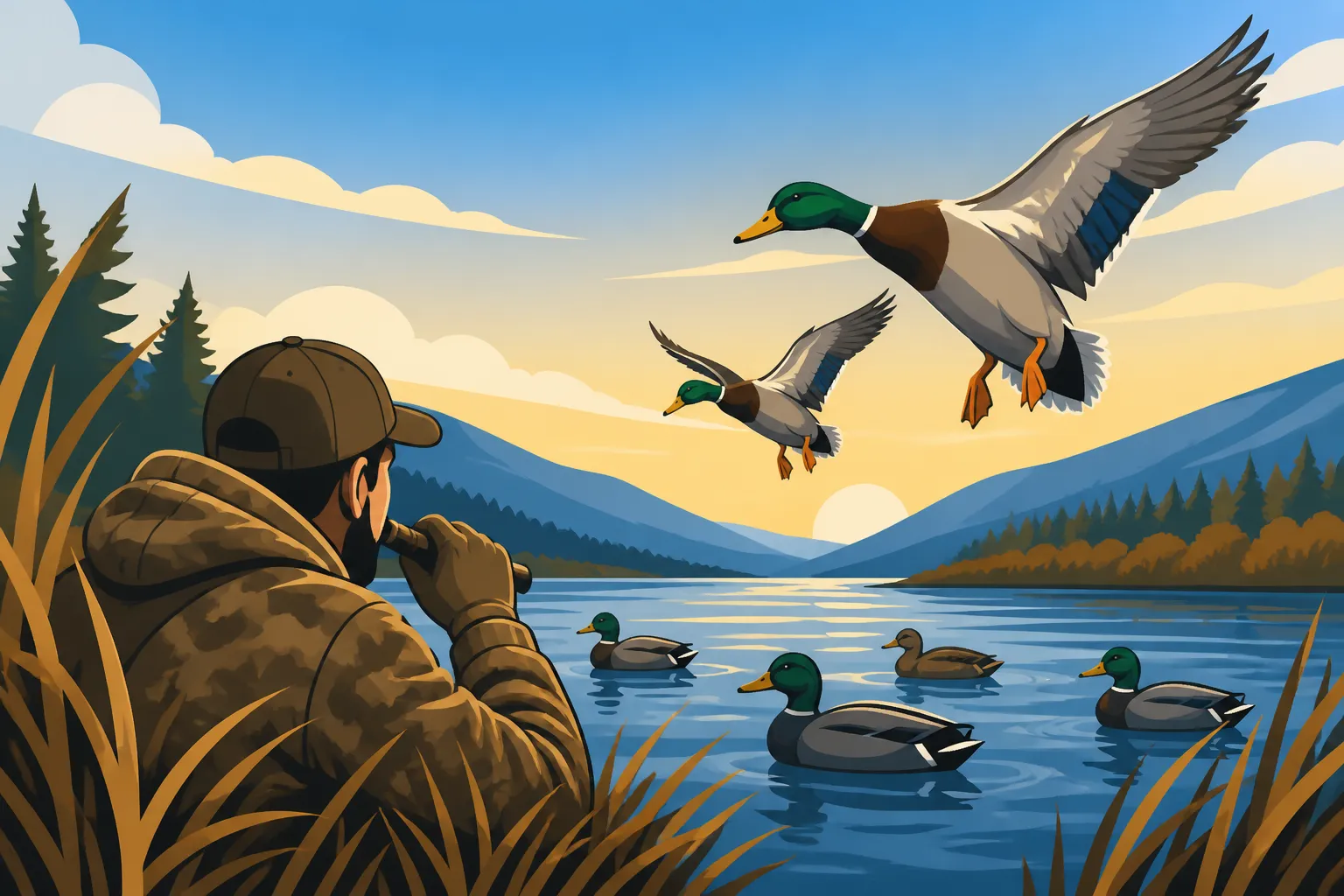
The mighty Connecticut River, snaking its way along New Hampshire's western border, offers some truly fantastic waterfowl opportunities, but luring in those wary mallards can feel like a game of chess against nature's finest. Many hunters get frustrated, setting out what they think is a perfect spread only to watch flock after flock pitch downriver, untouched. This comprehensive guide will walk you through the nuances of decoying mallards on the Connecticut River, turning those missed opportunities into memorable hunts.
Understanding the Connecticut River Environment and Mallard Behavior
The Connecticut River is a diverse and dynamic waterway, far from a static pond. Its currents, varying depths, and surrounding habitat dramatically influence mallard movements and feeding habits. To consistently decoy birds, you first need to become a student of this unique river system.
River Dynamics and Mallard Habitat Preferences
The Connecticut River isn't uniform; it has slow oxbows, swift main channels, shallow eddies, and flooded timber pockets. Mallards, being dabbling ducks, favor shallower waters where they can tip-up to feed on submerged aquatic vegetation, seeds, and invertebrates. They're also drawn to areas with soft, muddy bottoms and access to agricultural fields. Along the Connecticut, this often means focusing your efforts on larger river bends where current naturally slows, creating sedimentation and shallower feeding flats, or tributary mouths that introduce fresh food sources and calmer waters. Look for backwaters, sloughs, and flooded timber that provide shelter from the main current and predators, especially during colder weather. These spots offer ducks a place to rest and feed with less effort. Understanding how the current flows in these specific spots is crucial for effective decoy placement, ensuring your spread moves naturally and looks alive.
Migration Patterns and Peak Times
New Hampshire's position within the Atlantic Flyway means the Connecticut River serves as a vital corridor for migrating waterfowl. Early in the season, you'll encounter local birds, often in smaller groups. As October progresses into November, significant numbers of northern mallards begin to push south, swelling the population. This is often when the hunting really heats up. The timing of cold fronts up north and ice formation further north significantly impacts when these birds arrive in larger waves. Tracking weather patterns and recent bird reports from Maine, Vermont, and even Quebec can give you a significant advantage. The season generally extends into December, with the latest birds often the wariest, and the coldest weather concentrating them into remaining open water and reliable food sources. Remember, the New Hampshire Waterfowl Season and Zones are specifically designed around these migratory patterns, so always check the latest regulations.
Identifying Key Mallard Feeding and Roosting Areas
Scouting is paramount on the Connecticut. Mallards are creatures of habit, often using the same feeding and roosting areas day after day, provided they aren't pressured too heavily. Feeding areas are typically shallow water zones rich in food, often near agricultural fields that have been harvested, offering waste grain. Roosting areas are usually larger, safer bodies of water where ducks can gather in numbers overnight, away from disturbances. This might be a wide, calm section of the river, a large oxbow, or even a local pond or lake adjacent to the river. Observing where ducks fly at dawn and dusk is your biggest clue. Are they flying from a specific feeding field to a larger body of water? Or are they pitching down into a sheltered cove after leaving a roost? Platforms like GoHunt can be invaluable for pinpointing potential habitat, showing satellite imagery, public land boundaries, and even historical harvest data in some regions, giving you a serious edge in identifying these key locations before you ever step foot in the mud. Don't underestimate the power of knowing where they want to be.
Decoy Strategies for Connecticut River Mallards
Once you understand the birds and the river, it's time to set the stage. Your decoy spread isn't just a collection of plastic ducks; it's a visual invitation that needs to look as natural and enticing as possible to wary mallards.
Choosing the Right Decoy Spread and Numbers
The "right" spread depends heavily on the day, the pressure, and the specific spot you're hunting. On the Connecticut, you generally want to err on the side of realism. For smaller pockets or backwaters, a spread of 6-12 high-quality mallard decoys might be all you need, often mixed with a few black ducks or pintails for variety, as these species often associate. In larger open stretches of the river, especially during peak migration, you might deploy 2-3 dozen or more to create a more visible "raft" of birds that screams safety and sustenance. Consider adding a few Canada goose decoys to your spread, particularly if geese are using the same general area, as ducks often feel safer around geese. The key is to make your spread appear dynamic and unpressured. If you're dealing with heavily hunted birds, a smaller, tighter, more realistic spread can often outperform a massive, artificial-looking one. For more ideas, you might find specific patterns in Duck Decoy Spreads for New Hampshire's Connecticut River helpful.
Effective Decoy Placement in Current
This is where many river hunters struggle. Decoys must look natural in the current. Avoid stringing them out in a straight line or having them all face the same direction, which looks unnatural. Instead, create pockets and open landing zones.
- The "J" or "U" Hook: This classic spread works well in current. Place the bulk of your decoys upstream, forming the long arm of the J (or U). Leave an open water "landing strip" in the curve of the J, usually facing downwind from your blind, where ducks can comfortably pitch in. The current will naturally pull the ducks through your shooting lane.
- Decoy Anchoring: Use heavier decoy weights (often 4-6 oz or even larger in swift currents) with longer lines (6-8 feet) to allow the decoys to ride naturally on the water's surface without being dragged under or bunching up. Braided line or stout monofilament is preferred for durability.
- Variety of Positions: Mix up your decoy positions. Some facing upstream, some downstream, some feeding (butt-up) to simulate a contented flock. This realism is what convinces wary birds.
- Motion Decoys: On the Connecticut, motion can be a game-changer. A spinning-wing decoy (like a Mojo Mallard) placed in the open water of your landing zone, or a jerk cord system, adds irresistible flash and movement that mimics feeding ducks. Just be mindful of regulations regarding motorized decoys, and ensure they look natural and aren't overused, especially on bright, sunny days when the flash can look unnatural.
Incorporating Motion Decoys and Natural Elements
Motion decoys, when used judiciously, can significantly enhance your spread. A spinning-wing decoy creates a visual beacon that can attract birds from a distance. However, sometimes too much motion can spook birds, especially if they are heavily pressured. A subtle jerk-string setup, allowing you to create ripples and bobbing motion among your static decoys, often works wonders for close-in work. For river hunting, a motion decoy that creates ripples (like a V-wing or a rippler) can also be very effective, mimicking ducks actively feeding and moving in the water.
Beyond mechanical motion, incorporate natural elements. If hunting an edge with grass or cattails, place some decoys partially tucked into the vegetation, simulating ducks seeking shelter. Use natural cover like fallen logs or brush on the bank to break up your outline and add to the illusion of a secluded, safe spot. Sometimes, a few strategically placed floating logs can even act as natural confidence decoys, especially if the ducks are accustomed to seeing them on the river.
Calling, Concealment, and Ethical Considerations
Decoys are just one part of the equation. Your calling prowess and ability to disappear into the landscape are equally important for success on the Connecticut River.
Mastering Mallard Calls and When to Use Them
A good mallard call is an essential tool, but knowing when and how much to call is the real art.
- The Greeting Call: A series of 3-5 loud quacks is often used to get the attention of distant birds. Once they show interest, back off the volume.
- The Comeback Call: A longer, more insistent series of 5-7 quacks, often with increasing urgency, used when birds are flying past or seem hesitant.
- The Feed Call: Soft, contented clucks and quacks simulate ducks happily feeding. This is often used when birds are working your spread, as a reassuring "all clear."
- The Lonesome Hen: A longer, drawn-out quaaack can pique the interest of single drakes or small groups looking for company.
Avoid overcalling, especially when birds are already committed and working towards your spread. A few soft feed calls are often all that's needed to seal the deal. Listen to the birds themselves; they'll often tell you what they want to hear. There are excellent instructional videos and guides, and practicing in the off-season, even with a mentor, can greatly improve your skills. Remember, calling is about confidence, not just volume.
Essential Concealment Tactics for River Hunting
Mallards have incredible eyesight, and on the open stretches of the Connecticut, good concealment is non-negotiable.
- Natural Blinds: Utilize the natural cover available – tall grass, cattails, fallen trees, riverbanks. Take the time to brush in your blind meticulously, making it look like a natural part of the landscape. A layout blind can be incredibly effective in certain field-edge scenarios, similar to techniques used in Layout Blind Hunting a Northern Zone Field.
- Low Profile: Whether you're in a boat blind or a bank blind, keep your profile as low as possible. Ducks see in a much wider field of vision than humans, and any unnatural shape against the horizon will be spotted.
- Face Paint/Masks: Your face is bright and reflective. Always wear a facemask or use face paint to break up your outline and hide any glare.
- Movement: This is the biggest killer of duck hunts. Once ducks are working your spread, absolutely minimize movement. Resist the urge to peek or fidget. Wait until they commit and are in easy range.
- Camo Patterns: Choose camouflage patterns that match the local vegetation. On the Connecticut, this often means patterns with marsh grass, cattail, or leafy patterns that blend with the riverbank deciduous trees.
Navigating Access and Safety on the Connecticut River
The Connecticut River is largely navigable and offers extensive public access points, but understanding the rules and prioritizing safety is crucial.
- Public Access: Many boat launches and access points are available along the river in New Hampshire. Check the New Hampshire Fish and Game website or local town resources for specific locations. Be mindful of parking and launch etiquette.
- Private Land: While the river itself is public, the adjacent land may be private. Always be aware of property boundaries and respect landowner rights. A mapping app like GoHunt, with its detailed parcel data, can clearly show you land ownership, helping you avoid accidental trespass when setting up your blind or retrieving downed birds.
- River Hazards: The Connecticut can be cold, especially in late fall and winter. Wear appropriate cold-weather layering and waders designed for the conditions, like those discussed in Waders for New Hampshire Waterfowl Hunting. Currents can be strong, and submerged obstacles are common. Always wear a life jacket, especially if hunting from a boat, and let someone know your hunting plan and expected return time. Hypothermia is a serious risk if you unexpectedly enter the water.
- Hunting Hours: Remember, waterfowl hunting hours typically end at sunset. Be aware of the exact time and plan your exit accordingly.
- Retrieving Game: Have a plan for retrieving downed birds. A good retrieving dog is invaluable, but if you don't have one, consider a small, easily deployable dinghy or canoe to safely retrieve birds from the current or beyond your wading depth. Never put yourself at risk for a bird.
- Regulations: Always carry your valid New Hampshire hunting license, waterfowl stamp, and HIP certification. Be intimately familiar with the New Hampshire Duck and Goose Bag Limits and any specific zone regulations.
Essential Gear and Preparation for River Hunts
Having the right gear makes a challenging river hunt much more manageable and enjoyable. Being prepared for anything the New Hampshire weather can throw at you is key to success and safety.
Waders, Boats, and Cold-Weather Layering
Hunting the Connecticut River often means dealing with cold water, mud, and sometimes swift currents. Your gear needs to be up to the task.
- Waders: Quality chest waders are non-negotiable. Neoprene waders offer excellent insulation for cold water, while breathable waders, layered appropriately, can be more versatile for varying temperatures. Ensure they fit well and allow for comfortable movement, especially if you'll be slogging through mud. Carry a wader repair kit, just in case.
- Boats: A reliable boat is crucial for accessing many prime river spots, transporting decoys, and retrieving birds. A sturdy jon boat or a flat-bottomed duck boat with a reliable outboard is ideal. Ensure your boat is properly registered, has all required safety equipment (life jackets, signaling devices, lights), and that you know how to operate it safely in river conditions, especially in current. For smaller, shallower backwaters, a canoe or kayak might suffice, but be aware of stability and payload capacity.
- Layering: New Hampshire weather is notoriously unpredictable, especially in late fall. Layering is essential to stay warm and dry. Start with a moisture-wicking base layer, add insulating mid-layers like fleece or down, and top it off with a waterproof and windproof outer shell. Bring extra gloves, hats, and socks. Even if the forecast looks mild, conditions on the river can change rapidly. Remember that sitting still in a blind amplifies the cold, so over-dressing is better than under-dressing. For more details on staying warm, consider reading about Layering for New Hampshire's Cold Hunting Season.
Scouting and Utilizing Tools like GoHunt
Successful river hunting begins long before opening day. Thorough scouting, combined with modern tools, will significantly increase your odds.
- Pre-Season Scouting: Visit the river in the weeks leading up to the season. Identify potential roosting and feeding areas. Look for natural pinch points, oxbows, and sloughs that ducks might favor. Observe flight patterns at dawn and dusk. Note water levels and current speeds, as these change throughout the season.
- Mapping Apps: Tools like GoHunt are invaluable for scouting. They provide detailed satellite imagery, topographical maps, and public/private land ownership layers. You can mark potential blind locations, access points, and observed bird activity. The ability to download maps for offline use is crucial in areas with spotty cell service along the river. This helps you identify promising habitat features like flooded timber or shallow flats that might not be obvious from the road.
- Reading the River: Learn to "read" the river. Where are the calm spots out of the main current? Where are the sandbars forming? Which banks offer the best natural cover? Look for signs of duck activity: droppings on logs, feather piles, or areas where vegetation has been grazed. This skill comes with time and observation.
- Post-Hunt Analysis: After each hunt, reflect on what worked and what didn't. Did the ducks decoy well? Were they spooked by something specific? Adjust your spread, calling, or blind location based on these observations. Hunting is a continuous learning process.
Post-Hunt Care and Regulations
Your responsibility doesn't end when the shot is fired. Proper care for your harvested birds and adherence to regulations are crucial.
- Field Dressing: While many hunters wait until they get home, basic field dressing (removing guts) can help cool the bird faster, especially on warmer days, preserving the meat quality.
- Transporting Birds: Birds must remain in a condition that allows for species identification during transport from the field. This usually means leaving a wing attached. Check the specific regulations for New Hampshire Duck and Goose Bag Limits.
- Cleaning and Storage: As soon as possible, clean your birds properly, removing feathers and internal organs. Rinse the meat thoroughly and store it in a cooler with ice or refrigerate it immediately. For long-term storage, vacuum sealing and freezing are excellent options to prevent freezer burn.
- Reporting: While not all waterfowl require individual reporting like deer, it's good practice to understand any specific regulations that might arise. Ensure your HIP certification is up-to-date.
- Leaving No Trace: Always pack out everything you pack in. Leave your hunting spot cleaner than you found it. This respects the land, other hunters, and future opportunities.
The Connecticut River offers a classic waterfowl hunting experience, and with careful planning, the right gear, and a deep understanding of mallard behavior, you can enjoy some truly rewarding hunts in the Granite State.
Disclaimer
Hunting is an inherently dangerous activity. This guide provides general information and recommendations. Always consult the most current New Hampshire Fish and Game Department regulations, practice firearm and boating safety, and prioritize personal safety when hunting. Conditions on the Connecticut River can change rapidly, and hunters are responsible for their own safety and adherence to all applicable laws and regulations.