New Hampshire’s Natural Lure Restrictions
For many of us, traditional deer hunting has always involved some form of natural scent lure, be it a trusty doe-in-estrus urine during the rut or a simple buck lure to pique curiosity. There's a certain old-school appeal to it, a feeling of connecting with nature on its own terms. But in New Hampshire, the landscape of scent strategies has significantly shifted, leaving many hunters scratching their heads and wondering what's truly legal and effective. The frustration is real when you realize a long-trusted tactic is now off-limits, all in the name of protecting our deer herd. This comprehensive guide will unravel the complexities of New Hampshire's natural lure restrictions, explaining why these rules are in place and how you can adapt your hunting strategy to stay compliant and successful.
The Critical Rationale Behind New Hampshire's Natural Lure Ban
It’s easy to feel like these regulations just make things harder, adding another layer of complexity to an already challenging pursuit. But New Hampshire's natural lure ban isn't about hindering hunters; it's a proactive, science-backed measure to protect our wild deer, moose, and elk populations from a devastating and incurable disease: Chronic Wasting Disease (CWD). The threat of CWD is very real, and state wildlife agencies across the country are taking aggressive steps to prevent its spread.
Understanding Chronic Wasting Disease CWD
Imagine a disease that slowly but relentlessly attacks the brain and nervous system of deer, elk, and moose. That's CWD in a nutshell. It's caused by abnormal proteins called prions, which are incredibly resilient and can persist in the environment for years, even decades. Unlike bacteria or viruses, prions aren't easily destroyed by freezing, cooking, or disinfectants.
When an animal is infected with CWD, these prions accumulate, leading to a host of neurological symptoms: drastic weight loss (hence "wasting"), stumbling, drooling, lethargy, and a general loss of fear of humans. It’s a truly horrific way for an animal to die, and it’s always fatal. There is no vaccine and no cure.
The scariest part about CWD is how it spreads. Infected animals shed prions through their saliva, urine, feces, and decomposing carcasses. Other animals can then pick up these prions directly from the environment by grazing on contaminated soil or plants. Once CWD takes root in an area, it's virtually impossible to eradicate. States like Wisconsin, Pennsylvania, and parts of the Midwest have seen CWD become endemic in their deer herds, requiring costly and often controversial management strategies, including mass culling, just to try and slow its relentless march. For a state like New Hampshire, which currently boasts a CWD-free herd, preventing its arrival is paramount. We don't want to see our beloved white-tailed deer suffering from this awful disease, nor do we want to face the drastic measures necessary to control it.
The Role of Natural Lures in CWD Transmission
Now, how do deer urine and other natural lures fit into this grim picture? The connection might not be immediately obvious, but it's a critical one. Many commercial deer lures are made from the urine or glandular secretions of captive deer. While these deer farms might claim to have "CWD-free" herds, the reality is far more complex.
- Detection Limitations: Current CWD testing methods aren't perfect. An animal can be infected and shedding prions for a significant period before it shows symptoms or tests positive. This means a "CWD-free" certified farm could still unknowingly harbor infected animals.
- Prion Persistence: Even if a farm animal hasn't yet tested positive, if it carries prions, those prions can contaminate its urine and secretions. When hunters use these lures in the field, they are essentially introducing these prions into new environments where wild deer live.
- Environmental Deposition: Imagine a hunter spraying deer urine on a scrape line or a wick near their stand. Over time, that urine, potentially carrying prions, soaks into the soil. Wild deer then come along, investigate the scent, and potentially ingest those prions when they lick the ground, browse nearby vegetation, or even just breathe in dust.
- A Hypothetical Scenario: Picture a hunter in Coos County using a bottle of doe urine purchased from a store, unaware it originated from an infected farm out of state. They set up their stand in a prime travel corridor near a beaver flowage edge. They spray the lure on the ground around a mock scrape. Local deer, attracted by the scent, lick and sniff the area. If that lure contained prions, those prions are now in New Hampshire soil. Fast forward months, or even years, and those prions are still there, a ticking time bomb waiting for a browsing deer to pick them up. This is the exact scenario New Hampshire Fish and Game is trying to avoid. Our goal is to keep our wild herd healthy, and that means being incredibly cautious about anything that could introduce CWD. This preventative approach is why New Hampshire's Ban on Natural Deer Lures Explained is such a crucial part of the state's broader CWD strategy.
What Exactly is Prohibited: Deciphering the Regulations
Understanding the "why" makes the "what" a lot easier to digest. New Hampshire's regulations are quite clear about what constitutes a prohibited natural lure, aiming to eliminate any potential vectors for CWD transmission from outside sources. For hunters transitioning from old habits, this can feel like a big adjustment, but it's one that ultimately benefits the health of the game we pursue.
Defining "Natural Lures" in New Hampshire
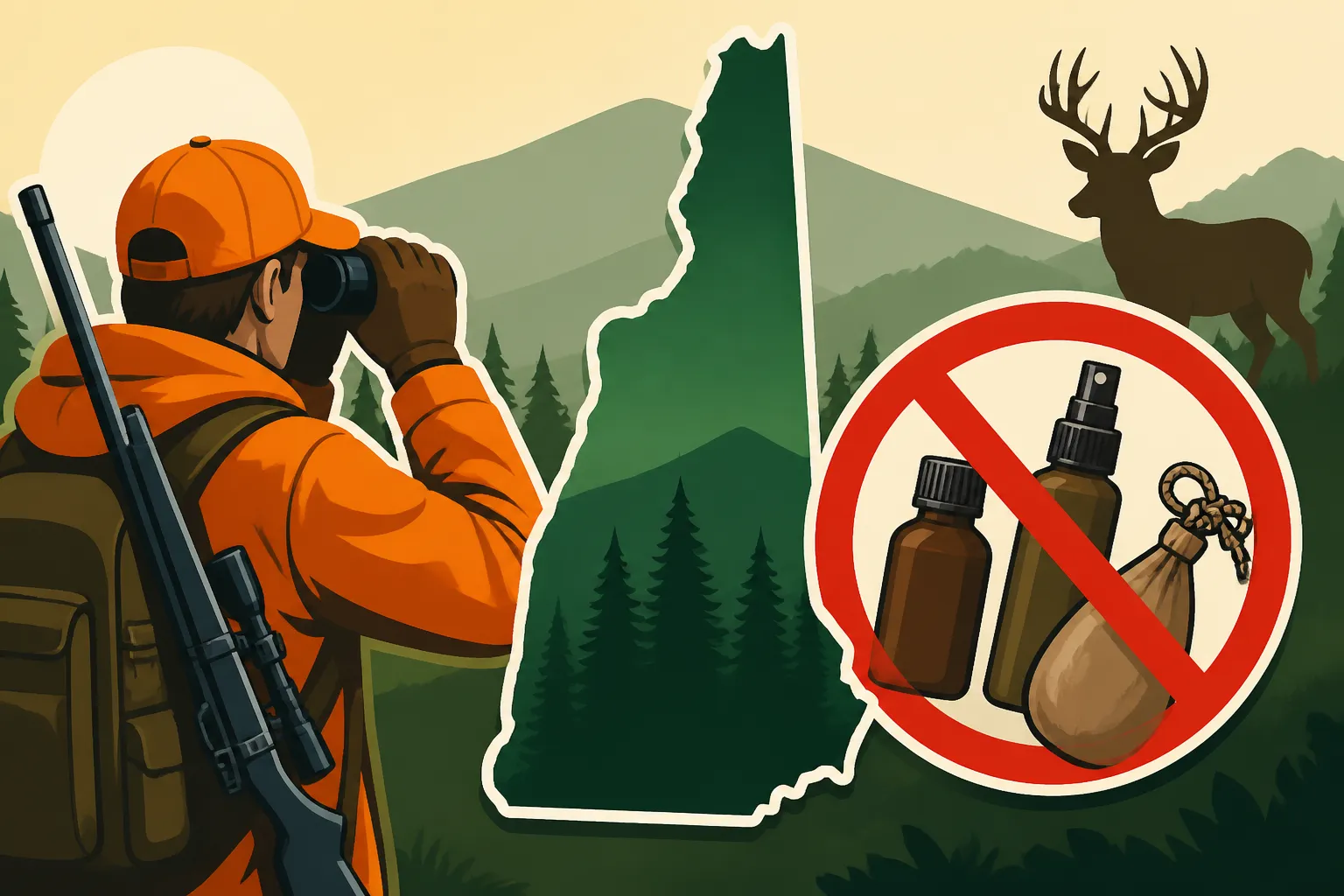
When New Hampshire Fish and Game talks about "natural lures," they are specifically targeting products derived from cervids (deer, elk, moose). This means anything that comes from the bodily fluids or tissues of these animals is off-limits.
Here’s a breakdown of what’s strictly prohibited:
- Deer Urine: This is the big one. Whether it's "doe-in-estrus," "dominant buck urine," or "curiosity scent," if it's derived from deer urine, you cannot use it. This applies to commercially bottled urine and any attempt to collect and use wild deer urine yourself.
- Glandular Secretions: This includes tarsal gland, pre-orbital gland, interdigital gland, and other secretions that deer use for communication. While you might find synthetic versions, any actual biological secretions are banned.
- Blood and Other Bodily Fluids: Any product containing actual deer blood, saliva, or other fluids is prohibited.
- Other Cervid Parts: This generally extends to any nervous tissue, brain matter, or spinal column material from a cervid, though these are rarely found in hunting lures anyway.
The key takeaway is this: if it came directly from a deer, elk, or moose, it's not allowed. This robust measure is part of New Hampshire's broader effort to remain CWD-free, which also includes strict New Hampshire Carcass Import Restrictions to prevent infected materials from entering the state.
A common misconception is that if a product is "CWD-certified" or claims to be from a "clean herd," it's okay. Unfortunately, as discussed, the science on prions dictates extreme caution. Because current testing cannot detect prions in live animals with 100% certainty, and because prions are so incredibly tough, New Hampshire has taken a blanket approach: no natural cervid lures, period. This eliminates any ambiguity and provides the strongest possible safeguard for our wild populations.
Permitted Alternatives and Exceptions
The good news is that you don't have to throw out your entire scent strategy. Many effective and legal alternatives are available, and some "natural" products that aren't animal-derived are still perfectly fine to use. The focus here is on non-cervid sources and synthetic compounds.
Here’s what you can use:
- Synthetic Scents: This is your primary go-to replacement for traditional urine lures. Companies have developed incredibly realistic synthetic versions of doe-in-estrus, buck urine, and various glandular scents. These are chemically formulated to mimic the natural odors without any biological material from cervids. Brands like Code Blue (with their Grave Digger synthetic line) and Tink's (with their Power Scrape synthetic) offer good options that are widely available.
- Cover Scents: Scents designed to mask human odor are still permissible, as long as they are not derived from cervids. This includes scents like pine, cedar, earth, fresh dirt, or even common household odors like vanilla or apple. These are fantastic for blending into the natural environment, especially when Hunting a White Mountain Notch Pass where human odor can carry far.
- Food-Based Attractants (Non-Cervid): If a "natural" lure is derived from plant matter or other non-cervid sources, it's generally allowed. Examples include pure apple scent, acorn scent, persimmon, or other fruit/vegetable-based attractants. Always double-check that these products contain no animal-derived components, especially if they are labeled "natural." The key is the source: if it's plant-based, you're usually in the clear.
- Repellents: Bear spray, for instance, is not a lure, and its use for safety is entirely unrelated to these regulations. Similarly, insect repellents are fine.
When in doubt, always err on the side of caution. If a product label is vague or you're unsure about its origin, it's best to contact the New Hampshire Fish and Game Department directly. A quick call can save you a lot of grief and ensure you're protecting the resource. Think of it as part of your annual preparation, alongside checking the specific dates for New Hampshire's WMU-Based Deer Season Structure or reviewing the rules for Crossbow Hunting New Hampshire's Twelve WMUs.
| Category | Prohibited Natural Lures (Cervid-Derived) | Permitted Alternatives (Non-Cervid/Synthetic) |
|---|---|---|
| Urine Scents | Doe-in-estrus urine, Buck urine, etc. | Synthetic doe-in-estrus, Synthetic buck urine |
| Glandular Scents | Tarsal gland, Pre-orbital gland | Synthetic glandular scents |
| Bodily Fluids | Deer blood, Saliva, Lymph | N/A (no equivalent, not needed) |
| Cover Scents | N/A (if non-cervid, they're permitted) | Pine, Cedar, Earth, Vanilla, Apple |
| Food Attractants | N/A (if non-cervid, they're permitted) | Apple essence, Acorn extract, Molasses |
This table should help clarify the distinction. The core idea is to avoid introducing any material from deer, elk, or moose that could potentially carry CWD prions into the New Hampshire landscape.
Practical Implications for Hunters on the Ground
Adapting to new regulations can feel daunting, especially when you've relied on certain tactics for years. But savvy New Hampshire hunters are already adjusting their strategies, proving that successful hunting is entirely possible without natural cervid lures. It's about shifting focus and honing other skills that will make you a more well-rounded hunter.
Adjusting Your Scent Strategy
The first step is a mental one: let go of the idea that you need natural deer urine to be successful. Countless mature bucks are harvested every year without it.
- Embrace Synthetic Scents: This is the most direct replacement. Experiment with different synthetic brands and types. Some hunters swear by certain synthetic doe-in-estrus scents during the rut, reporting similar levels of curiosity and attraction from bucks. Try placing synthetic buck urine in a mock scrape, or using a synthetic curiosity scent on a wick near your stand. Remember, presentation still matters, just like with natural lures.
- Master Scent Control: This becomes even more critical when you can't rely on attracting deer with a specific scent. Focus on eliminating your own odor. This means showering with scent-free soap, washing your hunting clothes in scent-free detergent, and storing them in airtight containers. Dressing in layers, such as those discussed in Layering for New Hampshire's Cold Hunting Season, can also help manage perspiration, a major source of human odor.
- Utilize Cover Scents Wisely: Pine, cedar, and earth scents can be effective cover scents. Apply them to your boots, clothing, or even a drag rag as you walk to your stand. The goal isn't necessarily to attract deer, but to fool their noses into thinking you're just another part of the forest.
- Focus on Environmental Scouting: Without relying on lures, your scouting skills become paramount. Spend more time looking for natural deer sign: fresh tracks, rub lines, active scrapes (which deer create naturally, not just with lures), and bedding areas. Understanding deer movement patterns, like those indicated by Reading New Hampshire Mud for Fresh Deer Movement, becomes even more valuable. Tools like the GoHunt app can provide excellent aerial imagery and topographic maps to help identify pinch points, funnels, and natural food sources.
- Clean Your Gear: If you've previously used natural deer urine or other prohibited lures, it's crucial to thoroughly clean all your gear – boots, clothing, scent wicks, spray bottles, and even your treestand. Use a strong disinfectant and scent-free soap to ensure no prions linger. This might seem extreme, but given the persistence of prions, it’s a necessary precaution.
By shifting your mindset and focusing on these alternative strategies, you'll not only stay compliant with New Hampshire's regulations but likely become a more skilled and observant hunter in the process.
Consequences of Non-Compliance
Let's be blunt: violating these regulations isn't just a minor infraction. New Hampshire Fish and Game takes CWD prevention incredibly seriously, and so should every hunter. The penalties for using prohibited natural lures can be significant and far-reaching.
- Fines: You can expect substantial monetary fines for possession or use of illegal cervid lures. These aren't just slaps on the wrist; they are designed to be a deterrent.
- License Suspension: Beyond fines, you could face suspension of your hunting license, meaning you'd be unable to hunt in New Hampshire for a specified period. This could extend to other states as well, through interstate compacts. Imagine missing several seasons because of a lure violation.
- Confiscation of Equipment: Game wardens have the authority to confiscate illegal lures and potentially other associated hunting equipment.
- Ethical Ramifications: Beyond the legal penalties, there's an ethical responsibility to consider. Our hunting traditions are built on respect for wildlife and the land. Intentionally or unintentionally contributing to the spread of a deadly disease like CWD undermines that respect and endangers the future of hunting in our state. Game wardens are highly trained and vigilant, often conducting checks in popular hunting areas, and they will not hesitate to enforce these critical regulations.
It's far better to err on the side of caution, learn the rules, and ensure your practices align with the state's conservation goals. Protecting our White-Tailed Deer Across New Hampshire from CWD is a collective effort, and every hunter plays a vital role.
Staying Informed and Supporting CWD Prevention
The world of wildlife management is constantly evolving, and regulations can change. It's not enough to simply read the digest once; staying engaged and informed is an ongoing responsibility for every hunter. By doing so, you become an active participant in protecting New Hampshire's cherished wildlife.
Resources for Current Regulations
The best defense against unintentional non-compliance is proactive education. Don't rely on outdated information or hearsay from the camp.
- New Hampshire Fish and Game Department Website: This is your authoritative source. The NHF&G website (wildlife.nh.gov) is regularly updated with the latest regulations, news, and advisories regarding CWD. Make it a habit to check it before each hunting season.
- New Hampshire Hunting Digest: Every year, NHF&G publishes the official hunting digest. This small booklet is packed with all the legal information you need – season dates, bag limits, weapon restrictions, and, of course, CWD prevention rules, including the natural lure ban. Always carry a copy (physical or digital) with you in the field.
- GoHunt: While not specific to New Hampshire, platforms like GoHunt provide valuable, state-by-state information. Their comprehensive research and regulation summaries can be an excellent complement to the official NHF&G resources, allowing you to quickly reference specific rules, including those pertaining to lures and attractants. They often provide accessible breakdowns of complex regulations.
- Direct Contact: If you have any doubt about a specific product or situation, pick up the phone and call the New Hampshire Fish and Game Department. Their wildlife biologists and conservation officers are there to help and would much rather answer a question than issue a citation.
Regulations, especially those related to disease prevention, can be dynamic. A small change in CWD prevalence in a neighboring state could trigger an adjustment in New Hampshire's rules. Making an annual review of these resources a non-negotiable part of your pre-season routine is essential.
New Hampshire's Broader CWD Prevention Efforts
The natural lure ban isn't an isolated rule; it's one piece of a larger, integrated strategy designed to keep CWD out of New Hampshire. Understanding these other measures helps reinforce why the lure ban is so important.
- Carcass Import Restrictions: As mentioned earlier, New Hampshire has strict rules about bringing cervid carcasses or certain parts into the state from areas where CWD has been detected. This prevents infected animal remains, which contain high concentrations of prions, from contaminating our soil and water. You can find detailed information on these specific rules under New Hampshire Carcass Import Restrictions.
- CWD Surveillance Program: New Hampshire Fish and Game conducts ongoing surveillance, collecting samples from harvested deer, elk, and moose for CWD testing. This proactive monitoring is crucial for early detection should CWD ever breach our borders. Hunters often participate by submitting lymph node samples at check stations or designated drop-off points. This is exactly why it’s so important to be aware of New Hampshire's CWD Surveillance Program and cooperate with any requests for samples.
- Educational Outreach: NHF&G invests in educating hunters and the public about CWD, its risks, and prevention methods. This guide is part of that larger effort to empower hunters with knowledge.
- Natural Lure Enforcement: Conservation officers are actively enforcing the natural lure ban. This ensures compliance and sends a clear message that New Hampshire is serious about protecting its wildlife.
These comprehensive efforts, from strict regulations on lures and carcass transport to continuous monitoring, demonstrate New Hampshire's commitment to maintaining a healthy and CWD-free deer herd. As hunters, we are the first line of defense, and our adherence to these rules is vital for the longevity of our hunting heritage. When you're out Scouting New Hampshire Public Land Before Season, remember that every action you take, from your scent choices to how you manage your harvest, contributes to this critical conservation mission.
Disclaimer
Please note: Hunting regulations can change annually. While this guide provides comprehensive information, it is crucial to always consult the most current New Hampshire Fish and Game Department hunting digest or website for the official and most up-to-date regulations before heading into the field. This content is for informational purposes only and does not constitute legal advice.