New Hampshire Ruffed Grouse and Woodcock
There's a unique magic that washes over you when the leaves start turning in New Hampshire, signaling the arrival of fall and with it, the pursuit of our most cherished upland birds. For many of us, the heart beats a little faster at the thought of a thunderous flush of a ruffed grouse or the erratic, whistling flight of an American woodcock. This guide is your companion to understanding, finding, and respectfully harvesting these incredible birds across the Granite State.
The Allure of Upland Birds in New Hampshire
Hunting upland birds in New Hampshire isn't just about the shot; it's about the entire experience. It's the crisp autumn air, the vibrant tapestry of fall foliage, the sound of leaves crunching underfoot, and the anticipation that hangs heavy in the air. These birds offer a challenge, a connection to the wild, and a reward unlike any other.
Why Ruffed Grouse Capture Our Hearts
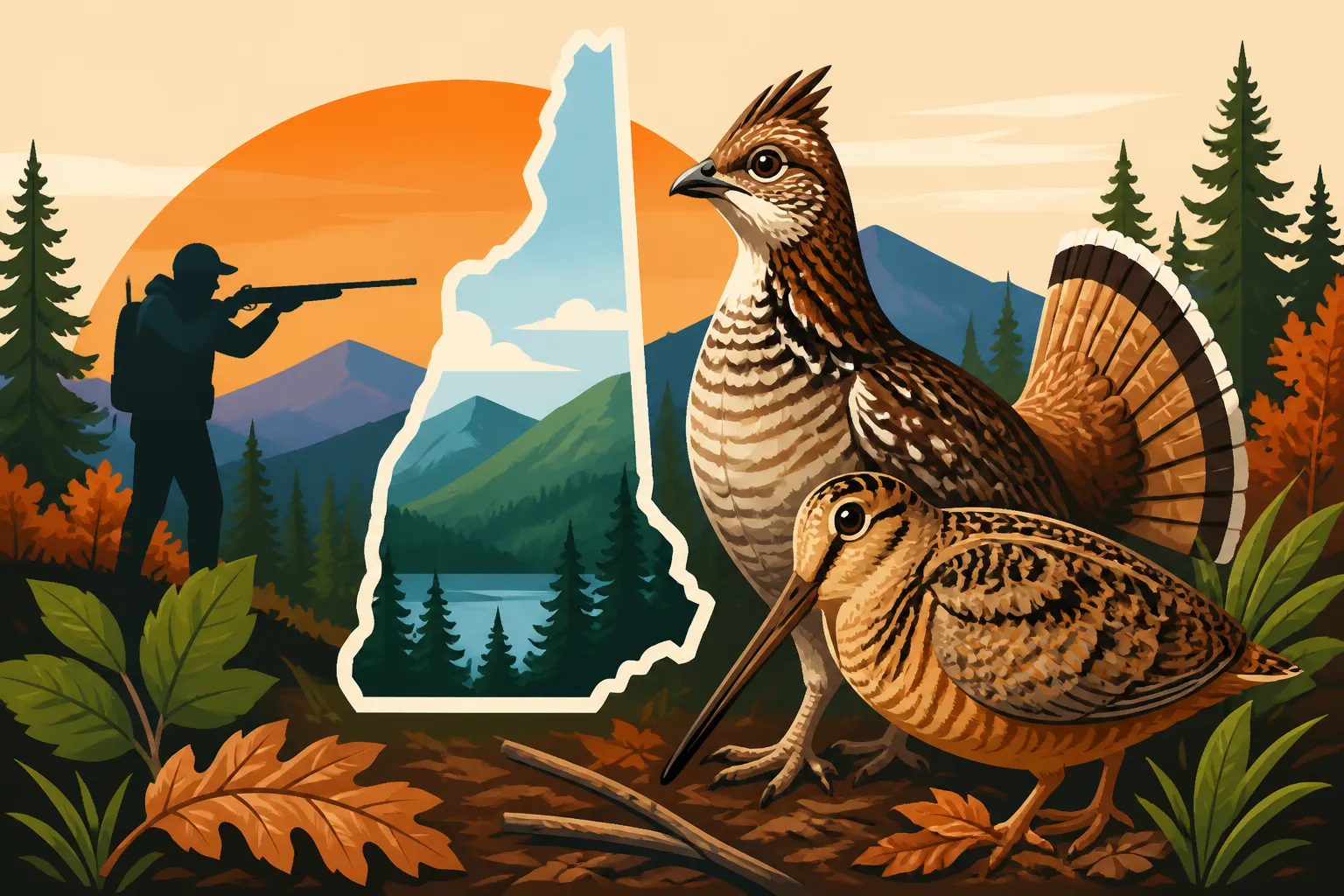
The ruffed grouse, often called the "king of game birds," holds a special place in the hearts of New Hampshire hunters. It's not just their stunning plumage, blending perfectly with the forest floor, but their explosive, heart-stopping flush that makes them so exhilarating. One minute, the woods are silent; the next, a feathered rocket bursts from cover, often giving you only a split-second to react. This unpredictability is what drives us back to the coverts season after season. Many seasoned hunters describe the grouse flush as akin to a drum roll, a sudden, powerful sound that sets the pulse racing. It's a testament to their survival instincts that they can remain so camouflaged and still until you're practically on top of them. The challenge isn't just in the shooting; it's in the finding, the outsmarting, and the sheer effort of covering rugged terrain.
The Enigmatic Charm of the American Woodcock
Then there's the American woodcock, a truly unique migratory bird often referred to as the "timber doodle." While less dramatic than a grouse flush, the woodcock's flight is erratic and challenging, often weaving through dense alder thickets and saplings. Their long bills, large eyes, and distinctive corkscrew flight pattern make them instantly recognizable and a joy to pursue. They are a bird of mystery, appearing almost overnight during their migrations and disappearing just as quickly. The woodcock offers a different kind of hunt, often slower-paced, focused on finding specific wet, brushy habitat. Their calls, especially the spring peenting, are a distinctive sound of the New England woods. For many, harvesting a woodcock is as much about appreciating their unusual beauty and migratory journey as it is about putting meat in the freezer.
Understanding New Hampshire's Ruffed Grouse Dynamics
To consistently find ruffed grouse, you need to understand their biology, where they live, and how their populations ebb and flow. New Hampshire's diverse landscape offers prime grouse habitat, from the northern hardwoods to the central and southern forests.
Habitat Preferences and Behavior
Ruffed grouse thrive in young, regenerating forests – areas with dense undergrowth, saplings, and shrubby cover that provide both food and protection from predators. Think of abandoned apple orchards, old logging cuts (especially 5-15 years post-harvest), power line corridors, and the edges of beaver flowages. These areas offer berries, buds, and insects, as well as crucial overhead and lateral cover. You’ll often find them along old stone walls, near natural springs, or where softwoods meet hardwoods. They aren't birds of open spaces; they prefer to walk or run through thickets, only taking to the air when absolutely necessary.
During the breeding season, males establish drumming logs, typically fallen trees in somewhat more open timber, where they perform their distinctive drumming display to attract mates. As fall progresses, their diets shift towards buds, catkins (like aspen and birch), and residual berries. Areas with a good mix of aspen, birch, and oak are particularly appealing. Understanding these preferences helps narrow down your search, especially when you're Scouting New Hampshire Public Land Before Season.
Population Cycles and Their Impact
Ruffed grouse populations are known for their cyclical nature, typically peaking and declining over an 8-10 year period. These cycles are driven by a complex interplay of factors, including predator populations (like goshawks, coyotes, and bobcats), weather patterns, and habitat availability. In New Hampshire, recent trends have shown fluctuations, but the overall population remains healthy in areas with suitable habitat. A good year might see flushes every few hundred yards, while a low point in the cycle might make every bird feel like a trophy.
Understanding these cycles is crucial for managing expectations and appreciating the birds you do encounter. During a low cycle, hunters might need to cover more ground and adjust their tactics, perhaps focusing on historically productive areas that retain dense, protective cover. While New Hampshire doesn't have a formal system to track grouse cycles like some other states, experienced hunters and conservation groups like the Ruffed Grouse Society often have anecdotal insights into local populations. You can often find current information on New Hampshire Ruffed Grouse Population Cycles through state wildlife agencies or by talking to local foresters.
Where to Find Grouse in the Granite State
New Hampshire offers fantastic grouse hunting opportunities across its various regions. While the North Country (Coos and northern Grafton counties) is often hailed for its vast tracts of mixed forest and old logging roads, great habitat exists throughout the state. Counties like Carroll, Belknap, and Merrimack also offer excellent prospects, particularly in areas with active timber management. The key is to look for areas with early successional forest, whether that's old farmsteads reverting to forest, recent clear-cuts, or areas regenerating after a significant storm or logging operation.
- North Country: Expansive public lands like parts of the Hunting New Hampshire's White Mountain National Forest and vast private timberlands (often with public access) provide endless opportunities. Focus on edges of clear-cuts, alder swamps, and old logging landings.
- Central and Southern NH: Look for smaller, fragmented parcels of public land, town forests, and private lands with permission. These areas often have more mature timber, so focus on the brushy edges, old orchards, and stream bottoms.
- Logging Operations: Connect with local loggers or check public land maps for recent timber harvests. These sites are golden for grouse habitat in a few years. Apps like GoHunt are excellent for identifying recent satellite imagery and public land boundaries, helping you pinpoint potential grouse hotspots.
Mastering the Hunt for New Hampshire Ruffed Grouse
Hunting ruffed grouse is a demanding pursuit that requires stamina, keen observation, and often, a good dog. It's a game of chess with feathers, where understanding the bird's likely escape routes can be as important as your shooting skills.
Tactics for Flushing and Shooting
Most grouse hunting in New Hampshire involves "still-hunting" or "walking up" birds. This means moving slowly and deliberately through promising cover, stopping frequently to listen and observe. Grouse will often hold tight, relying on their camouflage, so a slow pace allows you to spot them before they flush, or at least be ready when they do. Always be prepared for a flush; your gun should be mounted, and your stance ready. When a bird flushes, focus on the bird, not the chaos. Pick a small spot on the bird and swing through it, follow through, and pull the trigger.
- Walk in a zigzag pattern: This helps cover more ground and provides varying angles of approach, often forcing a bird to flush.
- Pause and listen: After a few steps, pause for 10-20 seconds. Grouse often get nervous when you stop and may flush, or you might hear them moving. This also gives your ears a chance to pick up subtle sounds you missed while moving.
- Hunt into the wind: This helps carry your scent away from the birds and can also aid in hearing distant flushes.
- Hunt with a partner: Two hunters walking parallel, about 20-30 yards apart, can effectively push birds and cover more ground.
The best grouse hunters are masters of quick, instinctive shooting. The shots are almost always close-range and fast.
The Role of Dogs in Grouse Hunting
While you can certainly hunt grouse without a dog, a well-trained bird dog elevates the experience to another level. Pointers, setters, and flushers like springer spaniels and labs are all excellent choices. A good dog can cover significantly more ground, locate birds you would have walked past, and most importantly, retrieve downed game in thick cover, preventing lost birds. For pointers and setters, the thrill is seeing the dog lock up on point, indicating a bird is holding tight. For flushers, it’s watching them methodically work cover and erupt a bird into flight.
Proper dog training is paramount for a safe and effective hunt. Dogs should be trained to "whoa" or "heel" on command, retrieve to hand, and be comfortable with gunshots. For hunting in New Hampshire's varied terrain, dogs also need excellent conditioning and protective gear, like bells to track their movement and protective vests in thorny areas. Using an app like GoHunt can also help you mark dog points or flushes, giving you valuable data for future hunts. For more details on training and specific breeds, checking out Small Game and Predator Hunting in New Hampshire could offer broader insights into canine companions in the field.
Scouting and Seasonal Considerations
Scouting is just as important for grouse as it is for big game. Before the season, look for areas with active timber management, old logging cuts, abandoned orchards, and dense transition zones. Look for "grouse sign" – droppings, dusting bowls, and fresh tracks in soft soil. Pay attention to food sources. Early season (September-October) often finds grouse closer to berries and insects, while late season (November-December) sees them concentrating on buds of aspen, birch, and apple.
As the season progresses and leaves fall, grouse often become warier and may utilize ever denser cover, especially thick softwood pockets, for thermal protection. Snow can also be your friend, as it reveals tracks and allows you to read how birds are using the landscape. During late season, concentrate on south-facing slopes, protected valleys, and dense conifers. Remember, the best time to hunt is often during a light drizzle or after a light snowfall, when the woods are quieter underfoot.
Unraveling the Secrets of New Hampshire Woodcock
Woodcock are a unique challenge and provide a wonderful contrast to grouse hunting. Their migratory habits and specific habitat needs mean that while they may not always be present, when they are, the action can be fast and furious.
Migration Patterns and Arrival
American woodcock are migratory birds, breeding in the northern US and Canada and wintering in the southern US. New Hampshire sits squarely within their breeding and migratory range. They typically begin arriving in New Hampshire in late March and April, with males performing their elaborate "sky dance" to attract mates. The fall migration usually begins in September and peaks in October, often coinciding with peak foliage. The first hard frost often signals their imminent departure, as frozen ground makes it impossible for them to probe for earthworms, their primary food source.
Understanding these patterns is key to timing your hunt. You won't find resident woodcock in August. You're waiting for the "flights" to come through. These flights can be highly dependent on weather fronts; a strong cold front often pushes large numbers of birds south. Keep an eye on weather forecasts and migration reports, which can often be found through services like GoHunt. Detailed information on When Woodcock Migrate Through New Hampshire is invaluable for planning your trips.
Preferred Cover and Feeding Habits
Woodcock have very specific habitat requirements. They absolutely love young, moist, brushy cover. Think dense alder thickets along stream bottoms, willow stands, regenerating clear-cuts near water, and wet, shrubby fields. They need soft, moist soil where they can probe their long, flexible bills for earthworms, grubs, and other invertebrates. They also seek out areas with dense overhead cover to protect them from avian predators like hawks and owls.
Unlike grouse, which prefer to run, woodcock will typically freeze and hold incredibly tight, even allowing you to step almost on top of them before flushing. This tight-holding behavior is what makes them such a dog-friendly bird. Look for areas where the ground is moist but not standing water, with plenty of tangles and small woody stems. These areas often appear impenetrable, but that's precisely where woodcock want to be. The edges of beaver ponds or low-lying areas near rivers like the Connecticut River are classic woodcock haunts.
Identifying Woodcock Sign
Learning to read woodcock sign is an important skill. The most distinctive sign is their "borings" – small, pencil-sized holes in the soft, moist ground where they've probed for worms. When you find these, you know woodcock have been present and feeding. Their droppings are also unique: small, white, splashy "chalk" marks, often found on leaves or small branches. Finding these signs indicates fresh activity and tells you to slow down and hunt that area meticulously.
Another sign, though less common to spot, is a "splash" of mud on a sapling or leaf, caused by their long bills hitting vegetation as they flush. While not always present, finding a combination of borings and chalk is a strong indicator of current woodcock presence. These signs can be a lifesaver when you're Reading New Hampshire Mud for Fresh Deer Movement in the same areas, proving it's not just big game using the cover.
Practical Strategies for New Hampshire Woodcock Hunting
Hunting woodcock requires a different approach than grouse. It's often slower, more methodical, and highly dependent on precise habitat selection.
Walking the Coverts Effectively
When hunting woodcock, your pace should be even slower than for grouse. Woodcock hold exceptionally tight, so a slow, deliberate walk is essential. If you have a pointing dog, allow them to work the cover thoroughly, honoring their points. For flushers, let them quarter back and forth in front of you, covering every inch of the thicket. Many woodcock hunters prefer walking into the wind, as it helps you hear the birds' distinctive whistling flight when they flush.
Focus on working the edges of the thickest cover. While woodcock like dense areas, they'll often hold just inside the absolute nastiest stuff, where you can still get a shot when they flush. A classic strategy is to walk along a stream bank or the edge of an alder swamp. As with grouse, hunting with a partner can be effective, with one person walking the edge and the other wading into the thicket, driving birds out. Remember, the flights can bring in many birds, so if you find one, there are often more nearby.
Shotgun and Ammunition Choices
Because woodcock shots are typically close-range and fast in thick cover, a lighter, fast-swinging shotgun is preferred. A 20-gauge or even a 28-gauge with open chokes (Cylinder or Skeet) is ideal. The goal is to get as wide a pattern as possible quickly, giving you a better chance in the tight confines. Many hunters also prefer shorter barrels for maneuverability in the brush. For ammunition, light target loads or game loads with small shot sizes like 7.5 or 8 are perfect. You don't need heavy loads to bring down a small, delicate woodcock, and the increased pellet count in smaller shot helps fill out your pattern.
When it comes to Legal Weapons During New Hampshire Firearms Season or other specialized hunting methods like Crossbow Hunting New Hampshire's Twelve WMUs, the requirements are much stricter, but for upland birds, the focus is on quick handling and open patterns. Ensure you are using lead shot, as steel shot is not effective for upland birds and may be prohibited in certain areas.
Navigating Different Seasons and Weather
The New Hampshire woodcock season typically runs from late September through November, often overlapping with the peak of their fall migration. Early season hunts can be challenging due to dense foliage, making visibility tough. As the leaves drop in mid-to-late October, visibility improves significantly, making for better hunting conditions. This is often the prime window for woodcock flights.
- Mid-October to Early November: This is often the sweet spot. Foliage has dropped, making birds easier to see, and cold fronts are actively pushing new birds into the state. Look for cool, damp days, as this keeps the ground soft for probing and birds active.
- Late Season (into November): As temperatures drop and the ground freezes, woodcock will quickly move south. If you hit a hard frost, your window is likely closing rapidly. Focus on the very last soft, wet spots you can find.
- Rainy Weather: Light rain or misty conditions can be excellent for woodcock, as it keeps the ground soft. Heavy rain might make for an uncomfortable hunt, but birds will still be present.
Conservation and Habitat for Upland Birds in New Hampshire
The future of ruffed grouse and woodcock hunting in New Hampshire, and indeed across their range, hinges on effective habitat management and ongoing conservation efforts. Hunters play a vital role in supporting these initiatives.
Critical Habitat Components
For both grouse and woodcock, early successional forest habitat is paramount. This means young forests, typically less than 20 years old, that have a dense understory of shrubs, saplings, and herbaceous plants. This type of habitat is created by disturbances like timber harvesting (clear-cutting and selective cuts), wildfires, and even severe weather events. Without these disturbances, forests mature, and the critical low-level cover disappears, making them unsuitable for these birds.
- Ruffed Grouse: Require a mosaic of young regenerating forest for brood rearing, denser cover for escape and thermal regulation, and mature trees (often aspen or birch) for food sources like catkins and buds. Drumming logs, usually fallen trees in slightly more open areas, are also essential.
- American Woodcock: Need wet, brushy areas with soft, moist soil for feeding, dense overhead cover for protection, and slightly more open "singing grounds" for courtship displays in spring. Alder swamps, regenerating wetlands, and willow thickets are key.
Protecting and creating these specific habitats is the cornerstone of upland bird conservation.
Efforts to Support Grouse and Woodcock Populations
Many organizations and state agencies are actively working to preserve and create upland bird habitat in New Hampshire. The New Hampshire Fish and Game Department (NHF&G) manages numerous Wildlife Management Areas (WMAs) where habitat work, including targeted timber harvests, is conducted to benefit these species. Groups like the Ruffed Grouse Society (RGS) and the American Woodcock Society (AWS) are also instrumental. They advocate for science-based forest management, fund habitat projects, and educate landowners on practices that benefit upland birds.
Through partnerships, these groups work with private landowners and public land managers to implement projects such as clear-cuts, patch cuts, and riparian buffer improvements. These efforts not only benefit grouse and woodcock but also a host of other wildlife species that rely on young forest habitat. Organizations like RGS often host field days and educational events, teaching hunters and landowners about the importance of these practices.
How Hunters Contribute to Conservation
As hunters, our purchase of hunting licenses and stamps directly contributes to wildlife conservation funding through the Pittman-Robertson Act. This federal excise tax on firearms, ammunition, and archery equipment provides significant funding for state wildlife agencies, which is then used for habitat management, wildlife research, and hunter education programs. So, every time you buy your New Hampshire Hunting Licenses and What They Cost, you're directly supporting these conservation efforts.
Beyond financial contributions, hunters are often the first to notice changes in bird populations or habitat quality. Reporting your observations to NHF&G or participating in citizen science programs helps biologists monitor populations. Volunteering for habitat workdays or joining conservation organizations like the RGS or AWS further strengthens our collective impact. Advocating for responsible forest management and educating others about the importance of early successional habitat are also crucial roles we play.
Essential Gear for New Hampshire Upland Bird Hunters
Having the right gear won't guarantee you birds, but it will make your time in the New Hampshire coverts more comfortable, safer, and ultimately more enjoyable.
Clothing, Footwear, and Safety
Upland hunting in New Hampshire often means traversing rugged, uneven, and sometimes wet terrain in variable weather.
- Layered Clothing: New Hampshire weather can change quickly. Start with a moisture-wicking base layer, add insulating layers (fleece or wool), and finish with a durable, brush-resistant outer layer. You’ll be working hard, so breathability is key. Don't forget to incorporate blaze orange; New Hampshire law requires hunters to wear an article of hunter orange during certain seasons, which is always a good idea for visibility in dense cover. For more details on staying comfortable, check out Layering for New Hampshire's Cold Hunting Season.
- Durable Footwear: Invest in comfortable, waterproof, ankle-supporting boots. You’ll be putting in miles. Look for boots with good traction for slippery leaves and granite. Companies like L.L.Bean or Danner offer excellent options that stand up to the rigors of New Hampshire’s woods. Information on Boots for New Hampshire's Granite Terrain can guide your choice.
- Upland Vest: A good upland vest with a large game bag in the back and plenty of shell loops and pockets is indispensable. It distributes the weight of your shells, water, and harvested birds comfortably.
- Safety Essentials: Always carry a first-aid kit, a whistle (three short blasts for distress), a compass or GPS device (like the GoHunt app with offline maps), and enough water and snacks. Let someone know your hunting plan and expected return time.
Shotguns, Chokes, and Loads
Choosing the right shotgun is a personal preference, but certain characteristics lend themselves well to upland hunting.
- Gauge: 12-gauge, 20-gauge, or 28-gauge are all popular. The 20-gauge offers a good balance of power and lighter weight, while the 28-gauge is a joy to carry all day. A lighter, fast-swinging gun is generally preferred for quick, close-range shots.
- Action: Over/under, side-by-side, or semi-automatic shotguns are common. Whatever you choose, ensure it's reliable and you're comfortable with its mechanics.
- Chokes: Open chokes (Cylinder, Skeet, or Improved Cylinder) are best for the close-range shots typical of grouse and woodcock hunting. They provide a wider pattern, increasing your chances of connecting with a fast-flushing bird in dense cover.
- Ammunition: Light game loads or target loads with shot sizes 7.5, 8, or even 9 are effective for these small birds. Focus on pellet count for a dense pattern rather than heavy loads. Remember to use lead shot for upland birds unless local regulations specify otherwise.
Dog Gear and Training Considerations
For those hunting with dogs, specific gear is crucial for their safety and effectiveness.
- Protective Vests: Many upland hunters use protective vests for their dogs, especially in thorny or brushy areas, to prevent cuts and abrasions. Blaze orange vests also increase their visibility to you and other hunters.
- Bells or GPS Collars: A bell on your dog's collar helps you keep track of their location, especially when they're working out of sight in thick cover. For more advanced tracking, GPS collars with remote tracking features (like Garmin Alpha series) are invaluable, especially in vast public lands.
- First-Aid Kit for Dogs: Just like you, your dog can get injured. Carry a separate first-aid kit with essentials like paw balm, antiseptic wipes, vet wrap, and any necessary medications.
- Training and Conditioning: Ensure your dog is in excellent physical condition for the hunt. Regular exercise and practice in diverse terrains are essential. Reinforce commands like "whoa," "heel," and "retrieve" constantly. Always provide plenty of water for your dog, especially on warmer days.
Navigating New Hampshire's Upland Bird Regulations
Staying on the right side of the law is crucial for a safe, responsible, and enjoyable hunt. New Hampshire has specific regulations for migratory and resident game birds.
Season Dates, Bag Limits, and Licensing
New Hampshire's ruffed grouse and American woodcock seasons typically open in late September and run through late November or early December, with specific dates published annually by the New Hampshire Fish and Game Department.
- Ruffed Grouse: The bag limit for ruffed grouse is usually a generous number per day (e.g., 4 birds), with a possession limit twice the daily bag.
- American Woodcock: As migratory birds, woodcock fall under federal regulations, which often means slightly different season dates and a stricter daily bag limit (e.g., 3 birds). There's also a federal possession limit.
- Licensing: You will need a valid New Hampshire hunting license. For woodcock, as they are migratory birds, you must also obtain a free Harvest Information Program (HIP) certification and a federal duck stamp. Even though they're not ducks, this stamp supports wetland conservation that benefits woodcock. Details can be found on the NHF&G website. Remember to check New Hampshire Migratory Bird Certification requirements carefully.
Always consult the current New Hampshire Hunting Digest for the exact, up-to-date dates and limits before heading into the field. Regulations can change year to year.
Legal Hunting Hours and Safety Zones
For upland birds, hunting is generally permitted from ½ hour before sunrise to ½ hour after sunset. However, specific migratory bird regulations might have slight variations, so always double-check.
- Safety Zones: New Hampshire has strict safety zone laws. It is illegal to discharge a firearm within 300 feet of an occupied dwelling, house, camp, or other building without the owner's permission. For archery, this distance is 150 feet. Be acutely aware of these zones, especially when hunting on fragmented public lands or near residential areas. Always have a clear understanding of property lines, which can be easily identified using mapping apps like GoHunt. This applies universally, whether you're Hunting a Standing Apple Orchard or deep in the White Mountain National Forest.
- Blaze Orange: While not always legally required for small game and migratory birds (except during certain overlaps with big game seasons), wearing blaze orange is highly recommended for safety, especially when hunting with partners or in areas that may see other hunters. When New Hampshire's November Firearms Deer Season is open, it becomes mandatory.
Federal Regulations for Migratory Birds
As migratory game birds, woodcock hunting is subject to both state and federal regulations. The U.S. Fish and Wildlife Service (USFWS) sets broad frameworks for migratory bird seasons and bag limits, which states then adopt and implement. This means there are federal possession limits, and you must adhere to the federal duck stamp and HIP certification requirements mentioned earlier.
It's also important to note that certain non-toxic shot requirements can apply to migratory birds in some areas, though for woodcock in upland settings, lead is generally permitted unless you're hunting within a waterfowl management area or over specific water bodies. Always verify specific regulations with the current year's hunting digest from the New Hampshire Fish and Game Department and consult the USFWS migratory bird regulations if you have any doubts. This diligence ensures you’re contributing positively to New Hampshire's CWD Prevention Rules and overall responsible hunting.
Disclaimer
The information provided in this guide is for general informational purposes only and is not a substitute for the official New Hampshire Fish and Game Department hunting regulations. Always consult the most current New Hampshire Hunting Digest and federal regulations before hunting to ensure compliance with all laws and safety requirements. Hunting regulations, season dates, and bag limits are subject to change annually.