How Fish and Game Counts the Deer Herd
It's a question many of us hunters ponder every season, especially when we’re out in the woods and notice changes in deer sign or activity: "How exactly does New Hampshire Fish and Game figure out how many deer are out there?" It can feel like a mystery, particularly in a state with such diverse and often rugged terrain. This guide will pull back the curtain on the comprehensive strategies and dedicated efforts employed by New Hampshire Fish and Game to estimate our state’s deer population, helping you understand the science behind those critical management decisions.
Understanding Deer Herd Management in New Hampshire
Managing a healthy deer herd isn't just about ensuring there are enough deer for hunting; it's about ecological balance, preventing overpopulation that can harm habitat, and minimizing conflicts with human populations like vehicle collisions or agricultural damage. Here in New Hampshire, where we cherish our wild places and the opportunities they provide, understanding the ebb and flow of the white-tailed deer population is a monumental task. The challenges are real: dense forests, private land parcels, and a mix of suburban and remote wilderness make a precise count impossible. Instead, Fish and Game uses a suite of scientific methods to estimate the population and track trends.
Why Deer Population Estimates Matter
Imagine trying to manage a business without knowing how many employees you have, or how much inventory is on your shelves. That's essentially the challenge for wildlife managers. Without reliable population estimates, setting sustainable hunting seasons, allocating permits, or making informed habitat decisions would be a shot in the dark. These estimates help the state understand the overall health of the herd, identify areas where deer numbers might be too high or too low, and proactively address potential issues. It's a delicate balance, aiming to provide ample hunting opportunities while safeguarding the long-term viability of the species and its habitat. This scientific approach helps ensure that decisions, like those affecting New Hampshire's WMU-Based Deer Season Structure, are grounded in reality, not just guesswork or anecdotal evidence.
The Challenges of Counting Deer in the Granite State
Let's be honest, trying to count every deer in New Hampshire is like trying to count every leaf on a tree in autumn – utterly impossible. Our state's landscape, from the sprawling White Mountain National Forest to the dense hardwoods of the Monadnock Region and the scattered woodlots of the Seacoast, presents incredible challenges. Deer are masters of camouflage, shy by nature, and constantly on the move, especially when the New Hampshire Rut Peaks. They often inhabit areas that are difficult for humans to access, let alone observe systematically. Factors like harsh winters, predator presence, and habitat changes all play a role in how deer survive and thrive, further complicating direct enumeration. This is why wildlife biologists rely on a combination of indirect methods and statistical modeling to paint a comprehensive picture.
The Methods: How New Hampshire Fish and Game Collects Data
New Hampshire Fish and Game employs a multi-faceted approach to gather data on the deer herd. It's not one single magic bullet, but rather a combination of techniques that, when pieced together, give them the best possible understanding of what's happening on the ground. Think of it like a detective building a case – every piece of evidence, no matter how small, contributes to the overall picture.
Hunter Harvest Data and Mandatory Registration
This is arguably one of the most crucial and long-standing sources of data for Fish and Game. Every time a hunter successfully harvests a deer in New Hampshire, it must be registered. This isn't just a formality; it's a vital contribution to wildlife management. When you're Reporting a Deer Through New Hampshire's App or at an in-person check station, biologists collect critical information:
- Date and location of harvest: This helps pinpoint deer distribution and activity patterns.
- Sex of the deer: Essential for understanding the buck-to-doe ratio, which is key for reproductive potential.
- Age of the deer: Biologists examine teeth to determine age, providing insights into the age structure of the herd and recruitment rates (how many fawns survive to adulthood).
- Weight (sometimes): General health and condition can be inferred from body weight.
- Antler measurements (for bucks): Gives an indication of herd health, nutrition, and buck age structure.
This raw harvest data, accumulated over decades, allows Fish and Game to track trends in deer numbers, success rates, and the health of the herd within specific Wildlife Management Units (WMUs). If harvest numbers drop significantly in a WMU for several years, it’s a red flag that the population might be declining. Conversely, rising numbers often indicate a growing or stable population.
Aerial Surveys and Thermal Imagery
While not as common for white-tailed deer in New Hampshire due to the dense canopy, aerial surveys can be used in certain conditions, often with advanced technology. Imagine flying over a clear-cut or an open field at night with a thermal camera. Deer, being warm-blooded, stand out like beacons against the cooler background. These surveys can provide snapshot counts of deer in specific, more open habitats, especially after leaf-drop or during heavy snow cover when deer are concentrated in specific New Hampshire Deer Wintering Yards Explained. The dense nature of most of our state's timber, however, makes comprehensive aerial counts challenging and expensive. Still, for certain areas, it can offer valuable supplemental data.
Roadside Camera Surveys and Citizen Science
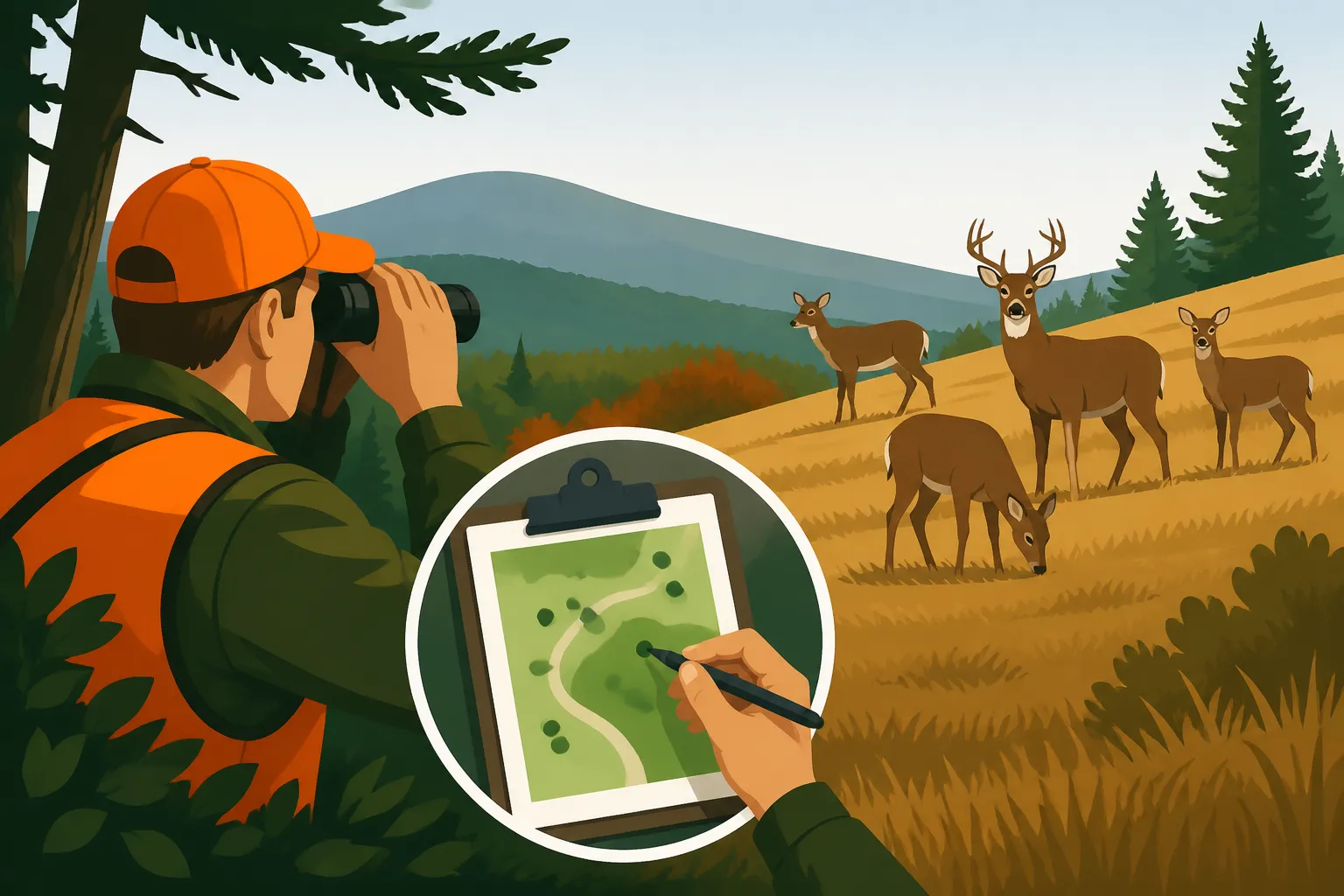
Modern technology offers new avenues for data collection. Trail cameras are no longer just for hunters; they're valuable tools for biologists. Setting up cameras along predetermined routes or in specific areas can provide data on deer presence, relative abundance, and even buck-to-doe ratios without direct human interaction. While a camera can't count every deer, it can provide an index of abundance over time.
Additionally, citizen science plays an increasingly important role. Initiatives that encourage the public to report sightings, roadkill, or even share trail camera photos (with location data) can augment official surveys, filling in gaps in data collection. Think of apps and platforms like GoHunt, which many hunters use to scout and record observations. If the Fish and Game Department can tap into this kind of distributed data collection, it adds another layer to their understanding. Even a seemingly simple observation of a doe with two fawns is a data point on fawn recruitment.
Carcass Collections and Disease Monitoring
It’s a grim task, but collecting deer carcasses – whether from roadkill or other non-hunting mortality – provides invaluable biological samples. Necropsies can reveal causes of death, overall health, and the presence of diseases or parasites. This is especially important for monitoring potential threats like Chronic Wasting Disease (CWD). New Hampshire is incredibly diligent about its New Hampshire's CWD Prevention Rules, and routine testing of harvested deer and roadkill is a cornerstone of this effort. A healthy herd is a productive herd, and disease monitoring helps ensure the long-term vitality of the population.
Advanced Modeling and Statistical Analysis
Ultimately, all this raw data doesn't just sit in a spreadsheet. Wildlife biologists are statisticians and modelers. They take the harvest data, the age structure, the buck-to-doe ratios, fawn recruitment estimates, and sometimes even environmental factors like winter severity, and plug it all into complex mathematical models. These models don't give an exact number of deer, but they generate a statistically sound estimate of the population size and trajectory. They can also predict how changes in hunting pressure, habitat, or environmental conditions might affect the herd in the future. This is where a robust data platform, like what GoHunt might offer its users for analyzing localized trends, mirrors the professional tools biologists use on a larger scale.
Analyzing the Numbers: From Data to Decisions
Once all this diverse data is collected and analyzed, it's not just a collection of interesting facts. This information forms the bedrock for critical decisions made by New Hampshire Fish and Game. It directly influences how hunting seasons are structured and how our wildlife resources are managed for the long haul.
Setting Hunting Seasons and Permit Allocations
The primary goal of deer management is to maintain a healthy, sustainable population. If the data suggests a particular WMU has a booming deer population that's outstripping its habitat, Fish and Game might increase antlerless permits to bring the numbers down to a healthier level. Conversely, if a WMU shows signs of declining deer numbers, they might reduce antlerless permits or even shorten seasons to allow the population to rebound. This is precisely how decisions are made regarding topics like New Hampshire's Moose Permit Lottery or the more widespread deer season structures. It’s a dynamic process, reviewed annually, to ensure the state’s deer herd remains robust. These decisions are carefully balanced to consider not just biological factors but also social considerations, like hunter satisfaction and public safety.
Understanding Deer Density by Region
New Hampshire isn't uniform; neither are its deer populations. The data collected helps create a clear picture of Deer Density by New Hampshire Region. The North Country, with its vast tracts of wilderness and harsher winters, typically supports lower deer densities than the more agricultural or suburban areas in the southern part of the state. Knowing these regional differences is crucial. What works for managing deer in WMU A might be entirely inappropriate for WMU J2. These variations in density also inform habitat improvement projects and targeted conservation efforts, ensuring resources are allocated where they can do the most good. Using tools that help visualize this data, much like GoHunt provides detailed maps and analytics, empowers both managers and hunters.
Long-Term Trends and Habitat Management
Beyond just year-to-year adjustments, the long-term accumulation of data allows biologists to identify significant trends. Are deer populations increasing statewide, decreasing, or holding steady? Are certain WMUs consistently struggling or thriving? This big-picture view helps Fish and Game understand the larger ecological forces at play, such as climate change, forest maturation, or land-use changes. This long-term data also informs habitat management strategies, such as promoting certain timber harvests to create early successional habitat, which is crucial for deer browse and cover. Understanding these trends ensures that today's hunting decisions don't compromise future generations' opportunities.
Hunter Involvement and the Future of Deer Management
As hunters, we are often the first to notice changes in the woods. We spend countless hours out there, observing, scouting, and experiencing the nuances of our local deer populations. Our involvement is not just appreciated by New Hampshire Fish and Game; it's absolutely essential for effective management.
The Hunter's Role as Citizen Scientist
Every hunter who registers their deer, accurately reports their harvest, and even provides observations throughout the season becomes a crucial part of the data collection process. When you're Scouting With the New Hampshire Fish and Game App and noting deer sign or activity, you're contributing to a collective understanding. Think of yourself as an extension of the state's wildlife monitoring team. The more accurate and thorough the data hunters provide, the better Fish and Game can understand the real-time dynamics of the herd. This includes reporting any unusual observations, such as sickly-looking deer or areas with unusually high roadkill numbers, which could be early indicators of disease or population stress. This proactive participation helps keep New Hampshire's CWD-free status secure.
How Hunter Feedback Informs Decisions
Beyond raw data, Fish and Game actively seeks feedback from the hunting community. Public meetings, surveys, and direct communication channels allow hunters to voice their observations, concerns, and suggestions. This qualitative data, while not statistical, provides valuable context and local insights that can sometimes highlight issues or opportunities not readily apparent from numbers alone. For instance, hunters might report unusual behavior or localized declines that warrant further investigation. Combining scientific models with on-the-ground observations from dedicated hunters creates a more robust and responsive management system, ensuring the needs and perspectives of those most invested in the resource are heard. A platform like GoHunt can facilitate this connection, allowing hunters to easily share their experiences and observations with wildlife agencies or fellow enthusiasts.
Ensuring a Sustainable Future for New Hampshire Hunting
The collaborative effort between New Hampshire Fish and Game and the state's hunters is paramount for the long-term health and sustainability of our deer herd. By understanding the scientific methods used to count and manage deer, and by actively participating in the data collection process, we all play a vital role in ensuring that future generations can enjoy the rich hunting heritage that defines our Granite State. Whether you're planning a trip for New Hampshire's November Firearms Deer Season or preparing for Bowhunting New Hampshire's Long Archery Season, know that the seasons you hunt and the opportunities you have are a direct result of these meticulous efforts. It's about more than just numbers; it's about a commitment to wildlife and the traditions we hold dear.
| Data Collection Method | Description | Benefits | Limitations |
|---|---|---|---|
| Hunter Harvest Data | Mandatory registration of harvested deer (sex, age, location, date). | Direct insight into population structure, health, and distribution. Cost-effective. | Relies on hunter participation. Only counts harvested deer, not total population. |
| Aerial Surveys | Using aircraft (sometimes with thermal imaging) to count deer in specific areas. | Can provide accurate counts in open or snow-covered terrain. | Very expensive. Limited by dense forest canopy. Not suitable for widespread counts in NH. |
| Roadside/Trail Camera Surveys | Automated cameras deployed in strategic locations to capture images of deer. | Non-invasive. Provides data on presence, relative abundance, and activity patterns. | Requires significant setup and monitoring. Doesn't give a direct total population count. |
| Carcass Collection | Examination of roadkill or other non-harvested deer. | Provides health information, disease monitoring, and age data. | Only captures a small, biased sample of the population. |
| Citizen Science | Public reporting of deer sightings, roadkill, or trail camera images. | Broadens data collection scope. Engages the public. | Data quality can vary. Requires consistent and accurate reporting. |
| Advanced Modeling | Statistical analysis of all collected data to estimate population size and trends. | Integrates multiple data sources for a comprehensive estimate. Predictive capabilities. | Relies on assumptions and accuracy of input data. Not a direct count, but a statistically derived estimate. |
Disclaimer
This article is for general informational purposes only and does not constitute professional advice. Laws, prices and regulations vary by location and change over time. Consult a qualified professional for guidance on your specific situation.