New Hampshire Moose Vehicle Collision Numbers
Driving through the stunning landscapes of New Hampshire, especially in the North Country, is often a peaceful experience, but it comes with a unique and serious hazard: moose-vehicle collisions. The sudden appearance of such a massive animal on the road can be terrifying and devastating, not just for the animal but for human lives and property. It's a risk many of us who travel these roads, whether for work or for a hunting adventure, unfortunately know all too well. This comprehensive guide will delve into the critical issue of moose-vehicle collision numbers in New Hampshire, exploring why they happen, where they're most common, and most importantly, what we can all do to prevent these often tragic encounters.
The Reality of Moose-Vehicle Collisions in New Hampshire
Anyone who has spent time driving the roads of our state, especially north of the notches, has seen the yellow diamond signs with the silhouette of a moose. They're not just for show; they're a stark reminder of a very real danger. While deer are common, a collision with a moose is an entirely different beast, literally and figuratively.
Why Moose Pose a Unique Hazard on the Road
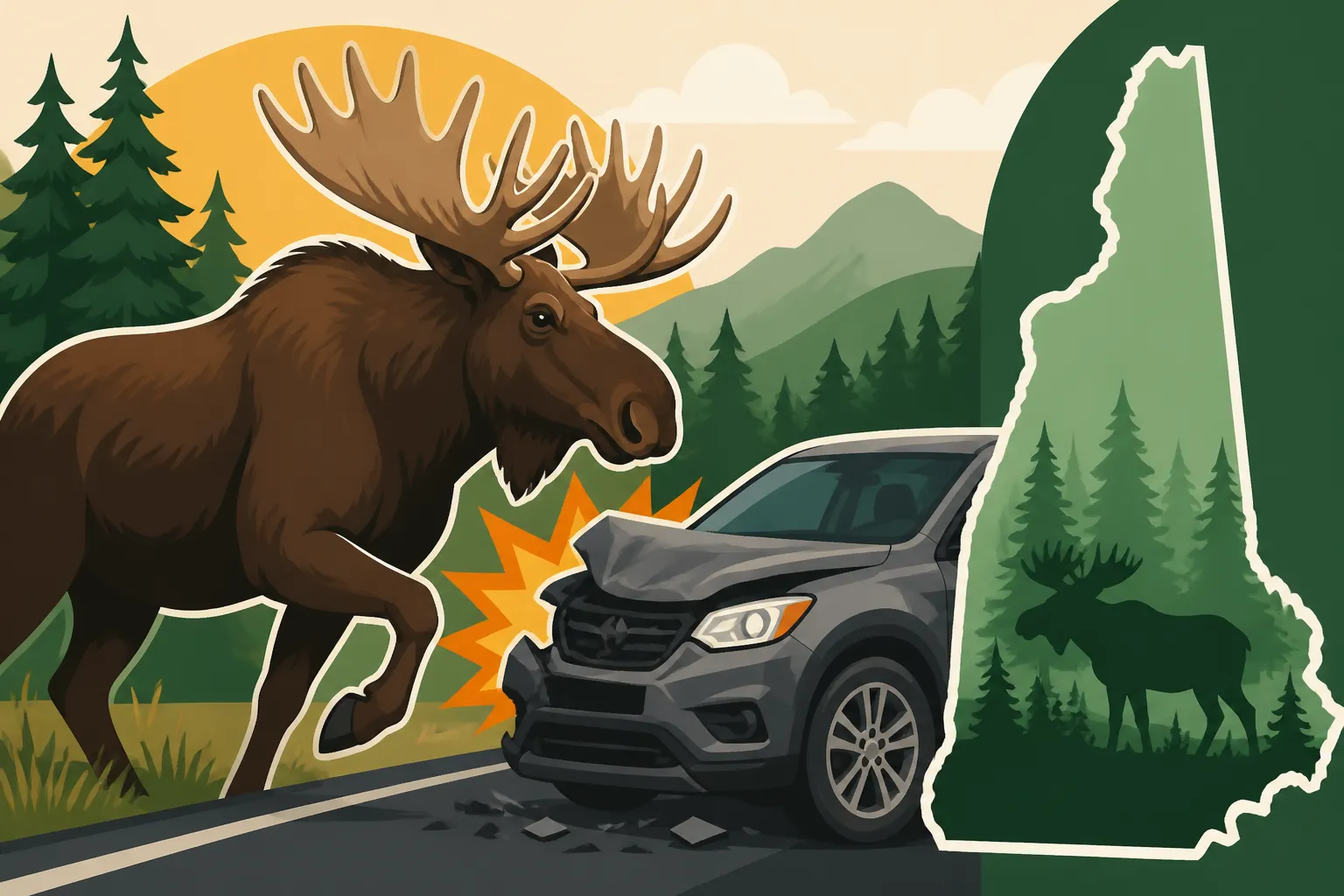
Let's be blunt: a moose is enormous. They can stand over six feet tall at the shoulder and weigh anywhere from 600 to well over 1,000 pounds. Imagine hitting a small car with your car. That's the kind of force we're talking about. Their sheer size means a direct impact is almost guaranteed to cause extensive damage to your vehicle, often crumpling the front end and pushing the engine back into the passenger compartment.
But it's not just the weight. Their long legs are a major factor in the severity of these crashes. When a car strikes a moose, the animal's legs often give way, and its massive body rolls up and over the hood, smashing through the windshield and into the occupants. This is where the real tragedy often lies, as the risk of serious injury or fatality for drivers and passengers skyrockets compared to hitting a deer. Their dark color, especially at night, makes them incredibly difficult to spot until you're right upon them. They don't have reflective eyes like deer, and their fur absorbs light. Plus, moose aren't always predictable; sometimes they'll bolt, sometimes they'll just stand there, frozen by headlights, compounding the danger. For more on these magnificent animals, check out Moose in New Hampshire's North Country.
Understanding the Data: How Numbers are Tracked
You might wonder how many of these collisions actually happen. It's not a number that's always perfectly static year to year, but we can look at trends and averages to get a clear picture. The New Hampshire Fish and Game Department, in cooperation with local law enforcement and the Department of Transportation (DOT), works to track these incidents. When a moose-vehicle collision occurs, it's typically reported to the police, who then often involve Fish and Game, especially if the animal is injured or killed.
This data, gathered from accident reports and direct calls, helps identify hotspots, peak seasons, and even times of day when these collisions are most frequent. While exact figures fluctuate, the overall picture shows that hundreds of moose-vehicle collisions occur annually across the state, with the majority concentrated in specific regions. It's a sobering thought, but understanding these trends is crucial for both public safety campaigns and potential infrastructure improvements. It’s part of the broader effort of New Hampshire Wildlife Disease Monitoring Program to understand wildlife interactions with human activity.
Factors Contributing to Moose Encounters on Roads
It's not just random chance when a moose ends up in front of your car. There are predictable patterns and environmental factors that contribute to these encounters. Understanding these can arm us with better defensive driving strategies.
Seasonal and Daily Activity Patterns
Moose aren't on a consistent, year-round schedule for road crossings. Their activity levels, and therefore the risk of collision, vary significantly with the seasons and even the time of day:
- Spring (May-June): This is a critical time. After a long winter, moose are on the move, seeking out fresh browse. Cows are often with newborn calves, making them less predictable and potentially more protective. Young bulls, yearlings, are also dispersing from their mothers' territories, often venturing into unfamiliar areas and crossing roads without the ingrained caution of older animals.
- Late Spring/Early Summer: This period continues the trend of increased movement. Moose are still seeking prime feeding grounds, and the lush vegetation along roadsides can sometimes draw them close.
- Fall (September-November): This is arguably the most dangerous season. The moose rut, or breeding season, kicks into high gear. Bulls become highly active, often oblivious to their surroundings, singularly focused on finding cows. Their movements are erratic, and they'll travel significant distances. This heightened activity, combined with shorter days and often leaf-covered roads that make spotting animals harder, creates a perfect storm for collisions. If you're out Hunting the Rut in Early-to-Mid November, you know how active deer can be, and moose are no different.
- Winter: While overall movement might decrease with deep snow, winter still presents risks. Moose might use plowed roads as easier travel corridors, or be drawn to roadsides where salt is used, especially on main routes.
Beyond the seasons, the time of day is paramount. Dawn and dusk are universally recognized as the periods of highest risk. Moose are crepuscular, meaning they are most active during these low-light hours. This perfectly overlaps with commuting times for many people, creating a dangerous intersection of human and animal activity. Nighttime, despite less traffic, remains very risky due to reduced visibility.
Habitat and Roadway Intersections
Moose don't just wander anywhere; they prefer specific types of habitat. And unfortunately, many of New Hampshire's most scenic roads cut right through these prime moose territories.
Roads that pass through wetlands, bogs, regenerating clear-cuts, and dense softwood thickets are notoriously risky. These are the places where moose find the food and cover they need. In the North Country, stretches of Route 3, Route 16, and even sections of I-93 are well-known collision zones precisely because they traverse ideal moose habitat. Think about those long, winding sections of road where the forest presses right up against the shoulder, or where you cross over a stream or through a low-lying, swampy area – those are classic moose crossings.
Understanding these habitat preferences is key. For hunters and even cautious drivers, tools like GoHunt can be incredibly valuable. By overlaying habitat maps with road networks, you can visually identify these intersections of prime moose habitat and active roadways. This kind of detailed topographical and land-use information can help you predict where a moose might be likely to step out, allowing you to adjust your driving behavior accordingly. While we focus on moose in the North Country, it's a good idea to know Hunting the North Country for general knowledge on wildlife movement.
The Role of Human Behavior and Awareness
Even with all the environmental factors, human behavior plays a huge role in preventing (or causing) moose-vehicle collisions. It often comes down to awareness and a willingness to adjust our habits.
- Speed: This is probably the biggest factor. Driving too fast, especially at night or in known moose country, drastically reduces your reaction time. A moose can appear out of nowhere, and if you're traveling at 60 mph, you simply won't have enough time to react, let alone stop.
- Distraction: In our modern world, distractions in the car are rampant. A quick glance at a phone, fiddling with the radio, or even deep conversations can pull your eyes and focus away from the road for those critical seconds. A moose crossing the road isn't like a car; it won't signal or wait its turn.
- Complacency: For those of us who live here, especially in rural areas, there's a risk of becoming too familiar with the roads. We drive them daily, perhaps for years, without incident, and that can lead to a false sense of security. We might think "it won't happen to me." But moose are unpredictable, and that complacency can be deadly.
- Lack of Awareness: Visitors or those less familiar with New Hampshire's northern routes may simply not understand the sheer density of moose or the specific risks involved. They might not realize that a yellow moose sign isn't just a scenic marker but a serious warning.
Mitigating Risk and Improving Road Safety
So, what can we actually do about this? It's not about eliminating moose, but about minimizing the risk of collision. This requires a multi-pronged approach involving driver responsibility and potential infrastructure adjustments.
Driver Awareness and Defensive Driving Strategies
This is where each of us has the most direct control. Making conscious choices behind the wheel can literally save lives.
- Slow Down, Seriously: This cannot be stressed enough. Reducing your speed, especially during dawn, dusk, and nighttime hours, is your best defense. If the speed limit is 55 mph, consider going 45 mph in areas known for moose activity. Those extra seconds can mean the difference between avoiding a collision and a devastating impact. Pay particular attention on roads that cut through New Hampshire Wildlife Management Areas as these often have high wildlife concentrations.
- Scan Aggressively: Don't just look at the road directly in front of you. Actively scan the shoulders, the ditches, and even further into the tree line. Look for dark shapes, movement, or even just the reflection of headlights in an animal's eyes (though remember, moose eyes don't always reflect as brightly as deer). Since moose are so tall, you might see their upper body over roadside brush before you see their legs.
- Use High Beams Wisely: Whenever it's safe and legal (i.e., no oncoming traffic), use your high beams. They dramatically extend your visibility and can give you precious extra seconds to spot an animal. Be ready to dip them instantly when another vehicle approaches.
- One Moose Means More: Moose often travel in groups, especially cows with calves, or during the rut when a bull might be trailing a cow. If you see one moose, immediately assume there could be another one (or two!) nearby. Don't relax your guard after the first one crosses.
- Leverage Technology (Responsibly): Just as hunters might use mapping apps like GoHunt to find game, you can use similar principles to understand your driving environment. While driving, don't use the app, but before your journey, review routes through known moose areas. Identify sections where roads closely parallel wetlands, cross major drainages, or pass through large tracts of unbroken forest. This pre-trip awareness can heighten your vigilance on those specific stretches of road.
Infrastructure Solutions and Wildlife Crossings
While individual driver behavior is key, there are also broader strategies that state agencies explore to reduce collisions. These are often complex and expensive, but can be highly effective.
- Warning Signs: Those yellow moose signs aren't decorative. They're strategically placed in areas with a history of collisions. Heed them as serious warnings, not suggestions. Sometimes, dynamic electronic signs are used that can flash "Moose Activity" during peak times or in response to recent sightings.
- Vegetation Management: Clearing brush and tall grasses along roadsides can improve visibility for drivers, giving them a clearer line of sight to the edge of the road. It also makes the roadside less appealing as immediate cover for animals looking to cross.
- Fencing: In highly problematic areas, strategic fencing can be erected along highways to deter moose from entering the roadway. This fencing often funnels animals towards designated crossing points.
- Wildlife Underpasses and Overpasses: The most effective, but also the most expensive, solution. These structures provide safe, separated passages for wildlife to cross major roadways without interacting with traffic. While common in other states and provinces, New Hampshire's rugged terrain and budget realities mean these are typically reserved for the absolute highest-priority zones. Imagine the cost of building a dedicated overpass for a handful of collisions, compared to the cost savings of prevention. They are very successful where implemented, but represent a huge investment.
What to Do If You Strike a Moose
Despite all precautions, accidents can still happen. If you are unfortunate enough to hit a moose, knowing what to do in the immediate aftermath is crucial for your safety and to comply with regulations.
- Safety First: Your immediate priority is the safety of yourself and your passengers. Pull your vehicle over to the side of the road if it is safe to do so, and turn on your hazard lights. Check for injuries to yourself and anyone else in the vehicle.
- Do NOT Approach the Moose: This is incredibly important. A wounded moose, especially one that has just been struck by a vehicle, is a massive, powerful, and terrified animal. It can be extremely dangerous. Maintain a safe distance.
- Call 911 Immediately: Report the incident. Provide your exact location, describe any injuries, and detail the condition and location of the moose. Law enforcement will dispatch appropriate personnel, which will likely include Fish and Game officials. They will handle the animal.
- Secure the Scene (if safe): If you have flares or reflective triangles, and it is safe to do so, deploy them to warn other approaching motorists. Be acutely aware of traffic around you.
- Do Not Attempt to Move or Salvage the Animal Yourself: New Hampshire has strict regulations regarding salvaged game. You cannot simply take a moose for meat if you hit it. Law enforcement or Fish and Game will determine if the animal can be legally salvaged, and they will follow proper protocols. Trying to move such a large animal on your own is also incredibly dangerous. For information on reporting deer, which has a different protocol, see Registering a New Hampshire Deer Online.
Understanding New Hampshire's moose vehicle collision numbers means more than just statistics; it’s about recognizing a pervasive risk in our beautiful, wild state. By practicing defensive driving, respecting wildlife, and understanding the factors at play, we can all contribute to making our roads safer for both humans and our majestic moose.
Common Factors Increasing Moose-Vehicle Collision Risk in New Hampshire
| Factor Category | Specific Element | Impact on Risk | Driver Action to Mitigate |
|---|---|---|---|
| Time of Day | Dawn & Dusk | Moose most active, low light reduces driver visibility dramatically. | Drive slower, use high beams when safe, increase scanning. |
| Nighttime | Moose are dark, hard to see, blend into shadows, especially without high beams. | Maintain lower speeds, maximize high beam use, be hyper-vigilant. | |
| Season | Spring (May-June) | Calving, dispersal of yearlings, moose seeking fresh browse. | Be extra alert near wetlands and new growth, especially at dawn/dusk. |
| Fall (Sept-Oct/Nov) | Rutting season, bulls are highly active and less cautious, focused on breeding. | Extreme caution, particularly in known moose country, assume multiple animals. | |
| Location | North Country Roads | Higher moose population density naturally leads to more encounters. | Assume moose are present, especially on major routes through New Hampshire's Moose Density Reduction Efforts areas. |
| Roads Near Water/Wetlands | Moose are drawn to water and associated vegetation for food and cover. | Increase awareness when roads parallel or cross bogs, swamps, or rivers. | |
| Regenerating Forests | New growth provides abundant food source, attracting moose. | Scan clear-cuts, young timber stands, and forest edges near roads. | |
| Visibility | Fog, Heavy Rain, Snow | Significantly reduces driver's ability to see obstacles, including moose. | Drastically reduce speed, increase following distance, use fog lights. |
| Blind Hills & Curves | Limited sight distance before a moose can appear. | Slow down before cresting hills or entering blind curves. | |
| Driver Behavior | Speeding | Less reaction time, longer stopping distances. | Adhere to speed limits, reduce speed further in high-risk areas. |
| Distracted Driving | Eyes off the road, delayed recognition of hazards. | Eliminate all distractions, focus 100% on the road and surroundings. |
Disclaimer
This article is for general informational purposes only and does not constitute professional advice. Laws, prices and regulations vary by location and change over time. Consult a qualified professional for guidance on your specific situation.